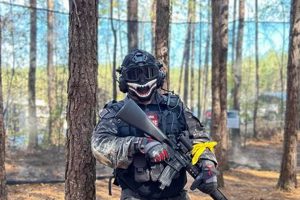
Tactical gear designed to carry essential equipment during simulated combat scenarios, these platforms offer a modular and accessible solution for load carriage. They typically feature pouches and attachment points for magazines, radios, medical supplies, and other mission-critical items. Variations exist to accommodate different player roles and loadout preferences, ranging from minimalist designs to more extensive configurations.
The use of such load-bearing equipment enhances operational efficiency by distributing weight evenly across the torso, improving mobility, and ensuring readily available access to necessary tools. Historically, these platforms evolved from military load-bearing vests and have been adapted for recreational use, reflecting a practical approach to carrying mission-specific gear. Their adoption in the sport stems from the need for organized and accessible equipment management in dynamic environments.
The following sections will delve into the different types available, factors to consider when selecting a suitable model, proper fitting techniques, and best practices for maintaining optimal performance and longevity.
Airsoft Chest Rigs
Effective utilization of load-bearing equipment significantly impacts performance and tactical advantage. The following tips outline best practices for maximizing the functionality and longevity of such gear.
Tip 1: Prioritize Load Balance: Distribute weight evenly across the platform to prevent fatigue and maintain mobility. Uneven weight distribution can lead to discomfort and hinder agility during gameplay.
Tip 2: Secure All Attachments: Regularly inspect and tighten all straps, buckles, and pouches to ensure equipment remains secure during movement. Loose attachments can result in lost items and distractions.
Tip 3: Practice Equipment Retrieval: Develop muscle memory for accessing critical items such as magazines, radios, and medical supplies. Consistent practice ensures rapid and efficient retrieval under pressure.
Tip 4: Adjust for Proper Fit: A snug and secure fit is crucial for optimal performance. Adjust the straps to minimize movement and prevent the platform from shifting during dynamic actions.
Tip 5: Adapt to the Environment: Consider the terrain and weather conditions when configuring your loadout. Adjust the amount and type of gear carried to match the specific requirements of each scenario.
Tip 6: Regular Maintenance is Key: After each use, inspect the platform for damage, clean any dirt or debris, and address any necessary repairs promptly. Regular maintenance prolongs the lifespan of the equipment and ensures consistent performance.
Tip 7: Consider Modularity: Take advantage of the modular design to customize the setup based on individual needs and preferences. Experiment with different pouch configurations to find the most efficient and ergonomic arrangement.
By implementing these tips, individuals can enhance their performance, maintain equipment integrity, and maximize the utility of load-bearing platforms.
The subsequent sections will address the selection of appropriate models based on gameplay style and individual requirements.
1. Load Distribution

Effective load distribution is a foundational element in the design and utilization of airsoft chest rigs. Improper weight management can induce fatigue, impede mobility, and negatively impact performance during extended gameplay. The strategic placement of equipment across the platform is critical to maintaining balance and preventing strain on specific muscle groups. A balanced rig allows the user to maintain a more natural posture and reduce the risk of injury.
The cause-and-effect relationship between load distribution and player performance is direct. For example, a rig heavily weighted on one side will force the user to compensate, leading to uneven gait and increased energy expenditure. Proper distribution, conversely, enables fluid movement and rapid transitions between positions. Real-world military applications have long emphasized the importance of balanced load carriage, a principle directly applicable to the simulated combat environment. An unevenly distributed load can hinder a players ability to quickly react to opposing players in CQB scenarios.
In summary, understanding and implementing optimal load distribution is paramount for maximizing the effectiveness and minimizing the physical strain associated with wearing tactical equipment. The proper allocation of weight translates directly to improved agility, endurance, and overall gameplay performance. Neglecting this aspect introduces unnecessary challenges and compromises the user’s ability to operate efficiently within the simulated environment.
2. Pouch Configuration

Pouch configuration, in the context of airsoft chest rigs, directly influences operational efficiency and tactical preparedness. The arrangement and type of pouches determine the accessibility and carrying capacity for essential equipment, affecting a player’s ability to react swiftly and effectively in dynamic scenarios. A poorly configured setup can impede movement, delay access to critical items such as magazines or communication devices, and ultimately compromise a player’s performance. Conversely, a well-planned pouch configuration optimizes gear accessibility and distribution, enhancing both speed and endurance.
The choice of pouch configuration should reflect the individual’s role and preferred playstyle. For instance, a designated marksman may prioritize ammunition pouches positioned for easy access during reloads, coupled with a utility pouch for essential tools. A support gunner, on the other hand, requires ample ammunition capacity, necessitating a higher density of magazine pouches. A CQB player might need pistol magazine and speed loader pouch. The configuration also extends to placement of medical kits, communication devices, and other ancillary items. Adaptability to varying scenarios necessitates modular pouch attachment systems, allowing on-the-fly adjustments based on mission requirements.
In summary, thoughtful consideration of pouch configuration is paramount to maximizing the utility of airsoft chest rigs. An optimized setup facilitates rapid access to mission-essential equipment, enhances player mobility, and contributes significantly to overall effectiveness on the field. Conversely, neglecting this aspect can lead to decreased performance and tactical disadvantage. The ideal configuration is not universal but rather a tailored solution based on individual needs, role, and playing style.
3. Adjustability
Adjustability represents a critical design parameter in airsoft chest rigs, directly impacting user comfort, stability, and overall performance during simulated combat scenarios. The capacity to tailor the fit of the platform to individual body types and equipment loadouts is essential for optimal functionality.
- Torso Length Adjustment
Vertical adjustability, typically achieved through shoulder strap modification, ensures that the rig sits correctly on the torso. Improper torso length adjustment can lead to discomfort, restricted movement, and inefficient weight distribution. A rig that is too long may interfere with leg movement, while one that is too short may ride up and hinder access to lower-mounted pouches.
- Waist Circumference Adjustment
Horizontal adjustability, often implemented via side straps or cummerbund systems, allows the user to secure the rig snugly around the waist. This prevents excessive shifting during dynamic movements, maintaining a stable platform for carrying equipment. Insufficient waist adjustment results in a loose-fitting rig that can impede agility and potentially cause gear to become dislodged.
- Shoulder Strap Padding Adjustment
The degree of padding and adjustability in shoulder straps contributes significantly to user comfort, especially during prolonged use. Adjustable padding can mitigate pressure points and distribute weight more evenly across the shoulders. A lack of padding or adjustability can lead to discomfort, fatigue, and potential strain injuries.
- Pouch Placement Versatility
While not strictly “adjustability” in the sense of altering the rig’s size, the modular nature of many platforms (e.g., MOLLE systems) allows for highly customizable pouch placement. This enables users to optimize the location of magazines, radios, and other essential items based on their individual reach, dexterity, and preferred tactical layout. A lack of such versatility can lead to inefficient gear access and compromised reaction times.
The interplay of these adjustability features dictates the overall effectiveness of an airsoft chest rig. A well-designed and properly adjusted platform will enhance user comfort, improve stability, and facilitate efficient gear access, ultimately contributing to improved performance in the field. Conversely, a rig with limited adjustability may compromise comfort and functionality, hindering the user’s ability to operate effectively. Choosing a platform with a wide range of adjustability is essential for ensuring a secure, comfortable, and functional fit, regardless of body type or loadout configuration.
4. Material Durability

Material durability is a primary consideration in the evaluation and selection of airsoft chest rigs. The operational environment necessitates robust construction to withstand physical stress, abrasion, and exposure to environmental elements. The lifespan and reliable performance of the rig directly correlate to the quality and resilience of its constituent materials.
- Fabric Denier and Weave Density
The denier rating of the fabric, typically nylon or polyester, indicates its thread thickness and therefore its resistance to tearing and abrasion. Higher denier fabrics, such as 500D or 1000D nylon, offer greater durability. Weave density, referring to the tightness of the fabric’s construction, further contributes to tear strength and overall longevity. For example, a tightly woven 1000D nylon rig will withstand significantly more abuse than a loosely woven 500D variant.
- Stitching Reinforcement and Seam Integrity
The quality of stitching and seam construction directly affects the rig’s ability to withstand stress under load. Reinforced stitching at critical stress points, such as pouch attachment points and shoulder strap junctions, prevents seam failure and component separation. Bar-tack stitching, a concentrated stitch pattern, is commonly employed to reinforce these areas. Inadequate stitching leads to premature wear and potential equipment loss.
- Hardware Quality and Corrosion Resistance
Buckles, zippers, and other hardware components must exhibit sufficient strength and corrosion resistance to maintain functionality over extended use. High-quality polymer buckles and metal zippers with durable coatings prevent breakage and ensure reliable operation in adverse conditions. Inferior hardware is prone to failure, compromising the rig’s security and functionality. Marine-grade hardware may be preferable in high-humidity environments.
- Water Resistance and Environmental Degradation
Material selection influences the rig’s ability to resist water penetration and degradation from UV exposure and temperature fluctuations. Water-resistant coatings or laminated fabrics prevent moisture absorption, maintaining the rig’s structural integrity and preventing equipment damage. UV resistance mitigates fabric fading and weakening over time. Rigs exposed to harsh environmental conditions require materials engineered for prolonged outdoor use.
The long-term performance and reliability of airsoft chest rigs are intrinsically linked to material durability. Selecting a rig constructed from high-quality, robust materials, with attention to stitching reinforcement, hardware quality, and environmental resistance, is essential for ensuring a worthwhile investment and optimal performance in the field. Compromising on material durability often results in premature wear, equipment failure, and ultimately, reduced operational effectiveness.
5. Attachment Compatibility
Attachment compatibility, in the context of airsoft chest rigs, refers to the capacity of a platform to integrate with a variety of accessories and components, thereby expanding its functionality and adaptability to diverse operational requirements. The degree of attachment compatibility dictates the user’s ability to customize the rig to suit specific roles, loadouts, and environmental conditions. Limited compatibility restricts the user’s options and may necessitate the purchase of additional, specialized gear.
- MOLLE (Modular Lightweight Load-carrying Equipment) Integration
MOLLE is a standardized attachment system widely adopted in tactical gear. Its presence on an airsoft chest rig enables the secure mounting of pouches, holsters, and other accessories via interwoven straps. The density and arrangement of MOLLE webbing directly influence the number and type of attachments that can be accommodated. Rigs with comprehensive MOLLE coverage offer maximum versatility, while those with limited webbing may restrict customization options. An example is the ability to add a hydration carrier to a rig lacking built-in provisions.
- PALS (Pouch Attachment Ladder System) Standards
PALS is the webbing grid system that forms the foundation of MOLLE. Compliance with PALS standards ensures compatibility across different brands and manufacturers of tactical gear. Airsoft chest rigs adhering to PALS specifications can readily accept pouches and accessories from a wide range of sources. Non-standard webbing configurations may limit attachment options and require the use of proprietary or modified components. Incompatibility with PALS can severely restrict the user’s ability to adapt the rig to changing needs.
- Velcro and Hook-and-Loop Panels
The incorporation of Velcro or hook-and-loop panels allows for the attachment of patches, identification tags, and other morale items. Furthermore, these panels can serve as a mounting platform for specialized accessories, such as magazine retention systems or quick-access medical pouches. The size, placement, and quality of Velcro panels impact their functionality and durability. A poorly positioned or low-quality Velcro panel may fail to securely retain attachments, leading to potential loss or compromise. It should be noted that heavy pouches are not usually recommended for Velcro.
- Hard Point Attachment Systems
Certain airsoft chest rigs incorporate hard points, such as D-rings or buckles, for the attachment of slings, lanyards, or other heavy items. These hard points provide a secure and reliable connection for accessories that cannot be adequately supported by MOLLE or Velcro alone. The strength and placement of hard points are critical factors in determining their suitability for specific applications. A poorly designed or under-strength hard point may fail under load, posing a safety hazard or resulting in equipment damage.
The adaptability and utility of airsoft chest rigs are fundamentally linked to their attachment compatibility. A platform with versatile and robust attachment systems enables the user to tailor the rig to meet specific mission requirements and personal preferences. Conversely, limited attachment compatibility restricts the user’s options and may hinder their ability to effectively carry and access essential equipment. Choosing a rig with a comprehensive and well-executed attachment system is crucial for maximizing its long-term value and ensuring optimal performance in diverse operational scenarios.
Frequently Asked Questions
The following section addresses common inquiries regarding the selection, use, and maintenance of airsoft chest rigs. The information provided aims to clarify misconceptions and offer practical guidance for optimizing the performance and longevity of this essential piece of tactical gear.
Question 1: What distinguishes an airsoft chest rig from a plate carrier?
An airsoft chest rig primarily focuses on load carriage, providing pouches and attachment points for magazines, radios, and other essential gear. It typically lacks ballistic protection. A plate carrier, in contrast, is designed to accommodate ballistic plates for protection against projectile threats and may offer load-bearing capabilities as a secondary function. The primary distinction lies in the presence of ballistic protection in plate carriers.
Question 2: How does one determine the appropriate size for an airsoft chest rig?
Chest rig sizing is generally based on torso measurements, specifically chest circumference and torso length. Manufacturers typically provide sizing charts that correlate body measurements to specific rig sizes. It is crucial to consult these charts and, if possible, try on different sizes to ensure a secure and comfortable fit. Adjustability features can further fine-tune the fit to individual body types.
Question 3: What is MOLLE, and why is it important for airsoft chest rigs?
MOLLE (Modular Lightweight Load-carrying Equipment) is a standardized attachment system consisting of interwoven webbing that allows for the secure mounting of pouches and accessories. MOLLE integration is crucial for airsoft chest rigs as it provides a highly customizable platform for carrying essential gear. This modularity enables users to adapt the rig to specific mission requirements and personal preferences.
Question 4: How should an airsoft chest rig be properly cleaned and maintained?
Cleaning and maintenance procedures vary depending on the materials used in the rig’s construction. Generally, it is recommended to remove all attachments, hand wash the rig with mild detergent and water, and allow it to air dry completely. Avoid using harsh chemicals or machine washing, as these can damage the fabric and hardware. Regular inspection for wear and tear is also essential, with prompt repair or replacement of damaged components.
Question 5: What are the key factors to consider when selecting pouches for an airsoft chest rig?
Key factors to consider include the type of gear to be carried, the accessibility requirements, and the compatibility with the rig’s attachment system. Pouches should be appropriately sized for the intended contents, securely attached to the rig, and positioned for easy access during gameplay. Material durability and closure mechanisms (e.g., Velcro, buckles, zippers) are also important considerations.
Question 6: Can an airsoft chest rig be used in conjunction with other tactical gear, such as backpacks or plate carriers?
Yes, airsoft chest rigs can be used in conjunction with other tactical gear, but compatibility and comfort should be carefully assessed. When used with a backpack, ensure that the rig does not interfere with the backpack’s shoulder straps or weight distribution. When used with a plate carrier, ensure that the rig fits comfortably over the carrier without restricting movement or impeding access to essential gear. Overlapping or incompatible gear can lead to discomfort and reduced operational efficiency.
In summary, a thorough understanding of airsoft chest rig features, proper sizing, and maintenance procedures is essential for maximizing its utility and ensuring a safe and enjoyable gameplay experience. The information presented aims to provide a solid foundation for informed decision-making and responsible equipment management.
The following section will explore advanced customization techniques and modifications for airsoft chest rigs.
Conclusion
The preceding exploration of airsoft chest rigs has illuminated critical aspects of their design, functionality, and application within the simulated combat environment. Emphasis has been placed on load distribution, pouch configuration, adjustability, material durability, and attachment compatibility as key determinants of performance and user satisfaction. Understanding these factors facilitates informed decision-making when selecting and configuring load-bearing equipment.
The effective utilization of airsoft chest rigs transcends mere equipment acquisition; it necessitates a commitment to proper fitment, regular maintenance, and adaptable load carriage strategies. As the sport evolves, continued innovation in materials, designs, and attachment systems will further enhance the capabilities of these platforms. Prudent employment of these tools ultimately contributes to enhanced operational effectiveness and an improved overall experience.