This activity describes a fast-paced, mobile form of the airsoft game, typically played in smaller, more dynamic environments than traditional airsoft scenarios. Gameplay emphasizes quick thinking, agility, and adaptability. For example, a team might engage in a series of short, objective-based skirmishes across a confined area, prioritizing speed and tactical improvisation over prolonged engagements.
The emphasis on rapid movement and strategic flexibility provides participants with an engaging and physically active experience. Historically, the concept has emerged from a desire to streamline and intensify airsoft matches, offering a more accessible and readily organized alternative to large-scale, time-consuming events. The benefits include improved reaction time, enhanced teamwork skills, and a high level of cardiovascular exercise.
The following sections will delve into specific aspects of this activity, covering topics such as optimal equipment choices, effective tactical strategies for maximizing success, and essential safety precautions to ensure a positive and secure gameplay experience.
Essential Tactics for Dynamic Airsoft Engagements
This section outlines crucial strategies for success in fast-paced airsoft scenarios. Implementation of these tips can significantly enhance battlefield effectiveness and overall performance.
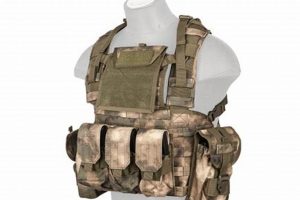
Tip 1: Prioritize Lightweight Equipment. Reduced weight allows for greater agility and faster movement across the playing field. Consider lighter vests, smaller airsoft replicas, and minimal essential gear. For example, a plate carrier with only necessary pouches is preferable to a fully loaded tactical vest.
Tip 2: Master Situational Awareness. Constant scanning and assessment of the surrounding environment are critical. Pay attention to potential flanking routes, enemy positions, and objective locations. Regularly update teammates on observed threats and opportunities.
Tip 3: Develop Effective Communication Protocols. Clear and concise communication is paramount for coordinating team movements and tactics. Establish pre-defined callouts for common situations, such as enemy sightings, flanking maneuvers, or requests for support. Utilize radios for longer-range communication.
Tip 4: Embrace Flanking Maneuvers. Direct engagements can often lead to stalemates. Instead, focus on flanking maneuvers to create advantageous positions and disrupt enemy formations. Coordinate with teammates to simultaneously attack from multiple angles.
Tip 5: Practice Snap Shooting Techniques. Quick and accurate shots are essential for eliminating threats in close-quarters combat. Practice snap shooting techniques to rapidly acquire targets and deliver accurate fire while minimizing exposure.
Tip 6: Utilize Cover Effectively. Proper use of cover is crucial for minimizing risk and maximizing survivability. Move between cover positions strategically, exposing oneself only when necessary to engage targets. Use available cover to reload and reposition.
Tip 7: Adapt to Changing Battlefield Dynamics. The battlefield environment can change rapidly. Be prepared to adjust tactics and strategies based on evolving circumstances. Flexibility and adaptability are key to maintaining a competitive edge.
By consistently applying these tactics, participants can significantly improve their performance and contribution in these airsoft activities. Enhanced agility, situational awareness, and effective communication contribute to a more rewarding and successful experience.
The following section will discuss suitable equipment choices to optimize performance in dynamic engagements.
1. Speed

Speed is a core element that defines the character of rapid engagement airsoft. It dictates tactical approaches and equipment choices, directly influencing the dynamics and challenges participants face.
- Movement Speed and Agility
Increased movement speed enables players to quickly traverse the playing field, allowing for faster flanking maneuvers and rapid response to evolving threats. Agility complements speed by facilitating quick changes in direction and the ability to navigate complex environments. A player with both qualities can exploit openings and capitalize on tactical opportunities more effectively.
- Reaction Time and Decision-Making
Fast-paced scenarios demand rapid reaction times and decisive decision-making. Players must quickly assess situations, identify threats, and execute appropriate actions. Hesitation can lead to missed opportunities or vulnerability to enemy fire. The ability to process information and react swiftly is critical for success.
- Weapon Handling and Target Acquisition
Speed extends to weapon handling and target acquisition. Players must be able to quickly shoulder their airsoft replica, acquire a target, and deliver accurate fire. Efficient reloading and weapon transitions are also essential for maintaining momentum in engagements. Mastering these skills enhances effectiveness in close-quarters combat.
- Pace of Gameplay and Objective Completion
The overall pace of gameplay is significantly accelerated. Matches often involve shorter rounds with quick objective transitions. Players must be prepared to maintain a high level of intensity and focus throughout the game. The emphasis on speed encourages proactive play and rewards teams that can efficiently coordinate their movements and strategies to achieve objectives.
The various facets of speed coalesce to create a unique and challenging experience. The demand for rapid movement, quick decision-making, and efficient weapon handling necessitates a high level of skill and coordination. The fast pace of gameplay encourages aggressive tactics and rewards players who can maintain their composure under pressure, making it an integral and defining characteristic of dynamic airsoft.
2. Agility

Agility is a cornerstone of effective participation in the fast-paced airsoft variant. It is a physical attribute that directly translates into tactical advantage and influences the overall dynamics of engagement. Specifically, heightened agility permits faster traversal of diverse terrains, enabling quick repositioning during skirmishes. This ability to rapidly change location allows players to exploit tactical opportunities, such as flanking maneuvers, and react swiftly to evolving threats. Without a sufficient degree of agility, participants are at a distinct disadvantage, limiting their capacity to effectively navigate the playing field and respond to opposing forces.
The correlation between agility and tactical efficacy is evident in various game scenarios. For example, a player with superior agility can quickly move from cover to cover, minimizing exposure to enemy fire while simultaneously advancing towards an objective. Similarly, agility facilitates rapid target acquisition, allowing for faster engagement of opposing players. In confined spaces, this ability becomes particularly crucial, enabling players to navigate tight corners and engage enemies in close-quarters combat. The absence of agility, conversely, often results in reduced responsiveness, leading to increased vulnerability and decreased effectiveness in accomplishing team objectives.
Ultimately, agility serves as a significant determinant of a player’s overall performance and contribution to the team. Enhancing physical conditioning to improve agility can therefore substantially elevate a participant’s capabilities within this dynamic airsoft context. This connection underscores the importance of integrating agility training into preparation strategies for individuals seeking to excel in these engagements. A holistic approach that combines physical conditioning with tactical training maximizes a player’s potential and contributes to a more engaging and competitive experience.
3. Teamwork

Teamwork is an indispensable element for success in fast-paced airsoft scenarios. Individual skill alone is insufficient; coordinated efforts and synergistic strategies are paramount for achieving objectives and maintaining a competitive advantage. The dynamic nature of these engagements necessitates clear communication, mutual support, and a cohesive approach to tactical decision-making. A team operating as a unified entity can effectively overcome challenges, exploit opportunities, and ultimately dominate the playing field. For instance, a successful breach-and-clear maneuver requires coordinated movement, synchronized firing, and clear communication of enemy positions within a confined space. Without effective teamwork, such an operation is likely to result in failure and potential casualties.
The importance of teamwork extends beyond tactical execution to encompass logistical support and strategic planning. Effective teams establish clear roles and responsibilities, ensuring that each member contributes to the overall mission. Communication protocols, pre-determined signals, and designated leadership facilitate efficient coordination and minimize confusion during intense engagements. Moreover, a well-functioning team fosters a culture of mutual respect and trust, enabling members to rely on each other in critical situations. The practical application of these principles is evident in scenarios where teams must adapt to unforeseen circumstances, such as unexpected enemy movements or changes in terrain. A team that has cultivated strong teamwork skills is better equipped to improvise, adjust tactics, and maintain cohesion under pressure.
In summary, teamwork is not merely a desirable attribute but an essential requirement for thriving in fast-paced airsoft. The complexity and dynamism of these engagements demand a coordinated and collaborative approach, where individual strengths are leveraged to achieve collective goals. While challenges may arise from communication breakdowns or conflicting priorities, a commitment to fostering teamwork will consistently yield superior results and a more rewarding experience for all participants. Understanding and implementing these principles is critical for teams seeking to maximize their effectiveness and achieve consistent success.
4. Tactical Flexibility

Tactical flexibility is a core attribute for participants engaging in dynamic airsoft scenarios. Its significance stems from the rapidly changing battlefield conditions and the need for participants to adapt their strategies in real-time to maintain a competitive advantage.
- Adaptability to Diverse Environments
The ability to adjust tactics based on terrain is crucial. Urban environments may necessitate close-quarters combat strategies, while open fields demand ranged engagements. Participants must be proficient in transitioning between these styles, employing appropriate cover, movement techniques, and weapon choices. For example, switching from a CQB-optimized airsoft replica to a rifle as engagement distances increase.
- Response to Unforeseen Circumstances
Unexpected enemy movements, equipment malfunctions, or objective changes require rapid adaptation. Pre-planned strategies can quickly become obsolete. Teams must be capable of improvising new approaches, re-assigning roles, and adjusting their formations on the fly. A successful team might quickly shift from an offensive push to a defensive posture if ambushed.
- Dynamic Role Assignment
Team members must be prepared to assume different roles as dictated by the situation. A designated sniper may need to transition to a support role in close-quarters combat, while a rifleman may need to provide cover fire for a flanking maneuver. Fluid role assignments maximize team effectiveness by leveraging individual skills where they are most needed.
- Weapon and Equipment Versatility
Selecting equipment that allows for flexible tactical options is essential. Airsoft replicas with adjustable hop-up systems, variable-magnification optics, and modular attachments provide a greater range of engagement capabilities. Similarly, carrying a sidearm or a secondary weapon enables quick transitions between different engagement distances.
These facets of tactical flexibility are essential for navigating the challenges presented by dynamic airsoft activities. They enable participants to respond effectively to evolving battlefield conditions, maintain a competitive edge, and ultimately contribute to a more engaging and successful gameplay experience.
5. Objective Focus
Objective focus is intrinsically linked to the successful execution and inherent enjoyment of dynamic airsoft scenarios. The rapid pace and condensed engagement zones of these activities necessitate a heightened awareness and prioritization of mission objectives. The causal relationship is direct: heightened objective focus increases the likelihood of mission completion, which in turn contributes to a more rewarding and satisfying gameplay experience. Without a clear and consistent objective focus, teams are prone to fragmentation, inefficient resource allocation, and ultimately, failure to achieve their goals.
For instance, in a capture-the-flag scenario, a team with a strong objective focus will allocate resources strategically, prioritizing the acquisition of the flag while simultaneously defending their own base. Communication channels will be dedicated to relaying information about flag location, enemy movements, and flanking opportunities. Conversely, a team lacking objective focus might become distracted by individual skirmishes or prioritize personal achievements over collective success, leading to a disjointed effort and a higher probability of defeat. This principle extends beyond simple objective-based missions to encompass more complex scenarios involving multiple objectives, dynamic respawn rules, and variable team compositions. The ability to maintain a singular focus on the primary mission, even amidst chaos and uncertainty, is a defining characteristic of successful teams.
In conclusion, objective focus is not merely a desirable attribute but an essential component of dynamic airsoft. Its presence directly influences team effectiveness, strategic cohesion, and overall gameplay enjoyment. The challenges associated with maintaining objective focus in a fast-paced, unpredictable environment underscore the importance of developing clear communication protocols, fostering a strong team culture, and prioritizing mission-critical tasks above individual aspirations. A dedication to objective focus allows teams to maximize their potential and fully realize the inherent excitement and strategic depth of these rapid engagement airsoft activities.
6. Communication
In the context of rapidly executed airsoft engagements, effective communication serves as a critical determinant of success. The compressed timeframe and dynamic nature of these scenarios necessitate rapid information exchange and coordinated tactical responses. A direct correlation exists between the quality of team communication and the likelihood of achieving mission objectives. Conversely, communication breakdowns can lead to confusion, miscoordinated movements, and ultimately, mission failure. For example, a team attempting to secure a designated area may be significantly hindered if members fail to accurately relay enemy positions, flanking maneuvers, or requests for covering fire. This highlights the importance of establishing clear communication protocols prior to engagement.
Practical applications of effective communication manifest in various aspects of dynamic airsoft gameplay. Pre-defined callouts for common situations, such as “enemy spotted,” “flanking left,” or “need cover,” allow for rapid dissemination of critical information without ambiguity. The use of radio communication systems further enhances coordination, enabling team leaders to direct movements and adapt strategies in real-time. Furthermore, non-verbal communication cues, such as hand signals, can supplement verbal exchanges in situations where auditory communication is compromised. Teams that prioritize communication training and regularly practice these techniques demonstrate improved coordination, reduced response times, and a greater overall effectiveness on the playing field.
Ultimately, the effectiveness of communication in rapid engagement airsoft activities hinges on clarity, speed, and precision. The ability to accurately convey information under pressure is paramount. Challenges may arise from environmental factors, equipment limitations, or individual communication styles. However, by emphasizing standardized protocols, fostering a culture of open communication, and continuously refining communication techniques, teams can mitigate these challenges and maximize their potential for success. The inextricable link between communication and success in dynamic airsoft underscores its importance as a foundational element of effective tactical execution.
7. Safety
Safety is not merely a peripheral consideration, but rather an intrinsic component that enables and sustains the viability of the fast-paced airsoft game. The accelerated tempo and close-quarters nature of this activity inherently amplify the risks associated with projectile impact, collisions, and environmental hazards. A direct correlation exists: the implementation of stringent safety protocols mitigates potential injuries, thereby fostering an environment where participants can engage more freely and confidently, maximizing the enjoyment derived from the activity. Conversely, a disregard for safety precautions exponentially increases the likelihood of adverse incidents, potentially leading to injuries that could temporarily or permanently preclude participation. For instance, the consistent use of approved eye protection is paramount, as even brief exposure to an airsoft projectile can result in severe ocular trauma. Similarly, adherence to velocity limits prevents excessive force upon impact, reducing the risk of skin lacerations, contusions, or more serious injuries.
Furthermore, the specific environments in which these activities are conducted often present unique safety challenges. Indoor arenas may feature confined spaces and limited visibility, necessitating heightened situational awareness and adherence to strict rules of engagement. Outdoor environments may introduce hazards such as uneven terrain, concealed obstacles, and potential exposure to wildlife. Therefore, a comprehensive safety briefing prior to each engagement is essential to communicate specific risks and reinforce appropriate conduct. This briefing should encompass topics such as minimum engagement distances, prohibited firing zones, and emergency procedures. Real-world examples underscore the importance of these measures; incidents involving unintentional discharge of airsoft replicas, collisions resulting in musculoskeletal injuries, and environmental hazards leading to accidental falls are all preventable through diligent safety practices.
In conclusion, safety is not simply a set of rules to be followed, but rather a fundamental prerequisite for responsible and enjoyable engagement in dynamic airsoft. By proactively addressing potential risks and consistently enforcing established safety protocols, participants can create a secure and sustainable environment that promotes skill development, tactical proficiency, and overall satisfaction. The challenges associated with maintaining unwavering adherence to safety standards necessitate a collective commitment from all participants, ensuring that the activity remains both exhilarating and secure. This understanding serves as a cornerstone for fostering a positive and responsible airsoft community.
Frequently Asked Questions About Rapid Engagement Airsoft
This section addresses common inquiries and misconceptions regarding the fast-paced variant of the airsoft game, providing clear and concise answers to enhance understanding and promote informed participation.
Question 1: What distinguishes fast-paced airsoft from traditional airsoft scenarios?
The primary distinction lies in the condensed engagement zones, accelerated pace of gameplay, and emphasis on rapid tactical adaptation. Traditional airsoft often involves larger playing fields, prolonged engagements, and more deliberate strategies. Fast-paced airsoft prioritizes quick decision-making, agility, and close-quarters combat.
Question 2: What are the essential safety precautions in this type of airsoft?
Mandatory eye protection, adherence to velocity limits for airsoft replicas, and strict observation of minimum engagement distances are critical. Pre-game safety briefings should address specific environmental hazards and rules of engagement. Responsible gun handling practices are always required.
Question 3: What type of equipment is best suited for these fast engagements?
Lightweight gear, maneuverable airsoft replicas optimized for close-quarters combat, and minimalist tactical loadouts are recommended. Airsoft replicas offering high rates of fire and rapid target acquisition can be advantageous. Red dot sights are preferable to high-magnification optics.
Question 4: How does teamwork differ in this format compared to traditional airsoft?
Teamwork is intensified due to the smaller playing areas and faster pace. Clear and concise communication, rapid response to changing battlefield conditions, and coordinated flanking maneuvers are essential for success. Well-defined roles and responsibilities, along with pre-established communication protocols, are crucial for team cohesion.
Question 5: What strategies maximize success in these dynamic encounters?
Prioritization of flanking maneuvers, rapid target acquisition, and effective use of cover are paramount. Quick decision-making, adaptability to changing circumstances, and the ability to exploit enemy weaknesses are key to gaining a tactical advantage. Consistent communication regarding enemy positions and movements is vital.
Question 6: What are the potential benefits of participating in rapid engagement airsoft?
Benefits include improved reaction time, enhanced tactical awareness, increased physical fitness, and the development of effective teamwork skills. The fast-paced nature of the activity promotes quick thinking, adaptability, and the ability to perform under pressure.
In summary, fast-paced airsoft presents a unique and challenging experience that requires careful consideration of safety protocols, equipment choices, and tactical strategies. A strong emphasis on teamwork and communication is essential for success.
The next section will explore the ethical considerations surrounding airsoft activities.
Conclusion
“Fun on the run airsoft” represents a dynamic adaptation of the traditional airsoft game, characterized by its rapid pace, condensed engagement zones, and emphasis on agile tactical maneuvering. This exploration has underscored the critical importance of factors such as equipment selection, communication protocols, team coordination, and unwavering adherence to safety regulations in realizing the full potential of this activity. Furthermore, the article has addressed common inquiries and misconceptions, clarifying the distinctions between this variant and more conventional airsoft scenarios.
As participation in “fun on the run airsoft” continues to expand, the ongoing refinement of established safety standards and the development of innovative tactical approaches will remain paramount. A sustained commitment to responsible gun handling, ethical gameplay, and the promotion of a supportive community will ensure the long-term viability and enduring appeal of this engaging recreational pursuit. Continued exploration and documentation of best practices will further contribute to the responsible evolution of “fun on the run airsoft,” solidifying its position within the broader airsoft landscape.