This activity is a recreational combat simulation where participants eliminate opponents by shooting them with spherical plastic projectiles launched from airsoft guns. These guns are designed to resemble real firearms, but fire low-energy plastic pellets, distinguishing the activity from paintball. A match typically involves two or more teams who compete to complete objectives, such as capturing a flag, eliminating all opposing players, or holding a specific location.
The appeal of this engagement stems from several factors. It offers a physically active outlet that promotes teamwork, strategic thinking, and communication skills. Furthermore, the realistic appearance of the equipment and the tactical nature of the gameplay provide an immersive experience for participants. It began gaining popularity in Asia in the 1980s and has since expanded globally, with organized leagues and competitions taking place worldwide. Regulations often vary by location regarding the ownership and use of imitation firearms.
The following sections will delve into the specific rules and regulations, equipment requirements, safety precautions, and various game formats involved in this increasingly popular recreational pursuit. Understanding these elements is crucial for both beginners and experienced players seeking to enhance their understanding and enjoyment of the activity.
Enhancing Performance and Safety
Maximizing effectiveness and minimizing risk require a combination of tactical awareness, proper equipment management, and adherence to safety protocols. The following guidelines provide a framework for improving participation in this simulated combat activity.
Tip 1: Prioritize Eye Protection: Approved goggles or a full face mask specifically designed for this type of activity are non-negotiable. Impacts from projectiles can cause serious eye injuries; therefore, investing in high-quality eye protection is paramount.
Tip 2: Understand Field Rules: Before engaging in any game, thoroughly familiarize oneself with the specific rules and regulations of the playing field. These rules often dictate permissible power levels of equipment, engagement distances, and prohibited areas. Adherence to these guidelines is vital for fair play and safety.
Tip 3: Maintain Equipment: Regular maintenance of equipment, particularly the airsoft gun, is crucial for optimal performance and longevity. This includes cleaning the barrel, lubricating moving parts, and inspecting for any signs of wear or damage.
Tip 4: Practice Effective Communication: Clear and concise communication with teammates is essential for coordinated maneuvers and successful objective completion. Utilize hand signals and pre-determined callouts to convey information quickly and efficiently.
Tip 5: Develop Tactical Awareness: Cultivate an understanding of field layouts, cover utilization, and flanking maneuvers. Anticipating opponent movements and adapting strategies accordingly can significantly improve one’s tactical advantage.
Tip 6: Adhere to Minimum Engagement Distances: Certain airsoft guns, particularly those with higher power outputs, necessitate minimum engagement distances. Firing at close range with a high-powered weapon can cause unnecessary discomfort or injury. Know and respect these distance restrictions.
Tip 7: Practice Responsible Gun Handling: Treat all airsoft guns as if they were real firearms. Keep the muzzle pointed in a safe direction, avoid pointing the gun at anyone outside of gameplay, and never brandish the gun in public areas.
Adhering to these recommendations will contribute to a safer and more enjoyable experience. Emphasizing safety, understanding rules, and maintaining equipment will enable participants to engage in this activity responsibly and effectively.
The subsequent sections will further explore advanced tactics and strategies for maximizing performance within this simulated combat environment.
1. Teamwork

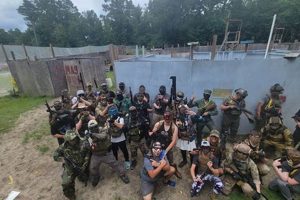
Teamwork is a fundamental element of this recreational activity, significantly impacting success and overall engagement. Effective collaboration and coordinated strategies are paramount for achieving objectives and overcoming opponents.
- Communication and Coordination
Clear and concise communication is essential for conveying information, coordinating movements, and adapting to changing battlefield conditions. Pre-planned signals, designated callouts, and real-time updates enable teams to execute complex strategies and react effectively to unforeseen circumstances. Successful teams prioritize open channels of communication and foster a culture of information sharing.
- Role Specialization and Task Delegation
Teamwork benefits from the assignment of specialized roles based on individual skills and strengths. Snipers, assault specialists, and support personnel each contribute unique capabilities to the team’s overall effectiveness. Clear task delegation ensures that responsibilities are distributed efficiently, minimizing overlap and maximizing productivity. Recognizing and leveraging individual strengths enhances the team’s adaptability and resilience.
- Strategic Planning and Adaptability
Developing comprehensive strategies that account for various scenarios is crucial for achieving objectives. Teams that can anticipate opponent tactics, adapt their plans on the fly, and coordinate their movements effectively gain a significant advantage. This requires a shared understanding of the game’s objectives, the field layout, and the team’s capabilities. The ability to quickly assess situations and implement contingency plans is a hallmark of successful teams.
- Mutual Support and Cover
Providing mutual support and cover is essential for maintaining momentum and minimizing casualties. Team members must be vigilant in protecting each other from flanking maneuvers and providing covering fire during advances. This requires a high degree of situational awareness and a willingness to prioritize the safety of teammates. Effective teams operate as a cohesive unit, prioritizing collective success over individual performance.
The integration of communication, role specialization, strategic planning, and mutual support underscores the integral relationship between teamwork and success within this combat simulation activity. Teams that prioritize these elements are better positioned to achieve their objectives, overcome obstacles, and foster a more engaging and rewarding experience for all participants.
2. Strategy

The incorporation of strategic planning and tactical execution is integral to competitive engagement in this activity. Successful participation transcends mere marksmanship, necessitating comprehensive strategic approaches to maximize effectiveness and achieve objectives.
- Field Domination via Terrain Utilization
Strategic terrain utilization directly impacts combat outcomes. Understanding sightlines, choke points, and natural cover allows teams to establish advantageous positions. Examples include utilizing elevated positions for overwatch, creating kill zones within narrow corridors, and employing flanking maneuvers through dense foliage. Proficiency in terrain management enables control over engagement zones and restricts opponent mobility, impacting objective attainment.
- Resource Allocation and Objective Prioritization
Strategic allocation of personnel, equipment, and time resources significantly influences success. Teams must prioritize objectives based on their strategic value and resource requirements. An example includes concentrating forces to secure a critical control point while diverting limited resources to defend less strategically important areas. Efficient resource allocation maximizes operational effectiveness and minimizes vulnerabilities.
- Information Gathering and Intelligence Analysis
Acquiring and analyzing intelligence regarding opponent positioning, capabilities, and intentions is critical for informed decision-making. Scouting patrols, observation posts, and communication intercepts can provide valuable information. For instance, identifying an opponent’s reliance on a specific tactic or identifying a weak point in their defensive perimeter allows for targeted counter-strategies. Effective intelligence analysis reduces uncertainty and improves the probability of successful outcomes.
- Adaptation and Contingency Planning
Adaptability to unforeseen circumstances and the implementation of contingency plans are essential for maintaining operational momentum. Unexpected opponent maneuvers, equipment malfunctions, or changes in environmental conditions require rapid adjustments to strategy. A team prepared with alternative plans for various scenarios can mitigate setbacks and capitalize on emerging opportunities. Flexibility and foresight are hallmarks of effective strategic implementation.
These strategic facets, encompassing terrain management, resource allocation, intelligence analysis, and adaptability, are inextricably linked to success within the simulated combat environment. The effective application of these principles distinguishes proficient participants from those relying solely on reactive measures, emphasizing the importance of strategic thinking in achieving objectives and maximizing engagement outcomes.
3. Equipment

Equipment is a critical determinant of performance, safety, and authenticity within this recreational activity. The selection, maintenance, and responsible use of equipment directly influence a participant’s ability to effectively engage in simulated combat scenarios, while also mitigating risks associated with projectile-based interactions. Inadequate or improperly maintained equipment can lead to performance deficiencies, safety hazards, and a diminished overall experience. For instance, the utilization of low-quality eye protection can result in severe injury from projectile impacts, while a malfunctioning airsoft gun can disrupt tactical operations and compromise a team’s objective completion.
The diversity of available equipment allows participants to tailor their gear to specific roles, play styles, and field conditions. Airsoft guns vary in terms of power, accuracy, and rate of fire, enabling players to select weaponry suited to close-quarters engagements or long-range reconnaissance. Tactical gear, such as vests, pouches, and communication devices, facilitates the efficient carrying and deployment of ammunition, medical supplies, and communication assets. Proper equipment management, including routine cleaning, lubrication, and component inspection, ensures reliable operation and extends the lifespan of equipment, reducing the likelihood of malfunctions during critical moments. Adherence to field-specific regulations regarding maximum projectile velocity and permissible equipment modifications is also essential for maintaining safety and fair play.
Ultimately, the responsible acquisition, maintenance, and utilization of appropriate equipment are fundamental to safe and effective participation in this simulated combat activity. Comprehending the performance characteristics of various equipment types, coupled with a commitment to safety protocols and adherence to field regulations, enhances the experience, reduces risks, and promotes fair play. The connection between well-maintained and properly utilized equipment and the positive outcome of this game is undeniable and directly impacts both individual and team performance.
4. Safety protocols

Adherence to comprehensive safety protocols is paramount within this simulated combat activity, mitigating inherent risks associated with projectile-based engagements. These protocols serve to protect participants from potential injuries and ensure a safe and enjoyable environment for all.
- Mandatory Eye Protection
The use of certified eye protection, specifically designed to withstand projectile impacts, is non-negotiable. This protocol prevents potentially blinding injuries from airsoft projectiles. Field regulations uniformly mandate full seal goggles or masks meeting ANSI Z87.1 standards or equivalent.
- Velocity Limitations and Chronographing
Airsoft guns are subject to strict velocity limits, typically measured in feet per second (FPS) using 0.20g BBs. Fields utilize chronographs to verify compliance with established limits, preventing the use of excessively powerful guns that could cause injury. Specific FPS limits often vary depending on the type of airsoft gun and the engagement distances permitted on the field.
- Minimum Engagement Distances
To mitigate the risk of close-range injuries, minimum engagement distances (MEDs) are often implemented. These distances specify the minimum separation required before firing upon another participant. Exceeding projectile velocity may require an extended MED.
- Safe Zones and Barrel Covers
Designated safe zones, where airsoft guns must be unloaded and placed in safe mode, provide a controlled environment for equipment handling and rest. Barrel covers or plugs are required to prevent accidental discharges within these zones. This protocol ensures the safe handling of equipment outside of active gameplay.
The aforementioned safety protocols, encompassing mandatory eye protection, velocity limitations, minimum engagement distances, and designated safe zones, are indispensable components of responsible activity participation. Strict adherence to these guidelines minimizes the risk of injury and fosters a culture of safety and respect among participants. Continual reinforcement and rigorous enforcement of these protocols are crucial for maintaining a safe and enjoyable experience for all involved in this recreational pursuit.
5. Field Tactics

Field tactics within this recreational activity are the practical application of strategic principles to achieve specific objectives during gameplay. The effective utilization of field tactics differentiates experienced participants from novices, transforming theoretical strategies into tangible in-game advantages. Sound tactical execution directly contributes to mission success, team cohesion, and individual performance.
- Cover and Concealment
The employment of cover and concealment constitutes a fundamental tactical element. Cover provides physical protection from projectile impacts, while concealment obscures a participant’s position from visual detection. Examples include utilizing natural terrain features such as trees and rocks, or deploying artificial barriers such as barricades and vehicles. Skillful utilization of cover and concealment minimizes exposure to enemy fire, increases survivability, and facilitates tactical movement.
- Flanking Maneuvers
Flanking maneuvers involve approaching an opponent from their side or rear, bypassing their direct line of sight and exploiting vulnerabilities in their defensive posture. Successful flanking requires coordinated team movements, effective communication, and a thorough understanding of the terrain. Examples include diverting a small team to encircle an enemy position, or utilizing stealth tactics to approach an unsuspecting opponent from an unexpected angle. Flanking maneuvers disrupt enemy formations, create opportunities for advantageous engagements, and can lead to the swift capture of objectives.
- Fire and Movement
The coordinated application of fire and movement allows teams to advance across open ground while minimizing exposure to enemy fire. Suppressing fire is used to disrupt the enemy’s ability to accurately target moving teammates, while advancing players provide covering fire in return. This tactic requires precise timing, effective communication, and a clear understanding of the team’s objectives. Fire and movement enables teams to overcome defensive positions, secure key terrain features, and maintain momentum during offensive operations.
- Breaching Tactics
Breaching tactics are employed to penetrate fortified positions or structures, allowing teams to gain access to restricted areas or eliminate entrenched opponents. These tactics often involve the use of specialized equipment, such as breaching tools or explosives, as well as coordinated team movements and communication. Examples include utilizing a battering ram to force open a door, or employing a smoke screen to mask an assault team’s approach. Effective breaching tactics require careful planning, precise execution, and a thorough understanding of the target’s layout and defenses.
These tactical elementscover utilization, flanking maneuvers, fire and movement coordination, and breaching tacticscollectively define the practical application of strategic principles within this recreational combat simulation. Proficiency in these tactics elevates individual and team performance, enabling participants to effectively navigate complex scenarios, overcome challenges, and achieve their objectives within the immersive environment.
6. Regulations

The operational framework of this recreational activity is fundamentally shaped by a network of regulations. These rules, enacted by field operators, governing bodies, and jurisdictional authorities, directly influence participant behavior, equipment specifications, and overall safety parameters. Strict adherence to these regulations is not merely a suggestion; it is a prerequisite for participation and a cornerstone of responsible conduct within the activity. Failure to comply can result in penalties ranging from temporary suspension to permanent expulsion, emphasizing the critical role of regulations in maintaining order and ensuring fair play. These rules, while varying by location, typically address projectile velocity limits, minimum engagement distances, mandatory safety gear, and prohibited modifications to equipment. For instance, most fields mandate chronographing airsoft guns prior to gameplay to verify compliance with established velocity limits, preventing the use of excessively powerful weaponry that could cause injury. Furthermore, regulations often prohibit the use of full-automatic firing modes in certain areas, restricting gameplay to semi-automatic fire to reduce the risk of uncontrolled projectile discharge.
The implementation and enforcement of regulations are crucial for mitigating potential risks and fostering a culture of responsibility. Consider, for example, instances where fields lacking rigorous safety protocols have experienced preventable injuries. In such cases, the absence of velocity checks, minimum engagement distance enforcement, or mandatory eye protection has directly contributed to participant harm. Conversely, fields with comprehensive and strictly enforced regulations have demonstrated a significantly lower incidence of injuries, underscoring the direct correlation between regulatory rigor and participant safety. These rules are also in place to maintain a fair game with everyone. Equipment regulation prevent a player to have unfair advantages, and the game outcome should be determined by skill. Regulations pertaining to the activity also serves to protect communities where the activity takes place, by ensuring the imitation firearm used isn’t brought or displayed in public.
In conclusion, regulations are not merely ancillary guidelines but integral components of this recreational activity. They serve as the bedrock upon which safety, fair play, and responsible conduct are founded. The consistent application and enforcement of these rules are essential for safeguarding participants, promoting a positive environment, and ensuring the long-term sustainability of the activity. A thorough understanding of and adherence to regulations are therefore paramount for all individuals engaging in this simulated combat pursuit.
7. Skill

Skill represents a confluence of learned techniques, innate abilities, and strategic understanding critical for effective participation. Competency in this pursuit extends beyond mere equipment ownership, demanding a multifaceted skillset that influences both individual and team performance.
- Marksmanship and Precision
Accurate and precise projectile placement is foundational to success. This encompasses proficiency in aiming, trigger control, and recoil management, adapted to varying distances and target sizes. Mastery of these techniques enables the consistent elimination of opponents and the effective suppression of enemy positions. Drills involving target practice and range estimation are crucial for honing these skills. A marksman can disrupt a coordinated advance or neutralize a high-value target, altering the course of a match.
- Tactical Movement and Positioning
Effective movement and positioning are vital for navigating the field, evading detection, and securing advantageous firing positions. This includes understanding terrain features, utilizing cover and concealment, and coordinating movements with teammates. Skilled movement minimizes exposure to enemy fire and maximizes opportunities for flanking maneuvers and surprise attacks. Players adept at tactical movement can effectively control engagement zones and dictate the pace of the game.
- Communication and Coordination
Clear and concise communication is essential for coordinating team movements, relaying information, and adapting to changing battlefield conditions. This requires a shared understanding of tactical terminology, the ability to quickly assess situations, and the capacity to effectively communicate plans and observations to teammates. A team with strong communication skills can execute complex strategies, react effectively to unforeseen circumstances, and maintain cohesion under pressure.
- Strategic Decision-Making
The ability to analyze the battlefield, assess risks and opportunities, and make sound tactical decisions is crucial for achieving objectives. This encompasses understanding game dynamics, anticipating opponent movements, and adapting strategies based on available information. Skilled strategists can identify weaknesses in enemy defenses, exploit vulnerabilities, and guide their team towards victory. Effective decision-making requires a combination of experience, intuition, and analytical reasoning.
Collectively, these facets of skillmarksmanship, tactical movement, communication, and strategic decision-makingdefine a competent and effective participant. Mastery of these elements transforms a recreational engagement into a strategic contest, highlighting the central role of skill in achieving success and fostering a challenging and rewarding experience.
Frequently Asked Questions about Sport Airsoft
This section addresses common inquiries regarding this recreational activity, providing factual information and clarifying misconceptions.
Question 1: Is it inherently dangerous?
This activity inherently involves projectile weaponry, but it is not inherently dangerous when conducted with adherence to established safety protocols. Mandatory eye protection, velocity limits, and minimum engagement distances significantly mitigate the risk of injury.
Question 2: Is it exclusively for military enthusiasts?
While some participants may have an interest in military simulations, it is not exclusively for military enthusiasts. It is a recreational activity enjoyed by individuals of diverse backgrounds seeking strategic engagement, physical activity, and teamwork opportunities.
Question 3: Is it legal?
Legality varies by jurisdiction. Many regions permit the possession and use of airsoft guns, subject to specific regulations regarding age restrictions, transportation protocols, and permissible modifications. Participants should verify compliance with local laws prior to engaging in the activity.
Question 4: How realistic are airsoft guns?
Airsoft guns are designed to resemble real firearms aesthetically, but they fire low-energy plastic projectiles and are not capable of causing lethal harm. While the appearance may be realistic, the operational mechanisms and intended use differ significantly from those of actual firearms.
Question 5: What are the essential equipment requirements?
Essential equipment includes certified eye protection, an airsoft gun compliant with field velocity limits, appropriate attire for the playing environment, and ammunition. Additional gear, such as tactical vests and communication devices, may enhance performance but are not universally required.
Question 6: How can one locate reputable fields?
Reputable fields typically maintain active online presence, showcasing safety protocols, field regulations, and participant testimonials. Verification of insurance coverage, adherence to industry standards, and positive reviews from experienced players are indicators of a reliable and professional field operation.
In summation, the activity presents a recreational opportunity characterized by strategic engagement, teamwork, and physical activity, provided that participants prioritize safety, adhere to regulations, and engage responsibly.
The succeeding section will explore the future trajectory of this activity.
Sport Airsoft
This exploration has examined the multifaceted nature of sport airsoft, highlighting its blend of tactical acumen, equipment proficiency, and adherence to stringent safety regulations. From its emphasis on teamwork and communication to the critical role of strategic decision-making and skillful execution, the activity presents a challenging and engaging recreational pursuit. The importance of responsible participation, including compliance with field rules and ethical gameplay, has been consistently underscored.
As the activity continues to evolve, its sustained growth hinges on a collective commitment to safety, integrity, and innovation. Participants are encouraged to prioritize responsible engagement, contributing to a positive and sustainable future for sport airsoft. Continued adherence to best practices and proactive adaptation to emerging trends will ensure its ongoing relevance and appeal within the broader landscape of recreational activities.