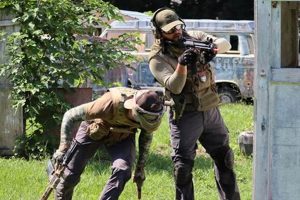
A popular online entertainment group has expanded its content creation to include simulated combat scenarios utilizing realistic toy weapons. These activities often feature trick shots, challenges, and competitions, appealing to a broad audience interested in both sports entertainment and simulated military exercises. An example involves participants attempting to hit targets from various distances or perform complex maneuvers while engaging in mock battles.
The significance of this type of content lies in its ability to blend athleticism, creativity, and strategic thinking. It provides entertainment while also potentially introducing viewers to aspects of teamwork and problem-solving often associated with tactical simulations. Historically, such staged engagements have gained traction as an accessible and less intense alternative to more traditional forms of combat sports or military training exercises.
This article will now delve into the specific equipment used, the rules typically implemented, and the overall impact this form of entertainment has on its audience, as well as the broader implications related to safety and responsible recreation.
Tactical Engagement Guidance
The following sections provide guidelines for enhancing performance and enjoyment in recreational simulated combat activities. Emphasis is placed on safety, strategic play, and equipment proficiency.
Tip 1: Field Awareness is Paramount. Maintaining constant observation of the surrounding environment is critical. Identifying potential threats and advantageous positions before engagement allows for a more calculated and effective approach. Examples include noting pathways, cover locations, and high ground.
Tip 2: Prioritize Protective Equipment. Full-face protection, including eye and mouth guards, is non-negotiable. Injuries to the face and eyes can be severe. Additional padding for vulnerable areas like knees and elbows is recommended for enhanced safety during movement and engagements.
Tip 3: Master Weapon Handling. Familiarity with the specific toy weapon being used is essential. Practice reloading, aiming, and adjusting hop-up systems to achieve optimal range and accuracy. Consistent practice translates to improved performance under pressure.
Tip 4: Communication is Key. Clear and concise communication with teammates is vital for coordinated maneuvers. Establish agreed-upon terms and signals to relay information quickly and efficiently. Effective communication mitigates confusion and enhances tactical effectiveness.
Tip 5: Utilize Cover Effectively. Employ available cover strategically to minimize exposure to incoming projectiles. Move between cover positions methodically and avoid prolonged exposure in vulnerable locations. Mastering cover techniques significantly reduces the risk of being hit.
Tip 6: Movement Techniques. Practice low-profile movement, such as crouching or crawling, to minimize visibility. Utilize flanking maneuvers to gain a tactical advantage over opponents. Efficient and unpredictable movement patterns can disrupt enemy formations and create opportunities.
Tip 7: Know the Rules of Engagement. Strict adherence to established rules is crucial for fair play and safety. Understand the boundaries, objective parameters, and prohibited actions of the playing field. Violations of the rules can result in penalties or disqualification.
These tactical considerations underscore the importance of safety, strategy, and skillful execution in simulated combat scenarios. Applying these principles enhances not only individual performance but also the overall experience for all participants.
The subsequent section will address common errors and how to avoid them, further refining participant skills.
1. Teamwork

In simulated combat scenarios, such as those popularized online, effective teamwork is not merely advantageous but fundamentally essential for success. The complexities of objective-based gameplay and coordinated maneuvers necessitate a cohesive unit working towards a common goal.
- Communication and Coordination
Clear and consistent communication forms the bedrock of any successful team effort. In the context of these simulated engagements, this translates to relaying information about enemy positions, planned movements, and potential threats. Coordinated strategies, such as flanking maneuvers or coordinated pushes, are only viable with precise and timely communication.
- Role Specialization and Division of Labor
Teams often benefit from assigning specific roles based on individual strengths and skills. Some participants may excel at reconnaissance and information gathering, while others are better suited for aggressive assaults or defensive positions. A well-defined division of labor maximizes the team’s overall effectiveness by leveraging the unique capabilities of each member.
- Strategic Planning and Execution
Before and during engagements, teams must develop and implement strategic plans. This involves analyzing the terrain, anticipating enemy movements, and coordinating actions to achieve specific objectives. Successful strategic planning requires input from all team members and a clear understanding of the overall game plan.
- Adaptability and Improvisation
Even the best-laid plans can be disrupted by unforeseen circumstances. The ability to adapt to changing conditions and improvise solutions is crucial for maintaining momentum and overcoming challenges. This requires team members to be flexible, resourceful, and capable of making quick decisions under pressure.
The multifaceted nature of teamwork, encompassing communication, specialization, planning, and adaptability, directly impacts a team’s ability to achieve its objectives. Its influence can be compared to the cohesion seen in traditional sports or military operations, where coordinated action is paramount. These insights underscore the significance of promoting teamwork as a core aspect of simulated combat activities.
2. Trick Shots

The inclusion of elaborate and skillful projectile manipulations, commonly termed “trick shots,” within simulated combat entertainment contributes significantly to its viewership appeal and perceived entertainment value. These demonstrations of skill, often defying conventional expectations, serve to augment the basic premise of simulated engagements with an added layer of spectacle.
- Skillful Manipulation Demonstrations
This aspect focuses on the exhibtion of expertise in handling projectile-based devices to achieve outcomes beyond standard operational parameters. Examples include ricocheting projectiles off multiple surfaces to hit a distant target, firing from unconventional stances, or executing rapid-fire sequences with precision. The successful execution of these maneuvers demonstrates a high level of proficiency and control.
- Novelty and Spectacle
The unexpected nature of these maneuvers creates a sense of novelty and spectacle, capturing the attention of viewers accustomed to more conventional depictions of simulated combat. The element of surprise inherent in each shot contributes to the entertainment value, differentiating this form of content from straightforward gameplay videos.
- Technical Proficiency Integration
Trick shots often require a deep understanding of the physics involved, including projectile trajectory, wind resistance, and the capabilities of the equipment being used. The successful incorporation of these technical elements elevates the perceived skill level of the participants and adds a layer of complexity to the entertainment.
- Replicability Encouragement
While the complexity of some trick shots may appear daunting, the presentation often encourages viewers to attempt similar maneuvers themselves. This fosters a sense of engagement and participation, blurring the line between passive observation and active involvement in the simulated combat experience.
In summary, the strategic integration of trick shots into simulated combat entertainment serves to enhance its appeal by showcasing skill, adding novelty, demonstrating technical proficiency, and encouraging viewer engagement. This element distinguishes the content from conventional gameplay and contributes to its broad popularity, further adding value.
3. Equipment Safety

The safe and responsible use of equipment is a paramount concern in simulated combat activities, particularly those popularized by online entertainment groups. The potential for injury, while mitigated by the nature of the projectiles, necessitates strict adherence to safety protocols. A failure to prioritize equipment safety can result in physical harm to participants, damage to property, and a negative perception of the activity as a whole. For example, improper use of protective eyewear can lead to serious eye injuries, and modifications to toy weapons that increase projectile velocity can result in more severe impacts.
The link between safety and positive engagement is evident. When participants feel secure in the knowledge that proper precautions are in place, they are more likely to fully engage in the activity and enjoy the experience. Furthermore, adherence to equipment safety standards serves as a positive role model for viewers, especially younger audiences. Responsible content creation emphasizes not only the exciting aspects of simulated combat, but also the importance of safe practices, such as wearing appropriate protective gear and following established guidelines for weapon handling. This approach contributes to a more informed and responsible community.
Ultimately, a comprehensive understanding of equipment safety is not merely a procedural requirement, but a fundamental aspect of ensuring a positive and sustainable simulated combat experience. By prioritizing safety, participants and content creators demonstrate a commitment to responsible engagement, safeguarding the well-being of individuals and promoting a positive image of the activity within the broader community. This emphasis on safety contributes to the longevity and acceptance of simulated combat as a legitimate form of recreation and entertainment.
4. Strategic Play

Strategic play is fundamental to the engagement witnessed within simulated combat scenarios, mirroring elements found in tactical simulations and competitive sports. The application of strategic thinking elevates the experience beyond simple marksmanship, introducing layers of complexity and requiring participants to consider not only individual skill but also team dynamics, terrain analysis, and resource management. This strategic element is often a core component of the entertainment, creating scenarios that reward careful planning and execution. An example is a capture-the-flag game where one team employs a diversionary tactic to draw opponents away from the actual objective, while another team executes a swift and concealed maneuver to secure the flag. The success of such a maneuver depends on effective communication, coordinated movement, and an understanding of the opposing team’s likely response.
The importance of strategic play can be further seen in the selection and utilization of equipment. Teams might choose loadouts tailored to specific roles, such as snipers providing overwatch, assault units engaging in close-quarters combat, or support personnel providing covering fire. Moreover, the terrain itself becomes a crucial factor in strategic decision-making. Teams that effectively utilize cover, concealment, and choke points gain a significant advantage over those who prioritize direct confrontation. This emphasis on strategic thinking is a defining characteristic of the simulated combat videos, often showcased through post-game analysis or slow-motion replays highlighting key strategic decisions. For instance, a team might set up a defensive perimeter around a key objective, anticipating an enemy assault and preparing to funnel them into a pre-determined kill zone. Another scenario involves teams strategically placing mines or other obstacles to disrupt enemy movement and create opportunities for ambushes.
In conclusion, strategic play within these simulated scenarios is not merely an ancillary component, but rather a central element that distinguishes it from other forms of entertainment. This element introduces tactical depth, rewards planning and execution, and promotes teamwork. The inclusion of strategic play enhances the overall viewing experience, creating content that is engaging, informative, and reflective of tactical thought processes found in more serious contexts. Understanding the relationship between strategic play and the appeal of simulated combat activities is crucial for participants seeking to improve their performance and for viewers seeking to appreciate the nuances of the activity.
5. Content Creation

Content creation is intrinsically linked to the phenomenon, driving its popularity and shaping its perception. The simulated combat activities, often involving trick shots and strategic engagements, are designed with the explicit intent of being captured and disseminated through online platforms. This process transforms a recreational activity into a form of entertainment, expanding its reach and influencing its appeal. For example, video editing, soundtrack, and special effects are applied to elevate the level of entertainment to the content.
The impact of content creation extends beyond mere documentation; it influences the very nature of the activity. Participants are often incentivized to perform elaborate maneuvers or engage in visually striking tactics specifically for the camera. This can lead to both creative innovation and potential safety compromises, highlighting the need for responsible content production practices. Consider, for instance, the development of increasingly complex trick shots requiring specialized equipment or the staging of scenarios with heightened dramatic effect. Also, safety aspect should be consider when content creation is ongoing with the participants to avoid accident.
In summary, content creation serves as a pivotal element. It enhances and shapes public perception, and presents both opportunities and responsibilities for participants. Understanding this relationship is crucial for analyzing the appeal of the recreational simulated combat sector and for promoting safe and ethical practices within this form of entertainment.
6. Recreational Sport
The categorization of simulated combat activities, as popularized by the online group, Dude Perfect, as a “recreational sport” warrants examination. The designation carries implications for participant engagement, safety regulations, and the activity’s overall perception. It also invites comparisons to established recreational sports and tactical simulation activities.
- Physical Activity and Exertion
While often perceived primarily as a strategic endeavor, simulated combat involves physical activity. Participants engage in running, crouching, and tactical movements across varied terrains. This physical exertion contributes to its classification as a sport, albeit one with a lower intensity compared to traditional athletic pursuits. The degree of exertion varies with the playing field, the duration of the game, and the intensity of engagement.
- Skill Development and Mastery
Recreational sports often involve the development of specific skills. In simulated combat, participants refine their marksmanship, tactical awareness, and communication skills. Continuous engagement leads to improved accuracy, strategic decision-making, and team coordination. This skill development provides participants with a sense of accomplishment and progression.
- Social Interaction and Team Dynamics
Like many recreational sports, simulated combat promotes social interaction and teamwork. Participants collaborate with teammates, strategize together, and rely on each other to achieve common objectives. This fosters camaraderie and a sense of belonging within the group. Teams must function cohesively, coordinating their movements and communication to gain a tactical advantage.
- Rule Adherence and Fair Play
Adherence to established rules and principles of fair play is integral to any recreational sport. Simulated combat activities operate under agreed-upon guidelines regarding equipment usage, boundaries, and engagement protocols. These rules ensure a safe and equitable playing environment for all participants. Violations of these rules can result in penalties or disqualification, reinforcing the importance of ethical conduct.
The identified facets underscore the connection between Dude Perfect’s simulated combat content and the broader category of recreational sports. While differing from conventional sports in its emphasis on tactical simulation, it shares key characteristics related to physical activity, skill development, social interaction, and adherence to rules. These shared attributes justify its consideration as a form of recreational sport, offering participants a blend of physical challenge, strategic thinking, and social engagement.
Frequently Asked Questions Regarding Simulated Combat Activities
The following section addresses common inquiries and clarifies misconceptions related to simulated combat engagements often associated with the “Dude Perfect Airsoft” search term. The information provided aims to offer a clear and objective understanding of the subject matter.
Question 1: What distinguishes simulated combat from actual military training?
Simulated combat activities, while often incorporating tactical elements, are designed for recreational purposes and lack the intensity, risks, and comprehensive training objectives of professional military exercises. The equipment used is generally less powerful, and the scenarios are typically staged for entertainment value.
Question 2: Are there age restrictions for participation?
Age restrictions vary depending on the specific location, event organizer, and local regulations. However, most organized simulated combat activities require participants to be at least a certain age (e.g., 16 or 18) due to safety considerations and the potential for physical exertion.
Question 3: What types of protective gear are mandatory?
Full-face protection, including eye and mouth guards, is universally considered mandatory for participation. Additional protective gear, such as padding for knees and elbows, is strongly recommended to minimize the risk of injuries during movement and engagements.
Question 4: How are disputes or rule violations typically resolved?
Most organized events have designated referees or marshals responsible for enforcing the rules and resolving disputes. Participants are expected to adhere to the referees’ decisions and maintain a spirit of fair play.
Question 5: What is the typical range of toy weapons used in these activities?
The effective range of toy weapons varies depending on the specific model and modifications. However, most organized events impose limits on projectile velocity to ensure participant safety. The maximum effective range is typically within 100-200 feet.
Question 6: What are the common objective types?
Capture-the-flag, team deathmatch, and objective-based scenarios are prevalent. Each objective type introduces unique strategic challenges and requires different team compositions and tactics.
In summary, the key takeaways emphasize safety, responsible participation, and adherence to established guidelines. Understanding these aspects contributes to a more informed and positive engagement with simulated combat activities.
The following section will address legal implications.
Conclusion
This exploration of “dude perfect airsoft” has illuminated several key facets of the simulated combat entertainment landscape. The discussion encompassed elements ranging from strategic gameplay and content creation, to the significance of equipment safety and teamwork. The analysis further clarified the nuanced relationship between this recreational activity and the broader categorization of “sport,” addressing common misconceptions and providing insights into responsible engagement.
The future trajectory of “dude perfect airsoft,” and similar forms of simulated combat entertainment, hinges on a continued commitment to safety, ethical content creation, and the fostering of a responsible community. A sustained focus on these principles will contribute to the longevity and positive perception of this increasingly popular recreational activity. Consideration of legal limitations is advisable.