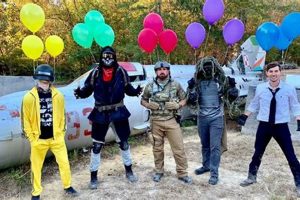
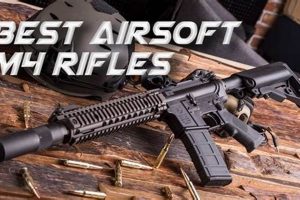
The activity in question involves simulated combat scenarios using realistic airsoft replicas within a designated and often elaborately themed playing area. These areas, designed to mimic conflict zones, frequently incorporate elements such as abandoned buildings, trenches, and natural obstacles to enhance the immersive experience. Participants typically engage in team-based objectives requiring strategic coordination and tactical maneuvering.
This form of recreational activity promotes teamwork, strategic thinking, and physical fitness. Its appeal lies in offering a safe and controlled environment to experience simulated military operations, fostering camaraderie and problem-solving skills. Historically, this type of simulated combat has evolved from simple backyard games to organized events with detailed rule sets and specialized equipment, demonstrating an increasing sophistication and popularity.
The following sections will delve deeper into specific aspects of this simulated combat activity. We will examine the required equipment, common game types, safety regulations, and strategies employed by participants to achieve success.
Effective Strategies for Simulated Combat Scenarios
Success in simulated combat environments requires careful planning and execution. The following guidelines offer strategic insights for maximizing effectiveness and enhancing the overall experience.
Tip 1: Prioritize Communication: Clear and concise communication among team members is crucial for coordinating movements and reacting effectively to evolving battlefield conditions. Establish pre-determined signals and utilize radios when available to maintain situational awareness.
Tip 2: Master Cover and Concealment: Employ available cover, such as walls, vehicles, and natural obstacles, to minimize exposure to enemy fire. Concealment, using foliage or camouflage, further reduces visibility and enhances survivability.
Tip 3: Understand Field Topography: Familiarize oneself with the playing field’s layout, including key terrain features, choke points, and potential ambush locations. This knowledge allows for strategic positioning and tactical advantages.
Tip 4: Employ Tactical Movement: Avoid predictable movements. Utilize bounding overwatch, flanking maneuvers, and suppression fire to gain positional advantage and disrupt enemy formations.
Tip 5: Maintain Equipment Proficiency: Regularly maintain and familiarize oneself with the operation of airsoft replicas and related gear. Consistent practice enhances accuracy, reload speed, and overall operational efficiency.
Tip 6: Adapt to the Situation: Be prepared to adjust strategies and tactics based on changing circumstances. Flexibility and adaptability are essential for overcoming unexpected challenges and achieving mission objectives.
Effective implementation of these strategies enhances survivability, tactical effectiveness, and overall enjoyment of simulated combat activities. Prioritizing communication, terrain awareness, and adaptability ultimately leads to improved performance.
The subsequent section will provide a detailed overview of safety protocols and equipment considerations critical to responsible participation in these activities.
1. Tactical environment
The tactical environment forms the foundational structure of simulated combat engagements, influencing strategic decisions and operational effectiveness. Understanding its components is paramount for participants.
- Terrain Features and Utilization
Terrain features, such as buildings, natural obstacles, and elevation changes, dictate movement patterns and firing positions. In a simulated warzone, mastering terrain utilization is essential for gaining a tactical advantage. For example, using a building as cover allows for protected movement and observation of the engagement area.
- Urban and Rural Landscapes
The distinction between urban and rural landscapes presents unique challenges. Urban settings offer close-quarters combat opportunities, while rural environments provide greater emphasis on concealment and long-range engagements. Recognizing these differences is crucial for adapting tactics and weapon selection. A simulated urban environment often features confined spaces requiring CQB tactics, while a rural setting may necessitate the use of longer-range replicas and camouflage.
- Environmental Conditions
Environmental conditions, including weather, visibility, and lighting, can significantly impact operations. Reduced visibility due to fog or darkness limits engagement ranges and favors close-quarters combat. Simulated environments that incorporate variable weather conditions add realism and complexity, demanding adjustments to tactical approaches. A scenario incorporating rain might necessitate adjustments to gear and movement techniques.
- Objective Placement and Layout
The placement and layout of objectives, such as capture points or strategic assets, directly influence tactical decision-making. Defending or attacking an objective requires coordinated teamwork and strategic positioning. Objective layouts that encourage flanking maneuvers or create choke points force players to adapt their tactics to achieve mission success. A strategically placed objective can dictate the flow of the entire engagement.
In conclusion, the tactical environment is a dynamic element in simulated combat activities. A thorough understanding of terrain, landscape, environmental conditions, and objective placement enables participants to develop effective strategies and enhance their overall performance. Furthermore, mastery of these elements contributes to a more immersive and realistic simulation experience.
2. Protective Equipment

The implementation of protective equipment is not merely an accessory within simulated combat activities, but an indispensable component critical to ensuring participant safety. The projectiles utilized, while non-lethal, can impart significant force upon impact. The consequences of inadequate or absent protective measures can range from minor contusions and abrasions to more severe injuries, including eye damage and dental trauma. Therefore, adherence to established protective equipment protocols is paramount. Failure to comply with minimum protective standards often results in exclusion from participation, underscoring the gravity of this requirement. A real-world example involves mandatory full-face masks that are to be worn to prevent eye injuries, a rule strictly enforced at organized events. The cause is the potential for eye damage, and the effect is the required use of full-face masks, highlighting the direct relationship between risk and protective measures.
Specific protective equipment requirements typically encompass eye protection, face protection, and often, body armor or padded clothing. Eye protection must meet or exceed established safety standards to withstand projectile impact without shattering or dislodging. Face protection is frequently mandated to safeguard the teeth and soft tissues of the face, particularly in close-quarters combat scenarios. Body armor or padded clothing serves to mitigate the impact force of projectiles, reducing the likelihood of bruising and discomfort. Furthermore, the type and extent of protective gear may vary depending on the specific regulations of the playing field or event organizer. Some organizations, for example, require the use of lower-face masks in addition to eye protection, while others allow for less restrictive options contingent upon the players age and experience level. The practical application of this understanding involves selecting appropriate gear that meets the requirements of the event while also maximizing comfort and maneuverability.
In summary, protective equipment is not optional but a fundamental requirement for participation in simulated combat activities. Its consistent and correct utilization mitigates the risk of injury, allowing participants to engage in the activity safely and responsibly. Challenges associated with protective equipment often involve comfort and mobility; however, these concerns must be balanced against the critical need for adequate protection. The overarching theme reinforces the importance of responsible participation and adherence to safety protocols, ensuring that the recreational aspects of the activity do not come at the expense of participant well-being.
3. Team communication
Team communication serves as the central nervous system within simulated combat scenarios, directly influencing operational effectiveness and mission success. The inherent complexity of simulated engagements, characterized by dynamic environments and evolving objectives, necessitates clear, concise, and timely information exchange among team members. Failure to establish robust communication protocols often leads to misinterpretations, delayed responses, and ultimately, mission failure. For instance, a team executing a flanking maneuver relies on constant communication to maintain coordination, avoid friendly fire, and capitalize on opportunities as they arise. Disrupted communication in this scenario can result in compromised positions, exposing team members to enemy fire and undermining the entire operation.
Effective communication in these settings extends beyond simple verbal exchanges. It encompasses pre-established signals, standardized terminology, and the utilization of communication devices, such as radios, to maintain situational awareness across the team. Tactical advantages gained through superior positioning or intelligence are rendered useless if this information is not effectively disseminated to all relevant personnel. Consider a team identifying an enemy stronghold; the timely relay of its location, size, and potential defenses allows the team to adjust its approach, coordinate an assault, and minimize casualties. This reliance on efficient information flow highlights the critical role of team communication in achieving strategic objectives.
In conclusion, team communication is not merely a desirable attribute but a foundational requirement for success in simulated combat environments. The ability to transmit and receive information accurately and rapidly directly impacts a team’s capacity to adapt to changing circumstances, coordinate actions, and achieve mission objectives. Addressing challenges related to communication, such as signal interference or language barriers, is essential for maintaining operational effectiveness. The connection between effective communication and mission success underscores its importance in enhancing both the safety and the enjoyment of simulated combat activities, solidifying its position as a critical component within this dynamic and engaging recreational pursuit.
4. Objective focus
Objective focus constitutes a core tenet within simulated combat scenarios. It shapes tactical decision-making, resource allocation, and ultimately, mission outcomes. Its significance in the context of such activities underscores the necessity for participants to maintain a consistent orientation toward pre-defined goals.
- Strategic Prioritization
Strategic prioritization involves assessing multiple objectives and allocating resources based on their relative importance to overall mission success. In simulated combat activities, this may involve prioritizing the capture of a key strategic point over eliminating a small group of opposing forces. The consequences of misaligned priorities can lead to resource depletion and failure to achieve critical objectives. This means resources, such as manpower or tactical advantages, are purposefully assigned to key aspects.
- Tactical Adaptation
Tactical adaptation refers to the ability to modify strategies and tactics in response to changing battlefield conditions while maintaining a clear focus on mission objectives. Participants must be able to adjust their plans based on enemy movements, environmental factors, and unforeseen circumstances without losing sight of the overarching goal. This requires a high degree of flexibility and situational awareness. The ability to modify strategies and tactics in the middle of battle while keeping mission goals in mind.
- Resource Management
Effective resource management is essential for sustaining operational capabilities and achieving objectives in prolonged engagements. This includes managing ammunition, equipment, and personnel to ensure that resources are available when and where they are needed most. The efficient allocation of resources directly impacts a team’s ability to maintain offensive pressure and defend against enemy attacks. This is basically maintaining a balance of gear and personal to ensure successful attainment of targets.
- Situational Awareness
Maintaining comprehensive situational awareness is crucial for anticipating threats, identifying opportunities, and making informed decisions that support mission objectives. Participants must be able to gather and process information from multiple sources, including visual observation, communication with teammates, and intelligence reports, to develop a clear understanding of the battlefield situation. This holistic view enables them to make proactive decisions that align with overall mission objectives.
In summary, objective focus is a fundamental element of effective engagement in simulated combat activities. The integration of strategic prioritization, tactical adaptation, resource management, and situational awareness enables participants to enhance their performance and achieve mission objectives successfully. The pursuit of these objectives not only contributes to mission success but also enhances the overall experience and satisfaction derived from participation.
5. Replica handling

The responsible handling of airsoft replicas is paramount within simulated combat activities. It directly impacts participant safety and the integrity of the recreational environment. Improper handling can lead to accidental injuries, damage to equipment, and compromised safety protocols, undermining the intended realism and enjoyment of these activities.
- Safe Carry and Storage
Securely carrying and storing airsoft replicas prevents accidental discharges and unauthorized access. Transporting replicas in designated cases or bags, unloaded and with safety mechanisms engaged, minimizes the risk of unintentional harm. In designated safe zones or staging areas, replicas should be stored in a secure manner, preventing tampering or misuse. A common practice involves using locked cases for transport and designated weapon racks in safe zones, mitigating the potential for accidental activation or theft.
- Proper Loading and Unloading Procedures
Adhering to established loading and unloading procedures reduces the risk of accidental discharge during gameplay. Before entering or exiting the playing field, replicas should be unloaded and magazines removed. Ensuring that the firing chamber is clear and the safety is engaged before storage or transportation prevents unintended activation. A standard protocol includes visually inspecting the chamber and magazine well to verify that no projectiles remain, confirming the replica’s safe condition.
- Target Discipline and Awareness
Maintaining target discipline and awareness is crucial for preventing unintended injuries to fellow participants. Airsoft replicas should only be aimed at designated targets within the playing field, avoiding any intentional or reckless targeting of individuals outside the boundaries of engagement. Participants should exercise caution and confirm the target’s identity and position before discharging a replica, mitigating the risk of friendly fire or accidental harm to spectators. This involves adhering to clearly defined engagement rules and respecting designated safe zones.
- Maintenance and Inspection
Regular maintenance and inspection of airsoft replicas ensure their proper functioning and prevent malfunctions that could lead to injuries. Inspecting replicas for damaged components, such as broken sights or malfunctioning safeties, allows for timely repairs and prevents operational failures during gameplay. Lubricating moving parts, cleaning barrels, and testing functionality contribute to reliable performance and mitigate the risk of unexpected malfunctions that could compromise safety. This involves adherence to manufacturer guidelines and regular servicing to maintain optimal performance and safety standards.
Responsible replica handling is fundamental to safe and enjoyable participation in simulated combat activities. By emphasizing secure carry, proper loading procedures, target discipline, and regular maintenance, participants contribute to a secure and respectful playing environment. These practices reinforce the importance of adherence to established safety protocols and enhance the overall experience, fostering a sense of responsibility and respect within the community.
6. Adherence rules

Within the context of simulated combat, adherence to established rules serves as the cornerstone of safety and fair play. The activity, by its very nature, involves simulated conflict; therefore, strict regulations are essential to mitigate the risk of injury and ensure a level playing field for all participants. These regulations encompass various aspects, including limitations on projectile velocity, designated safe zones, mandatory protective equipment, and acceptable engagement distances. A disregard for these rules can result in unintended injuries, disputes among participants, and ultimately, the disruption of the activity.
The importance of adherence extends beyond mere safety considerations. It also influences the integrity of the simulated experience. Rules governing engagement scenarios, objective completion, and replica modifications are designed to maintain a balance between realism and fairness. For example, restrictions on replica power output prevent participants from gaining an unfair advantage through overpowered equipment, while rules regarding respawn locations and objective capture zones ensure a balanced and engaging gameplay experience. The absence of these rules can lead to an imbalanced and frustrating experience, diminishing the enjoyment for all involved. Instances of non-compliance, such as exceeding projectile velocity limits, can result in equipment confiscation or expulsion from the activity, illustrating the serious consequences of rule violations.
In conclusion, adherence to established rules is not optional but a fundamental requirement for responsible participation in simulated combat activities. It directly impacts safety, fairness, and the overall integrity of the recreational experience. Challenges associated with enforcement and interpretation of rules must be addressed through clear communication, consistent application, and a commitment to fostering a culture of respect and responsible gameplay. The understanding of this connection solidifies the value of rules in ensuring a safe and immersive environment.
Frequently Asked Questions About Warzone Airsoft
The following questions and answers address common inquiries regarding simulated combat activities. These responses aim to provide clear and concise information to prospective participants and interested observers.
Question 1: What distinguishes a simulated combat activity from paintball?
The primary distinctions lie in the projectiles used and the level of realism sought. Simulated combat activities utilize 6mm or 8mm plastic BBs, replicating the appearance and operation of real firearms, whereas paintball employs larger, paint-filled projectiles. These factors contribute to a greater emphasis on tactical realism in simulated environments.
Question 2: What are the minimum age requirements for participation?
Age requirements vary depending on the specific event organizer and local regulations. Generally, participants below the age of 18 are required to have parental consent, and some events may impose stricter age limits due to safety considerations. Potential participants are strongly advised to verify the specific age requirements prior to registration.
Question 3: What types of protective equipment are mandatory?
Mandatory protective equipment typically includes full-seal eye protection that meets established safety standards. Many events also require full-face protection to safeguard against dental and facial injuries. Additional protective gear, such as padded clothing or tactical vests, is often recommended but may not be universally mandated.
Question 4: What are the common velocity limits for airsoft replicas?
Velocity limits, measured in feet per second (FPS) with 0.20g BBs, vary depending on the type of replica and the intended role in the activity. Indoor facilities often impose lower FPS limits than outdoor venues, and specific weapon classes, such as sniper rifles, may be subject to higher restrictions. The set Velocity limit is enforced to ensure participant safety.
Question 5: What types of gameplay scenarios are typically encountered?
Gameplay scenarios vary widely, encompassing both objective-based missions and team deathmatch formats. Common objectives include capturing strategic points, rescuing hostages, and infiltrating enemy bases. Some events incorporate elaborate storylines and role-playing elements to enhance the immersive experience.
Question 6: What are the potential risks associated with simulated combat activities?
While these activities are generally safe when conducted responsibly, potential risks include eye injuries, facial injuries, sprains, and contusions. Adherence to safety protocols, including the consistent use of protective equipment and responsible replica handling, significantly mitigates these risks.
In summary, responsible participation, strict adherence to safety regulations, and a thorough understanding of established rules are essential for a safe and enjoyable experience. Potential participants are encouraged to seek additional information from event organizers and experienced players.
The following section will explore advanced tactical strategies and equipment modifications relevant to simulated combat engagements.
Conclusion
This exploration of “warzone airsoft” has covered core aspects of the activity, ranging from safety protocols and required equipment to tactical strategies and gameplay scenarios. Emphasis has been placed on understanding the rules, practicing responsible replica handling, and recognizing the importance of team communication in achieving mission objectives and maintaining a safe environment.
Continued advancements in replica technology and tactical gear will likely further enhance the immersive realism of “warzone airsoft,” but responsible participation remains paramount. Adherence to safety guidelines, respect for fellow participants, and a commitment to upholding the integrity of the activity will ensure its continued growth and acceptance as a legitimate and engaging recreational pursuit.