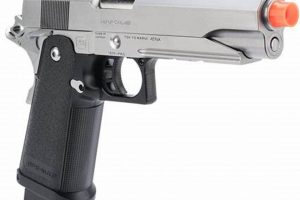
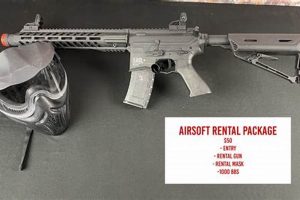
The practice involves using a readily available fuel source to power airsoft guns, specifically those designed to operate using compressed gas. This method offers an alternative to traditional green gas or CO2 cartridges. For example, certain models of airsoft pistols and rifles can be modified or are designed to utilize this readily available propellant.
Employing this alternative propellant can offer cost savings and increased accessibility, particularly in regions where green gas or CO2 cartridges are less readily available or more expensive. The historical context involves a search for efficient and affordable power sources within the airsoft community, leading to experimentation and adaptation of existing technologies.
The subsequent sections will delve into the advantages and disadvantages, safety considerations, suitable equipment, and maintenance procedures related to this particular approach to powering airsoft devices.
Guidance on Using Propane in Airsoft Applications
The following outlines essential points for the safe and effective employment of propane as a propellant source in airsoft. Strict adherence to these guidelines is crucial for preventing accidents and ensuring optimal performance.
Tip 1: Regulator Calibration: Accurately calibrate the regulator to the manufacturer’s recommended pressure settings for the specific airsoft gun model. Over-pressurization can lead to catastrophic failure of internal components.
Tip 2: Leak Detection: Routinely inspect all connections and fittings for leaks using a suitable leak detection solution. Even minor leaks can pose a fire hazard and reduce performance.
Tip 3: Ventilation is Critical: Ensure adequate ventilation when filling magazines. Propane is heavier than air and can accumulate in enclosed spaces, creating a potentially explosive atmosphere.
Tip 4: Lubrication Regimen: Maintain a consistent lubrication schedule for seals and O-rings. Propane can dry out rubber components, leading to leaks and reduced performance.
Tip 5: Storage Best Practices: Store propane tanks in a cool, dry, and well-ventilated area, away from direct sunlight and heat sources. Secure tanks to prevent tipping.
Tip 6: Adapter Compatibility Verification: Confirm that the adapter used to connect the propane tank to the magazine is compatible with both the tank and the magazine valve. Incompatible adapters can cause leaks and damage.
Tip 7: Magazine Filling Technique: When filling magazines, follow the manufacturers instructions precisely. Overfilling can lead to valve damage and inconsistent performance.
Careful implementation of these tips will contribute to a safer and more reliable usage experience. Consistent monitoring and adherence to safety protocols are paramount.
The concluding section will summarize the key advantages and disadvantages of utilizing propane as a propellant in airsoft, providing a comprehensive overview for informed decision-making.
1. Cost-effectiveness

Cost-effectiveness is a primary driver for considering propane as a propellant in airsoft. The financial implications of using alternative gases are significant, prompting many players to evaluate propane’s economic advantages.
- Lower Propellant Cost
Propane, readily available and widely used in various applications, typically exhibits a lower purchase price compared to specialized airsoft gases like green gas or CO2. This direct cost reduction translates to savings over time, particularly for frequent airsoft players. For example, a bulk purchase of propane can often yield a significantly lower cost per use compared to individual cans of green gas.
- Bulk Availability and Refilling
Propane is easily obtainable in bulk quantities, allowing for refilling smaller tanks or magazines. This eliminates the need for constantly purchasing disposable gas canisters. A standard 20-pound propane tank, commonly used for grills, can supply numerous airsoft magazine refills, dramatically reducing waste and ongoing expenses.
- Adapter Investment Recoupment
While an initial investment in a propane adapter and potentially a regulator is required, the long-term savings quickly offset this upfront cost. The ability to utilize a standard propane tank, readily available at hardware stores, provides a consistent and cost-effective source of propellant, rendering the initial investment worthwhile over repeated use.
- Reduced Operational Expenses
The overall operational expenses associated with airsoft can be significantly reduced by switching to propane. Frequent players who engage in prolonged skirmishes or training sessions benefit the most from this cost-saving measure. Savings can then be allocated to other airsoft gear, such as upgraded internal components or tactical accessories.
The cost-effectiveness of propane in airsoft stems from its lower purchase price, bulk availability, and the recoupment of initial adapter investments. This results in significantly reduced operational expenses, making propane a financially attractive propellant alternative for dedicated airsoft players.
2. Pressure regulation

The utilization of propane as a propellant in airsoft necessitates rigorous pressure regulation. Propane’s inherent pressure characteristics, significantly higher than those of typical airsoft-specific gases like green gas or CO2, pose a potential risk of damage to airsoft gun internals if left unmanaged. Unregulated propane can exert excessive force on valves, seals, and other components, leading to premature wear, malfunctions, or even catastrophic failures. A real-world example includes the bursting of a magazine due to overpressure, rendering it unusable and potentially causing injury. Therefore, pressure regulation is not merely an accessory but an essential safety and performance component within any propane-powered airsoft setup.
Effective pressure regulation is achieved through the implementation of a suitable regulator, typically integrated into the propane adapter system. This regulator functions to reduce the high-pressure propane from the tank to a safe and manageable level, tailored to the specific operating parameters of the airsoft gun. Different airsoft models require varying pressure settings; thus, careful calibration of the regulator is paramount. For instance, a pistol might require a lower operating pressure than a rifle. Failure to properly adjust the regulator can lead to inconsistent shot performance, decreased accuracy, and accelerated wear on the airsoft gun’s mechanical parts. Practical application involves monitoring the airsoft gun’s performance after regulator adjustments, looking for signs of over- or under-pressurization such as excessive recoil or insufficient range.
In summary, pressure regulation is inextricably linked to the safe and effective use of propane in airsoft. It serves as a critical safeguard against damage and ensures consistent performance. The challenges lie in selecting the appropriate regulator and meticulously calibrating it to the specific requirements of the airsoft gun. A thorough understanding of pressure regulation principles is therefore indispensable for anyone considering propane as an airsoft propellant.
3. Material compatibility

Material compatibility is a critical factor in the safe and effective use of propane as a propellant in airsoft. The prolonged exposure of certain materials commonly found in airsoft guns, such as rubber O-rings, plastic components, and specific metal alloys, to propane can result in degradation, swelling, or embrittlement. This degradation can lead to leaks, reduced performance, and ultimately, the failure of the airsoft gun. For example, standard nitrile rubber seals may degrade rapidly when in contact with propane, leading to gas leaks and a loss of pressure. Therefore, understanding material compatibility is paramount to prevent damage and ensure longevity.
The practical implications of material incompatibility are significant. Airsoft guns intended for use with green gas, which contains silicone oil for lubrication and seal preservation, may not be entirely compatible with propane’s drying effects. Propane can strip away lubricants, leading to increased friction and wear on moving parts. The selection of appropriate replacement parts, such as O-rings made of Viton or other propane-resistant materials, is crucial for mitigating these risks. Furthermore, regular maintenance, including the application of propane-compatible lubricants, is essential to counteract the drying effects and prolong the lifespan of critical components. This underscores the need for users to be proactive in identifying and replacing incompatible materials.
In conclusion, material compatibility represents a significant challenge in employing propane as a propellant for airsoft. The potential for material degradation necessitates careful consideration of component composition and proactive maintenance practices. Awareness of material compatibility limitations and the implementation of appropriate preventative measures are vital for ensuring the safe, reliable, and extended use of airsoft guns powered by propane.
4. Leak prevention

Leak prevention is an indispensable element in the context of utilizing propane as a propellant for airsoft devices. Given propane’s inherent flammability and potential for asphyxiation in concentrated quantities, mitigating leaks is paramount to ensure user safety and operational reliability.
- Seal Integrity and Maintenance
The integrity of seals within the airsoft gun and propane adapter is critical. Propane can degrade standard rubber seals, leading to leaks over time. Regular inspection and replacement with propane-resistant materials, such as Viton, are essential. For instance, a worn O-ring in the magazine valve can cause a slow leak, diminishing performance and creating a potential safety hazard. Consistent maintenance and lubrication with propane-compatible oils help prolong seal life and prevent leaks.
- Adapter Connection Security
The connection between the propane tank adapter and the airsoft magazine must be secure. Inadequate tightening or damaged threads can result in gas escaping during filling or operation. Regularly inspect the adapter’s threads and ensure a tight seal. The application of thread sealant can further enhance connection security and prevent leaks. A common scenario is a loose adapter connection causing a rapid release of propane, posing both a fire risk and a potential freezing hazard to exposed skin.
- Valve Functionality Assurance
Proper functionality of the magazine and tank valves is crucial to prevent unintended gas release. Valves should be inspected for damage, debris, and proper seating. A malfunctioning valve may fail to close completely, leading to a continuous leak. For example, a bent valve pin can prevent the valve from sealing properly, resulting in a gradual loss of pressure. Regular cleaning and lubrication of valves can maintain their optimal functionality and prevent leakage.
- Storage Practices and Leak Detection
Correct storage practices are important in preventing leaks during periods of inactivity. Propane tanks should be stored upright in a well-ventilated area away from heat sources. Leak detection solutions, such as soapy water, can be applied to connections to identify even minor leaks. The presence of bubbles indicates a leak that requires immediate attention. Proper storage and regular leak checks are crucial for maintaining system integrity and preventing potentially hazardous situations.
Leak prevention encompasses a multifaceted approach, involving seal maintenance, secure connections, functional valves, and responsible storage. These measures collectively minimize the risk of propane leaks, ensuring a safer and more reliable experience within the realm of propane-powered airsoft.
5. Environmental factors

Environmental conditions exert a discernible influence on the performance and safety of propane when utilized as a propellant for airsoft applications. Variations in temperature, altitude, and humidity can significantly alter propane’s pressure characteristics and its interaction with airsoft gun components. Understanding these environmental factors is essential for optimizing performance and mitigating potential risks.
- Temperature Sensitivity
Propane’s pressure is highly sensitive to temperature fluctuations. Lower temperatures reduce the vapor pressure of propane, leading to diminished gas output and decreased projectile velocity in airsoft guns. Conversely, higher temperatures increase pressure, potentially exceeding the safe operating limits of the airsoft gun and causing damage or failure. For instance, an airsoft gun performing optimally at 20C might experience a significant drop in performance at 0C, while operating at 40C could lead to over-pressurization and component stress.
- Altitude Effects
Altitude affects the partial pressure of atmospheric gases, including oxygen, which influences the combustion characteristics of propane if a leak occurs. At higher altitudes, the reduced oxygen concentration may alter the flammability range of propane, potentially increasing the risk of ignition or affecting the efficiency of leak detection methods. While not directly impacting the airsoft gun’s operation, altitude considerations are relevant to safety protocols.
- Humidity Influence
High humidity levels can contribute to condensation within the airsoft gun’s internal components and propane adapter, potentially causing corrosion and affecting the performance of seals and valves. Moisture can also interfere with the proper lubrication of moving parts. Conversely, extremely low humidity might exacerbate the drying effects of propane on rubber components, increasing the risk of leaks. Maintaining appropriate maintenance procedures becomes even more critical under varying humidity conditions.
- Storage Environment
The environmental conditions where propane tanks are stored directly impact their safety and longevity. Direct sunlight, extreme temperatures, and humidity can degrade the tank’s structural integrity over time. A rusting tank stored in a humid environment could become compromised. Proper storage protocols, including shielding tanks from the elements and storing them in well-ventilated areas, are imperative to prevent accidents and ensure safe propellant usage.
In conclusion, environmental factors play a non-negligible role in the performance, safety, and maintenance of propane-powered airsoft systems. Awareness of these influences and the implementation of appropriate adjustments and precautions are vital for ensuring consistent operation and mitigating potential hazards across a range of environmental conditions.
Frequently Asked Questions Regarding Propane Airsoft
The following addresses commonly encountered questions and misconceptions concerning the use of propane as a propellant in airsoft applications. These questions are answered with a focus on safety, performance, and practicality.
Question 1: Is propane inherently more dangerous than green gas for airsoft use?
Propane presents a higher flammability risk compared to green gas due to its composition. Green gas typically incorporates silicone oil, which reduces flammability. Propane requires stringent leak prevention and ventilation measures to mitigate fire hazards.
Question 2: Will using propane void the warranty of an airsoft gun?
The use of propane can, in many cases, void the manufacturer’s warranty. Airsoft guns are often designed and tested for specific propellants. Altering the propellant can lead to unforeseen issues not covered by the warranty.
Question 3: What type of regulator is necessary for propane airsoft?
A regulator specifically designed for propane and capable of delivering the appropriate pressure range for the airsoft gun is necessary. Regulators intended for other gases may not provide the necessary precision or safety features.
Question 4: How frequently should seals and O-rings be replaced when using propane?
Seals and O-rings should be inspected regularly, ideally before each use, and replaced at the first sign of degradation or leakage. The frequency depends on usage and material quality but proactive replacement is crucial.
Question 5: Can propane be used in any airsoft gun designed for gas blowback?
Propane is not universally compatible with all gas blowback airsoft guns. Some models lack the necessary material compatibility or pressure tolerance. Thorough research and potentially modification are often required.
Question 6: What is the optimal storage procedure for propane tanks used in airsoft?
Propane tanks must be stored upright in a well-ventilated, cool, and dry environment, away from direct sunlight and heat sources. Securing the tank to prevent tipping is also essential.
In summary, the employment of propane necessitates adherence to strict safety protocols, careful equipment selection, and diligent maintenance practices. A comprehensive understanding of the associated risks and benefits is crucial for responsible use.
The next section will provide a comparative analysis of propane and alternative propellants in airsoft, highlighting their respective advantages and disadvantages.
Conclusion
This exploration of propane airsoft has underscored the importance of safety, material compatibility, and informed decision-making. The economic benefits of propane must be carefully weighed against the potential risks associated with its use. Consistent maintenance, vigilant leak prevention, and adherence to proper storage protocols are paramount.
The future of propane airsoft hinges on continuous technological advancements in airsoft gun design and propellant delivery systems. Ongoing research into alternative materials and improved safety mechanisms will be crucial for minimizing risks and optimizing performance. Only through diligent risk assessment and responsible implementation can propane airsoft be considered a viable and safe option for the airsoft community.