The term refers to airsoft activities conducted outside of established or officially sanctioned venues. These events often take place in abandoned buildings, wooded areas, or other privately owned locations without formal oversight from airsoft organizations or regulatory bodies. This contrasts with organized airsoft games held at registered fields with safety marshals and established rules.
The appeal of such activities stems from a desire for a more raw and unregulated experience, often providing a greater sense of realism or challenge than standard airsoft games. Participants might be drawn to the unique environments and the freedom to create their own rules and scenarios. However, this lack of formal structure carries inherent risks, particularly concerning safety, legality, and potential damage to property. These types of games have evolved from informal gatherings amongst friends to more organized, yet still unsanctioned, events.
The following will delve into specific aspects, addressing topics such as legal considerations, safety precautions, community dynamics, and the motivations of individuals who choose to participate in these less conventional forms of the sport.
Considerations for Unsanctioned Airsoft Engagements
Participation in airsoft activities outside of established fields requires diligent attention to safety and legal ramifications. The following points outline essential considerations for those choosing to engage in such activities.
Tip 1: Secure Explicit Permission: Conduct activities only on land where explicit permission has been granted by the property owner. Verbal agreements should be documented with written confirmation to avoid potential legal issues arising from trespassing claims.
Tip 2: Prioritize Comprehensive Safety Gear: Due to the absence of regulated field safety inspections, participants must ensure personal protective equipment is adequate for the environment. Full-seal eye protection is mandatory, and consideration should be given to full-face masks, ballistic-rated ear protection, and durable clothing to minimize potential injury from projectiles and the surrounding terrain.
Tip 3: Establish Clear Rules of Engagement: Before initiating gameplay, clearly define rules regarding allowable projectile velocities (FPS limits), engagement distances, and prohibited areas. Consistent enforcement of these rules is vital for preventing accidents and maintaining a safe playing environment.
Tip 4: Maintain Open Communication with Local Authorities: Notify local law enforcement agencies of planned activities, including the location, date, and time. This can prevent misunderstandings and potential responses to reports of suspicious activity, particularly if the location is visible to the public.
Tip 5: Conduct Thorough Site Assessments: Prior to gameplay, thoroughly inspect the environment for potential hazards, such as exposed nails, unstable structures, or wildlife. Communicate identified hazards to all participants and establish procedures for avoiding them.
Tip 6: Implement a Field Emergency Plan: Develop a contingency plan for handling injuries or medical emergencies. Ensure participants know the location of the nearest medical facility and maintain readily accessible first-aid supplies. At least one participant should possess current first-aid and CPR certification.
Tip 7: Uphold Strict Environmental Responsibility: Practice “leave no trace” principles by removing all trash, spent BBs, and other debris from the site after gameplay. Minimize disruption to the environment and respect the natural surroundings.
Adherence to these considerations is paramount for mitigating risk and promoting responsible conduct in unsanctioned airsoft engagements. Prioritizing safety and legality will help ensure the continued viability of these activities.
The subsequent sections will address community building and ethical considerations within this sphere of airsoft.
1. Safety protocols

The absence of mandated safety regulations in unsanctioned airsoft events elevates the importance of self-imposed safety protocols. Unlike established airsoft fields that enforce specific rules and conduct equipment checks, participants in these environments bear the complete responsibility for their well-being and that of others. The direct consequence of neglecting stringent safety measures is a heightened risk of injury, ranging from minor abrasions to severe eye damage or more serious trauma. For instance, a failure to enforce FPS (feet per second) limits on airsoft guns can result in projectiles exceeding safe impact velocities, leading to significant harm, especially at close range. The dependence on individual diligence makes comprehensive safety protocols not merely recommended, but absolutely essential for the sustainability and ethical justification of these activities.
One critical aspect of safety protocols in this context involves thorough site assessment. Abandoned buildings or wooded areas often present hidden dangers, such as unstable structures, exposed sharp objects, or uneven terrain. A lack of prior assessment can lead to accidental falls, cuts, or other environment-related injuries. Additionally, because many areas lack immediate access to emergency medical services, participants must be proficient in basic first aid and have a well-stocked medical kit readily available. Real-world examples demonstrate that properly applied first aid can significantly mitigate the severity of injuries sustained in the field, highlighting the practical significance of these skills. Another area is the equipment testing, participants should ensure all the airsoft guns are working in good condition to ensure there will be no accidents during the playtime.
In summary, the viability of these airsoft events hinges on participants adopting and consistently adhering to rigorous safety protocols. The inherent risks associated with unregulated environments necessitate a proactive and responsible approach to personal and collective safety. Overlooking these safety measures can lead to significant injuries and potential legal repercussions, ultimately undermining the community and tarnishing the perception of the activity. Therefore, a comprehensive understanding and application of safety protocols are paramount for ensuring the ethical and sustainable continuation of this sport.
2. Legal Compliance

Legal compliance is an indispensable consideration for any activity, but its importance is amplified in the context of airsoft engagements occurring outside sanctioned venues. These unsanctioned events operate in a legal grey area, where adherence to laws and regulations becomes the sole safeguard against potential legal repercussions.
- Trespassing Laws
Unsanctioned airsoft frequently occurs on private property without explicit permission from the owner. This directly contravenes trespassing laws, which can result in legal charges ranging from fines to potential arrest. Ignorance of ownership or boundaries does not absolve participants of responsibility. A real-world example is law enforcement intervention upon discovery of airsoft activities on an abandoned industrial site, leading to legal action against the organizers and participants.
- Weapons Regulations
Airsoft replicas, while not firearms, are often subject to local and state laws regarding their transport, possession, and use. Some jurisdictions classify airsoft guns as imitation firearms, imposing restrictions on their visibility in public and requiring them to be transported in closed containers. Failure to comply can result in confiscation of equipment and potential criminal charges. The lack of regulated field oversight means that participants must individually ensure their equipment and activities comply with all applicable laws.
- Noise Ordinances
Airsoft games involving simulated gunfire and tactical maneuvers can generate significant noise, particularly in urban or suburban environments. If activities occur during late hours or in areas with strict noise ordinances, participants risk violating these regulations. Complaints from residents can lead to police intervention and potential legal penalties. It is therefore crucial to consider the location’s noise sensitivity and adjust activities accordingly.
- Environmental Regulations
Unsanctioned airsoft activities often take place in natural environments, such as forests or abandoned areas. Discarding BBs, leaving trash, or causing damage to vegetation constitutes a violation of environmental regulations. These actions can result in fines and potentially more serious environmental charges. Adherence to “leave no trace” principles is not merely an ethical consideration but a legal imperative for responsible participation.
In summary, legal compliance is a cornerstone of ethical participation in unsanctioned airsoft. The absence of formal oversight places the onus on individuals to ensure their activities are within the bounds of the law. Neglecting these considerations can have severe legal ramifications, impacting not only the participants but also the broader airsoft community. A proactive approach to understanding and abiding by relevant laws is essential for the sustainability and responsible conduct of these activities.
3. Location Secrecy

Location secrecy forms a fundamental aspect of airsoft activities operating outside formally sanctioned venues. The clandestine nature of these engagements necessitates stringent measures to maintain confidentiality, driven by a confluence of factors that include legal considerations, safety concerns, and the desire to preserve the integrity of the playing environment.
- Mitigation of Legal Risks
The unauthorized use of private property for airsoft activities exposes participants to potential legal liabilities, including trespassing charges and property damage claims. Maintaining location secrecy is a primary defense against such risks, preventing unwanted attention from law enforcement and property owners. Real-world examples involve the rapid dispersal of airsoft games following the arrival of authorities, highlighting the direct correlation between location secrecy and the avoidance of legal consequences.
- Preservation of Site Integrity
The discovery of an airsoft location can lead to its degradation through vandalism, theft of equipment, or intentional disruption by external parties. Location secrecy acts as a shield, safeguarding the playing environment from unwanted interference and ensuring its continued usability. Consider instances where discovered locations were rendered unusable due to deliberate acts of destruction, emphasizing the tangible benefits of maintaining confidentiality.
- Enhanced Safety and Security
Unsanctioned airsoft locations often lack the safety infrastructure of established fields, increasing the potential for accidents or injuries. Location secrecy minimizes the risk of attracting uninvited individuals with malicious intent, reducing the likelihood of confrontations or other security threats. The unmonitored nature of these sites necessitates proactive measures to protect participants from potential harm, making location secrecy a vital component of overall safety.
- Community Exclusivity and Control
Location secrecy serves as a gatekeeping mechanism, allowing established airsoft communities to maintain control over their playing environment and regulate access. This exclusivity enables communities to enforce safety standards, manage player behavior, and ensure a positive playing experience for all participants. The deliberate exclusion of individuals deemed untrustworthy or disruptive reinforces the importance of location secrecy in fostering a cohesive and responsible airsoft community.
In conclusion, location secrecy is not merely a preference, but a practical necessity for the survival and ethical operation of unsanctioned airsoft activities. The ability to maintain confidentiality protects participants from legal repercussions, preserves the playing environment, enhances safety, and fosters a sense of community cohesion. The inherent risks associated with these unregulated activities make location secrecy a critical element of responsible participation.
4. Equipment Modifications

Equipment modifications represent a significant facet in airsoft events occurring outside regulated fields. Driven by factors ranging from performance enhancement to aesthetic customization, alterations to airsoft replicas are prevalent within this subculture. However, such modifications can have considerable implications for safety, legality, and fair play, necessitating a comprehensive understanding of their role and potential consequences.
- Performance Enhancement and FPS Limits
A primary motivation for equipment modification is to increase the velocity (FPS – feet per second) of airsoft projectiles, thereby extending range and impact. Unregulated venues often lack the strict FPS limits enforced at established fields, leading participants to modify their replicas to achieve a competitive advantage. However, exceeding safe FPS levels increases the risk of injury, particularly at close range. Examples include modifying internal components such as springs and cylinders to boost performance, often without regard for the safety implications. The lack of chronograph testing, common at regulated fields, exacerbates this risk.
- Aesthetic Customization and Realism
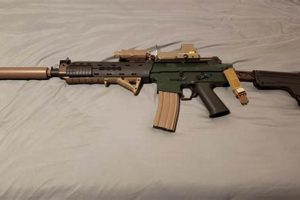
Modifications are often undertaken to enhance the aesthetic realism of airsoft replicas, mimicking real-world firearms more closely. This can involve replacing stock components with aftermarket parts, adding realistic markings, or weathering the replica to simulate wear and tear. While aesthetic modifications may not directly impact performance or safety, they can blur the line between airsoft replicas and actual firearms, potentially leading to legal complications if the replica is mistaken for a real weapon in public. For example, removing orange tips or adding realistic markings to an airsoft replica can increase the risk of misidentification by law enforcement.
- Durability Upgrades and Longevity
Some modifications are aimed at improving the durability and longevity of airsoft replicas, particularly those subjected to heavy use in demanding environments. This can involve replacing plastic components with metal parts, reinforcing critical stress points, or upgrading internal mechanisms to withstand increased wear and tear. While durability upgrades can enhance the reliability of the replica, they can also increase its weight and complexity, potentially affecting its handling and ease of use. Examples include reinforcing gearboxes and replacing plastic bushings with metal bearings.
- External Modifications and Tactical Advantage
External modifications are frequently implemented to provide a tactical advantage in airsoft games. This can involve adding optics, lasers, foregrips, or other accessories to enhance aiming, target acquisition, and weapon handling. While external modifications can improve performance, they can also increase the weight and bulk of the replica, potentially hindering maneuverability in close-quarters environments. Examples include the addition of red dot sights for rapid target acquisition and the use of vertical foregrips for improved weapon control.
Equipment modifications, therefore, represent a multifaceted aspect with significant ramifications for participants. While driven by legitimate desires for performance enhancement, aesthetic customization, and improved durability, these modifications carry inherent risks that must be carefully considered. A responsible and informed approach is crucial for ensuring that equipment modifications enhance the airsoft experience without compromising safety, legality, or fair play within unsanctioned events.
5. Community Dynamics
The absence of formal oversight in unsanctioned airsoft environments accentuates the significance of community dynamics. These dynamics dictate participant behavior, shape safety standards, and influence the overall experience. Lacking external regulations, the community becomes the de facto governing body, responsible for establishing and enforcing its own rules and norms. A functional and cohesive community fosters a safe and enjoyable environment, while a fractured or dysfunctional one can lead to chaos, conflict, and potential harm. For example, a community that prioritizes clear communication, mutual respect, and collective responsibility is more likely to establish and adhere to stringent safety protocols, mitigating the inherent risks associated with unregulated play. Conversely, a community characterized by internal rivalries, disregard for safety, or a lack of accountability is more prone to accidents and legal issues. Therefore, understanding the interplay of community dynamics is critical for anyone engaging in these activities.
The formation and maintenance of trust within these communities are particularly important. As participants operate outside formal channels, they rely heavily on the trustworthiness and reliability of their fellow players. This trust is cultivated through consistent adherence to agreed-upon rules, honest communication, and a willingness to hold oneself and others accountable for their actions. For instance, if a participant consistently demonstrates a commitment to safety and fair play, they are more likely to earn the respect and trust of their peers, strengthening the community as a whole. Conversely, if a participant repeatedly violates the rules or engages in disruptive behavior, they risk ostracization and can undermine the community’s cohesion. The success of unsanctioned airsoft hinges on the ability of participants to build and maintain these relationships based on trust, ensuring a safe and enjoyable experience for all involved.
In essence, the dynamic within these communities is a critical determinant of its sustainability and ethical standing. The emphasis on self-regulation and mutual responsibility places a premium on strong leadership, effective communication, and a shared commitment to safety and fair play. The absence of these elements poses a significant threat to both the well-being of participants and the long-term viability of these events. The proactive cultivation of positive community dynamics is thus not merely desirable but essential for responsible and ethical participation. This is because the community is the governance, regulation, and environment. Participants are bound by it.
6. Financial Autonomy
Financial autonomy constitutes a critical element in unsanctioned airsoft, influencing the nature, accessibility, and sustainability of these activities. Operating outside the purview of established venues and commercial entities, underground airsoft relies on self-funding and resourcefulness to maintain its existence. This independence fosters unique characteristics and poses specific challenges.
- Independence from Commercial Interests
Unsanctioned airsoft avoids dependence on commercial airsoft fields or stores, enabling communities to establish their own rules and priorities. It removes external influences dictating gameplay style, equipment choices, or participation fees. This autonomy allows resource allocation based on community needs rather than profit motives. For example, a community might pool funds to improve the playing environment or purchase shared equipment, decisions made independently of market trends.
- Direct Cost Management
Participants directly manage the expenses associated with gameplay, including the purchase of airsoft replicas, protective gear, and consumables. This requires participants to engage in cost-effective practices, such as repairing equipment, sharing resources, and seeking out affordable options. An example includes collaborative bulk purchasing of BBs or gas to reduce individual costs, or improvising field improvements using recycled materials.
- Funding Challenges and Resource Limitations
Financial autonomy also introduces limitations in resources. Unsanctioned events often lack access to professional facilities, dedicated equipment maintenance, and insurance coverage. This can restrict the scale and complexity of gameplay scenarios, and may compromise participant safety. For instance, a community may be unable to afford professional first-aid services, placing greater emphasis on individual preparedness.
- Alternative Revenue Streams
Some communities generate revenue to offset costs through means like membership fees, small-scale fundraising events, or sales of custom-made gear. These income streams can help fund site maintenance, equipment upgrades, or community-building activities. For instance, a community might organize a small-scale raffle or auction to raise money for field improvements or to support a member experiencing financial hardship.
These facets illustrate how financial autonomy shapes the landscape of unsanctioned airsoft. While offering freedom from commercial constraints and enabling cost-effective participation, it also presents challenges related to resource limitations and safety. The ability of communities to navigate these challenges and manage their finances effectively is crucial for the sustainability and ethical operation of these activities.
Frequently Asked Questions About Underground Airsoft
The following questions and answers address common concerns and misconceptions regarding airsoft activities that occur outside formally sanctioned venues.
Question 1: What defines “underground airsoft”?
The term refers to airsoft activities conducted on private property, abandoned buildings, or other non-commercial locations without official oversight from established airsoft organizations or regulatory bodies. It contrasts with organized games held at registered fields with safety marshals and established rules.
Question 2: Is participation in “underground airsoft” legal?
Legality depends on local and regional laws. Activities conducted without property owner permission constitute trespassing, a criminal offense. Participants must also comply with regulations regarding airsoft gun ownership, transportation, and usage. Ignorance of the law is not a valid defense.
Question 3: What are the primary safety risks associated with “underground airsoft”?
Risks include injuries from projectiles, falls, contact with hazardous materials, and encounters with unauthorized individuals. The absence of regulated safety measures elevates the potential for accidents. Participants must ensure their protective gear is adequate for the environment. Emergency services may be significantly delayed from reaching the scene.
Question 4: How are rules and safety standards enforced in “underground airsoft”?
Enforcement relies entirely on self-regulation and the adherence to agreed-upon protocols within the participating community. The absence of official marshals necessitates a strong commitment to responsible conduct and peer accountability.
Question 5: How can new individuals safely join an “underground airsoft” group?
Begin by researching local groups and inquiring about their safety protocols and community standards. Attend a meeting as an observer before participating in gameplay. Assess the group’s commitment to safety and adherence to legal requirements. Seek references from established members before revealing personal information or attending a gameplay session.
Question 6: What ethical considerations apply to “underground airsoft”?
Ethical participants respect private property, avoid causing disturbances to the surrounding community, and prioritize safety. They uphold fair play, promote responsible gun handling, and refrain from damaging the environment. A strong sense of personal responsibility is paramount.
Participants should carefully weigh the risks and benefits before engaging in “underground airsoft.” The decision to participate requires informed consent, a commitment to self-regulation, and a willingness to assume personal responsibility for safety and legal compliance.
The next section will explore the future trends and potential evolution of airsoft engagements outside the formal setting.
Conclusion
This exploration of underground airsoft reveals a complex subculture operating beyond the boundaries of established venues. Key aspects include the emphasis on community self-regulation, financial autonomy, location secrecy, and potential risks associated with unregulated equipment modifications and safety protocols. The inherent challenges demand responsible participation, prioritizing legal compliance, safety, and ethical conduct.
As airsoft evolves, the future of underground airsoft hinges on participants’ commitment to responsible practices and community governance. Upholding these principles ensures its continued viability while mitigating inherent risks. The choices made today shape the future of this unsanctioned sphere, determining whether it becomes a model of responsible self-regulation or fades into obscurity due to preventable consequences.