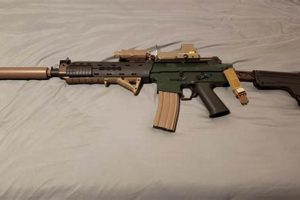
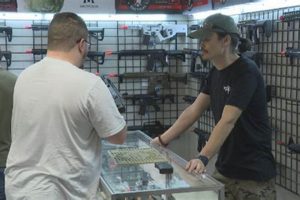
Appropriate attire for the sport of simulated combat utilizing realistic replica firearms is essential for safety, comfort, and tactical advantage. Such apparel generally includes protective eyewear, face coverings, durable clothing, gloves, and sturdy footwear. For example, participants may opt for military-style fatigues, tactical vests, and specialized boots.
The selection of suitable clothing contributes significantly to mitigating potential injuries from projectile impacts and environmental hazards. Moreover, proper attire can enhance concealment and mobility, impacting overall performance and strategic effectiveness. Historically, participants often repurposed military surplus gear; however, purpose-built airsoft apparel is now widely available, offering improved protection and functionality.
The subsequent sections will detail the specific types of protective equipment and clothing recommended for participation, addressing considerations such as material selection, camouflage options, and impact resistance ratings.
Essential Airsoft Apparel Considerations
Maximizing safety and performance requires careful attention to clothing and equipment choices. These considerations address impact protection, environmental adaptation, and tactical functionality.
Tip 1: Eye Protection is Paramount: Select goggles or a full-face mask certified to meet or exceed ANSI Z87.1 standards. This ensures resistance against projectile impact, preventing severe eye injuries.
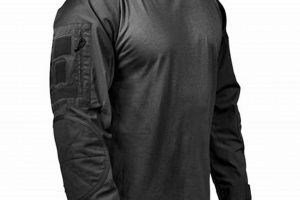
Tip 2: Prioritize Full Skin Coverage: Exposed skin is vulnerable to welts and abrasions from BB impacts. Opt for long-sleeved shirts and pants constructed from durable, abrasion-resistant materials.
Tip 3: Utilize Layered Clothing for Adaptability: Weather conditions can fluctuate significantly. Employ a layering system consisting of a moisture-wicking base layer, an insulating mid-layer, and a weather-resistant outer layer. This enables adjustment to maintain optimal comfort and temperature regulation.
Tip 4: Select Sturdy Footwear for Varied Terrain: Ankle support and robust soles are crucial for navigating uneven ground and preventing injuries. Choose boots designed for hiking or tactical applications that offer adequate traction and stability.
Tip 5: Consider Tactical Gear Functionality: Vests, pouches, and slings should be selected based on their utility and ability to carry essential equipment, such as magazines, communication devices, and hydration systems. Ensure a secure and comfortable fit to avoid hindering movement.
Tip 6: Hand Protection is Crucial: Gloves shield hands from impacts, scrapes, and cuts. Tactical gloves with reinforced knuckles and durable palms provide superior protection and grip.
Effective implementation of these guidelines will significantly enhance player safety, comfort, and tactical effectiveness on the airsoft field.
The following sections will expand on specific gear options and provide guidance on optimizing apparel selection for different game types and environments.
1. Protection

Protection is paramount when considering appropriate attire. The high-velocity impact of projectiles necessitates specialized clothing and equipment to mitigate potential injury. This section outlines vital facets of protection, emphasizing their role in ensuring player safety.
- Eye and Face Protection
ANSI-rated goggles or full-face masks provide crucial defense against BB impacts to the eyes and face. These standards indicate impact resistance capable of withstanding the forces generated during gameplay, preventing potentially blinding injuries. Without appropriate eye protection, participation should be prohibited.
- Body Armor and Padding
Tactical vests, plate carriers, and padded clothing offer torso protection from projectile impacts, reducing the likelihood of welts and bruising. While not typically mandatory, such armor enhances comfort and allows for increased maneuverability without fear of significant discomfort from impacts. Certain configurations allow integration of ballistic plates, although their relevance in this context is debated.
- Hand and Finger Protection
Gloves are essential to protect hands and fingers, which are vulnerable to injury during close-quarters engagements and while navigating the environment. Tactical gloves featuring reinforced knuckles and durable palms provide a robust defense against impacts, abrasions, and cuts. Exposed fingers can be particularly susceptible to painful BB strikes.
- Head Protection
While full-face masks provide integrated head protection, separate helmets or head coverings offer additional protection against impacts from low-hanging branches, falls, and stray projectiles. These are especially valuable in wooded or urban environments where head injuries are a greater risk. The added weight and bulk of a helmet should be weighed against the increased protection it provides.
The integration of these protective elements is integral to choosing attire that balances safety with tactical requirements. Prioritizing proper protection minimizes the risk of injury, allowing participants to fully engage in the activity with confidence.
2. Camouflage
Camouflage represents a crucial element in attire selection, directly impacting concealment effectiveness. Its purpose is to disrupt visual recognition by blending into the surrounding environment, granting a tactical advantage. Effective camouflage negates an opponent’s ability to readily identify and target the wearer, thereby increasing survivability and facilitating strategic positioning. The selection of camouflage patterns should correlate directly with the predominant environment of engagement. Woodland patterns are effective in forested areas, while desert patterns are better suited for arid landscapes. Urban environments often necessitate grey or black tones to blend with concrete and asphalt.
The effectiveness of camouflage is not solely determined by pattern selection. The material construction and application method also play a significant role. Durable fabrics that resist fading and maintain pattern integrity are essential for long-term concealment. Furthermore, proper layering techniques and the integration of natural vegetation can further enhance camouflage capabilities. For instance, a ghillie suit, constructed with strips of fabric and natural foliage, provides exceptional concealment in dense vegetation. Conversely, wearing woodland camouflage in a desert environment is demonstrably ineffective and potentially detrimental.
In conclusion, camouflage is an integrated aspect of tactical apparel, not a mere aesthetic choice. Its selection must be informed by the operational environment and complemented by appropriate material selection and application. The proper implementation of camouflage significantly enhances concealment, contributing to a player’s overall effectiveness and survivability.
3. Durability

The inherent demands of simulated combat environments necessitate a focus on durability in apparel selection. The rigors of navigating varied terrains, engaging in physical exertion, and enduring potential impacts from projectiles place significant strain on clothing and equipment. Consequently, the longevity and functionality of chosen garments directly correlate with their ability to withstand these stresses. For instance, low-quality fabrics are susceptible to tearing, seam failures, and color fading, rendering them ineffective and potentially unsafe. Conversely, apparel constructed from robust materials, such as ripstop nylon or reinforced cotton blends, offer enhanced resistance to abrasion, tearing, and environmental degradation. A practical example involves observing the wear patterns on commonly used combat trousers. Those constructed from inferior materials may exhibit rapid degradation around high-stress areas such as knees and pockets, while more durable alternatives retain their integrity despite similar levels of use.
The choice of durable materials extends beyond the primary fabric to encompass supporting components such as zippers, fasteners, and stitching. Weak or poorly constructed zippers can fail, compromising the secure closure of pockets and pouches. Similarly, inferior fasteners may detach or break, rendering load-bearing equipment unreliable. Reinforced stitching is essential for maintaining the structural integrity of seams and preventing unraveling, particularly in areas subject to high stress. Tactical vests, for example, often incorporate reinforced stitching along seams and attachment points to withstand the weight of carried equipment. The quality of these supporting components directly contributes to the overall durability and lifespan of the apparel, impacting both its performance and cost-effectiveness over time.
In summary, durability constitutes an indispensable aspect of selecting appropriate attire. It encompasses not only the selection of robust fabrics but also the careful consideration of supporting components and construction techniques. The increased investment in durable apparel translates to enhanced safety, prolonged lifespan, and sustained performance under demanding conditions. The challenge lies in balancing the cost of durable materials with budgetary constraints, necessitating a comprehensive evaluation of material properties and construction quality to ensure optimal value and performance. Ultimately, prioritizing durability contributes directly to a more reliable and effective operational experience.
4. Mobility
Freedom of movement represents a pivotal attribute of appropriate attire. Constricting garments or cumbersome equipment impede agility and reaction time, directly affecting performance during dynamic engagements. The selection of apparel should, therefore, prioritize unrestricted range of motion and minimize unnecessary encumbrance.
- Streamlined Silhouette
Bulky or ill-fitting clothing can snag on obstacles or hinder maneuverability in confined spaces. Opting for garments with a streamlined silhouette reduces the likelihood of such impediments. Military-style BDU pants, for example, often feature articulated knees and gusseted crotches to facilitate a wider range of motion without binding. The implementation of a streamlined silhouette, therefore, improves agility and responsiveness.
- Lightweight Materials
The weight of clothing and equipment directly impacts fatigue levels and overall mobility. Heavy materials contribute to rapid exhaustion and reduce agility. Selecting lightweight fabrics, such as nylon or moisture-wicking synthetics, minimizes the burden on the wearer. A comparison between a traditional canvas tactical vest and a modern mesh-based alternative illustrates this point: the latter offers comparable load-bearing capacity with significantly reduced weight.
- Strategic Load Distribution
The manner in which equipment is carried influences balance and agility. Unbalanced or poorly distributed loads can impede movement and increase the risk of injury. Tactical vests and chest rigs designed for optimized load distribution ensure that weight is evenly dispersed across the torso, minimizing strain and maximizing freedom of movement. For example, distributing magazine pouches symmetrically on a vest reduces the tendency to lean or overcompensate during movement.
- Flexible Armor and Protection
While protection is paramount, rigid or inflexible armor can restrict movement and reduce agility. Modern protective gear incorporates flexible materials and articulated designs to provide impact resistance without compromising range of motion. Knee pads, for instance, may utilize hinged designs or flexible padding to allow for unrestricted bending and kneeling.
The integration of these mobility-enhancing elements is crucial for optimizing performance. By prioritizing streamlined designs, lightweight materials, strategic load distribution, and flexible protective gear, participants can enhance their agility, responsiveness, and overall effectiveness. The trade-off between protection and mobility should be carefully considered to achieve a balance that maximizes both safety and performance.
5. Regulation
Regulations dictate the permissible and mandatory apparel in airsoft, directly influencing what participants must wear. Site-specific and event-specific rules often mandate minimum protective gear requirements, influencing gear selection significantly. Failure to adhere to these regulations results in exclusion from participation, emphasizing the binding connection between rules and dress code. For example, most organized airsoft events stipulate ANSI Z87.1 rated eye protection as an absolute requirement. Similarly, certain sites enforce minimum FPS (feet per second) limits for replica firearms, often accompanied by regulations regarding mandatory full-face protection for specific weapon categories. This direct cause-and-effect relationship underscores the integral nature of regulations in dictating acceptable attire.
The importance of understanding these regulations extends beyond mere compliance. Knowledge of stipulated gear requirements allows players to prepare appropriately, ensuring both their safety and their ability to participate. Furthermore, regulations frequently address camouflage restrictions, prohibiting the use of camouflage patterns closely resembling those used by local law enforcement or military units to prevent misidentification. This restriction highlights the broader societal implications of gear selection and the need for responsible adherence to stipulated guidelines. Practical application of this knowledge involves researching specific site rules prior to participation, verifying the compliance of selected equipment with relevant standards, and ensuring that chosen camouflage patterns do not violate any applicable restrictions.
In summary, regulations serve as a critical determinant of permissible attire. They establish minimum safety standards, address potential societal concerns related to camouflage patterns, and ensure fair gameplay. By proactively understanding and adhering to these regulations, participants contribute to a safe and responsible environment while maximizing their ability to engage in the activity. Ignoring or circumventing these rules risks both personal injury and exclusion from participation, reinforcing the critical importance of regulatory compliance.
6. Modularity

Modularity, in the context of apparel, directly relates to adaptability and customization. Specifically, modular attire in airsoft involves systems that allow users to configure their loadout based on mission requirements, personal preferences, and environmental factors. This concept entails incorporating components like MOLLE (Modular Lightweight Load-carrying Equipment) webbing onto vests, belts, and packs. This system enables the attachment of pouches, holsters, and other accessories in a user-defined arrangement. The cause-and-effect relationship is straightforward: MOLLE systems provide the framework; the user determines the configuration based on immediate needs. The importance lies in the ability to efficiently carry essential equipment (magazines, medical kits, communication devices) in easily accessible locations, thereby increasing tactical effectiveness and overall readiness.
The practical significance of modularity extends beyond simply attaching pouches. It influences weight distribution, improves ergonomic accessibility, and enables quick adjustments in the field. Consider the example of switching from a CQB (Close Quarters Battle) to an outdoor, woodland scenario. With a modular system, a player can readily reconfigure their loadout, removing unnecessary pouches to reduce weight and adding camouflage elements to improve concealment. Furthermore, modular systems promote interoperability. Pouches designed for one vest can generally be attached to another, facilitating equipment sharing within a team. This adaptability proves valuable in situations where resources are limited or when specific mission parameters demand unique loadouts. Moreover, it enables progressive upgrades or replacements of individual components without requiring a complete system overhaul.
In summary, modularity represents a core principle in selecting effective attire. It facilitates customized loadouts, promotes adaptability to diverse operational environments, and enhances tactical effectiveness. While the initial investment in a modular system might be higher, the long-term benefits of adaptability and user-defined configuration outweigh the cost. Challenges include ensuring compatibility between different components and managing the complexity of a fully customizable system. Overall, understanding and leveraging modularity contributes significantly to a more adaptable and efficient system, allowing players to tailor their attire precisely to the demands of the game.
Frequently Asked Questions
The following questions address common inquiries regarding appropriate attire for airsoft, focusing on safety, practicality, and regulatory compliance.
Question 1: Is specialized clothing truly necessary for participation?
While not always strictly mandated, specialized clothing significantly enhances both safety and performance. Durable fabrics, protective elements, and camouflage patterns provide tangible advantages over casual attire. Prioritizing specialized apparel demonstrates commitment to both personal safety and strategic effectiveness.
Question 2: What constitutes adequate eye protection?
Eye protection must meet or exceed ANSI Z87.1 standards, ensuring resistance against projectile impact. Goggles or full-face masks bearing this certification provide the requisite level of protection. Sunglasses or non-rated eyewear offer insufficient protection and are not acceptable.
Question 3: Are there specific camouflage patterns that should be avoided?
Certain camouflage patterns resembling those used by local law enforcement or military units should be avoided. Utilizing such patterns may lead to misidentification and potential legal ramifications. Participants should familiarize themselves with local regulations and exercise discretion in camouflage selection.
Question 4: How important is footwear selection?
Footwear selection is critical due to the varied terrain often encountered. Sturdy boots with ankle support and robust soles provide protection against injuries and enhance traction. Athletic shoes or casual footwear offer inadequate support and protection, increasing the risk of ankle sprains and other foot injuries.
Question 5: Is full-face protection always required?
Full-face protection is not universally required, but its use is highly recommended, particularly for those utilizing high-powered replica firearms. Certain sites and events mandate full-face protection based on weapon velocity or engagement distance. Participants should ascertain specific requirements prior to participation.
Question 6: Can clothing offer effective protection against projectile impacts?
While clothing cannot provide complete protection against high-velocity projectiles, multiple layers of durable fabric can significantly reduce the severity of impacts. Long-sleeved shirts and pants constructed from thick materials offer a degree of protection against welts and abrasions. However, clothing should not be considered a substitute for specialized protective gear.
Adhering to these guidelines enhances both safety and the overall enjoyment of the activity. The selection of appropriate attire contributes significantly to a positive and responsible gameplay experience.
The subsequent sections will address advanced gear options and tactical considerations for experienced participants.
Conclusion
The preceding analysis underscores the critical nature of gear selection for participation. A comprehensive approach encompasses protection, camouflage, durability, mobility, regulatory adherence, and modularity. The integration of these elements contributes directly to participant safety, tactical effectiveness, and overall performance. The principles outlined serve as a framework for informed decision-making, enabling individuals to select attire that aligns with their specific needs and the demands of the environment.
Continued attention to advancements in material science and equipment design will further enhance the capabilities of airsoft attire. A commitment to prioritizing safety, coupled with a thorough understanding of regulatory requirements, remains paramount. The informed application of these principles ensures a responsible and engaging experience, underscoring the enduring significance of thoughtful attire selection.