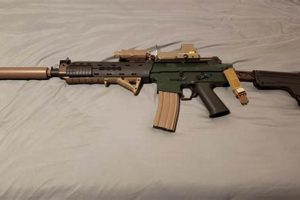
The practice involves adapting the recognizable armor and weaponry of characters from the Star Wars franchise, specifically those affiliated with Mandalorian culture, for use within the airsoft sport. This often entails replicating helmet designs, armor plating, and blaster-style airsoft guns to create a visually distinct and immersive playing experience. For example, an airsoft enthusiast might construct a replica helmet based on the design of Boba Fett or Din Djarin, along with custom-painted armor pieces, for use in scenario-based airsoft games.
This specialized application provides participants with a deeper level of engagement and personalization within the sport. It allows for creative expression through costume design and role-playing, fostering a sense of community among individuals who share a passion for both airsoft and the Star Wars universe. Furthermore, the historical context of Mandalorian characters, known for their combat prowess and unique code of honor, can add a layer of narrative depth to airsoft games, enriching the overall experience.
Further discussion will explore the specific components typically used in creating these loadouts, covering topics such as helmet modification, armor fabrication, and the adaptation of airsoft weaponry to resemble iconic blasters. This detailed examination provides a foundation for understanding the practical aspects of realizing this popular adaptation within the airsoft community.
Essential Airsoft Mandalorian Loadout Considerations
Achieving an authentic and functional airsoft Mandalorian loadout requires careful planning and attention to detail. Prioritizing both aesthetics and practical performance is critical for optimal results on the field.
Tip 1: Helmet Integrity: Secure fit is paramount. Ensure the helmet, often a modified replica, provides adequate eye protection and does not impede movement or visibility. Consider internal padding and a secure chinstrap system for stability during dynamic gameplay.
Tip 2: Armor Material Selection: Balance protection with mobility. Opt for lightweight yet durable materials for armor plating. ABS plastic or similar materials offer a reasonable degree of protection without significantly restricting movement. Strategically placed padding enhances comfort and reduces impact.
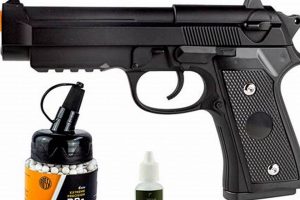
Tip 3: Blaster Modification: Prioritize functionality over pure aesthetics. While visual accuracy is desirable, ensure that any modifications to airsoft blasters do not compromise performance or safety. Adhere to field regulations regarding power output and projectile velocity.
Tip 4: Load-Bearing Gear Integration: Distribute weight effectively. Incorporate a load-bearing vest or belt system to manage magazines, grenades, and other essential equipment. Proper weight distribution reduces fatigue and enhances maneuverability during extended engagements.
Tip 5: Communication System: Maintain team coordination. Integrate a discreet communication system within the helmet. A compact headset and push-to-talk microphone facilitate clear and reliable communication with teammates, crucial for effective tactical maneuvers.
Tip 6: Camouflage Considerations: Adapt to the environment. Select camouflage patterns that blend effectively with the terrain in which the airsoft engagements will take place. While Mandalorian armor is visually distinctive, strategic camouflage can provide a tactical advantage in certain situations.
Tip 7: Adherence to Field Rules: Prioritize safety and fair play. Regardless of the visual aesthetic, always adhere strictly to the rules and regulations of the airsoft field. Safe gun handling, proper eye protection, and respect for other players are paramount.
A successful airsoft Mandalorian loadout is a balance of visual authenticity, practical functionality, and adherence to safety regulations. Thoughtful planning and careful execution are essential for creating a unique and effective playing experience.
The subsequent sections will delve into the specific techniques for achieving these recommendations, including detailed information on helmet modification, armor fabrication, and blaster customization.
1. Helmet Customization

Helmet customization forms a critical element in the creation of an authentic and functional airsoft Mandalorian loadout. It represents the convergence of aesthetic accuracy, protective functionality, and individual personalization within the framework of the airsoft sport. The helmet serves as both a visual centerpiece and a protective component, necessitating a balance between screen-accurate design and practical utility.
- Structural Integrity and Safety Standards
Modifying a helmet for aesthetic purposes should not compromise its ability to protect the wearer from impacts associated with airsoft projectiles. Helmets must meet or exceed established safety standards, such as those outlined by ASTM or ANSI, even after modifications. This may involve reinforcing specific areas, ensuring adequate padding, and verifying that eye protection remains securely integrated with the helmet shell. Examples include using ballistic-rated visors or ensuring that custom-fabricated components are securely affixed and do not create sharp edges or potential hazards.
- Material Selection and Fabrication Techniques
The choice of materials for helmet customization directly impacts both its weight and durability. Common materials include ABS plastic, fiberglass, and 3D-printed polymers. Each material possesses unique characteristics in terms of strength, flexibility, and ease of modification. Fabrication techniques range from basic cutting and sanding to more advanced processes such as vacuum forming and resin casting. The use of appropriate adhesives and fasteners is crucial for ensuring the long-term structural integrity of the modified helmet. Incorrect material selection or fabrication techniques can result in a helmet that is either too fragile or too heavy for practical use in airsoft scenarios.
- Visor Integration and Field of View
The visor is a critical component of the airsoft Mandalorian helmet, providing eye protection while maintaining a clear field of view. Visors must be constructed from impact-resistant materials such as polycarbonate and should be treated with anti-fog coatings to prevent condensation buildup. The design of the visor should minimize distortion and allow for a wide peripheral vision. Integration methods include direct attachment to the helmet shell or the use of hinged mechanisms that allow the visor to be raised or lowered. Compromising the field of view can significantly impair a player’s situational awareness and reaction time on the airsoft field.
- Ventilation and Heat Management
Prolonged use of a fully enclosed helmet can lead to overheating and discomfort, particularly in warm weather conditions. Incorporating ventilation systems into the helmet design is essential for maintaining a comfortable internal environment. This may involve the use of strategically placed vents or the integration of small fans to circulate air. However, ventilation openings must be designed to prevent the ingress of airsoft projectiles. Failure to address ventilation concerns can result in decreased player performance and an increased risk of heat-related illnesses.
The facets of helmet customization demonstrate the multifaceted nature of creating an effective airsoft Mandalorian loadout. The balance between visual fidelity, protective capabilities, and user comfort is essential for a successful integration of Mandalorian aesthetics within the practical demands of the airsoft environment. Further refinements in materials science, fabrication techniques, and safety standards will continue to influence the evolution of airsoft Mandalorian helmet designs.
2. Armor Fabrication

Armor fabrication stands as a foundational element within the airsoft Mandalorian phenomenon. The creation of visually accurate and functionally suitable armor pieces is paramount to embodying the Mandalorian aesthetic on the airsoft field. Without meticulous armor fabrication, the desired immersion and tactical advantages often associated with the theme remain unrealized. The effectiveness of an airsoft Mandalorian loadout is directly proportional to the quality and practicality of its armor components.
The process necessitates careful material selection, considering factors such as durability, weight, and weather resistance. Commonly employed materials include thermoplastics like ABS or PETG, offering a balance between impact resistance and ease of manipulation. Fabrication techniques span from vacuum forming to 3D printing, each imparting unique characteristics to the final product. For instance, vacuum-formed armor often provides a smoother, more uniform finish, while 3D-printed components allow for intricate detailing and customization. The choice of fabrication method often depends on budget, skill level, and desired level of detail. Examples can be seen in numerous online communities dedicated to airsoft Mandalorian builds, showcasing a wide range of armor designs and construction methods. Many enthusiasts also incorporate modular designs, allowing for adaptable loadouts based on specific game scenarios.
Ultimately, the success of armor fabrication within the airsoft Mandalorian context hinges on a clear understanding of both aesthetic requirements and practical performance considerations. While visual accuracy is highly valued, the armor must also provide adequate protection and freedom of movement to allow for effective participation in airsoft engagements. Failing to strike this balance results in either an aesthetically pleasing but functionally impractical costume or a highly functional but visually unconvincing representation of a Mandalorian warrior.
3. Blaster Modification

Blaster modification, within the context of airsoft mandalorian loadouts, constitutes the practice of altering standard airsoft guns to more closely resemble the blasters depicted in the Star Wars franchise. This undertaking stems from a desire for enhanced visual authenticity and a deeper immersion into the Mandalorian persona. The practical effect of blaster modification is a transformed airsoft gun, which, while retaining its core functionality as a projectile weapon, now exhibits the aesthetic characteristics of a fictional blaster. For example, a standard M4 airsoft rifle might be modified with custom-fabricated parts to emulate the appearance of Din Djarin’s IB-94 blaster pistol. The importance of blaster modification lies in its ability to elevate the visual impact of the airsoft mandalorian portrayal, contributing significantly to the overall immersive experience. A generic airsoft gun, regardless of its performance, often fails to capture the spirit of the character, while a meticulously modified blaster reinforces the connection between the player and the role being assumed.
Further exploration reveals that blaster modification is not merely a superficial aesthetic alteration. It frequently requires a nuanced understanding of both the airsoft gun’s internal mechanics and the principles of prop design. Modifications often extend beyond simple cosmetic changes, potentially involving alterations to the gun’s external housing, the addition of custom scopes or sights, and the integration of lighting or sound effects. Moreover, the process of blaster modification necessitates adherence to safety regulations and airsoft field rules. Modifications that compromise the gun’s safety mechanisms or increase its projectile velocity beyond allowable limits are both dangerous and prohibited. The modification process also often includes repainting the airsoft gun to match blasters from the star wars media and changing out certain parts that make it look more realistic.
In conclusion, blaster modification represents a critical component of the airsoft mandalorian pursuit, driving the transformation of standard airsoft guns into visually compelling replicas of fictional blasters. The challenge lies in balancing the pursuit of aesthetic accuracy with the imperative of maintaining safety, functionality, and adherence to established regulations. The success of blaster modification hinges on the skill and ingenuity of the airsoft enthusiast, their willingness to invest time and resources into the process, and their commitment to upholding the ethical and safety standards of the airsoft community.
4. Gear Integration

Gear integration, within the domain of airsoft Mandalorian loadouts, denotes the strategic incorporation of various tactical components with the core costume elements. It moves beyond mere aesthetics, focusing on functionality and the seamless interaction between different parts of the kit to enhance performance and realism on the airsoft field.
- Load-Bearing Systems and Weight Distribution
The hallmark of effective gear integration is the efficient management of weight. Tactical vests, plate carriers, and battle belts serve as platforms for distributing the load of magazines, grenades, communication devices, and other essential equipment. The selection and configuration of these systems directly impact the wearer’s mobility, stamina, and access to critical gear. Examples include modular vests that allow for customizable pouch configurations and belts designed to accommodate MOLLE-compatible accessories. Poor weight distribution can lead to fatigue and hinder tactical effectiveness, while a well-integrated system allows for fluid movement and rapid access to necessary equipment.
- Communication Equipment and Headset Compatibility
Clear communication is paramount in coordinated airsoft gameplay. Gear integration, therefore, encompasses the seamless incorporation of communication devices, such as radios and headsets, into the Mandalorian helmet and armor. Headsets must be compatible with the helmet design, providing secure and comfortable fit without compromising hearing protection. Push-to-talk (PTT) devices are typically integrated into the load-bearing system for easy access. Effective integration ensures reliable communication with teammates, facilitating tactical coordination and situational awareness. Incompatible or poorly integrated systems can lead to communication breakdowns and hinder overall team performance.
- Hydration Systems and Accessibility
Maintaining hydration is crucial during prolonged airsoft engagements. Gear integration involves the incorporation of hydration systems, such as hydration bladders and pouches, into the load-bearing system. The system must allow for easy access to water without requiring the wearer to remove the helmet or armor. Examples include bladders integrated into the back panel of tactical vests and drink tubes routed through the armor for convenient access. Proper integration ensures that the wearer remains hydrated and alert throughout the game, enhancing their overall performance and endurance.
- Weapon Holsters and Retention Systems
Secure weapon retention is a critical aspect of gear integration. The holster must provide a secure and accessible means of carrying a sidearm, such as a pistol, without impeding movement or interfering with other gear. Holsters are typically attached to the belt or leg platform, allowing for a quick and easy draw. Retention systems, such as straps or locking mechanisms, prevent accidental weapon loss during dynamic movements. Effective integration ensures that the wearer can quickly and reliably access their sidearm when needed, while also maintaining secure weapon retention during active gameplay.
The integration of gear represents a crucial element of an airsoft Mandalorian loadout. By prioritizing functionality and seamless interaction between different components, gear integration enhances the wearer’s performance, comfort, and immersion on the airsoft field. As airsoft technology and tactical gear continue to evolve, so too will the strategies and techniques employed in integrating these elements into the airsoft Mandalorian aesthetic.
5. Team Communication

Team communication forms a cornerstone of effective gameplay in airsoft, and its significance is amplified within the context of specialized loadouts such as those inspired by Mandalorian characters. The inherent complexities of scenario-based airsoft engagements necessitate clear, concise, and reliable communication channels to facilitate tactical coordination and strategic decision-making. When players adopt the Mandalorian aesthetic, characterized by enclosed helmets and specialized gear, effective communication strategies become even more critical due to potential limitations in auditory and visual perception.
- Helmet-Integrated Communication Systems
The hallmark of Mandalorian armor, the helmet, often restricts natural hearing and speech projection. Consequently, helmet-integrated communication systems, including headsets and microphones, are essential. These systems must provide clear audio transmission and reception to overcome the dampening effects of the helmet’s construction. Effective integration requires careful consideration of microphone placement, audio amplification, and noise reduction technologies. In scenarios where players use customized helmets, wireless communication systems can maintain critical team channels.
- Designated Communication Roles
Within a Mandalorian-themed airsoft team, the assignment of specific communication roles enhances operational efficiency. One individual may serve as the primary point of contact with other teams or command structures, relaying information and coordinating movements. Others may focus on internal team communication, providing real-time updates on enemy positions, flanking maneuvers, and potential threats. Clear role assignments prevent communication bottlenecks and ensure that critical information reaches the appropriate individuals in a timely manner.
- Predefined Communication Protocols
Standardized communication protocols are essential for ensuring clarity and minimizing ambiguity, particularly in high-stress situations. These protocols may include the use of code words, designated frequencies, and concise messaging formats. For example, a team might adopt a specific term to indicate that they are under heavy fire or that they require immediate assistance. The implementation of predefined communication protocols reduces the likelihood of misinterpretation and enhances the speed and effectiveness of team responses.
- Situational Awareness and Information Sharing
Effective team communication is intrinsically linked to situational awareness. Players must be able to accurately assess their surroundings, identify potential threats, and relay this information to their teammates in a clear and concise manner. This may involve describing enemy positions, reporting on terrain features, or providing updates on the team’s progress toward mission objectives. The sharing of accurate and timely information enhances the team’s overall situational awareness and enables them to make informed tactical decisions.
The integration of these facets of team communication is paramount for airsoft teams adopting the Mandalorian aesthetic. Overcoming the inherent challenges posed by specialized gear and demanding tactical scenarios requires a proactive and systematic approach to communication planning. The result is a more cohesive, coordinated, and ultimately successful team on the airsoft field.
6. Field Compliance

The adherence to established rules and regulations governing airsoft gameplay is a non-negotiable aspect of participation, especially within the visually distinctive context of airsoft Mandalorian loadouts. While the aesthetic elements contribute significantly to the immersive experience, they must never supersede the paramount importance of safety and fair play as mandated by the specific airsoft field.
- Velocity Limits and Chronograph Testing
Airsoft fields uniformly impose strict velocity limits on airsoft guns to mitigate the risk of injury. These limits, typically measured in feet per second (FPS) with a standardized weight BB, necessitate rigorous chronograph testing of all airsoft guns before they are permitted on the field. In the context of airsoft Mandalorian loadouts, any blaster modifications must not cause the gun to exceed these velocity limits. Failure to comply can result in immediate expulsion from the field. For example, adding a high-powered spring to a modified blaster may increase its FPS beyond the allowable limit, rendering it non-compliant and unsafe.
- Protective Gear Requirements
Mandatory protective gear, most notably eye protection, represents a fundamental safety requirement on all airsoft fields. Full-seal goggles or masks that meet ANSI Z87.1 standards are universally mandated to prevent eye injuries from BB impacts. Airsoft Mandalorian loadouts must incorporate compatible eye protection that meets these standards. For instance, custom Mandalorian helmets must be designed to accommodate approved goggles or masks, ensuring a secure and complete seal around the eyes. The visual appeal of a Mandalorian helmet should never compromise the wearer’s adherence to mandatory eye protection requirements.
- MED (Minimum Engagement Distance) Rules
Many airsoft fields enforce minimum engagement distances (MED) for airsoft guns based on their velocity. These rules are designed to prevent injuries caused by close-range shots with high-powered guns. Airsoft Mandalorian loadouts must adhere to these MED rules, which may necessitate the use of secondary weapons, such as pistols, for close-quarters engagements. For example, if a modified blaster exceeds a certain FPS threshold, the player may be required to maintain a minimum distance of 20 feet from other players. Adherence to MED rules is crucial for minimizing the risk of injury and ensuring a safe playing environment.
- Prohibited Items and Conduct
Airsoft fields typically prohibit the use of certain items, such as metal BBs, pyrotechnics, and high-powered lasers, due to safety concerns. They also enforce codes of conduct that prohibit aggressive behavior, unsportsmanlike actions, and intentional rule violations. Airsoft Mandalorian loadouts must comply with these restrictions. For example, while a Mandalorian-themed loadout might incorporate replica grenades for aesthetic purposes, the use of actual pyrotechnic devices would be strictly prohibited. Upholding the principles of fair play and respecting the safety of all participants is paramount, regardless of the visual theme adopted.
The multifaceted aspects of field compliance underscore the necessity for responsible participation in airsoft, particularly when embracing specialized themes such as airsoft Mandalorian. The immersive appeal of these loadouts must never overshadow the fundamental importance of safety, fair play, and adherence to established rules and regulations. Prioritizing field compliance ensures a positive and safe experience for all participants, fostering a culture of respect and responsibility within the airsoft community.
Frequently Asked Questions
This section addresses common inquiries and clarifies pertinent aspects regarding the integration of Mandalorian aesthetics within the airsoft sport. The information provided aims to offer a comprehensive understanding of the subject matter.
Question 1: Is the creation of airsoft Mandalorian loadouts a permissible activity within the airsoft community?
Yes, provided that all modifications and equipment comply with established field rules and safety regulations. Visual customization must not compromise the functionality or safety of the airsoft gun or protective gear.
Question 2: What are the primary considerations when modifying an airsoft gun to resemble a Mandalorian blaster?
The primary considerations encompass maintaining the gun’s operational integrity, adhering to velocity limits, and ensuring that any modifications do not create safety hazards. Aesthetic alterations should not impede the gun’s performance or compromise its safe handling.
Question 3: What materials are typically employed in the fabrication of Mandalorian armor for airsoft use?
Commonly used materials include durable plastics such as ABS or PETG, offering a balance between impact resistance and ease of manipulation. The choice of material depends on the desired level of detail, the fabrication method, and budget considerations.
Question 4: How is effective communication maintained when wearing a Mandalorian helmet during airsoft games?
Effective communication necessitates the use of helmet-integrated communication systems, including headsets and microphones. These systems must provide clear audio transmission and reception to overcome the muffling effects of the helmet.
Question 5: What measures are taken to ensure compliance with field rules when using an airsoft Mandalorian loadout?
Compliance measures include adhering to velocity limits, utilizing approved protective gear, respecting minimum engagement distances, and refraining from using prohibited items. Loadouts should be inspected and approved by field officials before participation.
Question 6: Does the adoption of an airsoft Mandalorian persona confer any tactical advantages?
While the aesthetic appeal may enhance immersion, the tactical advantages are primarily derived from the player’s skill, teamwork, and strategic decision-making. A well-executed loadout, regardless of its visual theme, can contribute to a more engaging and effective playing experience.
In summary, the successful integration of Mandalorian elements into airsoft hinges on a commitment to safety, adherence to established regulations, and a nuanced understanding of the sport’s tactical dynamics.
The following section will address advanced techniques and considerations for experienced airsoft Mandalorian enthusiasts.
Airsoft Mandalorian
The preceding examination has explored the multifaceted nature of airsoft mandalorian. Key considerations encompass aesthetic fidelity, functional performance, adherence to safety regulations, and the cultivation of effective teamwork. The successful integration of these elements is critical for creating an immersive and rewarding airsoft experience.
As the airsoft mandalorian subculture continues to evolve, adherence to established safety protocols and ethical gameplay remains paramount. The pursuit of visual authenticity should never supersede the responsibility to ensure a safe and fair environment for all participants. Continued innovation in materials science, fabrication techniques, and communication technologies will undoubtedly shape the future of airsoft mandalorian, fostering a dynamic and engaging community for enthusiasts worldwide.