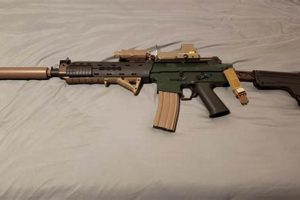
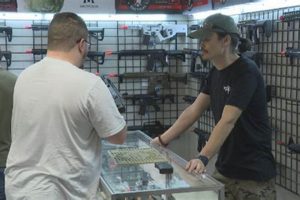
Facilities dedicated to the practice of airsoft target shooting offer a controlled environment for enthusiasts. These venues provide a safe space to hone marksmanship skills using airsoft guns, which project non-lethal projectiles. They often feature varied target types and distances, allowing for the simulation of different scenarios.
The value of these controlled practice areas lies in their contribution to responsible airsoft participation. They allow individuals to develop proficiency in weapon handling and accuracy in a secure setting, promoting safety awareness and minimizing the risk of accidental injury. Historically, such establishments have emerged as the sport has gained popularity, reflecting a commitment to structured and supervised engagement.
This article will further detail the types of target systems available, the safety protocols commonly implemented, and the potential benefits associated with regular training at designated facilities. The focus remains on objective information regarding the practice and its positive implications.
Essential Guidance for Airsoft Marksmanship Development
The following recommendations are presented to enhance skill development and ensure responsible engagement with airsoft target practice.
Tip 1: Prioritize Eye Protection. Mandatory use of approved eye protection is paramount. Ballistic-rated goggles or a full-face mask designed for airsoft projectiles must be worn at all times within the active range area.
Tip 2: Adhere to Range Regulations. Familiarization with, and strict adherence to, all established range rules and instructions is non-negotiable. These regulations are designed for participant safety and operational efficiency.
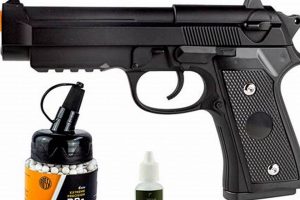
Tip 3: Calibrate Equipment. Ensure proper calibration of the airsoft replica prior to commencement of target practice. Chronograph testing confirms compliance with velocity limitations, and hop-up adjustments optimize projectile trajectory for accuracy.
Tip 4: Implement Consistent Stance and Grip. Maintaining a stable shooting platform is critical for accuracy. Practice consistent body positioning, grip pressure, and trigger control to minimize movement and maximize stability.
Tip 5: Focus on Target Acquisition. Sharpen the ability to rapidly and accurately acquire targets through consistent practice. Employ techniques such as sight alignment and trigger pull discipline to improve shot placement.
Tip 6: Practice Controlled Breathing. Incorporate controlled breathing techniques into the firing sequence to reduce body movement. Exhaling prior to trigger pull can enhance stability and shot accuracy.
Tip 7: Conduct Post-Session Maintenance. Regular maintenance of the airsoft replica is essential for consistent performance. Cleaning the barrel, lubricating moving parts, and inspecting for damage will prolong the lifespan of the equipment and maintain its accuracy.
These guidelines, when consistently applied, will cultivate improved marksmanship skills and responsible conduct within a controlled target practice environment. Prioritizing safety, equipment maintenance, and diligent practice will contribute to a positive and productive experience.
The succeeding section will address specific target types and engagement scenarios frequently encountered in dedicated airsoft facilities.
1. Safety Protocols

Stringent safety protocols form the bedrock of responsible airsoft practice. Their presence directly determines the viability and ethical operation of designated shooting ranges. Failure to implement and enforce comprehensive safety measures introduces unacceptable risks, potentially leading to injury or damage. The cause-and-effect relationship is undeniable: adherence to safety guidelines minimizes hazards, while neglect escalates the likelihood of adverse incidents. For example, mandatory eye protection, strict adherence to velocity limits, and controlled handling procedures demonstrably reduce the risk of projectile-related injuries.
The significance of formalized safety guidelines extends beyond immediate physical well-being. A culture of safety fosters respect for the equipment, the environment, and fellow participants. This, in turn, promotes a more positive and constructive training atmosphere. Examples of this include designated safe zones for equipment handling, clear communication protocols for range commands, and mandatory briefings on emergency procedures. The absence of these protocols can lead to confusion, negligence, and a compromised sense of security, thereby undermining the overall experience.
In summary, the effective implementation of safety protocols is not merely a regulatory requirement but a fundamental ethical obligation within the context of airsoft practice areas. These measures mitigate inherent risks, cultivate responsible conduct, and contribute to the long-term sustainability of the activity. Neglecting this crucial aspect jeopardizes participant safety, undermines the credibility of the practice, and potentially invites legal ramifications. Therefore, a commitment to comprehensive safety protocols is paramount for all stakeholders involved.
2. Target Variability

Target variability within a dedicated airsoft practice area directly influences the development of comprehensive marksmanship skills. The presence of diverse target types, ranging from stationary paper targets to reactive steel plates and simulated environmental challenges, necessitates adaptable aiming techniques and tactical decision-making. Cause-and-effect relationships are apparent: varied target configurations promote versatility, while a limited target selection restricts skill progression. For instance, practicing solely with stationary targets neglects the dynamic aspects of real-world scenarios, hindering the ability to quickly acquire and engage moving or partially obscured objectives. The inclusion of reactive targets provides immediate feedback on shot placement, reinforcing accuracy and building confidence.
The importance of target variability as a component of a dedicated airsoft practice is further underscored by its practical application in simulating real-world engagement scenarios. Examples include incorporating target arrays that require sequential engagement, timed target exposures that demand rapid reaction times, and obstructed targets that necessitate precise aiming and trajectory adjustment. These exercises replicate the challenges encountered in competitive airsoft events or tactical training exercises, allowing participants to refine their skills in a controlled and repeatable environment. Furthermore, the introduction of variable distances and angles encourages adaptability and reinforces the fundamental principles of ballistics and aiming.
In summary, target variability is a critical factor in maximizing the benefits derived from a dedicated airsoft practice area. By providing a diverse range of challenges, it fosters adaptability, enhances skill development, and prepares participants for a wider spectrum of engagement scenarios. The practical significance of this understanding lies in its direct impact on marksmanship proficiency and tactical effectiveness. Addressing the challenge of implementing meaningful target variations requires careful consideration of the desired training outcomes and the incorporation of innovative target designs that accurately simulate real-world complexities.
3. Equipment Calibration

Equipment calibration within the context of a designated airsoft target practice area is crucial for ensuring accuracy, fairness, and safety. The consistency of projectile velocity and the proper functioning of aiming mechanisms are essential for participants to develop reliable marksmanship skills. A direct correlation exists between calibrated equipment and the validity of the training experience. Cause-and-effect is apparent: uncalibrated equipment leads to unpredictable projectile trajectories and inaccurate results, thereby undermining the effectiveness of the practice. For instance, variations in air pressure within an airsoft replica can significantly affect projectile velocity, leading to inconsistent target impacts. Without regular calibration using a chronograph, participants are unable to accurately assess their aiming proficiency or adjust their techniques effectively.
The importance of calibration extends beyond individual skill development, impacting the equitable operation of organized events and competitions. Many airsoft ranges enforce velocity limits to ensure participant safety and prevent excessive projectile force. Accurate measurement and adjustment of equipment are therefore essential for compliance with these regulations. Examples of real-world applications include pre-game chronograph testing, mandatory safety inspections, and disqualification for exceeding allowable velocity limits. Furthermore, proper calibration of aiming devices, such as scopes and red dot sights, is critical for accurate target acquisition at varying distances. Without calibrated optics, participants may consistently miss targets due to parallax errors or misalignment issues. This highlights the interconnectedness of equipment functionality and successful performance within the shooting range airsoft.
In summary, equipment calibration is a fundamental requirement for maximizing the benefits of target practice. It ensures accurate and consistent results, promotes fairness in competitive environments, and reinforces adherence to safety regulations. The practical significance of this understanding lies in its direct impact on skill development, participant safety, and the overall integrity of airsoft activities. Regularly calibrate equipment using appropriate tools and techniques, to maintain the integrity and maximize the performance.
4. Skill Development

Dedicated airsoft target practice facilities offer a controlled environment conducive to the systematic development of various marksmanship and tactical skills. The structured nature of these environments allows participants to focus on specific areas for improvement, leading to enhanced proficiency.
- Enhanced Accuracy and Precision
Regular practice at a designated facility allows for the refinement of aiming techniques and trigger control. By focusing on consistent stance, grip, and breathing, participants can reduce extraneous movement and improve shot placement. Examples include the ability to consistently hit smaller targets at varying distances, a skill directly transferable to both competitive and recreational airsoft scenarios. The consistent application of fundamentals within a structured range setting facilitates measurable improvements in accuracy.
- Improved Target Acquisition and Reaction Time
Dedicated practice allows individuals to train their ability to quickly identify and engage targets in a variety of scenarios. Practicing transitioning between multiple targets at different distances hones reaction time and develops the ability to rapidly assess and prioritize threats. For instance, drills involving pop-up targets or simulated cover scenarios can significantly improve target acquisition speed and decision-making under pressure. The development of these skills enhances situational awareness and tactical effectiveness.
- Refined Equipment Handling and Maintenance
Consistent use of airsoft replicas within a controlled environment encourages responsible equipment handling and maintenance practices. Regular cleaning, lubrication, and adjustment of internal mechanisms contribute to the longevity and reliability of the equipment. Participants learn to diagnose and resolve common malfunctions, ensuring optimal performance during gameplay. This knowledge base fosters self-sufficiency and reduces the reliance on external assistance in the field.
- Tactical Decision-Making and Strategic Planning
Shooting range airsoft can incorporate scenarios that require strategic planning and tactical decision-making. Setting up target arrays that simulate different combat situations allows individuals to practice coordinating movements, communicating with teammates, and adapting to changing circumstances. For example, designing a course of fire that requires participants to engage targets in a specific sequence, while navigating obstacles, promotes tactical thinking and enhances problem-solving skills. These skills can be transferred to real-world teamplay scenarios.
These facets of skill development, fostered within the controlled setting of designated airsoft target practice areas, contribute to the holistic improvement of participants. The focused nature of these environments allows individuals to hone specific skills, building a strong foundation for both recreational and competitive airsoft engagement. Continuous skill development benefits individuals on both personal enjoyment and team performance.
5. Controlled Environment

The existence of a controlled environment is fundamental to the ethical and practical operation of shooting range airsoft. This control extends to multiple aspects, encompassing safety regulations, equipment limitations, and designated boundaries. The absence of such control introduces unacceptable risks, rendering the activity potentially hazardous. A direct correlation exists between the degree of environmental control and the level of safety achieved. For instance, implementing clearly defined range boundaries prevents unintended projectile egress, while enforcing strict velocity limits minimizes the risk of injury from high-impact projectiles. These controls are not merely administrative requirements but essential safeguards. The presence of a controlled environment also allows for the systematic evaluation and refinement of marksmanship skills. Participants can focus on technique without the distractions or unpredictable elements inherent in unregulated open spaces. The ability to manipulate environmental variables, such as target distance and lighting conditions, allows for targeted training and skill development.
Real-world examples demonstrate the practical implications of a controlled environment. Organized airsoft events typically enforce strict rules regarding eye protection, projectile velocity, and prohibited firing zones. Failure to adhere to these regulations results in immediate ejection from the event, highlighting the importance of environmental control in maintaining safety and fair play. Furthermore, dedicated shooting ranges often employ trained range officers who actively monitor participant behavior and enforce safety protocols. These individuals serve as a crucial component of the controlled environment, ensuring compliance with regulations and intervening to prevent potential accidents. This intervention is critical when users forget or choose to ignore the rules in the range.
In summary, the controlled environment is not merely a desirable feature of shooting range airsoft but an indispensable requirement for its safe and effective operation. It facilitates skill development, promotes responsible behavior, and mitigates the inherent risks associated with projectile-based activities. Recognizing the practical significance of environmental control is crucial for all stakeholders involved, including range operators, participants, and event organizers. Addressing the challenges associated with maintaining environmental control, such as enforcing compliance and adapting to evolving technologies, requires a proactive and multifaceted approach. Ensuring it happens requires a constant overview.
Frequently Asked Questions
The following section addresses common inquiries concerning the operation, safety, and benefits associated with dedicated airsoft target practice facilities.
Question 1: What constitutes a suitable shooting range airsoft?
A suitable facility prioritizes participant safety, enforces strict adherence to velocity limits, and provides a controlled environment for target practice. The facility should possess clearly defined boundaries, mandatory eye protection requirements, and readily available first aid resources.
Question 2: Are specialized airsoft guns required for shooting range airsoft?
While specialized equipment is not mandatory, replicas used within a designated facility should be well-maintained, properly calibrated, and compliant with established velocity limits. Chronograph testing is typically employed to verify adherence to these limitations.
Question 3: What age restrictions apply to the practice of shooting range airsoft?
Age restrictions vary depending on local regulations and individual facility policies. Minors are typically required to have parental consent or supervision to participate in shooting range airsoft activities.
Question 4: What types of targets are commonly used in shooting range airsoft?
Target selection can vary, but often includes stationary paper targets, reactive steel targets, and simulated environmental challenges designed to enhance marksmanship skills. The variation aims to mimic scenarios for improved tactical decision-making.
Question 5: What are the primary benefits of participating in shooting range airsoft?
Regular practice within a controlled environment can improve accuracy, enhance reaction time, promote responsible equipment handling, and foster a deeper understanding of tactical principles.
Question 6: How does shooting range airsoft differ from recreational airsoft gameplay?
Shooting range airsoft emphasizes precision marksmanship and skill development in a controlled setting. In contrast, recreational airsoft gameplay typically involves dynamic scenarios, team-based objectives, and less stringent adherence to target accuracy.
In summary, dedicated airsoft target practice facilities offer a structured and safe environment for honing marksmanship skills. Adherence to safety protocols, responsible equipment handling, and a focus on continuous improvement are essential for maximizing the benefits derived from this activity.
The subsequent section transitions to address advanced techniques and tactical considerations within the realm of shooting range airsoft.
Conclusion
This exploration has detailed the multifaceted aspects of shooting range airsoft, encompassing its role in skill development, safety protocols, equipment maintenance, and the importance of a controlled environment. Emphasis has been placed on the practical significance of each component in fostering responsible conduct and maximizing the benefits derived from this activity. A structured approach to training within a designated facility is paramount for cultivating proficiency and promoting safe engagement.
Continued adherence to established guidelines, coupled with a commitment to ongoing skill refinement, will contribute to the sustained growth and responsible participation within the shooting range airsoft community. Recognizing its potential for promoting marksmanship proficiency and tactical understanding, stakeholders should prioritize the maintenance of ethical and safe practices within these environments.