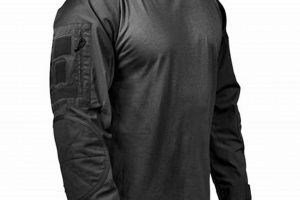
Battle Dress Uniforms designed for the airsoft sport are specialized apparel ensembles intended to provide camouflage, protection, and practical utility for participants. These outfits commonly consist of a jacket and trousers, often incorporating features like reinforced knees, multiple pockets, and adjustable closures to enhance maneuverability and storage capabilities during simulated combat scenarios.
The selection of appropriate attire is crucial for airsoft participants, influencing tactical advantage, safety, and overall comfort. The patterns and materials employed often mimic those used by real-world military forces, enabling players to effectively blend into diverse environments. Historically, the adoption of such specialized clothing has contributed to a heightened sense of realism and immersion within the sport.
Further discussion will explore the various camouflage patterns available, the materials used in construction, and the specific features that enhance performance in the context of simulated tactical engagements. Considerations will also be given to regulatory compliance and the ethical implications associated with the use of military-style apparel.
Essential Considerations for Selecting Appropriate Airsoft Apparel
The selection process for battle dress uniforms intended for airsoft activities necessitates careful consideration of several factors to ensure optimal performance, safety, and adherence to relevant regulations.
Tip 1: Camouflage Effectiveness: Prioritize camouflage patterns that are congruent with the predominant environment in which gameplay will occur. Woodland patterns are effective in forested areas, while arid or digital camouflage may be more suitable for desert or urban settings.
Tip 2: Material Durability: Evaluate the material composition for resilience against abrasion and tearing. Ripstop fabrics are generally recommended for their enhanced resistance to damage during intense physical activity.
Tip 3: Proper Fit and Mobility: Ensure that the chosen garment provides an appropriate range of motion without restricting movement. Articulated knees and elbows, along with adjustable waistbands, can improve comfort and agility.
Tip 4: Storage Capacity: Assess the quantity and configuration of pockets to accommodate essential equipment, such as magazines, communication devices, and first-aid supplies. Secure closures are vital to prevent loss of items during play.
Tip 5: Weather Resistance: Depending on the anticipated climate conditions, consider materials with water-resistant or waterproof properties to maintain comfort and prevent hypothermia in inclement weather.
Tip 6: Compliance with Local Regulations: Research and adhere to any local or field-specific regulations regarding permissible attire. Certain jurisdictions may prohibit the use of camouflage patterns closely resembling those used by law enforcement or military organizations.
Prioritizing these considerations can contribute significantly to a more effective and enjoyable airsoft experience, while also promoting safety and responsible engagement in the sport.
The subsequent sections will delve into the specific materials, patterns, and features that offer the greatest advantages within the context of airsoft activities.
1. Camouflage effectiveness

Camouflage effectiveness, in the context of airsoft battle dress uniforms, dictates the degree to which the wearer blends into the surrounding environment, thereby minimizing visibility to opposing players and maximizing tactical advantage.
- Environmental Congruence
Specific camouflage patterns are designed for optimal performance in distinct environments. Woodland patterns, characterized by greens and browns, are suited for forested terrains, while arid patterns, featuring tans and browns, are better suited for desert environments. Urban environments may necessitate gray or black-dominated digital patterns. Effective camouflage selection requires consideration of the operational environment.
- Disruptive Patterning
Disruptive camouflage patterns work by breaking up the wearer’s outline, making it more difficult to identify and track movement. These patterns often incorporate irregular shapes and contrasting colors to create visual noise that interferes with the eye’s ability to perceive a human form. The effectiveness of disruptive patterning is influenced by distance and lighting conditions.
- Material Properties
The material composition of the battle dress uniform influences its camouflage effectiveness. Glossy or reflective materials can negate the benefits of camouflage patterns by reflecting light and increasing visibility. Matte fabrics, conversely, absorb light, reducing glare and enhancing concealment. The texture of the material can also contribute to camouflage by mimicking natural surfaces.
- Seasonal Adaptation
The effectiveness of camouflage can vary seasonally as environmental conditions change. During autumn, for example, camouflage patterns with autumnal colors may provide better concealment than those designed for summer foliage. Similarly, snow camouflage patterns are necessary for effective concealment in winter environments. Adaptive camouflage solutions, which can change color or pattern based on the surrounding environment, represent an advanced approach to seasonal adaptation.
The selection of battle dress uniforms with appropriate camouflage effectiveness is crucial for achieving tactical objectives in airsoft engagements. A failure to consider environmental congruence, disruptive patterning, material properties, and seasonal adaptation can compromise a player’s ability to remain undetected and can negatively impact overall performance.
2. Material durability
Material durability is a paramount consideration in the selection and utilization of battle dress uniforms for airsoft activities. The rigorous nature of simulated combat necessitates robust construction capable of withstanding significant stress and environmental factors. Premature failure of garment materials can compromise player safety, effectiveness, and overall operational readiness.
- Abrasion Resistance
Abrasion resistance refers to a material’s capacity to resist surface wear caused by rubbing or scraping against other surfaces. In the context of airsoft, uniforms are frequently subjected to abrasion from contact with terrain, vegetation, and equipment. Materials such as ripstop nylon and canvas offer enhanced abrasion resistance compared to lighter-weight fabrics, minimizing the risk of tears and punctures. Military-grade specifications often mandate specific abrasion resistance standards for combat uniforms, demonstrating its critical importance.
- Tear Strength
Tear strength quantifies a material’s ability to resist the propagation of a tear once initiated. During airsoft engagements, uniforms can be snagged on obstacles, potentially leading to tears that compromise the integrity of the garment. High tear strength is particularly important in areas prone to stress, such as seams and reinforcement patches. Fabrics woven with interlocking patterns, like ripstop, are inherently more resistant to tearing, providing a crucial advantage in demanding environments.
- Tensile Strength
Tensile strength measures a material’s ability to withstand pulling or stretching forces before breaking. Uniforms must possess adequate tensile strength to withstand the stresses imposed by dynamic movements, such as running, crawling, and climbing. Materials with high tensile strength, such as certain synthetic blends, maintain their structural integrity even under significant strain, preventing deformation and failure. This property contributes directly to the longevity and reliability of the uniform.
- Seam Integrity
The durability of a battle dress uniform is not solely dependent on the fabric itself, but also on the integrity of its seams. Weak or poorly constructed seams are susceptible to failure, even if the fabric is robust. Reinforced stitching techniques, such as double or triple stitching, enhance seam strength and prevent separation under stress. Careful attention to seam construction is essential for ensuring the overall durability and reliability of the garment, particularly in high-stress areas like the crotch and shoulders.
The interplay between abrasion resistance, tear strength, tensile strength, and seam integrity determines the overall durability of battle dress uniforms designed for airsoft applications. Selection of appropriate materials and construction techniques is crucial for maximizing garment lifespan, ensuring player safety, and enhancing operational effectiveness in the demanding environment of simulated combat. These factors directly impact the economic viability of the gear as well.
3. Fit and Mobility
The relationship between fit, mobility, and battle dress uniforms designed for airsoft is fundamentally important to user performance and safety. A well-fitting uniform allows for unrestricted movement, critical for tactical maneuvers and sustained physical activity, while a poorly fitted garment can impede performance and increase the risk of injury.
- Range of Motion
An airsoft battle dress uniform must facilitate a full range of motion in the arms, legs, and torso. Restricted movement limits the ability to quickly assume firing positions, navigate obstacles, and react to dynamic combat scenarios. Garments employing articulated designs in the knees and elbows can significantly enhance range of motion, allowing for greater flexibility and agility on the field. Real-world military units prioritize range of motion in uniform design to maximize soldier effectiveness in combat.
- Proper Sizing
Accurate sizing is essential for ensuring both comfort and mobility. Uniforms that are too tight restrict movement and can cause chafing, while those that are too loose can snag on obstacles and interfere with weapon handling. Manufacturers typically provide sizing charts based on height and chest measurements to assist in selecting the appropriate size. Careful attention to these charts is crucial for achieving an optimal fit. Incorrect sizing can lead to decreased accuracy and slower reaction times.
- Adjustability
Features such as adjustable waistbands, cuffs, and drawstrings contribute to a more customized fit, accommodating varying body shapes and personal preferences. Adjustability allows users to fine-tune the garment to maximize comfort and mobility without compromising protection. Many high-quality airsoft battle dress uniforms incorporate these adjustable elements to ensure a secure and comfortable fit for a wide range of body types.
- Weight and Bulk
The weight and bulk of a battle dress uniform can significantly impact mobility, particularly during prolonged engagements. Lighter-weight materials and streamlined designs minimize fatigue and allow for greater agility. Excessive bulk can impede movement through confined spaces and increase the risk of entanglement. Manufacturers are increasingly focusing on lightweight, low-profile designs that maximize mobility without sacrificing durability or protection.
The interplay between range of motion, proper sizing, adjustability, and weight/bulk determines the overall impact of fit and mobility on the performance of an airsoft player. Selection of a battle dress uniform that prioritizes these factors is essential for optimizing tactical effectiveness and minimizing the risk of injury on the field. The trend toward lighter and more flexible materials directly addresses these concerns.
4. Pocket configuration

Pocket configuration on battle dress uniforms designed for airsoft is a critical factor influencing a player’s operational efficiency. Thoughtful pocket placement and design enable secure and readily accessible storage of essential equipment, directly impacting tactical effectiveness.
- Magazine Capacity and Placement
Magazine pouches are a primary component of the pocket configuration. Their capacity and location significantly affect reload speed and accessibility. Chest-mounted magazine pouches, for example, offer rapid access but may impede prone firing. Cummerbund-mounted pouches distribute weight more evenly but require more deliberate manipulation. The optimal configuration balances accessibility with comfort and operational profile.
- Utility Pouch Versatility
Utility pouches serve as flexible storage solutions for diverse equipment, including communication devices, first-aid kits, and multi-tools. Strategic placement on the arms, thighs, or back enables specialized loadouts tailored to specific roles and mission requirements. The modular nature of MOLLE (Modular Lightweight Load-carrying Equipment) systems allows for user customization of utility pouch arrangements. An example is thigh-mounted pouches for quick access to maps and navigation tools.
- Retention and Security Mechanisms
Pocket security mechanisms are essential to prevent equipment loss during dynamic movements. Velcro closures, button fasteners, and zippered compartments provide varying degrees of retention. High-intensity activities necessitate more secure closures, such as those found on specialized pouches designed for breaching tools or grenades. Poorly secured pockets increase the risk of losing critical gear during gameplay.
- Specialized Pouch Designs
Specialized pouch designs cater to specific equipment requirements, such as hydration carriers, radio pouches, and grenade pouches. These designs often incorporate features like adjustable straps, elastic retention, and drainage grommets to optimize functionality. Incorrect or absent specialized pouches can lead to equipment damage or impaired operational capabilities.
The selection of an appropriate pocket configuration directly contributes to a player’s efficiency and effectiveness in airsoft engagements. Consideration of magazine capacity, utility pouch versatility, retention mechanisms, and specialized pouch designs is crucial for maximizing tactical advantage and minimizing the risk of equipment loss. Furthermore, the implementation of MOLLE systems allows players to tailor the arrangement of these pockets to suit their personal preferences.
5. Weather resistance

Weather resistance in the context of battle dress uniforms designed for airsoft pertains to the ability of the apparel to protect the wearer from adverse environmental conditions. This protective capability directly influences player comfort, performance, and overall safety during outdoor gameplay.
- Water Repellency and Waterproofing
Water repellency and waterproofing refer to a material’s ability to resist water penetration. Water-repellent fabrics, often treated with Durable Water Repellent (DWR) coatings, cause water to bead and roll off the surface, delaying saturation. Waterproof materials, typically employing membranes or coatings, provide a complete barrier against water ingress. In airsoft, maintaining dryness is critical for preventing hypothermia in cold or wet conditions, preserving mobility, and ensuring the functionality of equipment carried within the pockets.
- Wind Resistance
Wind resistance denotes the material’s capacity to impede the passage of air. Wind chill can significantly lower body temperature, leading to discomfort and impaired cognitive function. Tightly woven fabrics or those incorporating windproof membranes reduce wind penetration, preserving body heat. This is particularly important in exposed environments or during periods of inactivity during airsoft games. Examples include tightly woven nylon or polyester fabrics.
- Breathability
Breathability refers to the material’s ability to allow moisture vapor to escape. During physical exertion, the body generates perspiration, which can lead to discomfort and chilling if trapped within the uniform. Breathable fabrics, often utilizing microporous membranes or wicking fibers, facilitate the evaporation of sweat, maintaining a comfortable internal climate. Balancing breathability with water resistance is a key consideration in selecting airsoft apparel.
- UV Protection
UV protection pertains to the material’s ability to block harmful ultraviolet radiation from the sun. Prolonged exposure to UV radiation can lead to sunburn, skin damage, and increased risk of skin cancer. Fabrics with a tight weave or those treated with UV-absorbing chemicals provide enhanced UV protection. This is particularly relevant for airsoft games played in sunny environments. Certain synthetic materials, like polyester, naturally offer higher UV protection than others.
The selection of battle dress uniforms incorporating appropriate weather resistance characteristics is crucial for ensuring player comfort, safety, and performance in diverse environmental conditions. Consideration of water repellency, wind resistance, breathability, and UV protection allows for informed selection of apparel tailored to the specific climate and playing conditions. Without appropriate weather resistance, the benefits of camouflage and durability are diminished.
6. Regulation compliance

Regulation compliance, in the context of airsoft battle dress uniforms, refers to adherence to local, regional, and field-specific rules governing permissible attire. This aspect is not merely a formality but a fundamental requirement ensuring safety, maintaining a distinction from real-world military and law enforcement personnel, and fostering a responsible image for the airsoft community. Failure to comply can result in exclusion from gameplay, legal repercussions, or damage to the sport’s reputation. For instance, certain jurisdictions prohibit camouflage patterns closely resembling those used by local law enforcement agencies. The specific regulations vary considerably, necessitating thorough research prior to selecting and wearing attire.
A practical example of regulation compliance involves adhering to field-specific requirements regarding the use of full-seal eye protection, which is often mandatory regardless of uniform choice. Furthermore, some fields mandate distinct color markings on attire to differentiate players by teams. The implementation of these rules serves to minimize friendly fire incidents and ensure fair gameplay. Similarly, regulations often prohibit the use of real ballistic armor or modifications that could create a hazard for other participants. The understanding of these rules significantly affects a player’s apparel choices and pre-game preparation.
In summary, regulation compliance forms an integral component of responsible airsoft participation. The adherence to prescribed guidelines directly influences safety protocols, clarifies player identification, and safeguards the ethical considerations of the sport. By proactively understanding and obeying regulations, players contribute to a secure and respectful environment, preserving the integrity and sustainability of airsoft activities while mitigating potential legal or social challenges. Ignoring these rules undermines the foundations of the sport and creates unnecessary risk.
Frequently Asked Questions
This section addresses common inquiries regarding specialized attire for airsoft, offering clarity on selection, usage, and compliance to enhance understanding and promote responsible participation.
Question 1: What constitutes an appropriate battle dress uniform for airsoft?
An appropriate ensemble typically comprises a jacket and trousers designed for durability, camouflage effectiveness, and freedom of movement. Selection should prioritize environmental congruence and adherence to field regulations.
Question 2: Are real military uniforms permissible for use in airsoft?
The permissibility of real military uniforms varies depending on local laws and field regulations. Caution must be exercised to avoid misrepresentation or violation of legal restrictions. Adherence to established guidelines is crucial.
Question 3: How does camouflage selection impact performance in airsoft?
Effective camouflage minimizes visibility, providing a tactical advantage. The choice of camouflage pattern should align with the predominant environment, such as woodland, arid, or urban terrains, to maximize concealment.
Question 4: What materials offer optimal durability in airsoft battle dress uniforms?
Ripstop nylon and other reinforced fabrics provide enhanced resistance to abrasion and tearing, crucial for withstanding the rigors of simulated combat. Selection of durable materials prolongs garment lifespan and ensures reliable performance.
Question 5: How does the fit of a battle dress uniform influence mobility?
A well-fitting uniform facilitates unrestricted movement, enabling agile maneuvers and rapid response to dynamic scenarios. Articulated knees and elbows, along with adjustable closures, enhance comfort and agility.
Question 6: What safety considerations are relevant to airsoft apparel?
Safety considerations extend beyond camouflage and durability. Full-seal eye protection, appropriate footwear, and adherence to field regulations regarding protective gear are paramount for minimizing injury risk.
Proper selection and usage of airsoft apparel are essential for ensuring safety, enhancing performance, and promoting responsible participation. Compliance with applicable regulations is non-negotiable.
The next article section will explore advanced customization and load-bearing equipment used in conjunction with battle dress uniforms.
Airsoft BDU
This exploration has underscored the multifaceted considerations involved in selecting and utilizing battle dress uniforms within the airsoft context. Camouflage effectiveness, material durability, fit and mobility, pocket configuration, weather resistance, and regulation compliance collectively determine the suitability of such attire for simulated tactical engagements. Understanding these factors is critical for optimizing performance, ensuring safety, and promoting responsible gameplay.
The informed application of these principles contributes to a more immersive and ethical airsoft experience. Participants are urged to prioritize both personal well-being and adherence to established guidelines, fostering a positive image for the sport and preserving its integrity for future generations. Continuing attention to evolving regulations and technological advancements in apparel design remains paramount.