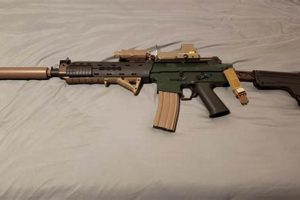
Devices designed to attach to the barrel of an airsoft gun, containing an internal porous material, aim to reduce the report generated upon firing. The internal material, commonly a cellular polymer, functions by disrupting and dissipating the sound waves produced by the expanding gas behind the projectile. These are often employed in scenarios where minimizing auditory signature is desired, such as simulated military operations or recreational games in noise-sensitive environments.
The employment of sound dampening attachments can offer a tactical advantage in airsoft games, allowing for more discreet movement and potentially masking the shooter’s location. Historically, the development of these components mirrors advancements in real firearm sound suppression technology, albeit adapted for the lower power and specific requirements of airsoft replicas. The efficacy varies depending on the design, internal materials, and the specific airsoft gun used.
The following sections will delve into the construction, performance characteristics, legal considerations, and selection criteria related to these sound-reduction accessories in the context of airsoft gameplay.
Tips for Maximizing Performance
Optimizing the performance of sound-dampening devices for airsoft requires careful consideration of several factors. Proper selection, installation, and maintenance are crucial for achieving the desired reduction in auditory signature.
Tip 1: Material Density Selection: Opt for models utilizing higher-density internal material. Increased density typically correlates with enhanced sound wave absorption, leading to a more noticeable reduction in noise output.
Tip 2: Proper Installation is Key: Ensure the device is securely and correctly attached to the airsoft gun’s barrel. A loose or misaligned attachment can create unwanted vibrations and actually amplify noise. Verify compatibility with the barrel threading.
Tip 3: Regular Inspection and Maintenance: Periodically inspect the internal material for degradation or damage. Replace the device if the internal structure becomes compressed or starts to disintegrate, as this will significantly reduce its effectiveness.
Tip 4: Experiment with Barrel Length: Certain barrel lengths, when paired with these devices, can exhibit improved sound reduction characteristics. Experiment with different barrel lengths to find the optimal combination for a particular airsoft gun model.
Tip 5: Consider Air Volume and Pressure: Airsoft guns with higher air volumes or pressure output may require more substantial sound-dampening solutions. Understand the specifications of the airsoft gun and select a device accordingly.
Tip 6: Evaluate External Construction Quality: The outer shell’s material and construction play a role in containing and redirecting sound. Choose devices with robust, non-resonant housings for optimal performance.
By implementing these strategies, users can enhance the effectiveness of their airsoft sound-dampening accessories, contributing to a more discreet and tactically advantageous gameplay experience.
The next section will explore the legal ramifications and ethical considerations associated with using sound-dampening equipment in airsoft activities.
1. Material Density

Material density within a sound-dampening airsoft attachment directly affects its sound reduction capabilities. A higher-density filler provides a greater surface area and mass for sound waves to interact with, resulting in more effective absorption and dissipation of acoustic energy. The relationship is causal: increased material density generally leads to improved sound suppression. Conversely, low-density or sparse filling offers minimal resistance to the passage of sound waves, rendering the device less effective.
As a component of sound-dampening airsoft accessories, material density is critical. Consider two devices of identical size and construction, differing only in the density of their internal material. The device filled with a higher-density material will demonstrably outperform the other in terms of sound reduction. This characteristic is vital in scenarios where minimizing auditory signature is paramount. For example, military simulation games or skirmishes in residential areas benefit significantly from the enhanced stealth provided by higher-density sound-dampening solutions.
Understanding the practical significance of material density informs selection decisions. Players seeking the highest level of sound suppression should prioritize accessories with high-density internal materials. It is important to consider the trade-offs between density, weight, and durability. While denser materials improve performance, they can also add weight and potentially reduce the lifespan of the device. The relationship between material density and acoustic dampening is fundamental to achieving the desired level of sound reduction in airsoft applications.
2. Attachment Security

The stability with which a sound-dampening device affixes to an airsoft gun is paramount to its effective function. A secure connection minimizes unwanted vibrations and maintains alignment, both crucial for optimal sound reduction. Conversely, a loose or improperly secured attachment can negate the benefits of the internal dampening material and even amplify noise.
- Thread Engagement and Compatibility
Proper thread engagement between the sound-dampening device and the airsoft gun’s barrel is essential. Incompatible threading or insufficient thread engagement can result in a weak connection prone to loosening during operation. Manufacturers typically specify compatible threading standards (e.g., 14mm CCW) to ensure a secure and reliable fit. Failure to match threading standards can lead to device instability, reduced sound reduction effectiveness, and potential damage to the airsoft gun’s barrel.
- Locking Mechanisms and Retention
Many advanced sound-dampening devices incorporate locking mechanisms, such as set screws or quick-detach levers, to enhance retention and prevent accidental dislodgement. These mechanisms ensure that the device remains firmly affixed to the barrel, even under the stresses of rapid firing or rough handling. The effectiveness of these locking systems directly influences the consistency of sound reduction performance. Poorly designed or improperly implemented locking mechanisms can compromise device security and reliability.
- Material Integrity and Durability
The materials used in the construction of the attachment interface must possess sufficient strength and durability to withstand the forces generated during airsoft gameplay. Weak or brittle materials can lead to premature wear, thread stripping, or even complete failure of the attachment. High-quality materials, such as reinforced polymers or machined metal alloys, are typically employed to ensure long-term reliability and maintain consistent attachment security.
- Alignment and Concentricity
Proper alignment between the sound-dampening device and the airsoft gun’s barrel is critical to prevent projectile clipping or interference. A misaligned device can introduce unwanted friction, reduce accuracy, and even damage the sound-dampening material or the airsoft gun’s internal components. Concentricity, the degree to which the device’s bore aligns with the barrel’s bore, is a key indicator of alignment accuracy and overall attachment security.
Ultimately, attachment security directly impacts the effectiveness and reliability of sound-dampening devices in airsoft applications. A well-secured device, properly matched to the airsoft gun, ensures consistent sound reduction performance, minimizes the risk of damage, and contributes to a more immersive and enjoyable gameplay experience.
3. Internal Degradation

Internal degradation of the porous material within airsoft sound dampening devices represents a significant factor impacting performance. The cellular structure, typically comprised of polymer foam, undergoes gradual decomposition due to several causes. Repeated exposure to propellant gases, temperature fluctuations, and physical impacts contribute to the breakdown of the foam’s structural integrity. As the foam degrades, its ability to absorb and dissipate sound waves diminishes, resulting in a progressive reduction in the device’s overall effectiveness. An example is a suppressor used frequently with high-pressure gas systems showing reduced performance after a few months, requiring replacement of the foam or the entire unit.
The practical significance of understanding internal degradation lies in proactively managing the lifespan of these accessories. Regular inspection for signs of disintegration, compression, or discoloration can provide early warning of performance decline. Furthermore, proper storage practices, such as avoiding extreme temperatures and protecting the device from physical damage, can help to prolong the material’s useful life. Selecting devices constructed with more durable, heat-resistant foam types can also mitigate the effects of degradation. Moreover, there is a growing market for suppressors utilizing replaceable foam inserts, allowing for a cost-effective means of maintaining consistent sound reduction performance. Consider the implications of a device intended for covert operations failing to dampen sound during a critical moment due to unnoticed internal degradation.
In conclusion, internal degradation is an unavoidable process affecting the performance of airsoft sound dampening devices. Understanding the causes, recognizing the signs, and implementing appropriate maintenance strategies are crucial for maximizing the longevity and effectiveness of these accessories. The challenge lies in balancing the pursuit of optimal sound reduction with the practical constraints of material durability and cost-effectiveness. This degradation process needs monitoring to remain within gameplay rules and maintain strategic advantage during game play.
4. Barrel Compatibility

Barrel compatibility represents a crucial factor in the effective utilization of sound-dampening devices on airsoft guns. A mismatch between the threading of the airsoft gun’s barrel and the sound-dampening accessory renders the system inoperable or, worse, risks damage to both components. The threading, typically specified in millimeters and either clockwise (CW) or counter-clockwise (CCW) orientation, dictates the physical interface between the barrel and the device. An incompatible thread pitch will prevent secure attachment, negating any potential sound reduction benefits. For example, attempting to mount a 14mm CCW-threaded accessory onto a 14mm CW-threaded barrel will result in cross-threading, potentially damaging the threads and preventing a secure fit. This incompatibility creates a direct cause-and-effect relationship: incorrect barrel compatibility causes ineffective or nonexistent sound dampening.
Correct barrel compatibility is not merely about physical attachment; it also influences the alignment of the sound-dampening device with the bore of the airsoft gun. Misalignment can lead to projectile clipping, reducing accuracy and potentially damaging the sound-dampening material within the accessory. Consider a scenario where a slightly oversized or poorly aligned sound-dampening device is attached to a high-velocity airsoft gun. The projectile, upon exiting the barrel, may collide with the internal structure of the device, causing a deviation in trajectory and reducing the effectiveness of the airsoft gun. Manufacturers often provide barrel compatibility specifications to guide users in selecting appropriate accessories. Adherence to these specifications ensures both proper fit and optimal performance.
In conclusion, barrel compatibility serves as a foundational element for the successful deployment of sound-dampening airsoft accessories. The proper fit and alignment of the device are prerequisites for achieving effective sound reduction and maintaining projectile accuracy. Challenges arise when manufacturers employ varying threading standards, necessitating careful attention to product specifications and compatibility guidelines. A thorough understanding of barrel compatibility ensures that the chosen sound-dampening accessory functions as intended, contributing to a more discreet and effective airsoft gameplay experience.
5. External Construction
The external construction of a sound-dampening device significantly influences its overall effectiveness and durability within the airsoft context. The materials and design of the outer shell directly impact sound containment, structural integrity, and resistance to environmental factors.
- Material Composition and Acoustic Properties
The composition of the external casing materials dictates their ability to dampen or transmit sound vibrations. Dense, non-resonant materials like reinforced polymers or specific metal alloys are preferred to minimize sound propagation from the internal foam. For instance, a suppressor constructed with a lightweight aluminum shell may exhibit undesirable ringing or vibration during use, negating some of the foam’s dampening effect. Conversely, a suppressor made from a high-density polymer composite would offer superior sound containment due to its reduced resonance.
- Structural Design and Impact Resistance
The external structure provides physical protection to the internal dampening foam. A robust design minimizes the risk of damage from impacts, which could compromise the foam’s integrity and reduce its sound-dampening capabilities. Consider a scenario where a suppressor with a thin-walled, non-reinforced shell is subjected to a drop. The external casing may crack or deform, leading to compression or tearing of the internal foam, thereby diminishing its performance and potentially rendering it unusable.
- Surface Finish and Camouflage Considerations
The external surface finish contributes to the device’s overall concealment capabilities. Matte finishes and strategic color patterns can reduce reflectivity and improve camouflage in various environments. For example, a suppressor with a glossy finish may reflect sunlight, compromising the user’s position in a tactical scenario. A matte, textured finish in a camouflage pattern, on the other hand, would provide enhanced concealment, allowing for more discreet operation.
- Attachment Mechanism and Stability
The design of the attachment mechanism ensures a secure and stable connection to the airsoft gun’s barrel. A robust attachment system prevents loosening or misalignment during use, which can compromise sound reduction and even damage the airsoft gun’s threads. For example, a suppressor with a poorly designed threading system may become loose during rapid firing, leading to increased noise output and potential damage to the threads on both the suppressor and the airsoft gun’s barrel.
These facets of external construction are interconnected and contribute to the overall effectiveness and longevity of airsoft sound-dampening devices. Careful consideration of material composition, structural design, surface finish, and attachment mechanism ensures optimal performance and reliability in various airsoft gameplay scenarios.
Frequently Asked Questions
The following section addresses common inquiries regarding sound-dampening devices utilizing a cellular polymer as an internal component within the airsoft context. These answers aim to provide clarity and factual information regarding their use, effectiveness, and maintenance.
Question 1: How significantly does a cellular polymer-filled airsoft sound-dampening device reduce noise?
The degree of noise reduction varies depending on factors such as the density of the internal material, the volume of the device, and the specific airsoft gun model. Expect a moderate reduction in the auditory signature, rather than complete silence.
Question 2: Is it legal to use a sound-dampening device on an airsoft gun?
Legality depends on jurisdictional regulations. It is incumbent upon the user to ascertain and adhere to all applicable local, regional, and national laws pertaining to airsoft guns and accessories.
Question 3: What is the typical lifespan of a cellular polymer filler within an airsoft sound-dampening device?
The lifespan varies based on usage intensity, environmental conditions, and the quality of the polymer material. Regular inspection for degradation is advised, and replacement of the device or filler may be necessary periodically.
Question 4: Can a cellular polymer-filled airsoft sound-dampening device improve accuracy?
The primary function is sound reduction. While some models may theoretically offer slight improvements in accuracy due to barrel stabilization, this is not the intended purpose, and significant improvements should not be anticipated.
Question 5: Are all cellular polymers equally effective in airsoft sound-dampening devices?
No. Variations in density, composition, and cellular structure influence sound absorption properties. Higher-density, closed-cell polymers generally exhibit superior performance compared to lower-density or open-cell alternatives.
Question 6: How should an airsoft sound-dampening device with a cellular polymer filler be properly maintained?
Regularly inspect the device for damage or degradation. Avoid exposure to extreme temperatures or harsh chemicals. If possible, clean the exterior with a mild detergent and ensure the internal material remains dry.
In summary, cellular polymer-filled sound-dampening airsoft accessories offer a means to reduce auditory output, though performance varies. Adherence to legal guidelines and proper maintenance practices ensure responsible and effective utilization.
The subsequent section will explore advanced modifications and customization options for airsoft sound reduction.
Foam Filled Suppressor Airsoft
The preceding analysis has explored the multifaceted aspects of sound-dampening devices employing cellular polymer fillers within the airsoft domain. Key points encompass the material density’s impact on sound reduction, the criticality of secure attachment, the inevitable internal degradation affecting performance, the imperative of barrel compatibility for proper function, and the influence of external construction on overall effectiveness and durability. Proper maintenance and awareness of legal regulations are essential for responsible utilization.
The continued development and refinement of these devices, coupled with a commitment to informed decision-making and ethical gameplay, will determine their role in shaping the future of airsoft engagements. Further research into advanced materials and innovative designs holds the potential to enhance sound reduction capabilities while ensuring compliance with applicable laws and safety standards. The user is encouraged to pursue responsible use.