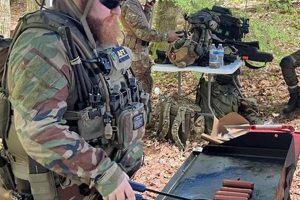
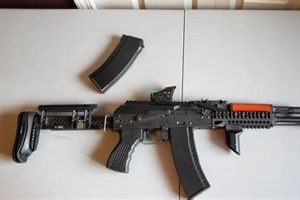
The replica discussed is a non-lethal, compressed gas or spring-powered projectile weapon that imitates the appearance and function of the Sig Sauer P365 handgun. These replicas are commonly used in recreational shooting sports and training exercises. An example of its use would be in simulated combat scenarios, where participants engage in tactical maneuvers and target practice using this type of replica.
The significance of these replicas stems from their utility in providing a safe and cost-effective alternative to using live firearms for training purposes. They allow individuals to develop firearm handling skills, practice aiming, and improve tactical decision-making without the risks associated with real weapons. Furthermore, the relative affordability makes the practice accessible to a wider audience. Historically, the development of realistic firearm replicas has mirrored advancements in firearm technology, leading to increasingly accurate and reliable simulation devices.
The subsequent discussion will delve into specific aspects of this particular replica, including available models, performance characteristics, maintenance requirements, and relevant safety considerations. Further topics include common modifications, and legal implications associated with ownership and use in various jurisdictions.
Essential Considerations for P365 Airsoft
This section provides crucial guidelines for optimal operation and safety when engaging with the replica. Adherence to these recommendations will ensure longevity of the product and mitigate potential hazards.
Tip 1: Prioritize Eye Protection: The use of ANSI Z87.1 rated goggles or a full face mask is mandatory during operation. Projectiles can cause serious eye injury; appropriate protection is non-negotiable.
Tip 2: Use Designated Ammunition: Employ only high-quality, seamless projectiles of the recommended weight (typically 0.20g or 0.25g). Using lower-quality or incorrectly weighted projectiles can damage internal components and negatively impact accuracy.
Tip 3: Maintain Gas Pressure: When using gas-powered models, ensure the correct gas type and pressure are used. Over-pressurization can cause irreparable damage and pose a safety risk.
Tip 4: Regularly Clean the Barrel: Periodic cleaning of the inner barrel with a cleaning rod and silicone oil removes debris and maintains accuracy. Neglecting this can lead to decreased performance.
Tip 5: Proper Storage is Critical: Store the replica in a cool, dry place, away from direct sunlight and extreme temperatures. This prevents degradation of materials and extends the lifespan of seals and other components.
Tip 6: Understand Local Regulations: Familiarize yourself with all applicable local and regional laws regarding ownership, transportation, and use. Non-compliance can result in legal penalties.
Tip 7: Handle with Respect: Even though it is a replica, treat it with the same respect and caution as a real firearm. This promotes responsible handling and prevents accidents.
By following these essential guidelines, users can maximize the performance and longevity of the product while upholding the highest standards of safety and responsibility.
The next section will explore potential modifications and customization options available for this popular model.
1. Realistic Aesthetics

Realistic aesthetics form a crucial component of the replica discussed. The degree to which the replica mirrors the appearance of the actual Sig Sauer P365 directly influences its utility in training and simulation exercises. The visual fidelity, encompassing dimensions, markings, and finish, significantly contributes to the user’s sense of immersion and realism. For instance, law enforcement agencies and military units utilize highly realistic replicas for force-on-force training, where the visual cues are essential for simulating high-pressure scenarios. An accurate representation of the firearm’s weight and balance further enhances the training experience by replicating the handling characteristics of the real weapon.
The pursuit of realistic aesthetics extends beyond mere visual resemblance. The functionality of certain components, such as the slide, magazine release, and trigger, often replicates the operation of the firearm it emulates. This operational similarity allows users to develop muscle memory and familiarity with the real weapon’s controls, which can be beneficial in situations where transitioning between the replica and the actual firearm is necessary. The incorporation of realistic blowback mechanisms, where available, further enhances the experience by simulating the recoil felt when firing a real handgun.
The emphasis on realism also presents certain challenges. The accurate replication of firearms can lead to confusion and potential misuse if the replica is not handled responsibly. Therefore, manufacturers and distributors often incorporate visual cues, such as orange tips, to differentiate the replica from the real firearm. Despite these measures, maintaining responsible handling practices and adhering to all applicable regulations remains paramount. Ultimately, the realistic aesthetics of the replica are a valuable attribute, providing a training tool that closely simulates real-world scenarios, but it is imperative to balance this realism with responsible handling and legal compliance.
2. Gas/Spring Power Source

The operational mechanism of the replica is fundamentally defined by its power source, which dictates its performance characteristics and maintenance requirements. Two primary power sources are prevalent: compressed gas and spring-powered mechanisms. Each offers distinct advantages and disadvantages that impact user experience and suitability for various applications.
- Compressed Gas Systems
Compressed gas systems, typically utilizing green gas, CO2, or HPA (High-Pressure Air), propel projectiles through rapid gas expansion. These systems generally offer higher power, greater realism through simulated recoil (in gas blowback models), and faster rates of fire. Green gas is a common choice due to its balance of power and ease of use, while CO2 provides increased power output, often preferred in colder climates. HPA systems offer consistent performance and adjustable pressure, but require external air tanks and lines. The efficiency of gas systems is influenced by temperature, with performance decreasing in colder conditions. Maintenance involves occasional lubrication of seals to prevent leaks and ensure consistent operation.
- Spring-Powered Mechanisms
Spring-powered replicas employ a pre-compressed spring to generate the force required to launch projectiles. These models are typically manually operated, requiring the user to cock the mechanism before each shot. Spring-powered replicas are generally more affordable than gas-powered counterparts and require less maintenance, as there are no gas seals to worry about. However, they offer lower power, lack the realism of blowback action, and have a slower rate of fire due to the need for manual cocking. These systems are often favored for beginners or in situations where simplicity and cost-effectiveness are paramount.
- Power Source Implications for Performance
The selection of power source significantly impacts the replica’s performance metrics, including projectile velocity (measured in feet per second, or FPS), effective range, and shot consistency. Gas-powered models generally exhibit higher FPS and longer effective ranges compared to spring-powered models. However, the consistency of gas-powered models can be affected by temperature and gas pressure fluctuations. Spring-powered models offer more consistent FPS but are limited by their lower overall power output. The choice of power source should align with the intended use case, with gas-powered models favored for competitive play and spring-powered models suitable for casual target practice or beginner use.
- Maintenance and Longevity Considerations
The power source also influences the maintenance requirements and overall lifespan of the replica. Gas-powered models require regular lubrication of seals to prevent leaks and maintain consistent performance. CO2 models may require more frequent seal replacements due to the higher pressure involved. Spring-powered models generally require less maintenance, primarily involving occasional cleaning and lubrication of the internal mechanism. The longevity of a spring-powered model depends on the quality of the spring and other internal components, while the lifespan of a gas-powered model is influenced by the frequency of use and the quality of the gas used.
In summary, the choice between gas and spring power significantly shapes the user experience and performance characteristics of a replica. Compressed gas systems offer enhanced realism and power, while spring-powered mechanisms provide simplicity and cost-effectiveness. Understanding the nuances of each power source allows users to make informed decisions based on their individual needs and preferences.
3. Accurate Projectile Trajectory
The flight path of a projectile launched from this type of replica significantly affects its usability and realism. Consistent and predictable trajectory is paramount for effective target practice, simulation exercises, and competitive scenarios. The following facets delineate the factors contributing to and influencing projectile accuracy.
- Barrel Quality and Hop-Up System
The internal barrel and hop-up mechanism are instrumental in dictating projectile trajectory. A smooth, consistent bore within the barrel minimizes friction and promotes stable flight. The hop-up system imparts backspin to the projectile, creating a lift force (Magnus effect) that counteracts gravity, extending range and flattening trajectory. The effectiveness of the hop-up is contingent on its adjustability and consistent application of backspin. For instance, replicas with adjustable hop-up systems allow users to fine-tune the trajectory to compensate for different projectile weights and environmental conditions. An inconsistent hop-up system leads to erratic projectile paths and reduced accuracy.
- Projectile Weight and Quality
The weight and quality of the projectiles influence their aerodynamic properties and susceptibility to external factors like wind. Heavier projectiles generally exhibit greater stability and resistance to wind drift, but require more energy to propel. High-quality, seamless projectiles with consistent dimensions minimize air resistance and ensure uniform flight characteristics. Conversely, low-quality projectiles with imperfections can experience irregular drag and deviate from the intended trajectory. The choice of projectile weight should be carefully considered in conjunction with the replica’s power output and intended range.
- Gas Consistency and Pressure (Gas-Powered Models)
For gas-powered models, consistent gas pressure is critical for maintaining uniform projectile velocity and trajectory. Fluctuations in gas pressure, due to temperature variations or insufficient gas fill, can result in inconsistent projectile velocities and deviations from the intended point of impact. High-quality gas regulators and consistent gas fill practices help mitigate these fluctuations. For example, using a regulated HPA (High-Pressure Air) system provides more stable pressure compared to using unregulated green gas or CO2, leading to more predictable trajectory.
- External Environmental Factors
External environmental conditions, such as wind, humidity, and temperature, inevitably affect projectile trajectory. Wind is the most significant factor, causing projectiles to drift laterally from their intended path. Humidity and temperature influence air density, which can affect projectile velocity and drag. Skilled users compensate for these factors by adjusting their aim or using heavier projectiles in windy conditions. Ignoring environmental factors can significantly reduce accuracy, particularly at longer ranges.
The interplay of barrel quality, projectile characteristics, gas consistency (for gas-powered models), and external environmental conditions collectively determines the accuracy of projectile trajectory with this type of replica. Optimizing these factors is crucial for achieving consistent and predictable results, which is essential for training, simulation, and recreational use. The inherent limitations of airsoft projectiles, compared to real bullets, necessitate a keen understanding of these factors to maximize accuracy within the operating parameters.
4. Durable Construction Material

The longevity and performance of the replica discussed are significantly dictated by the materials employed in its construction. Material selection influences resistance to wear, impact, and environmental degradation, factors critical to the replica’s lifespan and reliability. The composition of key components directly affects its ability to withstand repeated use and exposure to varying conditions.
- Frame and Slide Materials
The frame and slide, which constitute the primary structure, are commonly constructed from polymers, metal alloys, or a combination thereof. High-density polymers offer impact resistance and reduced weight, while metal alloys, such as aluminum or zinc, provide increased rigidity and a more realistic feel. The choice of material dictates the replica’s ability to withstand stress from repeated cycling and potential impacts during gameplay. An example is glass-filled nylon polymer frames which provide enhanced impact resistance compared to standard polymers.
- Internal Component Materials
Internal components, including gears, pistons, and valves, are subject to significant stress during operation. The composition of these components, often involving hardened steel, brass, or reinforced polymers, influences their resistance to wear and fatigue. For instance, steel gears in a gearbox offer superior durability compared to polymer gears, extending the gearbox’s lifespan under heavy use. The selection of appropriate materials for internal components is crucial for maintaining consistent performance and preventing premature failure.
- Barrel Material and Finish
The barrel, responsible for guiding the projectile, requires a smooth and consistent bore to ensure accuracy. Materials such as brass or aluminum are commonly used, with the internal finish playing a critical role in minimizing friction and promoting stable projectile flight. A polished brass barrel, for example, can reduce friction and improve accuracy compared to a rougher barrel. The barrel material and finish contribute to the overall accuracy and consistency of the replica.
- External Coating and Surface Treatment
External coatings and surface treatments enhance resistance to corrosion, abrasion, and UV degradation. Anodizing, for example, can improve the corrosion resistance and surface hardness of aluminum components. Durable coatings protect the replica from environmental factors and maintain its aesthetic appeal over time. The application of appropriate surface treatments extends the replica’s lifespan and preserves its functionality.
The selection of durable construction materials is a crucial consideration in the design and manufacturing of this replica. The interplay of polymer, metal alloy, and composite components, along with appropriate surface treatments, contributes to the replica’s overall durability, reliability, and performance. Utilizing high-quality materials ensures that the replica can withstand the demands of regular use and maintain its functionality over an extended period. The choice of materials directly correlates to the long-term value and user satisfaction associated with the product.
5. Customization Options

Customization options are an integral component of the replica being discussed, significantly influencing user satisfaction and expanding the replica’s utility. The availability of aftermarket components and accessories allows users to tailor the replica to specific preferences and performance requirements. This personalization is a direct cause of increased user engagement, as owners are more invested in a product they can modify to suit individual needs. The inherent modularity of the design facilitates customization, enabling users to upgrade components, alter the aesthetics, and enhance performance parameters. For example, a user might replace the factory-installed sights with high-visibility fiber optic sights for improved target acquisition in low-light conditions, or install a tighter-bore inner barrel to enhance accuracy and range. The significance of this component lies in its ability to transform a standard product into a bespoke tool tailored to specific requirements.
Further illustrating the practical application, consider the implementation of enhanced grip textures or ergonomic modifications. These alterations improve handling and control, particularly in dynamic scenarios. External modifications, such as the addition of tactical lights or laser aiming modules, can enhance the replica’s functionality in simulated law enforcement or military training exercises. Internal modifications, such as upgrading the hop-up unit or replacing the piston, can significantly improve accuracy and consistency. The scope of customization options extends from purely aesthetic changes to performance-enhancing upgrades, catering to a diverse range of user needs and preferences. The aftermarket ecosystem surrounding this replica provides a substantial range of components, ranging from replacement parts to specialized upgrade kits.
In summary, the breadth of customization options available significantly enhances the appeal and practical application. The ability to personalize the replica fosters a greater sense of ownership and allows users to optimize performance according to their individual needs. Challenges associated with customization include ensuring compatibility between aftermarket components and adhering to local regulations regarding replica modifications. However, the benefits of personalization, enhanced performance, and expanded utility outweigh these challenges, solidifying customization as a crucial aspect of the design and functionality. These modification options are generally available through both online retailers and specialty airsoft shops.
6. Safety Mechanisms
Safety mechanisms integrated within the replica are critical for responsible handling and the prevention of accidental discharge. The presence and functionality of these mechanisms are essential for distinguishing it from a potentially dangerous item and ensuring user safety.
- Trigger Safety
A trigger safety prevents the replica from firing unless the trigger is intentionally pulled. This is a mechanical interlock, often a small lever or button, that must be engaged to allow the trigger to move freely. An example is a blade-style trigger safety, where a portion of the trigger itself must be depressed before the main trigger can be pulled. The implications of a malfunctioning trigger safety can be severe, leading to unintended projectile launch.
- Manual Safety
A manual safety is a user-operated switch that physically blocks the firing mechanism. Typically, it is a lever or button located on the frame of the replica. When engaged, the manual safety prevents the trigger from being pulled or disengages the internal firing components. The presence of a reliable manual safety adds an extra layer of security against accidental discharge. Its improper use or neglect negates its protective function.
- Magazine Disconnect Safety
Some replicas feature a magazine disconnect safety, which prevents the replica from firing when the magazine is removed. This safety mechanism ensures that the replica cannot be fired even if a projectile is chambered, as long as the magazine is not present. While not universally included, its presence offers an additional measure of safety by eliminating the risk of firing a chambered projectile after magazine removal.
- Drop Safety
A drop safety is designed to prevent the replica from firing if it is dropped. This mechanism typically involves a physical block that prevents the firing pin or hammer from moving forward unless the trigger is intentionally pulled. The drop safety mitigates the risk of accidental discharge resulting from impact, a common concern with handling any realistic replica. The specific implementation of a drop safety varies among different models, but its fundamental purpose remains consistent: to enhance safety during handling and transportation.
The combination of these safety mechanisms contributes to the overall safety profile. The effectiveness of these features depends on their proper design, manufacturing, and regular maintenance. Users should familiarize themselves with all safety features and routinely verify their correct operation to ensure safe handling and prevent accidents.
7. Regulatory Compliance

Compliance with applicable regulations is paramount concerning the manufacture, sale, possession, and use of the replica. Non-compliance can result in legal penalties, including fines and confiscation. These regulations are designed to balance recreational or training uses with public safety and security considerations.
- Federal Markings and Import Restrictions
Federal law mandates specific markings on these replicas to differentiate them from actual firearms. An orange tip, typically affixed to the barrel, is a common requirement. Import regulations may also restrict the entry of replicas closely resembling specific firearms into certain jurisdictions. Failure to adhere to these requirements can lead to seizure by customs officials and potential legal action. For example, altering or removing the orange tip to make it appear more realistic often carries significant penalties.
- State and Local Ordinances
State and local ordinances vary widely regarding ownership, transportation, and use. Some jurisdictions may classify replicas as “imitation firearms,” subjecting them to restrictions similar to those imposed on actual firearms. Others may have specific regulations regarding their display in public or their use in simulated combat scenarios. Researching and adhering to local ordinances is crucial for responsible ownership. Some municipalities, for example, prohibit their public display or transportation without being contained in a secure case.
- Age Restrictions and Parental Consent
Many retailers and manufacturers impose age restrictions on the sale, regardless of any legal mandate. Purchasing or possessing them under a certain age may require parental consent or supervision. These restrictions aim to prevent misuse by minors and promote responsible handling. Retailers who disregard these age restrictions could face legal liability and damage to their reputation.
- Transportation and Storage Regulations
Regulations often govern the transportation and storage, particularly in vehicles or public places. Replicas must typically be stored unloaded and secured in a case or container. Transporting them openly or in a manner that could cause alarm may violate local ordinances. Some jurisdictions may require permits or licenses for possession, particularly if the replica is used for competitive activities.
Adherence to these regulatory facets ensures legal compliance and promotes responsible handling, mitigating potential risks. The specific requirements vary depending on location, necessitating thorough research and awareness of applicable laws and ordinances. The onus rests on the owner to ensure full compliance and responsible handling.
Frequently Asked Questions
This section addresses common inquiries regarding the replica, offering clarity on functionality, safety, and usage.
Question 1: What distinguishes it from an actual firearm?
Distinctive features, mandated by law, separate the replica from a real firearm. These features often include a brightly colored tip (typically orange), construction from materials different from those used in firearms, and reduced power output. Federal regulations require these distinguishing characteristics to prevent confusion and misuse. It propels non-lethal projectiles using compressed gas or spring mechanisms, unlike a firearm that uses explosive propellants.
Question 2: What is the typical effective range?
The effective range varies significantly based on the power source (gas or spring), projectile weight, and hop-up system. Generally, an effective range of 50-100 feet can be expected. Accurate shots beyond this range are possible but become increasingly difficult due to projectile drop and wind influence. Range is influenced by model and upgrade components.
Question 3: What safety precautions are necessary during operation?
Eye protection, specifically ANSI Z87.1 rated goggles or a full face mask, is mandatory. The replica must be treated as if it were a real firearm, with the muzzle always pointed in a safe direction. Users should be aware of their surroundings and ensure that no unintended targets are within range. Always engage safety mechanisms when not actively firing.
Question 4: Can it be modified or upgraded?
Various modification and upgrade options exist, including replacement barrels, hop-up units, and cosmetic accessories. Modification should be undertaken with caution, as improper alterations can negatively impact performance and safety. Consult with experienced technicians or reputable sources before undertaking any modifications. Be mindful of legal implications of modifications.
Question 5: Are there specific legal restrictions on owning or using it?
Legal restrictions vary significantly by jurisdiction. Some areas may classify these replicas as “imitation firearms” and subject them to similar regulations as real firearms. Other areas may have restrictions on public display or transportation. Researching and complying with all applicable federal, state, and local laws is essential before purchasing or using it.
Question 6: What maintenance is required to ensure longevity?
Regular cleaning of the barrel, lubrication of moving parts (especially in gas-powered models), and proper storage are crucial for maintaining performance and extending the lifespan. Avoid exposing it to extreme temperatures or moisture. Refer to the manufacturer’s instructions for specific maintenance recommendations. Neglecting maintenance can lead to performance degradation and premature failure.
These FAQs address prevalent concerns and provide foundational information for responsible use. It underscores the importance of understanding both the functionality and legal context.
The next section will explore best practices for storage and transportation.
Conclusion
The preceding analysis has explored various facets of the P365 airsoft replica, encompassing its design, operation, safety mechanisms, legal considerations, and modification possibilities. It is crucial to acknowledge that this type of replica serves diverse purposes, ranging from recreational target practice to simulated training exercises. However, it is equally critical to emphasize the importance of responsible handling and adherence to all applicable regulations. The presented information underscores the complexities associated with this item, requiring a nuanced understanding of both its capabilities and limitations.
The future of this replica hinges on continuous improvements in safety technology, evolving legal frameworks, and responsible user behavior. It is imperative that manufacturers prioritize safety features, regulatory bodies establish clear guidelines, and individuals exercise caution and respect in handling these replicas. By adhering to these principles, it is possible to maximize the benefits while mitigating potential risks, ensuring a responsible and sustainable future for the safe use of P365 airsoft replicas.


![KSC Airsoft: Realistic GBB Airsoft - [Shop Now!] | Ultimate Airsoft Guide for Beginners, Tactics & Gear Reviews](https://airsoftica.com/wp-content/uploads/2026/04/th-414-300x200.jpg "KSC Airsoft: Realistic GBB Airsoft - [Shop Now!] Ultimate Airsoft Guide for Beginners, Tactics & Gear Reviews")