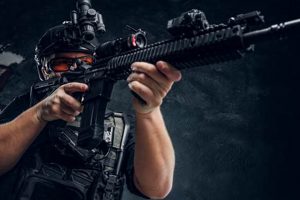
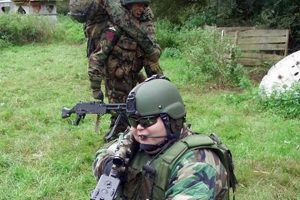
Simulated combat engagements utilizing realistic replica firearms that discharge 6mm plastic projectiles are a popular recreational activity. These engagements, often referred to as organized skirmishes, involve participants competing in various objective-based scenarios within designated playing areas. For example, teams might vie for control of a central point or attempt to eliminate all opposing players.
These activities offer a unique blend of physical exertion, strategic thinking, and social interaction. Participants benefit from increased cardiovascular fitness, improved tactical decision-making skills, and the development of teamwork abilities. Historically, the appeal stems from the desire for realistic military simulations without the dangers inherent in actual firearms training. They provide a safe environment to test strategies and hone skills that have parallels in other team-based activities.
The following sections will delve into the rules, equipment, and different styles of gameplay commonly encountered in these organized skirmishes. Further exploration will examine the safety protocols, the community aspect, and the ethical considerations that govern participation in this engaging pastime.
Strategic Approaches to Airsoft Skirmishes
Successful participation in organized airsoft engagements necessitates a blend of tactical planning, equipment proficiency, and adherence to established rules. The following recommendations aim to improve a participant’s overall performance and enhance their experience.
Tip 1: Prioritize Effective Communication: Maintain clear and concise communication with teammates regarding enemy positions, movement strategies, and objective status. Radio headsets can facilitate seamless coordination in larger playing areas.
Tip 2: Master Field Awareness: Constantly scan the environment for potential threats and advantageous positions. Understanding the terrain and anticipating enemy movements are crucial for survival and tactical success.
Tip 3: Maintain Equipment Proficiency: Regularly inspect and maintain airsoft replicas to ensure optimal performance and reliability. Practice reloading drills and familiarize oneself with the operational characteristics of primary and secondary weapons.
Tip 4: Implement Cover and Concealment Techniques: Utilize available cover, such as bunkers, trees, and walls, to minimize exposure to enemy fire. Learn to effectively transition between cover positions while maintaining situational awareness.
Tip 5: Adapt to Changing Battlefield Dynamics: Be prepared to adjust strategies based on evolving circumstances, such as enemy movements, objective changes, and unforeseen complications. Flexibility and adaptability are essential for success.
Tip 6: Focus on Teamwork and Coordination: Airsoft is inherently a team-based activity. Effective collaboration, mutual support, and coordinated maneuvers significantly increase the likelihood of achieving objectives.
Tip 7: Uphold Fair Play and Sportsmanship: Adhere strictly to established rules and demonstrate respect for opponents. Ethical conduct is paramount to maintaining a positive and enjoyable playing environment.
Consistently applying these principles can lead to demonstrable improvements in performance, enhanced tactical proficiency, and a more rewarding overall engagement experience.
The following section will examine specific strategies applicable to various game modes and field layouts.
1. Teamwork

The efficacy of a unit within organized simulated combat environments is fundamentally contingent upon its capacity for seamless teamwork. The coordination of individual actions towards a collective objective determines success or failure in these engagements. A direct correlation exists between the level of teamwork exhibited and the probability of achieving desired outcomes, such as capturing a strategic point or eliminating the opposing force. Real-world examples illustrate this principle. A team exhibiting synchronized movements, utilizing cover effectively, and communicating enemy positions accurately demonstrates a higher likelihood of success compared to a group operating in isolation with limited communication. This understanding is practically significant for participants seeking to enhance their overall performance and contribute meaningfully to their team’s objectives.
Furthermore, the specific demands of simulated combat scenarios necessitate specialized teamwork strategies. Communication protocols, pre-planned tactical maneuvers, and assigned roles within the team structure are essential components of effective teamwork. For instance, designated individuals might specialize in reconnaissance, providing crucial intelligence on enemy locations, while others focus on providing covering fire to allow for movement and flanking maneuvers. The ability to adapt teamwork strategies based on the dynamic conditions of the engagement is also crucial. Circumstances may require a shift in objectives, necessitating a realignment of individual roles and a revised approach to tactical execution.
In summary, teamwork represents an indispensable element of success in organized simulated combat. Overcoming challenges such as communication barriers and conflicting individual objectives requires a concerted effort to foster collaboration and mutual support. The principles of teamwork extend beyond the confines of the playing field, promoting valuable skills applicable to various aspects of collaborative endeavors.
2. Equipment

The selection and maintenance of appropriate equipment directly impacts a participant’s effectiveness and safety within organized simulated combat engagements. Airsoft replicas, protective gear, and tactical accessories are fundamental components influencing performance. The choice of a particular airsoft replica, whether a rifle, pistol, or shotgun, determines range, accuracy, and rate of fire, thereby dictating optimal engagement distances and tactical roles. Furthermore, the mandatory use of protective eyewear significantly mitigates the risk of eye injuries. A lack of suitable protective gear can result in disqualification from organized events and, more importantly, severe physical harm.
Beyond basic safety and functionality, specialized equipment enhances tactical capabilities. Tactical vests, pouches, and slings facilitate the efficient carrying of magazines, grenades, and communication devices, enabling sustained engagement in dynamic environments. The use of optics, such as red dot sights or scopes, improves target acquisition and accuracy, particularly at longer ranges. For instance, a sniper utilizing a high-powered scope and ghillie suit gains a significant advantage in concealment and precision targeting. Conversely, a player equipped with only a basic airsoft replica and minimal tactical gear will be at a distinct disadvantage against more adequately equipped opponents. The performance of the airsoft replica itself is crucial; properly maintained and upgraded internals ensure consistent performance and mitigate malfunctions that can compromise a player’s effectiveness.
In conclusion, equipment constitutes a critical determinant of success and safety in organized simulated combat engagements. Investing in quality equipment, maintaining it meticulously, and selecting appropriate tools for specific tactical roles are essential for optimal performance. Neglecting the importance of equipment can lead to reduced effectiveness, increased risk of injury, and a diminished overall experience. The proper selection and use of equipment demonstrates a commitment to both personal safety and competitive participation.
3. Tactical Planning

The strategic deployment of resources and personnel is a cornerstone of successful participation in simulated combat engagements. The effectiveness of participants is directly correlated to the depth and execution of pre-planned tactical strategies. For instance, a team that conducts thorough reconnaissance of the playing field, identifies key strategic positions, and coordinates its movements based on anticipated enemy actions demonstrates a significantly higher probability of achieving its objectives. Conversely, a group operating without a clear tactical plan is likely to be reactive and vulnerable to coordinated attacks. Tactical planning encompasses various elements, including route selection, communication protocols, and contingency plans for unforeseen circumstances. A failure to adequately address these elements can result in tactical disadvantages and increased vulnerability.
The practical application of tactical planning in simulated combat scenarios extends beyond the initial deployment phase. Adapting to evolving battlefield conditions requires constant reassessment and adjustment of the original plan. Consider a scenario where an initial objective is compromised, necessitating a shift in focus to an alternate objective. A well-prepared team will have anticipated such contingencies and developed alternative strategies for execution. Furthermore, the effective utilization of specialized roles and equipment within the team is contingent upon thorough tactical planning. Designated individuals may be assigned specific tasks, such as providing covering fire, flanking maneuvers, or disrupting enemy communication, all of which require coordinated action and pre-determined roles.
In summary, tactical planning is an indispensable element of success in simulated combat engagements. The ability to analyze the terrain, anticipate enemy actions, and coordinate team movements is crucial for achieving objectives and minimizing casualties. While unforeseen circumstances may necessitate deviations from the original plan, a solid foundation of tactical planning provides a framework for adaptability and resilience. Neglecting the importance of tactical planning can lead to decreased effectiveness and increased vulnerability, underscoring the necessity for careful preparation and strategic thinking.
4. Field Safety
The inherent nature of simulated combat activities necessitates a robust and consistently enforced framework of safety protocols. Participant well-being and the integrity of the activity are directly contingent upon the rigorous adherence to established field safety guidelines.
- Protective Gear Compliance
Mandatory use of ANSI-rated eye protection is paramount to prevent potential ocular injuries from projectile impacts. Full-face masks and lower-face protection further mitigate the risk of facial lacerations and dental trauma. Enforcement of protective gear requirements prior to and throughout engagements is critical to ensuring participant safety. Example: Failure to enforce eye protection policies can lead to severe injuries, underscoring the necessity for stringent oversight.
- Velocity Limits and Regulations
Airsoft replicas are subject to velocity limits, typically measured in feet per second (FPS) with 0.20g BBs. Chronograph testing before engagements ensures compliance and prevents replicas exceeding established safety thresholds. Specific fields may impose different velocity limits based on engagement distances and environmental conditions. Example: Indoor fields often enforce lower FPS limits than outdoor fields to mitigate the risk of injuries at closer ranges.
- Designated Safe Zones
Clearly defined safe zones, devoid of active engagement, provide areas for participants to remove protective gear, adjust equipment, and communicate without risk of projectile impact. Replicas must be unloaded and safety mechanisms engaged within these designated areas. Strict adherence to safe zone protocols is crucial for preventing accidental discharges and ensuring participant security. Example: Designating a central staging area as a safe zone allows for organized preparation and prevents accidental engagements outside the playing field.
- Medic Rules and Injury Procedures
Specific game modes may incorporate medic rules, allowing designated individuals to revive or treat downed players. Standardized injury procedures, including the immediate cessation of play and proper medical attention for serious injuries, are essential components of field safety. Implementing a clear communication system for reporting injuries and coordinating medical assistance is vital. Example: A field with established medic rules ensures that downed players receive prompt attention while minimizing disruption to ongoing engagements.
The multifaceted nature of field safety requires continuous vigilance and proactive measures to mitigate potential risks. Implementing and enforcing comprehensive safety protocols, coupled with participant education and responsible behavior, are crucial for maintaining a safe and enjoyable environment for all participants.
5. Game Objectives

The definition and implementation of specified objectives constitute a fundamental and defining characteristic of organized simulated combat engagements. Without clearly articulated goals, these activities devolve into unstructured skirmishes lacking strategic depth and competitive relevance. The objective provides a framework for tactical decision-making, influencing team composition, equipment selection, and overall engagement strategy. Capture-the-flag, team elimination, and objective-based scenarios such as bomb defusal or hostage rescue directly dictate participant actions and priorities. A team tasked with capturing a flag, for instance, will allocate resources and personnel towards offensive maneuvers and defensive strategies focused on securing the objective. Conversely, a team tasked with team elimination will prioritize aggressive engagements and individual player survival.
The practical significance of game objectives extends beyond simply providing a win condition. They introduce elements of risk assessment, resource management, and coordinated teamwork. Consider a scenario involving the capture of a fortified position. The attacking team must weigh the potential benefits of capturing the position against the risks of exposure to enemy fire. Effective resource management involves allocating ammunition, medical supplies, and personnel in a manner that maximizes the probability of achieving the objective while minimizing casualties. Coordinated teamwork is essential for executing complex maneuvers, such as flanking attacks or suppressing enemy fire, to facilitate the capture of the objective. These factors contribute to the overall challenge and strategic complexity of the engagement.
In summary, game objectives serve as the foundational element upon which organized simulated combat engagements are structured. They provide a framework for tactical decision-making, resource allocation, and coordinated teamwork. The clarity and specificity of the objectives directly impact the strategic depth and competitive relevance of the activity. The successful completion of these objectives necessitates a multifaceted approach, encompassing strategic planning, effective communication, and proficient execution. Ultimately, the pursuit of well-defined game objectives elevates these engagements from mere skirmishes to complex and engaging tactical simulations.
Frequently Asked Questions About Simulated Combat Engagements
The following addresses prevalent inquiries and misunderstandings regarding organized simulated combat engagements, providing factual and objective responses.
Question 1: What constitutes an acceptable level of protective gear in organized simulated combat?
Adherence to ANSI-rated eye protection is universally mandatory. Full-seal goggles or masks meeting this standard are required to safeguard against projectile impact. Lower-face protection, while not always mandated, is strongly advised to mitigate potential dental and facial injuries.
Question 2: What are the velocity limitations governing airsoft replicas used in organized events?
Velocity limits vary based on field type and engagement distances. Common thresholds range from 350 to 400 feet per second (FPS) with 0.20g BBs for indoor arenas, and 400 to 450 FPS for outdoor fields. Chronograph testing is standard procedure to ensure compliance.
Question 3: What distinguishes a designated “safe zone” from an active engagement area?
A designated safe zone is a clearly demarcated area where replica firearms must be unloaded, safety mechanisms engaged, and protective gear may be removed. Active engagement areas are defined by ongoing simulated combat activities and require the constant use of protective equipment.
Question 4: What are the typical engagement distances encountered in organized simulated combat?
Engagement distances depend heavily on the playing field’s layout and dimensions. Indoor arenas typically involve closer-quarters engagements, ranging from 10 to 50 feet, whereas outdoor fields may accommodate engagements extending to 100 feet or more.
Question 5: What defines fair play and ethical conduct in these simulated combat activities?
Fair play encompasses strict adherence to established rules, honest reporting of impacts, and respectful interaction with opponents. Ethical conduct dictates responsible firearm handling, the avoidance of unsportsmanlike behavior, and the promotion of a safe and enjoyable environment.
Question 6: How do different game objectives influence tactical approaches in simulated combat?
Game objectives directly dictate tactical priorities and resource allocation. Capture-the-flag necessitates offensive maneuvers, team elimination prioritizes aggressive engagements, and objective-based scenarios such as bomb defusal demand specialized strategies and coordinated teamwork.
Understanding and adhering to these principles is crucial for responsible and enjoyable participation in organized simulated combat engagements. The implementation of safety protocols, ethical conduct, and tactical awareness contributes significantly to the overall experience.
Further exploration of specific game modes and advanced tactical strategies will be addressed in the subsequent section.
Conclusion
This exploration has delineated the key components of organized simulated combat engagements, often referred to as “airsoft wars.” These encompass the critical aspects of teamwork, equipment, tactical planning, field safety, and the diverse range of game objectives that define participation. Understanding and adhering to these principles is paramount for ensuring both a safe and strategically rewarding experience within this activity.
While the simulated nature of these engagements necessitates a focus on responsible conduct and adherence to established protocols, the underlying strategic complexities and the emphasis on teamwork offer a valuable platform for skill development and tactical proficiency. Continued engagement and a commitment to ethical practices will further refine participant capabilities within “airsoft wars,” fostering a culture of sportsmanship and strategic acumen. Further research into advanced tactical doctrines and the evolving landscape of equipment technology will undoubtedly shape the future of this engaging pursuit.
![Best Airsoft Target [Practice & Fun!] Guide | Ultimate Airsoft Guide for Beginners, Tactics & Gear Reviews](https://airsoftica.com/wp-content/uploads/2026/04/th-359-300x200.jpg "Best Airsoft Target [Practice & Fun!] Guide Ultimate Airsoft Guide for Beginners, Tactics & Gear Reviews")