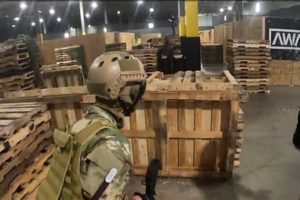
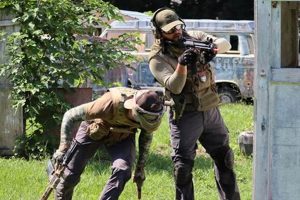
Equipment designed to shield the auditory system during airsoft activities is essential. This gear mitigates the risk of hearing damage from the loud reports of airsoft weapons, especially in enclosed spaces. Examples include specialized headsets, earplugs, and tactical helmets with integrated hearing protection.
Preserving auditory health during airsoft games offers several advantages. It allows for sustained participation without the risk of long-term hearing impairment, enabling players to maintain situational awareness and communication effectiveness. Early forms of hearing protection for shooting sports were rudimentary, evolving into the sophisticated, comfortable, and effective options available today.
The following sections will delve into the various types of equipment available, factors influencing the selection process, proper usage guidelines, and maintenance procedures to ensure optimal performance and longevity. The aim is to provide comprehensive information to facilitate informed decisions regarding hearing safety in airsoft.
Airsoft Ear Protection
Optimizing the performance and lifespan of auditory safeguarding equipment requires adherence to specific guidelines. The following recommendations promote responsible usage and consistent maintenance.
Tip 1: Selection Based on Environment: The choice of equipment should align with the operational environment. Enclosed spaces necessitate higher Noise Reduction Rating (NRR) values compared to open fields.
Tip 2: Proper Fitting is Crucial: Ill-fitting earplugs or headsets compromise protection. Ensure a snug and secure fit that effectively seals the ear canal or covers the entire ear.
Tip 3: Consistent Usage Throughout Gameplay: Consistent employment of protection throughout all phases of the game is vital. Brief periods of unprotected exposure can contribute to cumulative hearing damage.
Tip 4: Regular Inspection for Damage: Periodically examine the equipment for cracks, tears, or degradation of materials. Damaged equipment should be promptly replaced.
Tip 5: Cleaning and Storage Procedures: After each use, clean the equipment according to the manufacturers instructions. Store it in a dry, protected location away from extreme temperatures and direct sunlight.
Tip 6: Battery Management (for Electronic Devices): For electronic headsets, adhere to recommended battery replacement schedules. Failing batteries can compromise the device’s functionality and effectiveness.
These tips collectively emphasize the importance of proactive measures in preserving auditory health. Implementing these strategies enhances safety and extends the service life of protective equipment.
The subsequent section will provide a detailed overview of common issues and troubleshooting techniques, ensuring users can readily address minor malfunctions and maintain optimal performance.
1. Attenuation Ratings and Airsoft
Attenuation ratings, quantified as Noise Reduction Rating (NRR), are paramount in assessing the capacity of hearing protection devices to mitigate noise exposure during airsoft activities. Understanding NRR is critical for selecting appropriate gear.
- NRR Values and Their Significance
NRR values numerically represent the decibel reduction a device provides. A higher NRR indicates greater noise reduction. For example, an NRR of 30 suggests the device reduces noise exposure by 30 decibels, effectively lowering the sound level reaching the ear. Airsoft scenarios with loud bursts necessitate higher NRR values.
- Measurement Methodologies and Standards
NRR is determined through standardized laboratory testing. These tests involve exposing the device to known sound levels and measuring the reduction achieved. Compliance with ANSI standards (American National Standards Institute) ensures ratings are accurate and reliable. Manufacturers commonly display NRR ratings prominently on packaging.
- Real-World Application and Considerations
While NRR provides a benchmark, real-world performance can vary. Proper fit is crucial; a loose fit compromises the device’s ability to achieve the stated NRR. Furthermore, environmental factors, such as humidity and the presence of debris, may affect performance. It is recommended to select airsoft ear protection with higher NRR value that the level of noise produced by airsoft weapons, and the environment.
- Limitations of NRR
NRR offers a simplified representation of noise reduction capabilities. It does not account for frequency-specific attenuation. Certain devices may perform better at reducing high-frequency sounds compared to low-frequency sounds. It is best to understand decibel-level range for each airsoft weapons when selecting attenuation level for ear protection gear. Therefore, it is advisable to consult specialized resources or experts for tailored recommendations.
Comprehending NRR and its limitations enables informed decisions regarding the selection and use of hearing protection in airsoft, minimizing the risk of noise-induced hearing loss. Consistent and appropriate use of properly rated and fitted equipment is essential for safeguarding auditory health.
2. Proper Fit

The efficacy of airsoft ear protection is intrinsically linked to achieving a proper fit. Regardless of the technology or materials employed, a poorly fitted device offers compromised protection, negating intended safety benefits.
- Seal Integrity
The primary function of auditory safeguarding equipment is to create an airtight seal, preventing sound waves from entering the ear canal. Ill-fitting earplugs or earmuffs fail to achieve this seal, permitting sound leakage and undermining the protection. Examples include earplugs that are too small and do not fill the canal, or earmuffs with gaps due to improper adjustment.
- Sustained Effectiveness
Even if a seal is initially established, movement and activity inherent in airsoft gameplay can dislodge improperly fitted devices. Repeated adjustments disrupt concentration and can lead to inconsistent levels of protection. A helmet or headgear may also impact the seal.
- Comfort and Compliance
An uncomfortable fit discourages consistent usage. If the device causes pressure, irritation, or pain, players are less likely to wear it throughout an entire game. Comfort drives compliance and sustained adherence to safety protocols. Different size/shapes of ear will benefit from differnet brands and size of ear protection.
- Noise Reduction Rating (NRR) Validation
Published NRR values are contingent upon proper usage, including achieving a proper fit. The stated NRR is only valid when the device is used as intended and creates a secure seal. A loose or incorrect fit invalidates the published NRR, rendering it an inaccurate reflection of actual protection.
In summary, the connection between proper fit and airsoft ear protection is fundamental. A device that does not fit correctly provides inadequate protection, regardless of its other features. Prioritizing fit ensures the attainment of intended safety levels.
3. Material Durability
Material durability, in the context of airsoft ear protection, directly influences the longevity, performance, and overall reliability of protective equipment. The capacity of materials to withstand the stresses of airsoft gameplay is a primary factor in ensuring sustained auditory safety.
- Impact Resistance
Materials must resist physical impacts from BBs, branches, or falls. Polymers, composites, and reinforced plastics are commonly employed due to their high impact resistance. Failure to withstand such impacts can compromise the integrity of the protective barrier, exposing the wearer to potential auditory damage. For example, cracked earmuff cups or shattered earplug housings can negate the intended attenuation.
- Environmental Degradation
Prolonged exposure to sunlight, moisture, and temperature fluctuations can degrade certain materials, leading to embrittlement or warping. This is particularly relevant for airsoft ear protection used outdoors. UV-resistant coatings and waterproof materials mitigate these effects. For example, foam earplugs can lose their elasticity and sealing properties when exposed to humidity.
- Wear and Tear from Usage
Repeated use, cleaning, and storage can cause wear and tear on airsoft ear protection. This includes abrasion of outer surfaces, stretching of elastic components, and compression of foam. Robust materials and reinforced construction techniques extend the lifespan of the equipment. Silicone earplugs, for instance, are typically more resistant to wear and tear than foam alternatives.
- Chemical Resistance
Exposure to cleaning agents, sweat, and skin oils can chemically degrade certain materials. This can lead to discoloration, softening, or even structural weakening. Materials with high chemical resistance are preferred. For example, certain types of plastics may become brittle when exposed to harsh cleaning solvents.
The selection of durable materials is crucial in airsoft ear protection design. It directly affects the equipment’s ability to provide reliable and long-lasting auditory protection. Prioritizing material durability ensures that the protection remains effective throughout the rigors of airsoft gameplay.
4. Communication Compatibility

Communication compatibility is a critical factor when selecting auditory safeguarding equipment for airsoft activities. Maintaining clear communication with teammates is essential for strategic gameplay, and the chosen equipment should facilitate, not hinder, this capability.
- Headset Integration
Many airsoft ear protection solutions incorporate headset integration capabilities. This allows for the seamless use of communication devices without compromising auditory protection. Tactical helmets with integrated communication systems provide both protection and clear audio transmission.
- Microphone Placement and Sensitivity
The placement and sensitivity of microphones are crucial for effective communication. Microphones should be positioned to minimize ambient noise while capturing the wearer’s voice clearly. Poorly positioned or insensitive microphones can lead to garbled transmissions and miscommunication.
- PTT (Push-to-Talk) Accessibility
Easy access to push-to-talk (PTT) buttons is essential for rapid communication during gameplay. The design of ear protection should not impede the accessibility or usability of PTT devices. Tactical gloves and gear should also be considered to ensure unimpeded PTT operation.
- Digital Noise Suppression
Advanced ear protection systems incorporate digital noise suppression technology to filter out distracting ambient sounds, enhancing the clarity of incoming transmissions. This is particularly useful in noisy environments, such as indoor airsoft arenas.
In conclusion, effective communication is paramount in airsoft, and the selected ear protection must facilitate this need. Considerations such as headset integration, microphone quality, PTT accessibility, and noise suppression capabilities all contribute to seamless communication on the field, ensuring that auditory safeguarding does not compromise team coordination.
5. Environmental Considerations
Environmental factors significantly impact the selection and performance of auditory safeguarding equipment. Airsoft gameplay conducted in diverse settings necessitates careful consideration of ambient conditions to ensure optimal protection and user comfort.
- Temperature and Humidity
Extreme temperatures and high humidity levels can affect the materials used in airsoft ear protection. Heat can cause discomfort, leading to reduced compliance, while humidity may degrade foam or other absorbent materials, diminishing their effectiveness. Conversely, sub-zero temperatures can stiffen materials, impacting seal integrity. Therefore, material selection must align with anticipated climatic conditions.
- Wind and Precipitation
Wind can introduce significant noise interference, particularly when using communication headsets. Open-ear designs may be susceptible to wind noise, hindering clear communication. Similarly, rain or snow can compromise electronic components or saturate absorbent materials, reducing their performance and lifespan. Waterproof or water-resistant designs are beneficial in wet environments.
- Terrain and Vegetation
Gameplay in wooded areas or dense terrain requires robust materials resistant to abrasion from branches and foliage. Ear protection must withstand physical contact with the environment without compromising its protective qualities. Open fields, on the other hand, may necessitate greater emphasis on noise reduction, as sound can travel farther without natural barriers.
- Air Quality and Debris
Dust, pollen, and other airborne particles can accumulate within ear protection, causing irritation or affecting the functionality of electronic components. Environments with poor air quality necessitate equipment that is easily cleanable and resistant to particle ingress. The accumulation of debris can compromise seal integrity and reduce overall effectiveness.
In summary, environmental considerations are integral to selecting appropriate airsoft ear protection. Adapting equipment choices to the specific conditions ensures optimal protection, enhances comfort, and promotes long-term reliability, ultimately safeguarding the auditory health of participants across diverse environments.
6. Maintenance Protocols
Maintenance protocols are intrinsically linked to the sustained efficacy and longevity of airsoft ear protection. The impact of consistent maintenance directly influences the equipment’s ability to perform its primary function: safeguarding auditory health during airsoft gameplay. Neglecting established maintenance procedures precipitates a cascade of negative effects, culminating in diminished protection and potential equipment failure. For example, the accumulation of debris within earplugs compromises their sealing capability, reducing the Noise Reduction Rating (NRR). Similarly, sweat and skin oils degrade foam components, affecting their elasticity and sound-dampening properties.
Implementing routine cleaning, inspection, and storage procedures constitutes a proactive approach to preserving the integrity of airsoft ear protection. Cleaning removes contaminants that compromise performance, while inspection identifies potential damage or wear before it escalates into a critical failure. Proper storage, away from direct sunlight and extreme temperatures, prevents material degradation. Consider the scenario where electronic earmuffs, subjected to regular battery replacement and cleaning, consistently deliver optimal noise reduction and communication capabilities throughout extended gameplay sessions.
In conclusion, adherence to meticulously defined maintenance protocols is not merely an ancillary consideration; it is a fundamental component of responsible airsoft ear protection ownership. Neglecting maintenance introduces risks of compromised protection and premature equipment failure. By prioritizing consistent cleaning, inspection, and storage, users maximize the lifespan and performance of their auditory safeguarding equipment, ensuring sustained protection against noise-induced hearing damage. The implementation of these protocols is an investment in long-term auditory health and a demonstration of responsible airsoft participation.
Frequently Asked Questions
This section addresses common inquiries regarding auditory safeguarding equipment utilized in airsoft activities. The information provided aims to clarify misconceptions and promote informed decisions regarding hearing health.
Question 1: What constitutes adequate protection against noise generated by airsoft weaponry?
Adequate protection necessitates equipment with a Noise Reduction Rating (NRR) sufficient to attenuate the peak decibel levels produced by the specific airsoft weapon in use. Consultation with manufacturers’ specifications and professional audiologists is advisable.
Question 2: How does humidity affect the performance of foam earplugs?
Prolonged exposure to humidity compromises the elasticity and sealing properties of foam earplugs. This diminishes their noise reduction capabilities, rendering them less effective. Replacement with new, dry earplugs is recommended in humid environments.
Question 3: Is it necessary to use ear protection in outdoor airsoft games?
Outdoor environments do not negate the need for ear protection. The cumulative effect of repeated exposure to even moderate noise levels contributes to long-term hearing damage. Furthermore, enclosed outdoor spaces can amplify sound.
Question 4: Can electronic earmuffs completely eliminate all ambient noise?
Electronic earmuffs, even those with advanced noise suppression technology, cannot completely eliminate all ambient noise. They attenuate sound to safer levels, allowing for situational awareness while minimizing the risk of hearing damage.
Question 5: How frequently should airsoft ear protection be replaced?
The replacement frequency depends on usage intensity and material degradation. Visual inspection for cracks, tears, or hardening is critical. Generally, disposable earplugs should be replaced after each use, while reusable equipment should be replaced annually or as needed.
Question 6: Does price correlate directly with the effectiveness of airsoft ear protection?
Price is not the sole determinant of effectiveness. While more expensive options may offer advanced features, such as digital noise suppression, proper fit and adequate NRR are paramount, regardless of cost.
In summary, appropriate auditory protection during airsoft gameplay requires careful consideration of NRR ratings, environmental factors, material durability, and individual fit. Consistent adherence to safety protocols is essential for preserving hearing health.
The following section will explore real-world scenarios and case studies illustrating the importance of utilizing proper auditory safeguarding measures in airsoft.
Conclusion
This exploration has underscored the critical role of “airsoft ear protection” in mitigating the inherent risks associated with the sport. From attenuation ratings and proper fit to material durability, communication compatibility, environmental considerations, and maintenance protocols, each facet contributes to a comprehensive approach to safeguarding auditory health. Understanding these elements empowers participants to make informed decisions and adopt responsible practices.
The long-term consequences of neglecting auditory safety are irreversible. Therefore, prioritizing the consistent and appropriate use of “airsoft ear protection” is not merely a recommendation; it is an imperative for preserving hearing. Continued vigilance and adherence to established safety guidelines are essential for ensuring the well-being of all airsoft participants. The future of the sport depends on a commitment to responsible practices, and safeguarding auditory health is a fundamental aspect of that commitment.