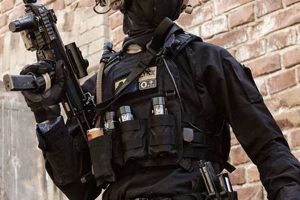
This simulated combat activity involves the use of airsoft replicas of weaponry and equipment from the First World War era. Participants engage in tactical scenarios replicating historical battles or skirmishes, utilizing period-specific gear for an immersive experience. For instance, players might use replicas of bolt-action rifles common during the conflict, along with uniforms and web gear emulating the attire of soldiers from the Allied or Central Powers.
The appeal lies in its ability to provide a tangible connection to history, allowing participants to experience, albeit in a controlled environment, some of the challenges and considerations faced by soldiers during the Great War. It offers a unique blend of historical reenactment, tactical gameplay, and camaraderie, fostering an appreciation for the sacrifices made during the conflict. Furthermore, participation can promote physical fitness and strategic thinking.
The following sections will delve into the specifics of recreating the weaponry, uniforms, and tactics associated with the period, offering guidance for those interested in engaging in this historical simulation. Attention will be given to accuracy, safety, and the availability of resources for participants.
Essential Considerations for Historical Airsoft Engagements
Participation in simulated combat scenarios from the First World War era requires careful consideration of several factors to ensure both historical accuracy and participant safety. The following guidelines provide essential advice for those engaging in this activity.
Tip 1: Weaponry Authenticity: Select airsoft replicas that accurately represent firearms used during the conflict. Prioritize models that mirror the appearance, weight, and operation of original weapons, focusing on bolt-action rifles and period-appropriate sidearms. Research historical records to ensure the chosen replica aligns with the desired impression.
Tip 2: Uniform and Gear Accuracy: Invest in uniforms and equipment that meticulously reproduce the attire of soldiers from the chosen nation and time period. Consult historical sources, photographs, and museum collections to ensure the correct colors, patterns, and materials are used. Avoid modern alterations or additions that detract from the overall authenticity.
Tip 3: Tactical Doctrine Adherence: Study the tactical doctrines and operational procedures employed during the First World War. Emulate the formations, movements, and communication methods used by infantry units of the era. Understand the limitations of the weaponry and the importance of coordinated maneuvers.
Tip 4: Safety Protocols and Equipment: Prioritize safety by wearing appropriate eye protection, face masks, and other protective gear designed for airsoft activities. Adhere strictly to established safety rules and regulations, including minimum engagement distances and responsible weapon handling procedures. Remember that historical accuracy should never compromise safety.
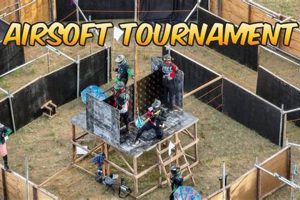
Tip 5: Field Layout and Terrain Simulation: Choose or create playing fields that resemble the terrain of First World War battlefields. Incorporate trenches, barbed wire obstacles, shell craters, and other features that recreate the environment of the Western Front or other theaters of the war. Consider the impact of terrain on movement and tactical options.
Tip 6: Communication and Coordination: Establish clear communication protocols and coordinate movements effectively within the unit. Utilize period-appropriate communication methods, such as whistles, hand signals, and pre-arranged calls, to enhance realism and teamwork. Practice these methods prior to engaging in simulated combat.
Tip 7: Historical Research and Education: Conduct thorough research into the history of the First World War, focusing on the specific battles, units, and individuals being portrayed. Share knowledge and insights with other participants to enhance the educational value of the activity and promote a deeper appreciation for the historical context.
Adherence to these guidelines will contribute to a more authentic, immersive, and educational experience, fostering a greater understanding of the First World War while ensuring participant safety and responsible engagement. The benefits extend beyond simple recreation, providing a unique perspective on military history.
The conclusion will summarize the key aspects discussed, highlighting the importance of accuracy, safety, and historical awareness in this engaging hobby.
1. Authentic Weapon Replicas

The utilization of authentic weapon replicas forms a cornerstone of credible First World War era airsoft simulations. These replicas serve as more than mere props; they are instrumental in establishing the visual and tactile reality central to recreating the historical period. The choice of replica directly impacts the immersive qualities of the experience, dictating the level of realism attainable. An accurate representation of a Mauser Gewehr 98, for example, necessitates not only visual similarity but also functional congruence, including bolt-action mechanics and realistic weight distribution. This attention to detail enhances the participant’s understanding of the weapon’s operation and its role in the context of the war.
The practical significance of employing authentic replicas extends beyond aesthetics. The handling characteristics of the replica influence tactical decisions and maneuvering. A replica of a Lewis Gun, with its characteristic weight and limited mobility, necessitates different strategic considerations compared to a lighter bolt-action rifle. This difference in handling, mirroring the historical reality, compels participants to adapt their tactics accordingly. Furthermore, sourcing accurate replicas can prove challenging, as availability and historical correctness must be considered. Replicas might require modifications or customizations to achieve a higher degree of authenticity, emphasizing the dedication to historical accuracy within the simulation.
In summary, authentic weapon replicas are vital for creating a realistic and informative First World War airsoft experience. They contribute to visual fidelity, influence tactical decisions, and demand a commitment to historical research. The challenge lies in sourcing and maintaining these replicas, ensuring they meet the standards of both authenticity and operational safety, ultimately enhancing the educational and immersive nature of the simulation.
2. Historical Uniform Accuracy

Historical uniform accuracy plays a crucial role in the immersive and educational aspects of First World War era airsoft engagements. Precise representation of military attire from the period is fundamental to creating a believable and respectful portrayal of the conflict. This requires careful attention to detail, encompassing fabric types, colors, insignia, and equipment.
- Material Authenticity and Construction
The composition of uniforms significantly impacts their appearance and functionality. Wool, cotton, and linen were common materials. Reproduction uniforms should strive to replicate these materials and construction techniques, including stitching patterns, button types, and overall tailoring. Deviation from historical fabrics can detract from the visual authenticity and affect the wearer’s comfort and mobility.
- Color Fidelity and Camouflage Considerations
Uniform colors varied significantly between nations and evolved throughout the war. German field gray (feldgrau), British khaki, and French horizon blue were distinct identifiers. Replicating these colors accurately is essential. Furthermore, understanding the purpose of these colors, whether for camouflage or identification, provides context for their historical use.
- Insignia and Rank Identification
Insignia denoting rank, unit affiliation, and specializations are critical components of historical uniform accuracy. Chevrons, patches, and other markings must be correctly positioned and representative of the specific time period and nationality being portrayed. Errors in insignia can lead to misrepresentation and undermine the credibility of the impression.
- Equipment and Accessories Integration
Uniforms are incomplete without the appropriate equipment and accessories. Webbing, pouches, helmets, and footwear must be consistent with the historical period. The arrangement and method of attachment of this equipment are equally important. An incorrect helmet or anachronistic webbing can disrupt the overall historical accuracy.
The cumulative effect of these facets significantly influences the authenticity of the airsoft experience. The pursuit of accurate historical uniforms not only enhances the visual realism but also promotes a deeper understanding of the material conditions and practical considerations faced by soldiers during the First World War. This dedication to detail elevates the activity beyond a simple game, transforming it into an educational and respectful engagement with history.
3. Period-Specific Tactical Play

The effective recreation of First World War engagements through simulated combat necessitates a thorough understanding and implementation of period-specific tactical doctrines. Tactical approaches employed during the Great War differed significantly from modern military strategies, reflecting the technology and battlefield conditions of the time. Integrating these historical tactics into airsoft scenarios is crucial for achieving a truly immersive and educational experience.
- Trench Warfare and Static Fronts
Trench warfare dominated much of the First World War, leading to largely static fronts and attritional combat. Airsoft scenarios should reflect this reality, emphasizing fortified positions, limited maneuverability, and the importance of fire support. Simulated trench systems, barbed wire obstacles, and no man’s land scenarios accurately replicate the constraints and challenges of this type of warfare.
- Infantry Assault Tactics
Infantry assaults during the war were often characterized by frontal attacks against entrenched positions, resulting in high casualties. Recreating these assaults in airsoft requires disciplined formations, suppression fire, and a willingness to advance under simulated fire. The limitations of bolt-action rifles and the lethality of machine guns should be factored into the tactical approach, highlighting the difficulty and cost of these attacks.
- Artillery Simulation and its Impact
Artillery played a pivotal role in the First World War, shaping the battlefield and influencing infantry movements. While direct artillery simulation is not feasible in airsoft, its effects can be replicated through the use of timed smoke grenades or designated “artillery zones.” These simulations force players to take cover, disrupt their formations, and simulate the psychological impact of artillery bombardment.
- Communication and Command Structures
Communication during the First World War was often unreliable, relying on runners, signal flags, or field telephones. Implementing similar communication limitations in airsoft scenarios adds a layer of realism and emphasizes the importance of clear pre-battle planning and independent initiative. Command structures should reflect the hierarchical organization of military units during the period.
By integrating these period-specific tactical elements into airsoft engagements, participants gain a more profound appreciation for the challenges faced by soldiers during the First World War. The emphasis on historical accuracy transforms the activity from a simple game into an educational and immersive experience, promoting a greater understanding of the conflict’s complexities and human cost. Understanding is more benifical than just fun.
4. Field Layout Realism

The authenticity of simulated combat experiences during the First World War era hinges significantly on the realism of the playing field. The design and execution of field layouts directly influence the immersion, tactical considerations, and educational value of these engagements. Mimicking the environments of the Western Front or other theaters of the war requires meticulous planning and attention to detail.
- Trench Systems and Fortifications
Trench networks were a defining feature of the conflict. Airsoft fields should incorporate elaborate trench systems, complete with fire steps, dugouts, and communication trenches. The depth, width, and layout of these trenches should mirror historical precedents. Fortifications, such as bunkers and pillboxes, should also be included to simulate the heavily defended nature of the battlefields.
- Barbed Wire Obstacles and No Man’s Land
Barbed wire presented a formidable obstacle to advancing troops. Airsoft fields should feature realistic barbed wire entanglements, strategically placed to channel movement and impede assaults. A designated “no man’s land” area, devoid of cover and subject to simulated artillery fire, further replicates the challenges of crossing open ground under enemy observation.
- Shell Craters and Terrain Irregularities
Constant artillery bombardment left the landscape scarred with shell craters and other terrain irregularities. These features can be simulated through the creation of artificial craters and the incorporation of uneven terrain. These elements not only enhance the visual realism but also affect movement, visibility, and tactical positioning.
- Environmental Details and Atmospheric Effects
Adding environmental details, such as muddy terrain, destroyed buildings, and scattered debris, further enhances the immersive qualities of the field. Simulated fog, smoke, or rain can create atmospheric effects that replicate the harsh conditions of the First World War. These details contribute to a more believable and engaging experience for participants.
The integration of these elements into the field layout is paramount for achieving a realistic and historically accurate simulated combat environment. The more closely the field mirrors the actual battlefields of the First World War, the more immersive and educational the experience becomes. The emphasis on authenticity transforms the activity from a recreational pursuit into a tangible connection with the past, allowing participants to better understand the challenges and realities faced by soldiers during the conflict. Careful consideration of environmental conditions, replicating the desolation and destruction of war, further adds to the impact.
5. Safety Protocol Compliance

The nexus between rigorous safety protocol compliance and engagements replicating the First World War through airsoft is not merely advisable, but fundamentally essential for the responsible execution of the activity. Airsoft weaponry, while designed for recreational use, projects projectiles at velocities capable of causing injury. Moreover, the simulated combat environment, often incorporating trenches, obstacles, and close-quarters scenarios, inherently presents risks of slips, trips, and collisions. Non-compliance with established safety guidelines can therefore lead to significant physical harm, including eye injuries, lacerations, and musculoskeletal trauma. The historical context should never overshadow the immediate need to prioritize participant safety through strict adherence to established regulations.
Specific examples of safety protocols directly relevant to First World War airsoft scenarios include the mandatory use of full-seal eye protection meeting recognized safety standards (e.g., ANSI Z87.1), the enforcement of minimum engagement distances based on weapon power output, and the strict prohibition of unsafe behavior, such as blind firing or intentional targeting of unprotected areas. Furthermore, responsible weapon handling procedures, including maintaining muzzle awareness and keeping weapons on safe when not actively engaged, are critical to preventing accidental discharges. The effectiveness of these protocols hinges on consistent enforcement and participant education, ensuring that all individuals involved understand the risks and responsibilities associated with the activity. For instance, organized events often incorporate pre-game safety briefings and mandatory equipment checks to mitigate potential hazards.
In conclusion, safety protocol compliance forms the bedrock of responsible First World War airsoft engagements. Failure to prioritize safety not only jeopardizes the well-being of participants but also undermines the integrity and credibility of the activity. By strictly adhering to established guidelines, implementing robust enforcement measures, and fostering a culture of safety consciousness, the risks associated with airsoft can be effectively mitigated, allowing participants to engage in a historically immersive experience without compromising their personal safety or the safety of others. The challenge lies in maintaining vigilance and consistently reinforcing safety protocols, even in the heat of simulated combat.
Frequently Asked Questions Regarding WW1 Airsoft
This section addresses common inquiries and concerns related to the simulation of First World War combat using airsoft weaponry. The information presented aims to provide clarity and promote responsible engagement in this activity.
Question 1: What specific types of airsoft guns are considered appropriate for WW1 Airsoft events?
Answer: Airsoft replicas of firearms historically utilized during the First World War are deemed appropriate. These typically include bolt-action rifles such as the Mauser Gewehr 98, Lee-Enfield, and Mosin-Nagant. Sidearms, such as the Luger P08 or Webley revolver, are also permissible. The specific models allowed may vary depending on the event organizer’s rules and guidelines.
Question 2: Is there a standard for uniform and equipment authenticity within the WW1 Airsoft community?
Answer: While strict regulations are rare, a general emphasis is placed on historical accuracy. Participants are typically encouraged to utilize uniforms and equipment that closely resemble those used by soldiers of the specific nation and time period being portrayed. Resources such as historical photographs and museum collections can aid in achieving a greater level of authenticity. However, safety should never be compromised for the sake of historical accuracy.
Question 3: What are the primary safety concerns associated with WW1 Airsoft?
Answer: The primary safety concerns are consistent with those of standard airsoft activities, including the risk of eye injuries, lacerations, and musculoskeletal trauma. Adherence to established safety protocols, such as mandatory eye protection, minimum engagement distances, and responsible weapon handling, is crucial for mitigating these risks. The presence of trenches and barbed wire in some WW1 airsoft fields may also present additional hazards.
Question 4: How are historical tactics incorporated into WW1 Airsoft scenarios?
Answer: Event organizers often design scenarios that reflect the tactical doctrines of the First World War. This may involve recreating trench warfare engagements, infantry assaults, or reconnaissance missions. Participants are encouraged to employ formations, movements, and communication methods consistent with those used by soldiers of the era. Limitations on weapon technology further inform tactical decision making.
Question 5: What resources are available for individuals interested in learning more about WW1 Airsoft?
Answer: Online forums, historical reenactment groups, and airsoft communities often serve as valuable resources for individuals seeking information about WW1 airsoft. These platforms provide opportunities to connect with experienced participants, share knowledge, and access information about events, equipment, and historical accuracy.
Question 6: How can one ensure that WW1 Airsoft events are conducted in a respectful and historically sensitive manner?
Answer: Respect for the historical context is paramount. Participants should approach the activity with an understanding of the human cost of the First World War and avoid behaviors that trivialize or disrespect the sacrifices made by soldiers. Accurate representation, responsible gameplay, and historical research contribute to a more respectful and meaningful experience.
Engaging responsibly and informed is important with “ww1 airsoft”.
The following sections will discuss the gear of ww1 airsoft.
Conclusion
This exposition of “ww1 airsoft” has illuminated the multifaceted nature of this engagement. The commitment to accurate weapon replicas, historical uniform authenticity, period-specific tactical play, and realistic field layouts converges to create an immersive simulation. Crucially, safety protocol compliance underpins the entire endeavor, ensuring participant well-being. The activity’s value extends beyond mere recreation, offering a tangible connection to history and fostering an appreciation for the sacrifices of the First World War.
Continued dedication to historical accuracy, responsible gameplay, and robust safety measures will serve to enhance the educational and experiential benefits of recreating this pivotal period through simulated combat. May the commitment to historical fidelity and safety remain paramount for all who engage in this pursuit.