This recreational activity simulates tactical combat scenarios using realistic imitation firearms that discharge non-lethal projectiles. Participants engage in team-based objectives, utilizing strategic planning and communication to achieve victory within a designated playing area. The activity promotes physical exercise, teamwork, and strategic thinking.
The significance of this activity lies in its ability to provide a controlled and safe environment for individuals to experience simulated combat. It encourages camaraderie and develops leadership skills through shared objectives. Historically, such activities have evolved from military training simulations, offering a recreational outlet for those interested in tactical strategy.
The following sections will delve into specific aspects of this activity, including safety protocols, equipment requirements, gameplay variations, and the communities that have formed around this shared interest.
Tactical Recommendations for Enhanced Gameplay
The subsequent recommendations are designed to optimize performance and enhance the overall experience in simulated tactical engagements. Adherence to these guidelines will improve strategic effectiveness and promote a safer environment for all participants.
Tip 1: Prioritize Situational Awareness: Maintain constant vigilance of the surrounding environment. Effective observation provides critical information about enemy positions and potential flanking routes. Regularly scan the playing field to anticipate opponent movements.
Tip 2: Master Communication Protocols: Clear and concise communication is essential for coordinated teamwork. Establish pre-determined signals and terminology to convey information quickly and accurately. Employ brevity codes to streamline message delivery.
Tip 3: Utilize Cover and Concealment: Employ available terrain features for protection. Understanding the difference between cover (protection from projectiles) and concealment (hiding from view) is crucial. Move strategically between cover points to minimize exposure.
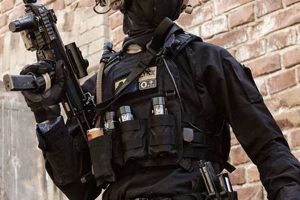
Tip 4: Adapt Equipment for Optimal Performance: Optimize load-bearing equipment for efficient movement and access to essential items. Ensure equipment is properly fitted and configured to minimize distractions and maximize agility.
Tip 5: Maintain Equipment Integrity: Regularly inspect and maintain all equipment. Check imitation firearm functionality, projectile supplies, and protective gear for any signs of wear or damage. Proactive maintenance minimizes the risk of equipment failure during gameplay.
Tip 6: Practice Tactical Maneuvers: Regularly rehearse basic tactical maneuvers, such as flanking, suppressing fire, and room clearing techniques. Repetition builds muscle memory and improves team coordination under pressure.
Tip 7: Know the Rules of Engagement: Thoroughly understand and adhere to all established rules and safety regulations. Clarify any uncertainties before engaging in gameplay. Strict adherence to rules promotes fairness and minimizes the risk of injury.
By implementing these recommendations, participants can significantly enhance their tactical proficiency and contribute to a more engaging and secure gameplay experience. Consistent application of these principles will lead to improved strategic decision-making and heightened team performance.
The following section will provide a comprehensive overview of safety protocols and equipment specifications that are crucial for responsible participation in simulated tactical engagements.
1. Game Site Topography

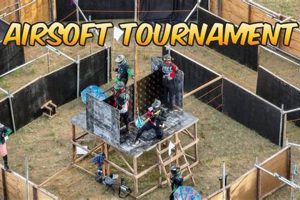
The physical layout of a playing area profoundly influences tactical considerations and strategic planning. Terrain features such as dense woodland, open fields, buildings, and elevation changes dictate movement patterns, engagement ranges, and concealment opportunities. Consequently, successful strategies directly correlate with a thorough understanding and adaptation to the specific characteristics of a given locale.
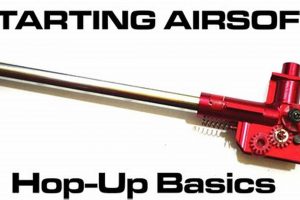
Consider, for example, a game site featuring a network of interconnected buildings. In such an environment, close-quarters combat skills and room-clearing tactics become paramount. Conversely, an open field emphasizes the importance of long-range accuracy and suppressive fire. Teams failing to assess and adapt to these topographical demands face a significant disadvantage. The selection of appropriate equipment, such as imitation firearms with adjustable hop-up systems for varying ranges, and the development of coordinated movement techniques, become critical success factors. Game site topography informs the selection of tactics and the specialization of player roles.
In summary, the impact of game site topography is undeniable. A nuanced understanding of the playing field is foundational for strategic decision-making. Challenges often arise from dynamic environmental conditions, such as changing weather, that require constant reassessment and adaptation. Effective integration of topographical awareness into tactical planning increases a teams operational effectiveness.
2. Equipment Regulation Compliance
Adherence to equipment regulations is paramount for ensuring participant safety and fair play within simulated tactical engagements. Comprehensive understanding and rigorous enforcement of these regulations are crucial to mitigate risks and maintain the integrity of the activity. Improper equipment or non-compliance with established standards can lead to injuries and undermine the competitive balance.
- Velocity Limits and Chronographing
Velocity limits are established to restrict the energy output of imitation firearms, preventing excessive projectile speed that could cause injury. Chronographing, the process of measuring projectile velocity, ensures that all devices comply with these limits. Regular chronographing is essential to identify and rectify any deviations from the established safety standards, which could arise from equipment malfunction or unauthorized modifications.
- Protective Gear Requirements
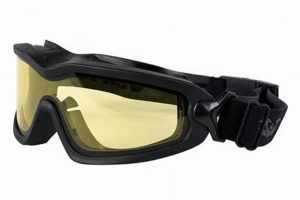
Mandatory protective gear, including full-seal eye protection and face protection, is essential to prevent injuries from projectile impacts. These safety measures are not optional. Full-seal eye protection, certified to meet ANSI Z87.1 standards, is mandatory. Failure to wear appropriate protective gear exposes participants to significant risk.
- Imitation Firearm Modifications
Regulations often restrict or prohibit modifications to imitation firearms that could increase their velocity beyond legal limits or alter their appearance to resemble real firearms too closely. Strict enforcement of these restrictions prevents unsafe equipment alterations and maintains a clear distinction between recreational devices and actual weapons. Any modifications must be thoroughly inspected and approved to ensure continued compliance with safety standards.
- Projectile Specifications
Regulations dictate the permissible type and weight of projectiles to be used, usually specifying biodegradable plastic BBs. These regulations aim to minimize environmental impact and ensure the projectiles used are safe for their intended purpose. Use of heavier or non-biodegradable ammunition can create the potential for increased injury.
Equipment regulation compliance, therefore, acts as a cornerstone in maintaining a safe and equitable environment. Regular equipment inspections and enforcement are necessary to ensure that all participants adhere to these standards, promoting a positive and injury-free experience.
3. Team Communication Systems

Effective team communication systems are a critical component for success in simulated tactical engagements, including within organized groups. The dynamic and often complex environments necessitate clear, concise, and reliable communication to facilitate coordinated movement, strategic decision-making, and effective execution of pre-planned maneuvers. The failure to establish and maintain robust communication channels can lead to confusion, misinterpretation of objectives, and ultimately, mission failure. For example, in a scenario requiring the capture of a designated objective, a team without adequate communication may find themselves fragmented and unable to provide mutual support, leaving them vulnerable to opposition forces. Such communication channels are a key factor in achieving objectives.
Practical application of effective communication systems extends beyond simply relaying information. Teams must establish standardized terminology, pre-determined signals, and clear protocols for disseminating critical intelligence, such as enemy positions, flanking attempts, or changes in objective priorities. These systems often incorporate a combination of verbal communication, hand signals, and, in some cases, specialized communication equipment such as radios or headsets. Furthermore, training exercises should incorporate communication drills to reinforce protocols and ensure that all team members are proficient in their use. Successful teams dedicate time to pre-game planning, assigning specific communication roles to individuals and ensuring that all members are familiar with the designated frequencies or channels.
In conclusion, robust team communication systems represent a decisive advantage in dynamic environments. Challenges can arise from equipment malfunctions, signal interference, or the stress of intense gameplay, all of which can compromise communication integrity. Addressing these challenges requires proactive planning, redundant communication methods, and continuous training to ensure that teams maintain effective coordination even under adverse conditions. These are key factors in planning, training, and gameplay.
4. Strategic Objective Planning
Strategic objective planning constitutes a foundational element of participation in that recreational activity. The activity’s inherent structure necessitates a proactive approach to goal setting, resource allocation, and tactical execution to achieve desired outcomes. Without a clear strategic framework, participants risk disorganization, inefficiency, and an increased likelihood of mission failure. The specific objectives can vary widely, ranging from the capture of a designated territory to the elimination of opposing forces, or the successful completion of a time-sensitive task. Regardless of the specific objective, strategic planning provides a roadmap for success by defining the steps necessary to achieve the desired result.
A tangible example illustrates the practical significance of strategic objective planning. Consider a scenario where two teams are tasked with capturing a central flag within a large, wooded area. A team that has meticulously planned its approach, assigning roles, establishing communication protocols, and identifying potential ambush points, is far more likely to succeed than a team that simply rushes towards the flag without a cohesive strategy. The strategic team may utilize flanking maneuvers to distract the opposition, employ suppressive fire to create openings for their advance, and establish a defensive perimeter around the flag once captured. Such coordinated efforts, born from strategic planning, provide a decisive advantage. The practical significance lies in the measurable impact on mission outcomes.
In conclusion, strategic objective planning serves as a critical determinant of success. The challenges often arise from the dynamic nature of the activity, where unforeseen circumstances can quickly alter the landscape and necessitate adjustments to the original plan. Effective planning requires a balance between meticulous preparation and the flexibility to adapt to changing conditions. Strategic planning is therefore not merely a preliminary step, but an ongoing process of assessment, adjustment, and refinement that underpins successful participation.
5. Adherence to Safety
Adherence to safety protocols is not merely a recommendation, but a foundational requirement for responsible engagement in recreational tactical simulations. The activity, involving the use of projectile-launching devices and simulated combat scenarios, inherently carries potential risks. Minimizing these risks requires strict adherence to established safety regulations, comprehensive training, and responsible behavior from all participants. These precautions are essential for both individual well-being and the sustained viability of the activity.
- Mandatory Protective Gear
The use of full-seal eye protection, certified to meet ANSI Z87.1 standards, is non-negotiable. Additionally, facial protection, such as a mesh mask or a full-face mask, is typically required to prevent injuries from projectile impacts. Inadequate or absent protective gear exposes participants to significant risk of permanent eye damage or facial trauma. This is especially relevant in close-quarters scenarios or in densely wooded areas where impacts may occur at close range or from unexpected angles. Proper protective gear is the minimum baseline for safety.
- Velocity Limits and Chronographing Procedures
Regulating the velocity of projectiles launched from imitation firearms is crucial to minimize the potential for injury. Established velocity limits, typically measured in feet per second (FPS), are enforced to prevent excessive energy output. Chronographing, the process of measuring projectile velocity, is conducted regularly to ensure compliance with these limits. Devices exceeding the established velocity limits are deemed unsafe and must be adjusted or removed from play. The consistent application of chronographing procedures and adherence to velocity limits are critical to ensuring player safety.
- Safe Zones and “Dead Rag” Protocols
Designated safe zones, free from active gameplay, provide areas where participants can remove protective gear, adjust equipment, and rest without risk of being shot. A “dead rag” or similar brightly colored indicator is used to signal that a player is out of the game and should not be targeted. Clear understanding and strict adherence to these protocols are essential for preventing accidental shootings and maintaining a safe environment in non-combat areas. Failure to comply with safe zone regulations can result in expulsion from the event.
Adherence to these safety measures represents a collective responsibility. These facets are not exhaustive but are essential. By prioritizing safety through strict adherence to regulations, comprehensive training, and responsible behavior, the potential for injury is minimized, and the long-term viability of tactical simulations as a recreational activity is preserved.
6. Community Event Calendar

The community event calendar serves as a central organizing tool, fostering participation and engagement within the recreational tactical simulation. This calendar outlines scheduled gameplay sessions, themed events, training workshops, and social gatherings, acting as a vital communication hub for participants. The absence of such a calendar would likely lead to fragmented participation, reduced community cohesion, and diminished opportunities for structured skill development. This framework becomes even more crucial in the operational domain.
Consider, for instance, a hypothetical scenario where a tactical simulation group lacks a centralized event calendar. Participants would rely on informal communication channels, such as word-of-mouth or scattered social media posts, to learn about upcoming events. This decentralized approach increases the risk of missed events, scheduling conflicts, and unequal access to information, particularly for new or less-connected members. A well-maintained event calendar, conversely, provides a single, reliable source of information, ensuring that all participants are informed about upcoming activities, registration deadlines, and event-specific rules or requirements. The existence of a calendar greatly streamlines logistical planning.
The community event calendar facilitates the growth and sustainability. The challenges surrounding the calendar are ensuring widespread awareness, consistent updates, and accessibility across various platforms. The calendar is essential for organized participation, skill enhancement, and community cohesion.
Frequently Asked Questions
This section addresses common inquiries regarding operations, regulations, and participation.
Question 1: What are the standard operating hours?
Operating hours vary seasonally. The official website and community event calendar provide up-to-date information. Adherence to posted times is mandatory.
Question 2: Is equipment rental available?
Equipment rental options are typically available, including imitation firearms, protective gear, and tactical accessories. Availability is subject to change; advance reservations are recommended.
Question 3: What safety protocols are enforced?
Mandatory safety protocols include the use of ANSI Z87.1-certified full-seal eye protection, velocity limits on imitation firearms, and adherence to designated safe zones. A complete list of safety regulations is available on-site.
Question 4: Are there age restrictions for participation?
Age restrictions apply, typically requiring participants to be at least 13 years of age. Minors may require parental consent or supervision. Verify specific age requirements prior to participation.
Question 5: Is there a dress code or recommended attire?
Appropriate attire includes durable clothing, closed-toe footwear, and camouflage or tactical gear. Brightly colored clothing is discouraged to minimize visibility during gameplay.
Question 6: What types of gameplay scenarios are offered?
Gameplay scenarios vary, ranging from team deathmatch and capture the flag to objective-based missions and scenario simulations. Event details are published on the community event calendar.
Understanding these frequently asked questions is crucial for responsible participation.
The subsequent section will delve into advanced tactical strategies employed within simulations.
Concluding Observations
This exposition has provided a comprehensive overview of the simulated tactical engagement activity, examining aspects ranging from gameplay dynamics and safety protocols to team communication and strategic planning. Emphasis has been placed on the critical role of equipment regulation compliance and adherence to established safety guidelines to ensure responsible participation. Moreover, the importance of community engagement, facilitated by structured event calendars, has been highlighted as a key factor in fostering a positive and sustainable environment for the activity.
The continued success and evolution of tactical simulations depend on the commitment of participants to uphold ethical standards, prioritize safety, and actively contribute to a thriving community. The information outlined herein serves as a foundation for informed participation and encourages a proactive approach to responsible engagement. Further exploration of advanced tactical strategies and ongoing participation in community events are encouraged to enhance individual skills and contribute to the overall development of simulated tactical engagement as a recreational activity.

![Redwolf Airsoft: Find Discount Codes & Save [Year] | Ultimate Airsoft Guide for Beginners, Tactics & Gear Reviews](https://airsoftica.com/wp-content/uploads/2026/04/th-288-300x200.jpg "Redwolf Airsoft: Find Discount Codes & Save [Year] Ultimate Airsoft Guide for Beginners, Tactics & Gear Reviews")