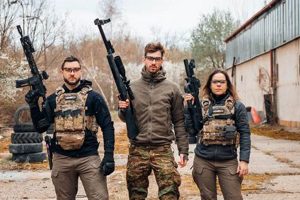
This specific style of airsoft game denotes an enclosed, often arena-like playing field designed to promote close-quarters combat. Matches typically occur within a contained space, forcing players into rapid engagements and strategic maneuvering in a confined environment. Imagine a scenario where quick reflexes and tactical teamwork are paramount for success in close-quarter combat.
The appeal of this game format lies in its intensity and accelerated pace. Players experience a higher rate of engagement compared to larger, outdoor airsoft fields. The historical development likely originated from a desire to simulate close-quarters battle scenarios and provide a more action-packed airsoft experience, reducing the need for extensive travel within a large playing area and focusing on direct player interaction.
The following sections will delve into specific tactics, equipment considerations, and strategies particularly effective within this game type, providing a detailed exploration of this exciting aspect of airsoft.
Strategies for Enclosed Airsoft Arenas
Optimizing performance in enclosed airsoft arenas necessitates a distinct approach compared to larger outdoor fields. Prioritization should be given to weapon selection, tactical movement, and communication strategies tailored for close-quarters engagements.
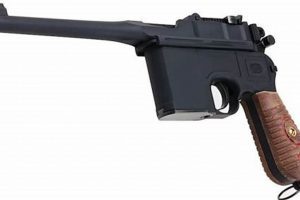
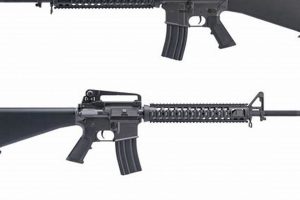
Tip 1: Weapon Selection: Compact weaponry, such as submachine guns or pistols with high rates of fire, provide an advantage in tight spaces. Maneuverability is crucial, therefore, minimizing the size and weight of the primary weapon is recommended. For example, a shorter M4 variant or a pistol paired with a carbine kit can offer a balance of firepower and agility.
Tip 2: Tactical Movement: Mastering room clearing techniques and utilizing cover effectively are vital. Employing a “pieing” method, where players gradually expose themselves to a room while assessing threats, minimizes risk. Consistent communication within the team to coordinate entry points and maintain situational awareness is also important.
Tip 3: Communication Protocols: Clear and concise communication is critical in the chaotic environment of enclosed arenas. Predefined callouts for common situations, such as identifying enemy positions or signaling for support, reduce ambiguity and enhance team coordination. Utilizing headsets or radios allows for real-time information sharing, providing an edge over uncoordinated opponents.
Tip 4: Grenade Utilization: Tactical grenades, including smoke grenades and flashbangs, can disrupt enemy formations and create opportunities for advancement. Smoke grenades can obscure lines of sight, allowing for flanking maneuvers or repositioning. Flashbangs, when used effectively, temporarily disorient opponents, creating a window for engagement.
Tip 5: Situational Awareness: Maintaining constant vigilance and awareness of surroundings is paramount. Minimizing tunnel vision and actively scanning for potential threats are crucial for survival. Utilizing peripheral vision and listening for auditory cues, such as footsteps or weapon fire, can provide early warnings of approaching opponents.
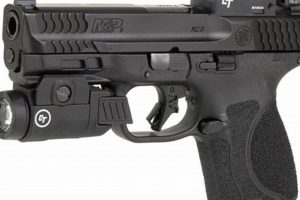
Tip 6: CQB Gear Optimization: Choosing the right gear for close quarters combat is also crucial. Lightweight tactical vests or plate carriers allows for greater range of movement. Flashlights with a strobe function can disorient opponents, giving a decisive advantage during low light conditions.
These strategies are designed to improve effectiveness within the challenging environment. Emphasizing speed, precision, and seamless teamwork will significantly enhance a player’s success rate.
The subsequent sections will cover advanced techniques.
1. Arena Configuration

Arena configuration is a critical determinant of gameplay dynamics. The design of an arena dictates engagement distances, lines of sight, and tactical opportunities, directly influencing player strategy and equipment choices within that context.
- Size and Layout
The size of the playing area significantly affects the frequency of player engagements. Smaller arenas result in more frequent and intense firefights, requiring players to prioritize speed and maneuverability. The layout, including the presence of corridors, open spaces, and elevated platforms, creates distinct tactical challenges. A complex layout with numerous chokepoints, for example, favors defensive strategies and close-quarters weaponry. Conversely, a more open layout with long sightlines might encourage the use of rifles with magnified optics.
- Obstacles and Cover
The density and type of obstacles present within the arena greatly impact gameplay. Bunkers, walls, and barricades provide cover, allowing players to advance strategically and engage opponents from protected positions. The placement of these obstacles influences flow of combat and offers opportunities for flanking maneuvers. A well-designed arena will incorporate a variety of cover options, encouraging dynamic and unpredictable engagements.
- Lighting Conditions
Lighting conditions within the arena influence visibility and impact tactical decision-making. Low-light environments create opportunities for stealth tactics and the use of illumination devices, such as flashlights or tracer units. Strategically placed lighting can create areas of high visibility, forcing players to adapt their approach. The use of strobe lights or other visual effects can further enhance the intensity of engagements.
- Entry and Exit Points
The location and number of entry and exit points determine how players can move within the arena. Limited access points can create chokepoints and predictable engagement zones. Multiple entry points allow for greater tactical flexibility and opportunities for flanking. Strategic positioning around entry points is key for both offensive and defensive strategies.
These design elements collectively shape the experience, influencing tactical decision-making and dictating viable combat strategies. A thorough understanding of arena configuration allows players to adapt their approach and maximize their effectiveness in this environment.
2. Close-Quarters Combat
Close-Quarters Combat (CQC) forms the foundational skillset for effective participation. Its principles dictate tactical approaches, weapon selection, and team dynamics within these constricted environments. An understanding of CQC principles is paramount for success.
- Room Clearing Techniques
Room clearing involves systematically neutralizing threats within an enclosed space. Techniques include pieing corners, utilizing entry points strategically, and employing coordinated team movements. Success hinges on minimizing exposure to potential threats and maintaining situational awareness. In the context, efficient room clearing translates to securing objectives, eliminating opponents, and maintaining tactical momentum.
- Weapon Handling and Control
CQC necessitates proficiency in rapid target acquisition, controlled bursts of fire, and quick weapon transitions. The confined spaces mean engagements occur at extremely close ranges, demanding precise weapon handling. An example is switching to a sidearm when the primary weapon malfunctions or is unsuitable for the immediate threat. For participants, skillful weapon handling is the difference between successful engagement and immediate elimination.
- Communication and Coordination
Clear, concise communication is crucial for synchronized team movements and tactical execution. Predefined callouts for identifying threats, signaling for support, or coordinating entry points minimize ambiguity and prevent friendly fire. Effective coordination maximizes team effectiveness, transforming individual actions into a cohesive tactical strategy. In, coordinated action facilitates swift objective capture and efficient opponent elimination.
- Situational Awareness and Threat Assessment
Maintaining constant vigilance and assessing potential threats is essential for survival. CQC environments are dynamic and unpredictable, requiring players to adapt to rapidly changing circumstances. Situational awareness involves identifying potential ambush points, recognizing enemy movement patterns, and anticipating likely engagement scenarios. Skillful threat assessment informs tactical decision-making, enabling players to react appropriately to developing situations. High situational awareness enhances survivability and increases tactical effectiveness.
The mastery of these CQC components is critical for navigating its unique challenges. Proficiency in these areas enables participants to excel. It transforms individual skill into collective tactical advantage within the context.
3. Weapon Proficiency

Weapon proficiency constitutes a fundamental skill for successful participation. The enclosed, fast-paced nature necessitates adept weapon handling, accurate target acquisition, and rapid transitions between primary and secondary weapons. In this environment, even minor deficiencies in weapon proficiency can result in swift elimination. The ability to quickly and accurately engage targets while moving through confined spaces is paramount. For example, a player struggling to reload efficiently under pressure or failing to clear a weapon malfunction promptly presents a significant liability to their team. The connection between these weapon skills and overall effectiveness is direct and demonstrable. In practical terms, proficiency directly impacts a player’s ability to contribute offensively, defend strategically, and react effectively to dynamic combat scenarios.
Beyond basic marksmanship, proficiency encompasses weapon modification and customization. Adapting a weapon to suit the specific arena configuration or play style demonstrates advanced skill. A player who can effectively adjust hop-up settings for optimal range and accuracy within the confines of the space, or who selects appropriate optics for rapid target acquisition at close ranges, gains a tangible advantage. Moreover, understanding weapon maintenance is vital; consistent upkeep reduces the likelihood of malfunctions during critical engagements. A well-maintained weapon, properly customized and skillfully handled, serves as an extension of the players tactical awareness and strategic intention.
In conclusion, weapon proficiency transcends mere familiarity with a given platform. It embodies a holistic understanding of weapon mechanics, effective handling techniques, and adaptive customization strategies. The enclosed environments demand a level of weapon mastery that separates proficient players from mere participants. A demonstrable skillset encompassing these aspects constitutes a significant determinant of success. Continued practice and a commitment to honing skills remain essential for optimizing performance.
4. Tactical Maneuvering

Within the confines of an enclosed arena, tactical maneuvering assumes paramount importance. Limited space constrains movement options, amplifying the significance of each maneuver executed. Successful navigation and positioning directly correlate with a player’s survivability and offensive capabilities. For instance, a simple flanking maneuver around a central barricade can disrupt enemy formations and create advantageous firing angles. Failure to adapt movement patterns to the arena’s layout leads to predictable positioning, increasing vulnerability to coordinated attacks. Thus, tactical acumen in maneuvering becomes a decisive factor differentiating proficient players from less experienced participants. The constricted parameters emphasize precision and adaptability in movement choices.
The effectiveness of tactical maneuvering is further enhanced by employing techniques such as suppressing fire and coordinated team movements. Suppressing fire pins down opponents, allowing teammates to advance and secure strategic positions. Coordinated movements, such as stacking up on entry points before breaching a room, minimize risk and maximize offensive potential. An example of successful tactical maneuvering can be observed when a team utilizes smoke grenades to obscure enemy vision, enabling them to reposition and outflank the opposing force. Conversely, a team failing to coordinate their movements and relying solely on individual actions becomes susceptible to being isolated and eliminated. The practical application lies in the seamless integration of movement with offensive and defensive tactics. The benefits are optimized strategic control.
In conclusion, tactical maneuvering represents a critical component for successful execution. Mastering efficient and adaptive movement techniques is essential for navigating the confined spaces, creating tactical advantages, and maximizing combat effectiveness. It is a key differentiator that enhances survivability. Understanding the nuances of tactical maneuvering proves foundational for players aspiring to excel and to effectively contribute to team success.
5. Team Coordination

Team coordination is a critical determinant of success within the confines of this specific style of airsoft game. The enclosed playing environment necessitates synchronized actions and seamless communication between team members to effectively overcome opposing forces. The confined spaces inherent in the environment amplify the consequences of poor coordination, as isolated individuals are readily targeted and eliminated. Real-life examples illustrate that a team operating with a clear communication structure, predefined roles, and practiced maneuvers consistently outperforms a less organized group, even when individual skill levels are comparable. Tactical advantages, such as flanking maneuvers and coordinated room clearing, become exponentially more effective when executed with precision and synchronization.
The practical significance of understanding team coordination is underscored by the need for shared situational awareness. Effective teams establish communication protocols that allow for the rapid dissemination of information regarding enemy positions, movements, and tactical intentions. This shared awareness enables players to anticipate threats, adjust strategies dynamically, and react cohesively to evolving combat situations. The integration of communication technologies, such as headsets or radios, facilitates real-time information sharing, further enhancing team coordination. Scenarios include calling out enemy positions, requesting support, or signaling tactical changes in the moment. Without such coordinated communication, tactical decisions may be delayed and the overall effectiveness of the team diminished.
Effective teamwork necessitates a shared understanding of objectives and strategies. Teams function optimally when individual roles and responsibilities are clearly defined, and each player understands their contribution to the overall objective. Achieving this level of coordination requires practice, communication, and a commitment to shared goals. Challenges include managing personality conflicts, mitigating communication breakdowns, and adapting to unforeseen circumstances. The ability to overcome these challenges through effective team coordination is the hallmark of a successful team, contributing directly to overall performance. The integration of effective team coordination with individual skill culminates in peak performance.
Frequently Asked Questions
This section addresses common inquiries regarding “thunderdome airsoft” its intricacies and practical considerations. These answers aim to clarify and provide detailed insight.
Question 1: What distinguishes “thunderdome airsoft” from standard airsoft gameplay?
The defining characteristic lies in the confined playing area. Unlike expansive outdoor fields, this format occurs within an enclosed space, typically an arena or multi-room structure. Engagements are invariably close-quarters, demanding rapid reaction times and specific tactical considerations.
Question 2: What equipment is recommended?
Compact, maneuverable weapons are advantageous. Submachine guns, pistols, and short-barreled rifles are favored over long-range weapons. Tactical gear should prioritize mobility and allow for quick movements within constricted spaces. Eye protection is non-negotiable; full-face masks are strongly recommended.
Question 3: Are there specific tactical approaches?
Room clearing techniques, coordinated team movements, and aggressive flanking maneuvers are highly effective. Situational awareness is crucial; maintaining constant vigilance for potential threats is essential. Communication is paramount; clear and concise callouts enhance team coordination.
Question 4: What are the safety precautions?
Adherence to established airsoft safety protocols is mandatory. Minimum engagement distances must be strictly observed. Blind firing is strictly prohibited. The use of approved eye protection is compulsory at all times within the playing area. Marshals are present to enforce safety regulations and resolve disputes.
Question 5: What is the general level of physical exertion involved?
The high-intensity nature requires a moderate degree of physical fitness. Expect frequent bursts of sprinting, crouching, and quick changes of direction. Hydration is essential, and players should be prepared for prolonged periods of intense activity.
Question 6: What are the advantages and disadvantages compared to outdoor airsoft?
Advantages include increased engagement frequency, a focus on close-quarters skills, and reduced travel time within the playing area. Disadvantages can include limited tactical options due to the confined space, potential for overcrowding, and the need for specialized equipment optimized for close-range engagements.
Key takeaways include the importance of specialized equipment, tactical adaptability, strict adherence to safety rules, and the intensity of the engagements. Preparedness leads to success.
The subsequent section will examine strategies for advanced play.
Thunderdome Airsoft
This exploration has dissected the core elements of thunderdome airsoft, elucidating its unique demands on skill, strategy, and teamwork. The emphasis on close-quarters combat, weapon proficiency, tactical maneuvering, and coordinated team efforts has been underscored. Understanding arena configuration and adapting to its constraints are critical components of success. This specific arena style demands a holistic skill set, prioritizing adaptability and precision over raw firepower.
The future of thunderdome airsoft hinges on continuous refinement of tactical doctrines and equipment optimization. As the game evolves, the emphasis on realism and tactical simulation will likely intensify. The commitment to safety and fair play remains paramount, ensuring a challenging yet responsible environment. Mastery within this arena represents a compelling demonstration of tactical acumen, physical prowess, and collaborative spirit.