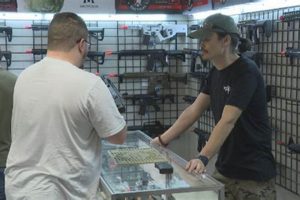
This activity involves simulated combat scenarios using realistic replica firearms that fire non-lethal plastic projectiles. Participants engage in tactical maneuvers and objective-based missions within a designated playing field, often mimicking military or law enforcement operations. As an example, teams might attempt to capture a flag, defend a position, or eliminate opposing players through strategic teamwork and communication.
Such simulated combat offers several benefits, including promoting physical fitness, developing strategic thinking, and fostering teamwork skills. Its roots can be traced back to military training exercises and recreational war games, evolving into a structured and regulated sport with safety protocols and established rules of engagement. The activity provides a safe outlet for adrenaline-fueled competition and camaraderie.
The following sections will delve into specific aspects of this activity, covering equipment selection, gameplay strategies, safety regulations, and the community surrounding this increasingly popular recreational pursuit.
Strategic Insights
Effective participation requires a combination of tactical awareness, equipment proficiency, and adherence to safety protocols. The following insights are designed to enhance performance and ensure a positive experience.
Tip 1: Field Reconnaissance. Prior to engagement, thoroughly assess the terrain. Identify advantageous positions, potential flanking routes, and areas of limited visibility. This pre-emptive analysis informs strategic decision-making during gameplay.
Tip 2: Communication Protocol. Establish clear and concise communication channels within the team. Use standardized terminology to relay enemy positions, movement patterns, and tactical objectives. Effective communication minimizes confusion and maximizes coordinated action.
Tip 3: Equipment Maintenance. Regularly inspect and maintain equipment, including replica firearms, protective gear, and communication devices. Proper maintenance ensures optimal performance and reduces the risk of malfunctions during critical moments.
Tip 4: Tactical Movement. Employ tactical movement techniques, such as bounding overwatch and staggered formations, to minimize exposure and maintain situational awareness. Avoid predictable routes and utilize cover effectively.
Tip 5: Objective Prioritization. Clearly define and prioritize objectives based on strategic importance and feasibility. Focus resources on achieving the most impactful objectives to gain a decisive advantage.
Tip 6: Adaptability. Remain adaptable and adjust tactics based on evolving circumstances. Enemy movements, terrain changes, and unforeseen events require a flexible approach to maintain effectiveness.
Tip 7: Safety Adherence. Always adhere to safety regulations and established rules of engagement. This includes wearing appropriate protective gear, respecting designated boundaries, and exercising responsible firearm handling practices. Prioritize safety above all else.
Implementing these insights can significantly improve performance, enhance strategic decision-making, and foster a more immersive and rewarding experience. Proficiency in these areas contributes to both individual and team success.
The subsequent sections will examine advanced techniques, equipment customization, and community engagement to further refine skills and maximize enjoyment of this activity.
1. Protective Gear

In the context of simulated combat, protective gear is not merely an accessory but an indispensable component of safety and responsible participation. The realistic nature of these simulations, while engaging, presents inherent risks of impact injuries from propelled projectiles. Consequently, the consistent and appropriate utilization of protective equipment directly mitigates the potential for injury, allowing for a safer and more enjoyable experience. For example, a full-face mask protects vulnerable facial areas from projectile strikes, preventing potentially serious eye or dental injuries. Similarly, vests and padded clothing can lessen the impact force on the torso and limbs.
The importance of protective gear extends beyond immediate impact protection. Its use promotes responsible behavior among participants, fostering a culture of safety and awareness within the activity. Field operators frequently mandate specific protective gear requirements, underscoring their commitment to minimizing risk. Failure to comply with these regulations can result in exclusion from participation, highlighting the direct link between protective measures and access to the simulated environment. Furthermore, advancements in protective gear technology, such as improved materials and ergonomic designs, have significantly enhanced comfort and performance without compromising safety. Examples include anti-fogging lenses for clear vision in diverse weather conditions and lightweight, breathable fabrics for extended wear.
In conclusion, the relationship between protective gear and simulated combat environments is one of fundamental necessity. Adequate protective equipment ensures participant safety, promotes responsible conduct, and ultimately contributes to the sustainability and growth of this activity. The consistent application of these measures is paramount to mitigating risk and maintaining a safe and enjoyable playing environment for all participants.
2. Replica Firearms

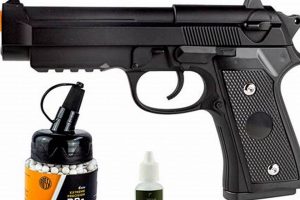
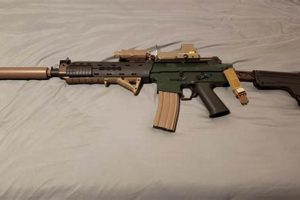
Replica firearms are central to the immersive experience of simulated combat. These devices, designed to closely resemble real-world firearms in appearance and handling, are employed to propel non-lethal projectiles. Their presence is not merely aesthetic; they are instrumental in shaping tactical considerations, influencing player behavior, and defining the strategic landscape of the activity. The level of realism afforded by these replicas directly impacts the engagement and suspension of disbelief necessary for effective participation. For example, a replica mimicking the weight and ergonomics of an M4 carbine necessitates similar handling techniques, encouraging players to adopt realistic tactical stances and movement patterns. Similarly, the range and accuracy characteristics of a replica sniper rifle dictate engagement distances and target selection strategies.
The selection, maintenance, and responsible use of replica firearms are critical considerations. Variations in design, power source (electric, gas, or spring-powered), and projectile velocity directly influence gameplay dynamics. Furthermore, replica firearms require regular maintenance to ensure reliable operation and prevent malfunctions during critical moments. The responsible use of these devices extends beyond the playing field. Safe storage practices, proper handling techniques, and adherence to local regulations are paramount to preventing accidents and maintaining a positive public perception. Instances of replica firearms being mistaken for real weapons underscore the need for responsible ownership and transportation. Local laws governing the purchase, possession, and modification of replica firearms must be meticulously followed to avoid legal repercussions.
In summary, replica firearms are a foundational element. Their realistic design enhances immersion, shapes tactical considerations, and influences player behavior. Responsible ownership, including adherence to safety protocols, regular maintenance, and compliance with legal regulations, is essential for preserving the integrity and safety of this activity. The continued responsible use of replica firearms is critical to maintaining a positive perception and ensuring the long-term viability of simulated combat scenarios.
3. Team Communication

Effective team communication is a cornerstone of success within simulated combat scenarios. The dynamic and unpredictable nature of these environments necessitates clear, concise, and timely exchange of information among team members. A breakdown in communication can directly translate to tactical disadvantages, mission failure, and increased risk of simulated casualties. Real-world examples demonstrate the criticality of this aspect; consider a scenario where a flanking maneuver is compromised due to delayed notification of enemy positioning. This single failure in communication can expose the entire team to a counter-attack, negating any potential advantage. The ability to rapidly relay enemy locations, anticipate movements, and coordinate strategies is thus essential for achieving objectives and maintaining cohesion.
The practical applications of effective team communication extend beyond simply conveying information. It fosters trust, builds camaraderie, and enhances overall team performance. Implementing standardized communication protocols, such as pre-defined terminology for common scenarios and established channels for different types of information, streamlines the flow of communication and minimizes ambiguity. Furthermore, utilizing technology, such as two-way radios with clear audio quality, can significantly improve the speed and reliability of information exchange. Post-game debriefings, where communication successes and failures are analyzed, provide opportunities for continuous improvement and refinement of communication strategies. The use of visual signals, when appropriate, can supplement verbal communication and provide immediate cues for coordinated action.
In conclusion, team communication is an indispensable component of victory. Challenges in maintaining effective communication under pressure are significant, yet overcoming these obstacles through training, standardized protocols, and technological solutions is crucial. The ability to effectively communicate not only enhances tactical performance but also contributes to a more immersive and enjoyable experience. Recognizing the fundamental importance of this aspect is essential for any team seeking to excel in the simulated combat environment.
4. Scenario Objectives

Scenario objectives are fundamental to the structure and purpose of this recreational activity. They provide a framework for gameplay, dictating the actions and strategies employed by participants. Without clearly defined objectives, the activity devolves into unstructured skirmishes lacking direction or purpose.
- Strategic Planning and Execution
Scenario objectives necessitate strategic planning prior to engagement and tactical execution during gameplay. For instance, a “capture the flag” scenario requires teams to develop strategies for both offense (capturing the opponent’s flag) and defense (protecting their own). The success of these strategies hinges on effective communication, coordination, and adaptability. The implications extend beyond simple victory or defeat, influencing team cohesion and individual skill development.
- Resource Management and Allocation
Many scenario objectives involve resource management, including ammunition, medical supplies, and strategic positions. Teams must allocate these resources effectively to maximize their chances of success. For example, a “defend the base” scenario might require prioritizing ammunition distribution to frontline defenders while allocating medical supplies to support personnel. Inefficient resource allocation can lead to mission failure, highlighting the importance of strategic foresight and logistical planning.
- Teamwork and Coordination
Scenario objectives inherently promote teamwork and coordination among participants. Achieving complex objectives, such as rescuing a hostage or disabling an objective, requires coordinated efforts from multiple team members. Roles must be clearly defined, and communication channels must be open and reliable. This emphasis on teamwork fosters a sense of camaraderie and shared accomplishment, contributing to the social aspect of the activity.
- Adaptability and Improvisation
Despite meticulous planning, unexpected events can occur during gameplay, requiring teams to adapt and improvise. Changing weather conditions, unexpected enemy movements, or equipment malfunctions can disrupt carefully laid plans. Teams that are able to quickly assess the situation, adjust their strategies, and improvise solutions are more likely to succeed. This adaptability enhances critical thinking skills and promotes resilience in the face of adversity.
These facets of scenario objectives, encompassing strategic planning, resource management, teamwork, and adaptability, collectively define the experience. Their successful implementation enhances both the competitive and social aspects, contributing to a more engaging and rewarding experience for all participants.
5. Field Topography

The terrain, or “field topography,” significantly influences the dynamics. Its configuration dictates tactical approaches, weapon effectiveness, and overall engagement strategies. Varying elevations, dense vegetation, and constructed obstacles directly impact movement, visibility, and the ability to secure advantageous positions. For example, elevated ground provides a commanding view, enabling participants to observe enemy movements and control lines of sight. Conversely, dense vegetation offers concealment, facilitating ambushes and flanking maneuvers. Therefore, a thorough understanding of the topographical features is essential for strategic planning and tactical execution.
The interaction between field topography and tactical decisions is evident in scenario design. Objective placement often considers the surrounding terrain, creating challenges and opportunities for both attacking and defending teams. A “capture the flag” scenario located on a multi-tiered terrain requires participants to adapt their strategies based on elevation changes and available cover. Similarly, a “defend the base” scenario surrounded by dense vegetation necessitates heightened awareness and effective close-quarters combat tactics. Real-world military principles of terrain analysis and adaptation are directly applicable, providing participants with a practical understanding of their influence on combat operations. Adaptability to varying topographical features is a key determinant of success.
In summary, field topography is a critical element shaping the strategic and tactical landscape. Its influence extends from basic movement and concealment to complex objective-based scenarios. Recognizing and adapting to topographical features are essential skills for effective participation. Mastery of terrain awareness enhances strategic decision-making, promotes tactical innovation, and ultimately contributes to a more immersive and rewarding experience. Overlooking its significance would equate to entering a strategic contest without knowing the rules.
6. Rules Enforcement

Rules enforcement is paramount to the safety, fairness, and overall viability of simulated combat. The absence of consistent rules enforcement leads to a breakdown in order, escalating risks of injury, disputes, and a decline in participant satisfaction. Consequently, robust rulesets and impartial enforcement mechanisms are essential components of any organized event. For instance, established safety regulations dictate mandatory eye protection, limits on projectile velocity, and restrictions on engaging at close range. The consistent application of these rules prevents preventable injuries and fosters a secure playing environment.
The implementation of fair play principles, facilitated through rules enforcement, ensures an equitable and enjoyable experience. Regulations concerning respawn rules, engagement distances, and prohibited behaviors maintain competitive balance and prevent exploitation. Referees or marshals are often designated to observe gameplay, mediate disputes, and enforce penalties for rule infractions. A lack of objective enforcement can result in accusations of cheating, diminishing the integrity of the event and discouraging participation. Real-world examples include tournaments where strict rules regarding chronograph testing (measuring projectile velocity) are rigorously enforced to prevent participants from exceeding established safety limits. Disqualification for violating velocity limits underscores the commitment to safety and fairness.
In conclusion, the connection between rules enforcement and the sustained success is undeniable. Stringent adherence to safety regulations, coupled with impartial enforcement mechanisms, ensures a secure, equitable, and enjoyable experience for all participants. Ignoring these fundamental principles jeopardizes the integrity of the activity and undermines its long-term viability. Upholding rules is therefore not merely a procedural formality but a critical responsibility for event organizers and participants alike, contributing to a positive and thriving community.
7. Tactical Maneuvers
Tactical maneuvers are integral to the execution and strategic depth, transforming it from a simple recreational activity into a simulated combat environment requiring calculated decision-making and coordinated teamwork. The efficacy of such maneuvers directly influences the outcome of scenarios, necessitating a comprehensive understanding of their application and implications.
- Flanking and Encirclement
Flanking maneuvers involve outmaneuvering the opposing force by attacking from the side, while encirclement aims to isolate and surround the enemy. In a structured playing field, flanking requires navigating terrain to gain a positional advantage. Encirclement demands superior numbers and coordination to effectively trap the opposing team. For example, one team might distract the enemy with a frontal assault while a smaller group circles around to attack from the rear, creating a tactical advantage. The success of these maneuvers relies on accurate reconnaissance and swift execution.
- Cover and Concealment Techniques
Utilizing cover and concealment is essential for minimizing exposure and maximizing survivability. Cover involves using solid objects to protect against incoming projectiles, while concealment involves using terrain or vegetation to obscure visibility. Properly employing these techniques requires identifying and utilizing available resources, such as walls, bunkers, or dense foliage. Tactical movement between points of cover, combined with effective use of concealment, reduces the risk of being targeted. A team effectively utilizing cover and concealment can sustain defensive positions or advance under fire with reduced casualties.
- Suppressive Fire and Movement
Suppressive fire involves using sustained fire to inhibit the movement and actions of the opposing force, allowing friendly units to maneuver and advance. This tactic requires coordinating fire effectively to create a zone of danger, forcing the enemy to remain behind cover. Movement under suppressive fire demands synchronized actions and awareness of teammates’ positions. A well-executed suppressive fire and movement strategy enables teams to gain ground, capture objectives, or extract personnel from hazardous areas. Ammunition management and communication are critical for maintaining effective suppressive fire.
- Breaching and Clearing Operations
Breaching and clearing operations involve penetrating fortified positions and neutralizing threats within enclosed spaces. This type of maneuver requires specialized techniques, such as using breaching tools to create entry points and employing close-quarters combat tactics to clear rooms and hallways. Communication and coordination are paramount to avoid friendly fire incidents and maintain situational awareness. A team proficient in breaching and clearing can effectively assault defended objectives, rescue hostages, or eliminate entrenched enemies. Careful planning and execution are essential to minimize casualties and achieve mission success.
These tactical maneuvers, when executed proficiently, elevate strategic decision-making and promote a more immersive and rewarding experience. The ability to adapt these maneuvers to varying field conditions and opposing strategies underscores the dynamic interplay between tactical planning and practical application, enhancing the overall engagement and contributing to a richer simulated combat environment.
Frequently Asked Questions
This section addresses common inquiries regarding simulated combat, offering clarifications and insights into various aspects of the activity.
Question 1: What are the primary safety considerations in simulated combat?
Mandatory eye protection, velocity limits on projectiles, and adherence to minimum engagement distances constitute the primary safety considerations. Consistent enforcement of these measures is crucial to mitigate the risk of injury.
Question 2: What types of equipment are typically required for participation?
Participants generally require a replica firearm, protective eyewear, appropriate clothing, and footwear suitable for outdoor terrain. Additional equipment, such as tactical vests and communication devices, may enhance performance.
Question 3: How is fair play maintained during simulated combat events?
Fair play is maintained through the implementation of established rulesets, impartial referees, and mechanisms for resolving disputes. Compliance with these regulations is essential for ensuring an equitable and enjoyable experience for all participants.
Question 4: What skills are typically developed through participation in simulated combat?
Participation fosters the development of strategic thinking, teamwork, communication, leadership, and problem-solving skills. These competencies are valuable in both recreational and professional contexts.
Question 5: What are the legal considerations surrounding the ownership and use of replica firearms?
Legal considerations vary depending on local jurisdictions. Participants must be aware of and comply with all applicable laws and regulations pertaining to the purchase, possession, transportation, and modification of replica firearms.
Question 6: How does scenario design influence the strategic complexity of simulated combat?
Scenario design, including objective placement and terrain configuration, directly impacts the strategic complexity. Well-designed scenarios challenge participants to adapt their tactics, manage resources, and coordinate their efforts to achieve mission objectives.
These FAQs highlight the core aspects and relevant points for the activity, providing a foundational understanding for both prospective and current participants.
The subsequent sections will explore advanced strategies and community engagement opportunities to further enrich the simulated combat experience.
Conclusion
This exploration has illuminated the multifaceted nature of battleground airsoft, underscoring its reliance on safety protocols, tactical execution, fair play, and community engagement. The importance of responsible participation, including adherence to rules and respect for fellow participants, has been consistently emphasized. Moreover, the strategic depth of the activity, influenced by field topography, scenario objectives, and team communication, has been thoroughly examined.
Recognizing the significant role of responsible action in sustaining battleground airsofts appeal and safety, participants are encouraged to prioritize ethical conduct and continuous skill development. As the activity evolves, continued emphasis on safety and integrity will be paramount, ensuring its lasting value as a challenging and engaging recreational pursuit.