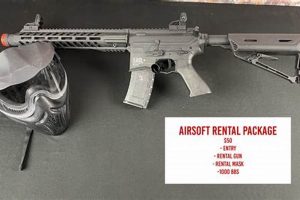
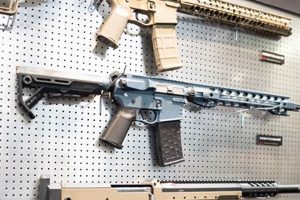
Replica firearms, specifically those designed for the sport of airsoft, are often manufactured with a blaze orange marking on the barrel. This serves as a visual indicator, readily identifying the item as a toy or training implement, rather than a real firearm. The absence of this vibrant indicator presents potential risks and complexities, particularly concerning public perception and legal interpretation.
The presence of this safety feature is designed to prevent misidentification, reducing the likelihood of alarming the public or triggering a response from law enforcement. Its utilization aims to contribute to responsible ownership and handling practices. Without this identifying marker, the potential for confusion increases, potentially resulting in negative consequences for both the individual possessing the item and the broader airsoft community. Historically, such markings have been introduced to address concerns about realism and prevent potential misuse of replica weaponry.
The following discussion will delve into the legal ramifications, safety considerations, and practical implications associated with modifying or possessing airsoft pistols without the factory-installed blaze orange barrel tip, exploring the associated responsibilities and potential liabilities.
Considerations Regarding Airsoft Pistols Devoid of the Orange Tip
The following points offer guidance on responsible practices when dealing with airsoft pistols lacking the blaze orange barrel marking.
Tip 1: Verify Local and State Regulations: Prior to any possession or use, thoroughly research and understand all applicable laws and ordinances pertaining to replica firearms. Regulations can vary significantly, with some jurisdictions specifically prohibiting removal or modification of safety markings.
Tip 2: Prioritize Safe Transportation: Transport the item in a closed container or bag, preferably out of sight. Mimic protocols used for transporting actual firearms to minimize the risk of alarming the public.
Tip 3: Exercise Discretion in Public Spaces: Avoid openly displaying the item in public areas. Even if legal, the absence of the visual identifier increases the likelihood of misinterpretation and potential intervention by law enforcement or concerned citizens.
Tip 4: Maintain Documentation: Keep records of purchase and any relevant documentation that establishes the item as an airsoft pistol, not a real firearm. This documentation may prove invaluable in clarifying its status if questioned.
Tip 5: Educate Others: If others will be handling the item, ensure they are fully aware of its nature and the associated safety precautions. Emphasize responsible handling and storage protocols.
Tip 6: Consider Repainting or Marking: Where legally permissible and practically feasible, explore options for adding a non-removable, readily visible marking to the airsoft pistol. This could include painting a portion of the frame in a bright color, providing a clear visual cue.
Tip 7: Avoid Modifications that Increase Realism: Refrain from altering the airsoft pistol in ways that make it appear more like a real firearm. This includes adding realistic-looking accessories or modifying its weight to more closely resemble a real weapon.
Adherence to these guidelines promotes responsible ownership and helps mitigate potential risks associated with airsoft pistols lacking the mandated visual identifier, promoting safety and reducing the likelihood of negative interactions with the public and law enforcement.
The subsequent sections will explore the potential legal consequences and safety measures related to these specific airsoft devices in greater detail.
1. Legality

The legality of an airsoft pistol lacking the blaze orange tip is highly dependent on jurisdiction. Federal law in the United States mandates these markings on imported toy, imitation, and replica firearms; however, it does not explicitly prohibit their removal or the possession of items without them after the point of sale. State and local laws, conversely, often impose stricter regulations. Some jurisdictions may explicitly forbid the removal of the orange tip, considering such actions an attempt to make the replica appear more like a real firearm, potentially violating statutes related to imitation firearms or creating public safety hazards.
The consequences of violating these laws can range from fines and confiscation of the item to more severe penalties, particularly if the item is displayed or used in a manner that causes alarm or threatens public safety. For example, in some states, brandishing an airsoft pistol lacking the orange tip in public could be interpreted as aggravated assault or a similar offense, carrying significant legal ramifications. Furthermore, the legality may depend on the circumstances surrounding the airsoft pistol’s use or possession. Even in jurisdictions where removal is not explicitly illegal, using the item to commit a crime or create a disturbance could trigger more serious charges.
Understanding the specific regulations in one’s local area is paramount. This understanding necessitates researching state statutes, municipal codes, and case law related to imitation firearms. Ignorance of these regulations is not a defense in legal proceedings. The legal landscape surrounding airsoft pistols without orange tips is complex and variable, demanding diligence on the part of owners and users to ensure compliance and avoid potentially severe legal repercussions.
2. Misidentification

The potential for misidentification constitutes a primary concern when an airsoft pistol lacks the blaze orange tip. This visual cue serves as an immediate indicator that the item is not a real firearm. Its absence significantly increases the likelihood that the replica will be mistaken for a lethal weapon, triggering a cascade of potentially dangerous consequences.
- Law Enforcement Response
When an airsoft pistol without the orange tip is perceived as a real firearm, it can elicit a forceful response from law enforcement. Police officers, trained to assess threats rapidly, may react with lethal force if they believe they are facing an armed individual. Misidentification, in this context, transforms the airsoft pistol into a perceived deadly threat, drastically escalating the situation. Numerous incidents illustrate this danger, where individuals possessing replica firearms have been injured or killed due to officers’ reasonable, yet mistaken, belief that they were armed with a real weapon.
- Public Alarm and Panic
The sight of what appears to be a real handgun can induce panic and fear among the public. This alarm can lead to chaotic situations, including stampedes or mass evacuations. The absence of the orange tip removes a crucial visual reassurance, contributing to the perception of imminent danger. The psychological impact on bystanders can be significant, potentially resulting in long-term anxiety and distress.
- Escalation of Criminal Activity
Individuals intending to commit crimes may exploit the ambiguity created by the lack of an orange tip. An airsoft pistol, resembling a real firearm, can be used to intimidate victims during robberies or other offenses. The victim’s inability to distinguish between a replica and a genuine weapon increases their vulnerability and compliance, effectively enabling criminal acts. The misidentification, in this scenario, empowers the perpetrator and amplifies the potential harm inflicted.
- Erosion of Public Trust
Incidents involving misidentified airsoft pistols can erode public trust in law enforcement and contribute to a climate of fear and suspicion. When citizens perceive that police officers are quick to resort to force or that replica firearms pose a significant public safety risk, it can strain community relations and undermine confidence in the justice system. This erosion of trust can have long-term consequences, hindering law enforcement’s ability to effectively serve and protect the public.
These facets highlight the multifaceted dangers associated with misidentification stemming from the absence of an orange tip on airsoft pistols. The potential consequences range from individual harm to broader societal impacts, underscoring the importance of responsible ownership, adherence to legal regulations, and proactive measures to mitigate the risk of confusion.
3. Public perception

Public perception surrounding airsoft pistols lacking the blaze orange tip is significantly influenced by a combination of factors, including media portrayals of firearms, societal anxieties regarding gun violence, and a general lack of understanding about airsoft as a sport. The absence of the easily identifiable orange marking immediately removes a key visual cue that distinguishes the item from a real firearm, leading to heightened concern and potential misinterpretations. This is exacerbated by the increasing realism of airsoft replicas, which often mirror the appearance, weight, and handling characteristics of actual weapons.
The practical significance of this understanding lies in the potential consequences of triggering negative public perception. An individual openly carrying or displaying what appears to be a handgun, even if it is a legal airsoft pistol, may provoke fear, panic, and aggressive responses from bystanders. This, in turn, can lead to confrontations, calls to law enforcement, and potential for misidentification resulting in escalated, even deadly, force. Real-world examples include incidents where individuals carrying airsoft guns without orange tips have been mistakenly shot by police officers or assaulted by civilians who perceived them as a threat. Furthermore, negative public perception can impact the broader airsoft community, leading to increased scrutiny, stricter regulations, and potential restrictions on the sport itself. Landowners may be less willing to allow airsoft games on their property, and retailers may face pressure to limit or discontinue sales of airsoft equipment.
In conclusion, the association between airsoft pistols lacking the orange tip and public perception is a critical area of concern, driven by the heightened potential for misidentification and the amplification of fear surrounding firearms. Addressing this challenge requires responsible ownership, open communication within the airsoft community about safety and awareness, and proactive efforts to educate the public about the nature of airsoft as a recreational activity. Failure to do so risks further stigmatization, increased legal restrictions, and the potential for tragic outcomes stemming from misperceptions and anxieties.
4. Safe Handling

Safe handling practices are paramount when dealing with airsoft pistols, and these practices become even more critical when the device lacks the visually distinguishing blaze orange tip. The absence of this indicator increases the risk of misidentification and potential harm, making strict adherence to safety protocols essential.
- Treating All Airsoft Pistols as if Real
The fundamental rule of firearm safetytreating every weapon as if it were loadedapplies equally to airsoft pistols, especially those without an orange tip. This mindset necessitates constant vigilance and a conscious effort to avoid complacency. For example, before handling the item, it must be verified that the magazine is removed and the chamber is empty. Neglecting this step can lead to unintended discharge, potentially causing injury or property damage. Real-world scenarios involve individuals mistakenly firing airsoft pistols in public areas, leading to alarm and potential legal consequences.
- Muzzle Awareness
Muzzle awareness, maintaining strict control over the direction the barrel is pointing, is a non-negotiable safety practice. The muzzle should always be directed in a safe direction, never pointed at oneself or others, regardless of whether the airsoft pistol is believed to be unloaded. A lack of muzzle awareness can lead to accidental injury if the device discharges unexpectedly. In the context of an airsoft pistol lacking the orange tip, this practice is even more crucial because any accidental discharge could be misinterpreted as a deliberate act of aggression, potentially triggering a violent response.
- Storage and Transportation Protocols
Proper storage and transportation are vital to prevent accidental discharge and unauthorized access. Airsoft pistols should be stored unloaded, with the magazine removed, in a secure location inaccessible to children and unauthorized individuals. When transporting the item, it should be placed in a closed case or bag, out of sight, to prevent alarming the public. For example, an airsoft pistol without an orange tip left visible in a vehicle could easily be mistaken for a real firearm, potentially leading to a police intervention.
- Eye Protection
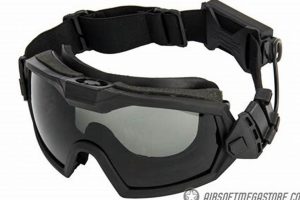
The use of appropriate eye protection is mandatory during any airsoft activity. Airsoft projectiles, while not lethal, can cause serious eye injury. Full-seal goggles or a face mask designed specifically for airsoft should always be worn. Real-world incidents have resulted in permanent vision loss due to inadequate eye protection. Furthermore, when handling the airsoft pistol for maintenance or cleaning, eye protection should still be worn as a precaution against accidental discharge or projectile ejection.
Adherence to these safe handling practices is not merely a suggestion but a necessity for responsible ownership of airsoft pistols, particularly those lacking the defining orange tip. These practices mitigate the risk of accidents, prevent misinterpretations, and contribute to a safe and responsible airsoft environment, safeguarding individuals and the broader community.
5. Responsible transport
The responsible transport of an airsoft pistol becomes critically important when the device lacks the legally mandated blaze orange tip. The absence of this readily identifiable safety feature significantly increases the risk of misidentification by law enforcement and the general public, transforming what would otherwise be a standard transportation procedure into a potentially hazardous situation. The core principle is to maintain an environment where the airsoft pistol is not mistaken for a real firearm during transit. Failure to adhere to stringent protocols can lead to severe consequences, including police intervention, legal charges, and even physical harm. The cause is the lack of a visual identifier; the effect is increased potential for misinterpretation and escalating risk.
Practical measures to ensure responsible transport encompass several key strategies. The airsoft pistol must be stored in a locked, opaque container during transit. This container should be separate from any ammunition or accessories that could contribute to the perception of an immediately accessible weapon. Furthermore, the container must be stored out of plain sight, preferably in the trunk of a vehicle or a similar enclosed space. Documentation demonstrating the item’s status as an airsoft pistol, such as a sales receipt or product manual, should be readily available but stored separately. Real-world examples demonstrate the importance of these precautions: individuals openly transporting airsoft pistols without orange tips, even if unloaded, have been subjected to felony stops and firearm-related charges due to public alarm and police misinterpretation. The practical significance of understanding these protocols is to minimize the likelihood of such incidents.
In summary, the responsible transport of an airsoft pistol without the orange tip is not simply a matter of convenience but a legal and safety imperative. The absence of this crucial visual cue amplifies the potential for misidentification and associated risks. By adopting stringent transportation protocolssecure containerization, concealment, and readily available documentationindividuals can significantly mitigate these risks and ensure compliance with applicable laws. The challenge lies in maintaining constant vigilance and awareness, recognizing that the perception of responsible transport is as important as the physical measures undertaken. This understanding is crucial for promoting safety and preserving the integrity of the airsoft sport.
6. Potential liabilities
The absence of a blaze orange tip on an airsoft pistol significantly elevates the spectrum of potential liabilities for owners, users, and even retailers. This seemingly minor alteration removes a crucial visual distinction, blurring the line between replica and genuine firearms, and thereby increasing the risk of accidents, misinterpretations, and legal repercussions. The following points delineate specific facets of potential liabilities arising from the airsoft pistol devoid of this safety marker.
- Negligence and Personal Injury
If an individual is injured as a result of the negligent use of an airsoft pistol lacking the orange tip, the possessor may face civil liability for negligence. For instance, if a person brandishes the item in a public area, causing another individual to suffer a heart attack due to the perceived threat, the possessor could be held liable for the resulting medical expenses and emotional distress. This liability extends beyond direct physical harm; it includes psychological trauma stemming from the reasonable belief that a real firearm was involved.
- Criminal Liability
The removal of the orange tip, depending on local laws, can constitute a criminal offense in itself. Furthermore, possessing or using an airsoft pistol without the required marking in the commission of a crime, even a minor offense, can result in significantly enhanced penalties. For example, using the item to intimidate someone during a petty theft could lead to charges of aggravated assault or armed robbery, carrying severe prison sentences. This liability is compounded by the potential for misidentification by law enforcement, which may escalate the situation and result in additional charges.
- Product Liability for Retailers and Manufacturers
Retailers and manufacturers may face product liability lawsuits if an airsoft pistol they sell or produce without the required orange tip is used in a manner that causes injury or harm. If it can be demonstrated that the absence of the safety marking contributed to the incident, these entities may be held responsible for damages. This liability extends to providing adequate warnings and instructions regarding the safe handling and legal requirements associated with the product. For example, a retailer who sells an airsoft pistol without the orange tip and fails to inform the purchaser about the legal restrictions could be sued if the purchaser subsequently violates those restrictions and causes harm to another person.
- Property Damage and Public Disturbance
The misuse of an airsoft pistol without the orange tip can result in liability for property damage or public disturbance. Firing the item at vehicles or buildings, even without intent to cause serious damage, can lead to charges of vandalism or property destruction. Furthermore, discharging the item in a public area, causing alarm or disruption, may result in fines and other penalties for disturbing the peace. This liability is amplified by the potential for misinterpretation by law enforcement, who may perceive the actions as a more serious threat, leading to arrests and criminal charges.
In conclusion, the spectrum of potential liabilities associated with airsoft pistols lacking the orange tip is broad and multifaceted. From negligence and criminal charges to product liability and property damage, the absence of this seemingly minor safety feature significantly increases the risks for owners, users, and businesses involved in the sale or manufacture of these items. Awareness of these potential liabilities is crucial for responsible ownership, adherence to legal regulations, and the prevention of accidents and legal repercussions.
Frequently Asked Questions
The following questions address common concerns and misconceptions regarding airsoft pistols lacking the blaze orange tip. The information provided aims to clarify legal considerations, safety protocols, and potential liabilities.
Question 1: Is it inherently illegal to own an airsoft pistol without an orange tip?
Federal law mandates the presence of an orange tip on imported airsoft guns. However, federal law does not explicitly prohibit the removal of the orange tip after purchase. State and local laws vary considerably; some jurisdictions may specifically prohibit removing or altering the orange tip, while others may not have specific regulations. Researching local laws is crucial.
Question 2: What are the potential consequences of misidentification?
Misidentification of an airsoft pistol as a real firearm can have severe consequences. Law enforcement may react with lethal force if they perceive a threat. The public may panic, leading to chaotic situations. Individuals may exploit the resemblance to commit crimes. Misidentification can erode public trust in law enforcement.
Question 3: How can the risk of misidentification be minimized?
The risk of misidentification can be minimized through responsible handling, including transporting the airsoft pistol in a closed container, avoiding open display in public, and educating others about the item’s nature. Consider adding a permanent, visible marking to the airsoft pistol where legally permissible.
Question 4: What safety precautions should be taken when handling an airsoft pistol without an orange tip?
Treat the airsoft pistol as if it were a real firearm. Practice strict muzzle awareness. Always wear eye protection during airsoft activities. Store the item unloaded, with the magazine removed, in a secure location. These practices mitigate the risk of accidents and misinterpretations.
Question 5: What are the potential legal liabilities associated with owning an airsoft pistol without an orange tip?
Potential liabilities include negligence if someone is injured due to negligent use. Criminal charges may arise if the item is used in the commission of a crime or if removing the orange tip violates local laws. Retailers and manufacturers may face product liability lawsuits if their products are used to cause harm.
Question 6: How should an airsoft pistol without an orange tip be transported responsibly?
Transport the airsoft pistol in a locked, opaque container. Store the container out of sight, preferably in the trunk of a vehicle. Keep documentation demonstrating the item’s status as an airsoft pistol readily available. This minimizes the likelihood of alarming the public or attracting unwanted attention from law enforcement.
Understanding the regulations, prioritizing safety, and acting responsibly are essential for mitigating potential risks associated with airsoft pistols lacking the blaze orange tip.
The subsequent section will delve into additional resources and information regarding safe and legal airsoft practices.
Airsoft Pistol No Orange Tip
The preceding examination has detailed critical aspects pertaining to airsoft pistols lacking the mandated blaze orange marking. It is evident that the absence of this visual identifier introduces complexities spanning legal compliance, public perception, and user safety. The potential for misidentification, coupled with varying legal landscapes, necessitates diligent adherence to responsible handling, storage, and transportation protocols.
The information provided should underscore the importance of awareness, responsible action, and an unwavering commitment to safety within the airsoft community. The ramifications associated with “airsoft pistol no orange tip” scenarios extend beyond individual ownership, influencing the broader public perception and potential regulation of the sport. Adherence to the principles outlined represents a crucial step towards mitigating risks and fostering a safe, responsible airsoft environment.