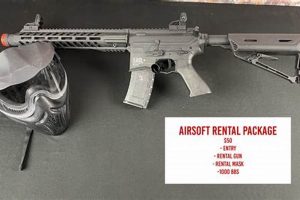
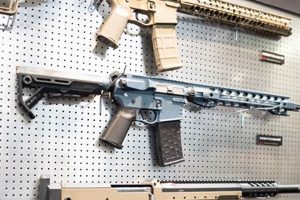
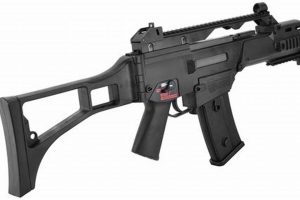
The modification of equipment used in simulated combat activities involving projectile-based weaponry represents a specific niche within the broader landscape of recreational and training applications. This often involves customizing existing devices to enhance performance, alter aesthetics, or adapt to specific operational requirements. An example includes adjustments made to a replica firearm to improve accuracy or rate of fire.
Such enhancements can offer advantages in competitive scenarios, providing a tactical edge through improved functionality. Furthermore, historical context reveals that this type of adaptation has evolved from rudimentary alterations to sophisticated modifications using advanced materials and engineering techniques. This evolution reflects a growing demand for increasingly realistic and personalized experiences.
The following sections will delve into specific areas related to the equipment, strategies, and regulatory considerations relevant to simulated combat scenarios. These areas will be explored in detail, providing a comprehensive overview of the pertinent elements.
Enhancement Guidelines for Simulated Combat Equipment
The following recommendations are intended to provide guidance on improving the performance and reliability of equipment used in simulated combat scenarios. Focus is placed on practical advice and proven techniques.
Tip 1: Implement Precision Inner Barrels: Utilizing high-quality inner barrels, manufactured to tight tolerances, improves projectile consistency and accuracy. Stainless steel or brass barrels are preferred for their durability and resistance to corrosion.
Tip 2: Optimize Hop-Up Systems: Precise adjustment of the hop-up unit allows for greater control over projectile trajectory and range. Experimentation with different bucking materials and nub configurations is recommended to find the optimal setup for specific ammunition.
Tip 3: Enhance Motor Performance: Upgrading the motor with a high-torque variant increases trigger response and rate of fire. Ensure compatibility with existing gearboxes and power supplies to prevent premature wear or failure.
Tip 4: Reinforce Gearboxes: Strengthening critical components within the gearbox, such as gears, pistons, and tappet plates, mitigates the risk of mechanical failure under stress. High-quality steel or reinforced polymers are preferred materials for replacement parts.
Tip 5: Improve Air Seal: Minimizing air leaks throughout the pneumatic system maximizes power and consistency. Teflon tape, O-rings, and specialized lubricants can be used to seal gaps and ensure efficient air compression.
Tip 6: Optimize Battery Selection: Using appropriately sized and rated batteries ensures consistent power delivery and prolongs equipment lifespan. Lithium Polymer (LiPo) batteries offer high energy density and discharge rates, but require careful handling and storage.
These guidelines represent a starting point for optimizing equipment. Adherence to these principles contributes to improved performance, reliability, and overall user experience in simulated combat activities.
The following sections will address relevant safety protocols and regulatory considerations, ensuring responsible engagement in these activities.
1. Accuracy enhancement

Accuracy enhancement, as it relates to modified projectile-based recreational equipment, is primarily achieved through component upgrades and meticulous calibration. The connection lies in the user’s desire to improve projectile placement, mimicking real-world scenarios or gaining a competitive advantage. Upgrades to the internal barrel, hop-up unit, and pneumatic system directly contribute to a more consistent and predictable trajectory. For example, replacing a stock inner barrel with a precision-made, tighter bore barrel reduces projectile wobble, thus increasing accuracy. Improper execution can lead to diminished returns or system failure.
The significance of accuracy enhancement stems from its direct impact on effectiveness in simulated combat situations. Increased accuracy allows for more precise targeting at greater distances, granting a tactical advantage. Players can more reliably engage opponents, reducing the need for suppressive fire and conserving ammunition. The practical application involves carefully selecting compatible components, correctly installing them, and then fine-tuning the hop-up system to achieve optimal projectile flight characteristics. This process often involves experimentation with different ammunition weights and hop-up settings to find the most accurate configuration for the specific equipment and playing conditions.
In summary, accuracy enhancement is a core tenet of equipment modification, driven by the pursuit of improved performance and realism. The challenges lie in identifying the specific components that will yield the greatest accuracy gains, correctly installing those components, and then properly calibrating the system. This understanding is crucial for individuals seeking to enhance their recreational activities while adhering to safety and regulatory guidelines. The importance is more than just improved equipment but more on user experience.
2. Range Improvement

Range improvement, a key consideration in modifying projectile-based recreational equipment, directly impacts a participant’s tactical capabilities within simulated combat environments. Enhancements aimed at increasing projectile range frequently involve adjustments to internal components responsible for air compression and projectile propulsion. Increasing the volume of air delivered behind the projectile, for example, can extend its flight path. An example is the replacement of the factory cylinder and cylinder head with components designed to provide a greater air volume and a more consistent seal. The effectiveness of these modifications is contingent upon precise execution and compatibility with other internal components.
The significance of increased range lies in the ability to engage opponents from greater distances, thereby providing a strategic advantage. This allows users to occupy positions of relative safety while maintaining offensive capabilities. The practical application involves selecting components that work harmoniously to optimize air efficiency and projectile velocity. This process often necessitates experimentation with different spring tensions, barrel lengths, and hop-up settings to achieve the desired range without compromising accuracy. Furthermore, an understanding of aerodynamic principles and projectile trajectory is crucial for maximizing the effectiveness of range-enhancing modifications. For instance, using heavier projectiles in conjunction with an appropriately adjusted hop-up system can stabilize the projectile’s flight and extend its effective range.
In summary, range improvement is a complex but significant aspect of equipment modification, requiring a thorough understanding of pneumatic systems and projectile dynamics. Challenges in achieving optimal range include balancing power output with accuracy and reliability. Modifying equipment to extend range also requires consideration of regulatory limits and safety protocols, ensuring compliance with applicable laws and promoting responsible participation in simulated combat activities. The correlation ensures more effective user and equipment performance.
3. Rate of Fire
Rate of fire, in the context of modified projectile-based recreational devices, is a performance metric quantifying the number of projectiles discharged per unit of time. It is intrinsically linked to mechanical and electrical modifications performed on the device’s internal mechanisms. Alterations to the motor, gear ratio, battery voltage, and trigger system directly influence the cyclic rate of operation, consequently affecting the number of projectiles propelled forward. A direct relationship exists: increased electrical power delivered to a high-torque motor, coupled with optimized gear ratios, results in a higher rate of fire. For example, replacing a standard motor with a high-speed variant, alongside the installation of low-resistance wiring and a high-discharge battery, can significantly increase the rate of projectile discharge.
The significance of rate of fire is multifaceted. In simulated combat scenarios, a higher rate of fire can provide a tactical advantage, allowing for more effective suppression of opponents and increased probability of target engagement. However, an excessive rate of fire can also lead to increased ammunition consumption, reduced accuracy due to recoil or vibration, and accelerated wear and tear on internal components. The practical application of understanding rate of fire lies in achieving a balance between performance and reliability. This involves selecting appropriate components and tuning the system to deliver a desired rate of fire without compromising the device’s longevity or accuracy. Furthermore, awareness of field regulations and safety guidelines is paramount, as some venues may impose restrictions on the maximum allowable rate of fire.
In summary, rate of fire is a critical performance characteristic directly influenced by specific modifications. The correlation underscores the necessity of carefully considering the trade-offs between performance, reliability, and regulatory compliance. The challenge lies in optimizing the system to achieve a desired rate of fire while maintaining accuracy and minimizing stress on internal components. Ultimately, responsible modification and a thorough understanding of rate of fire’s implications contribute to a more enjoyable and safe experience within the context of simulated combat activities.
4. Durability

Durability represents a crucial aspect of modified equipment used in simulated combat. The capacity of these devices to withstand repeated stress and potential impact directly impacts their long-term utility and the overall user experience. Enhancements intended to improve performance often place increased strain on internal components; therefore, durability becomes a paramount consideration in the modification process.
- Material Selection
The choice of materials directly influences the resilience of modified equipment. High-grade metals, reinforced polymers, and composite materials offer superior resistance to wear, fracture, and environmental degradation. For instance, replacing plastic bushings with steel bearings in a gearbox significantly reduces friction and prolongs the lifespan of the gears. Improper material selection can result in premature failure and compromised performance.
- Component Reinforcement
Reinforcement of critical components strengthens vulnerable areas and mitigates the risk of breakage. This can involve replacing factory-standard parts with aftermarket upgrades constructed from more durable materials or adding external supports to reinforce structural integrity. An example is the installation of a reinforced piston head and cylinder head to withstand increased pressure within the pneumatic system. Neglecting reinforcement can lead to catastrophic failures under stress.
- Stress Management
Effective stress management involves distributing forces evenly throughout the system to prevent localized failures. This can be achieved through careful component selection, proper lubrication, and meticulous assembly. For instance, shimming the gears within a gearbox to ensure optimal mesh minimizes stress on individual teeth and reduces the likelihood of gear stripping. Inadequate stress management can accelerate wear and tear, leading to reduced performance and eventual failure.
- Environmental Resistance
Resistance to environmental factors, such as moisture, temperature fluctuations, and abrasive particles, is essential for maintaining long-term functionality. Sealing sensitive components, applying protective coatings, and using corrosion-resistant materials can significantly enhance environmental resistance. For example, using silicone grease to protect O-rings and other seals prevents degradation from moisture and extends their lifespan. Failure to address environmental factors can lead to corrosion, jamming, and other performance-impairing issues.
These facets collectively underscore the importance of durability in the context of equipment modification. The long-term performance and reliability of modified devices hinge on the careful selection of materials, reinforcement of vulnerable components, effective stress management, and resistance to environmental factors. The successful integration of these considerations translates to increased lifespan, reduced maintenance requirements, and a more consistent user experience in simulated combat activities. Neglecting these factors can negate improvements in performance and lead to rapid deterioration of the modified equipment.
5. Power Source
The performance characteristics of equipment modified for simulated combat activities are directly and significantly influenced by the selection and management of the power source. The power source, typically a battery, provides the electrical energy required to actuate the internal mechanisms responsible for projectile propulsion. Insufficient voltage or amperage can result in reduced rate of fire, diminished projectile velocity, and inconsistent operation. Conversely, excessive voltage or amperage can cause premature wear, overheating, and potential component failure. For example, using a battery with a higher voltage than recommended for a specific motor can significantly increase the rate of fire but also drastically reduce the motor’s lifespan due to increased thermal stress and mechanical strain. The understanding of this relationship is paramount for reliable and consistent operation.
Practical applications of this understanding extend to various aspects of equipment maintenance and modification. Selecting batteries with appropriate discharge rates ensures that the motor receives sufficient current to operate efficiently under load, while using batteries with built-in protection circuits safeguards against over-discharge and short circuits. Furthermore, upgrading the internal wiring with low-resistance cables minimizes voltage drop, maximizing the power delivered to the motor. Field modifications may include battery swaps to maintain optimal performance during extended engagements. For instance, players often carry multiple fully charged batteries to sustain a consistent rate of fire and projectile velocity throughout a match, especially with equipment demanding more power.
In summary, the power source is not merely a supplementary component but an integral element that dictates the overall performance and longevity of modified equipment. The challenge lies in selecting a power source that provides adequate energy delivery without compromising the integrity of other internal components. Careful consideration of battery voltage, discharge rate, capacity, and internal resistance, along with adherence to manufacturer specifications, is crucial for achieving optimal and sustainable performance. The understanding underscores responsible modification, balancing performance enhancements with safety and equipment longevity.
Frequently Asked Questions Regarding Equipment Modification
The following questions address common concerns and misunderstandings pertaining to the enhancement of simulated combat equipment. The information provided aims to clarify key aspects and promote informed decision-making.
Question 1: What are the legal implications of modifying a replica firearm?
Alteration of replica firearms is subject to jurisdictional regulations. Modifications that result in increased projectile velocity or mimic the appearance of real firearms may violate applicable laws. It is imperative to research and adhere to local ordinances before undertaking any modifications.
Question 2: How does modifying the internal components affect the reliability of the device?
Altering internal components can introduce potential points of failure. While some modifications enhance performance, improper installation or incompatible parts may compromise the device’s overall reliability. Prior testing and adherence to manufacturer recommendations are crucial.
Question 3: Is it possible to increase both accuracy and range simultaneously through modification?
Achieving simultaneous gains in accuracy and range often requires a balanced approach. Modifications that solely focus on increasing power may sacrifice accuracy, while those that prioritize accuracy may limit range. A holistic understanding of internal mechanisms and projectile dynamics is essential.
Question 4: What is the recommended maintenance schedule for modified equipment?
Modified equipment typically requires more frequent and thorough maintenance than stock configurations. Regular inspection, lubrication, and replacement of worn components are necessary to ensure optimal performance and prevent catastrophic failures.
Question 5: Are there specific safety precautions to observe when using modified equipment?
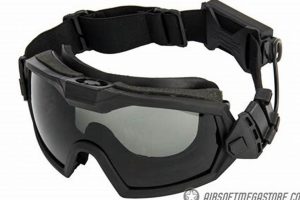
Modified equipment necessitates heightened safety awareness. The use of appropriate protective gear, including eye protection and face masks, is mandatory. Furthermore, adherence to field regulations and responsible handling practices is paramount to prevent injuries.
Question 6: How does battery selection impact the performance of modified equipment?
Battery selection is a critical factor in the performance of modified equipment. The voltage, discharge rate, and capacity of the battery must be compatible with the motor and internal wiring. Insufficient power can limit performance, while excessive power can damage internal components.
These FAQs provide a basic understanding of modification complexities. Thorough research is necessary before modifying equipment.
The subsequent section will address regulatory aspects and safety considerations concerning simulated combat activity.
Conclusion
This exploration has examined the multifaceted aspects of airsoft m, detailing its application, optimization techniques, and performance variables. Emphasis has been placed on the delicate balance between enhancement, reliability, and safety within simulated combat scenarios. Legal and regulatory considerations have also been addressed, highlighting the importance of responsible modification practices. Through meticulous attention to component selection, system integration, and adherence to established guidelines, users can optimize their equipment for improved performance and longevity.
Continued advancement in materials science and engineering promises further refinement in airsoft m techniques. A commitment to responsible practices and ongoing education remains paramount to ensuring safe and enjoyable participation in the evolving landscape of simulated combat. Understanding and adhering to these principles ensures airsoft m continues as a responsible recreational practice.