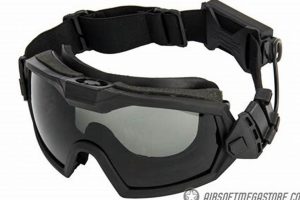
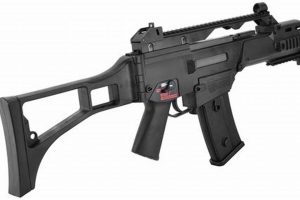
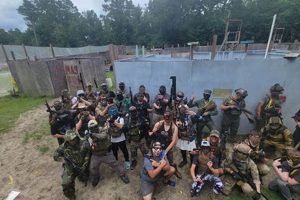
This class of replica firearm replicates the form and function of a specific submachine gun platform, adapted for use in recreational shooting sports. These devices typically utilize 6mm plastic projectiles propelled by compressed gas or electric mechanisms. An example includes a scaled-down version of the SIG Sauer MPX, designed to fire plastic BBs rather than live ammunition.
The appeal stems from the realism and training opportunities offered. These replicas allow enthusiasts to practice weapon handling, target acquisition, and tactical maneuvers in a safe and controlled environment. Furthermore, they provide a more accessible and affordable alternative to owning and operating actual firearms. The emergence of these training tools parallels the growing popularity of military simulation activities and practical shooting disciplines.
The subsequent sections will delve into specific models within this category, examining their features, performance characteristics, and suitability for various applications within the broader realm of simulated combat and target practice. Furthermore, information regarding maintenance, upgrades, and safety protocols will be provided.
MPX Airsoft
Optimizing the performance and longevity of an MPX airsoft replica requires diligent maintenance and a thorough understanding of its operating principles. The following tips provide actionable guidance for both novice and experienced users.
Tip 1: Battery Management: Employing the correct voltage and amperage batteries is crucial. Over-volting can damage the internal electronic components, while under-volting can lead to reduced performance and premature battery failure. Consult the manufacturer’s specifications for appropriate power sources.
Tip 2: Regular Cleaning: Periodically cleaning the barrel with a specialized cleaning rod and silicone oil removes accumulated debris and improves accuracy. Neglecting this step can result in decreased range and consistency.
Tip 3: Hop-Up Adjustment: Fine-tuning the hop-up unit is essential for maximizing range and accuracy. Experiment with incremental adjustments to achieve the optimal backspin on the BB, compensating for variations in BB weight and wind conditions.
Tip 4: Gearbox Maintenance: For electric-powered models, lubricating the internal gears with high-quality grease reduces friction and prolongs the lifespan of the gearbox. This process should be performed by experienced technicians or individuals familiar with airsoft replica disassembly.
Tip 5: Magazine Maintenance: Regularly clean and lubricate the magazine follower and spring to ensure smooth feeding of BBs. Dirty or dry magazines can cause malfunctions and feeding issues.
Tip 6: Quality Ammunition: The use of high-quality, seamless BBs is paramount. Inferior BBs with imperfections can damage internal components and negatively impact accuracy.
These maintenance practices, when implemented consistently, can significantly enhance the performance, reliability, and lifespan of the MPX airsoft replica. Neglecting these recommendations can lead to performance degradation and costly repairs.
The subsequent section will address common troubleshooting scenarios and provide solutions for resolving operational issues encountered with this specific type of airsoft replica.
1. Realism

Realism serves as a crucial determinant in the value and application of MPX airsoft replicas. The degree to which these replicas emulate the form, function, and handling characteristics of their real firearm counterparts directly impacts their suitability for training, simulation, and recreational purposes.
- External Appearance and Dimensions
The fidelity of the replica’s external features, including dimensions, weight, and material composition, contributes significantly to realism. Replicas with accurate dimensions and weight feel more authentic, improving the immersive experience and potentially enhancing training value. Variations in these factors can detract from the overall impression.
- Operating Mechanisms and Controls
The replication of the real firearm’s operating mechanisms, such as the trigger pull, charging handle manipulation, and magazine release, is pivotal. Functioning controls that mirror the original design provide a more realistic tactile experience, allowing users to develop muscle memory and familiarity with the platform’s operation.
- Markings and Trademarks
The inclusion of authentic markings and trademarks enhances the visual fidelity of the replica. Licensed versions, produced with authorization from the original manufacturer, often feature accurate engravings and logos, further contributing to the overall realism. Unlicensed replicas may lack these details or feature altered markings.
- Field Stripping and Internal Components
The ability to field strip the replica, exposing internal components that resemble the real firearm’s inner workings, adds another layer of realism. Detailed internal replicas can provide a better understanding of the platform’s construction and maintenance requirements, increasing its appeal for enthusiasts and training applications.
The pursuit of realism in MPX airsoft replicas reflects a desire for authenticity and functional equivalence. A higher degree of realism improves the immersive experience for recreational users and enhances the training value for those seeking to replicate real-world weapon handling scenarios.
2. Performance

The operational effectiveness of an MPX airsoft replica is paramount to its suitability for simulated combat, target practice, and recreational shooting activities. Several interrelated factors dictate the overall performance of these devices.
- Accuracy and Range
The ability to consistently hit a target at a given distance defines accuracy. This depends on barrel quality, hop-up system effectiveness, and projectile quality. Extended range allows engagement at greater distances, providing a tactical advantage in simulated combat. Variations in these attributes directly influence the user’s ability to effectively engage targets.
- Rate of Fire (ROF)
ROF, measured in rounds per minute (RPM), represents the speed at which the replica can fire projectiles. Higher ROF provides a greater volume of fire, which can be advantageous in suppressive fire scenarios. However, excessive ROF can lead to increased ammunition consumption and potential strain on internal components. Electronic firing control systems can regulate and optimize ROF for specific scenarios.
- Consistency
Consistent performance, measured by the uniformity of projectile velocity and trajectory, is essential for predictable shot placement. Variations in gas pressure, battery voltage, or internal component wear can lead to inconsistencies, negatively impacting accuracy and range. Regular maintenance and quality components contribute to sustained consistency.
- Gas Efficiency/Battery Life
Gas efficiency, in gas-powered replicas, dictates the number of shots achievable per gas fill. Extended battery life, in electric-powered replicas, allows for prolonged use without requiring frequent recharging. Efficient gas usage and extended battery life minimize operational downtime and reduce the need for frequent replacements.
The interplay of accuracy, rate of fire, consistency, and gas efficiency/battery life determines the overall performance envelope of an MPX airsoft replica. Optimizing these factors through component selection, maintenance, and proper operation allows users to maximize their effectiveness in various simulated scenarios. Performance, therefore, is a critical consideration in evaluating the suitability of a specific MPX airsoft model for its intended application.
3. Upgradability

The inherent design of MPX airsoft platforms often facilitates extensive modifications and component replacements, a characteristic known as upgradability. This feature is crucial for users seeking to enhance performance, customize aesthetics, or extend the operational lifespan of their replicas. The modular nature of the MPX firearm design translates effectively to airsoft versions, enabling the substitution of internal components such as motors, gears, barrels, and hop-up units. The ability to install higher-performance parts, for example, contributes directly to increased firing rates, improved accuracy, and greater consistency. Similarly, the replacement of worn or damaged parts ensures continued functionality and prolongs the replica’s usability. Many aftermarket manufacturers produce upgrade components specifically designed for MPX airsoft replicas, further amplifying the potential for customization and performance enhancement.
Consider, for instance, an MPX airsoft replica used primarily in competitive speedsoft scenarios. The user may prioritize rate of fire and trigger response. By upgrading the motor and electronic trigger unit, the replica’s performance can be significantly enhanced to meet the demands of fast-paced gameplay. Conversely, a user focused on realism and simulation may prioritize external modifications, such as installing a different rail system or stock, to more closely replicate a specific configuration of the real MPX firearm. The inherent upgradability of the platform empowers users to tailor their replicas to specific roles and preferences, adapting them to various gameplay styles and operational requirements.
In summary, the upgradability of MPX airsoft replicas constitutes a significant advantage, allowing for performance optimization, customization, and extended operational lifespan. This capability addresses the evolving needs of users and provides a pathway for continual improvement and adaptation. While the extent of upgradability varies among different MPX airsoft models and manufacturers, the overall potential for modification remains a key factor in their enduring popularity and versatility. This focus on component replacement distinguishes it from more limited choices.
4. Maintenance

Consistent and proper maintenance is crucial to the operational longevity and performance of MPX airsoft replicas. Neglecting routine upkeep can lead to diminished accuracy, reduced rate of fire, and potential component failure, ultimately shortening the lifespan of the device.
- Lubrication of Internal Mechanisms
The gearbox, responsible for powering the firing cycle in electric-powered MPX airsoft replicas, requires regular lubrication. Specialized grease applied to the gears minimizes friction, reduces wear, and ensures smooth operation. Insufficient lubrication can result in increased stress on components, leading to premature failure. Gas-powered models also require lubrication of seals and valves to maintain gas efficiency and prevent leaks. Silicone oil is generally recommended for these components. The frequency of lubrication depends on usage intensity and environmental conditions.
- Cleaning of the Barrel Assembly
The internal barrel of an MPX airsoft replica accumulates debris from projectiles and environmental factors, impacting accuracy and range. Regular cleaning with a specialized cleaning rod and appropriate solvent removes this debris, restoring optimal performance. Neglecting barrel cleaning can lead to inconsistent projectile trajectories and reduced effective range. This procedure should be performed carefully to avoid damaging the internal barrel surface. Appropriate cleaning solvents and materials, like lint-free cloths, should be used.
- Inspection and Replacement of Worn Parts
Periodic inspection of critical components, such as the hop-up bucking, piston head, and air nozzle, is essential for identifying wear and tear. The hop-up bucking, responsible for imparting backspin to the projectile, is particularly susceptible to wear and degradation. Replacing worn components promptly prevents performance degradation and potential damage to other internal parts. A proactive approach to component replacement minimizes downtime and maximizes the operational lifespan of the replica.
- Battery Care and Storage (for Electric Models)
Proper battery care is crucial for electric-powered MPX airsoft replicas. Overcharging or discharging batteries beyond their rated capacity can lead to reduced performance and shortened lifespan. Using a smart charger that automatically terminates charging when the battery is full is recommended. Batteries should be stored in a cool, dry place and partially charged for extended periods of inactivity. Neglecting these practices can result in battery damage and potential safety hazards.
These maintenance procedures, consistently applied, directly contribute to the reliable performance and extended lifespan of MPX airsoft replicas. Neglecting these practices increases the risk of malfunctions and costly repairs, diminishing the overall value and usability of the platform.
5. Regulation

The sale, possession, and use of MPX airsoft replicas are subject to a complex web of regulations that vary significantly based on geographical location. These regulations often stem from concerns regarding public safety and the potential for misidentification of airsoft replicas as actual firearms. At the national level, some jurisdictions may impose restrictions on the import, manufacture, or sale of replicas that lack distinctive markings, such as orange tips, designed to distinguish them from genuine firearms. For instance, specific countries may mandate that airsoft devices be brightly colored or constructed of transparent materials to prevent confusion with real weapons. The failure to comply with these national regulations can result in legal penalties, including fines and confiscation of the replica.
Local ordinances and state laws frequently impose additional layers of regulation on MPX airsoft replicas. These may include restrictions on their public display, transportation, and use in unauthorized areas. Certain municipalities may prohibit the discharge of airsoft devices within city limits, while others may require permits for organized airsoft activities. Furthermore, some states may have minimum age requirements for purchasing or possessing airsoft replicas. For example, a minor found in possession of an airsoft replica in violation of local ordinances could face legal consequences, and the replica could be impounded. Ignoring these local regulations can lead to encounters with law enforcement and potential legal ramifications.
The diverse and often inconsistent nature of these regulations presents a challenge for airsoft enthusiasts and retailers. It necessitates a thorough understanding of the specific laws governing airsoft replicas in the relevant jurisdiction. Resources such as legal databases and airsoft advocacy groups can provide valuable information. The burden of compliance rests on both the user and the vendor to ensure that the sale, purchase, and use of MPX airsoft replicas adhere to all applicable laws and regulations, promoting responsible and safe practices within the airsoft community. Negligence in this area can expose individuals and businesses to significant legal and financial risks.
6. Cost

The financial aspect associated with MPX airsoft replicas represents a significant consideration for both prospective buyers and existing owners. The initial purchase price constitutes the most immediate cost, ranging from entry-level models to high-end, meticulously crafted replicas. This price is influenced by factors such as the manufacturer, materials used in construction (e.g., polymer versus metal), internal components, and licensing agreements with the firearm’s original manufacturer. For example, a licensed replica with authentic markings and a full metal construction will invariably command a higher price point than an unlicensed, polymer-based alternative. Therefore, the desired level of realism and performance must be balanced against budgetary constraints during the initial selection process.
Beyond the initial investment, ongoing operational costs contribute significantly to the overall financial burden. These recurring expenses include consumables such as BBs (ammunition), compressed gas (for gas-powered models), or batteries (for electric models). High-quality BBs, essential for optimal performance and minimizing internal damage, can represent a notable expenditure over time. Similarly, the type and frequency of compressed gas refills or battery replacements impact the long-term cost of operation. Maintenance and repair costs must also be factored in. Regular cleaning, lubrication, and occasional component replacements are necessary to maintain the replica’s performance and extend its lifespan. Unexpected malfunctions or damage may necessitate professional repairs, further contributing to operational expenses. Upgradability, while potentially enhancing performance, introduces another layer of potential cost. Aftermarket components, such as enhanced hop-up units, motors, or gearsets, can significantly improve performance but require additional investment.
In conclusion, the cost of ownership for MPX airsoft replicas extends beyond the initial purchase price. Operational expenses, maintenance requirements, and potential upgrades all contribute to the overall financial commitment. A comprehensive understanding of these costs enables informed decision-making, allowing purchasers to select models that align with their budget and usage patterns. The long-term cost-effectiveness of a given replica, therefore, hinges on a careful evaluation of its purchase price, operational expenses, and potential for future upgrades, all considered in relation to the user’s intended application and level of engagement with the airsoft hobby.
Frequently Asked Questions
This section addresses common inquiries and misconceptions concerning MPX airsoft replicas, providing concise and informative answers.
Question 1: What differentiates an MPX airsoft replica from a real firearm?
MPX airsoft replicas are designed to fire 6mm plastic projectiles propelled by compressed gas or electric mechanisms. They lack the ability to discharge live ammunition and are intended for recreational or training purposes. Visual similarities can exist; however, internal mechanisms and functional capabilities are fundamentally different.
Question 2: Are there legal restrictions associated with owning an MPX airsoft replica?
Legal restrictions vary significantly by jurisdiction. National, state, and local laws may govern the sale, possession, transportation, and use of airsoft replicas. Compliance with all applicable regulations is mandatory. Specific restrictions may include age limits, requirements for orange tips, and prohibitions on public display.
Question 3: What type of maintenance is required for MPX airsoft replicas?
Routine maintenance includes lubrication of internal components, cleaning of the barrel assembly, inspection for worn parts, and proper battery care (for electric models). Neglecting maintenance can lead to performance degradation and reduced lifespan. Frequency of maintenance depends on usage intensity.
Question 4: What factors influence the performance of an MPX airsoft replica?
Performance is determined by a combination of factors, including accuracy, range, rate of fire, consistency, and gas efficiency (for gas-powered models) or battery life (for electric models). Upgrading internal components can enhance performance; however, compatibility and proper installation are critical.
Question 5: Can MPX airsoft replicas be modified or upgraded?
Many MPX airsoft replicas are designed to accommodate aftermarket upgrades. These modifications can enhance performance, improve aesthetics, or extend the replica’s lifespan. Compatibility of components must be verified prior to installation.
Question 6: What is the typical cost associated with owning an MPX airsoft replica?
The total cost includes the initial purchase price, ongoing expenses for consumables (BBs, gas, batteries), and maintenance or repair costs. The price varies based on the model, features, and intended use.
Understanding these fundamental aspects ensures responsible ownership and optimal utilization of MPX airsoft replicas. Adherence to legal requirements and proper maintenance practices are essential for safe and enjoyable operation.
The following section will provide a conclusion recapping major points.
Conclusion
This examination of MPX airsoft replicas has addressed key aspects including realism, performance, upgradability, maintenance, regulation, and cost. The analysis emphasized the importance of understanding the technical specifications, operational characteristics, and legal implications associated with these devices. The intended application, budgetary constraints, and regulatory environment dictate the selection and responsible use of such replicas.
The ongoing evolution of airsoft technology and the increasing regulatory scrutiny necessitate continuous evaluation of best practices and adherence to legal guidelines. The informed and responsible engagement with MPX airsoft platforms contributes to a safer and more sustainable environment for the airsoft community.