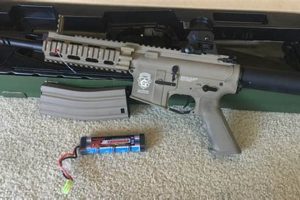
This component represents a self-contained electromechanical unit central to the operation of many electric airsoft rifles. Found predominantly in models replicating the AR-15/M4 platform, as well as certain MP5 and G3 variants, it houses the gears, piston, cylinder, and other mechanisms necessary to propel a BB through the barrel. Its standardized design allows for a degree of interchangeability and upgrade potential across compatible airsoft gun models.
The standardized design offers several benefits to airsoft enthusiasts. It facilitates upgrades and repairs due to readily available parts and compatible components from various manufacturers. The widespread adoption also means a large community knowledge base exists, aiding users in troubleshooting and performance enhancement. Historically, this standardized design has contributed significantly to the accessibility and customization options available within the airsoft hobby.
The following sections will delve into the individual components within, common issues encountered, and methods for maintenance and performance optimization of this critical assembly.
Gearbox Optimization Strategies
The following points provide actionable advice for maintaining and enhancing the operational effectiveness of the Version 2 electromechanical unit.
Tip 1: Select High-Quality Components. Investment in durable gears, a robust piston, and a reliable motor forms the basis of a high-performing system. Prioritize materials known for their wear resistance and structural integrity.
Tip 2: Ensure Proper Lubrication. Consistent application of appropriate grease to gears and silicone oil to the cylinder minimizes friction and wear. Select lubricants designed specifically for airsoft components to avoid damaging seals or other materials.
Tip 3: Correct Air Seal is Essential. A compromised air seal between the piston head, cylinder, and nozzle results in a loss of compression and decreased power. Inspect and replace O-rings as needed, and consider using aftermarket components designed for improved sealing.
Tip 4: Shimming for Optimal Gear Mesh. Proper shimming of the gears within the unit is critical for smooth and efficient operation. Incorrect shimming can lead to excessive noise, increased wear, and potential failure. Use shims of varying thicknesses to achieve the correct gear alignment.
Tip 5: Consider Motor Upgrade. Replacing the stock motor with a higher-torque or higher-speed option can significantly improve trigger response and rate of fire. Ensure the chosen motor is compatible with the existing battery and other components.
Tip 6: Regular Inspection is Key. Periodic disassembly and inspection of the unit allows for early detection of wear or damage. Address any issues promptly to prevent further complications.
The consistent application of these strategies ensures increased longevity, reliability, and overall performance. Neglecting these points risks suboptimal function and potential equipment failure.
The next section offers guidance on troubleshooting common issues and performing essential maintenance procedures.
1. Compatibility

The Version 2 assembly’s compatibility serves as a cornerstone of its widespread adoption and utility. This compatibility dictates the range of airsoft rifle models within which the unit can be installed and function correctly. The primary factor determining compatibility lies in the physical dimensions and mounting points of the assembly, which must align precisely with the receiver of the airsoft rifle. Failure to meet these dimensional requirements results in either impossible installation or compromised function due to misalignment of internal components, such as the magazine feed or hop-up unit.
A direct consequence of the standardized design is the ready availability of replacement parts and upgrade components across a broad spectrum of manufacturers. This interchangeability streamlines repairs and allows users to customize their airsoft rifles to meet specific performance needs or aesthetic preferences. For example, the extensive use of this design in the M4/AR-15 platform has fostered a thriving aftermarket ecosystem, where users can easily find and install upgrades like reinforced gears, high-torque motors, or improved air seal components to enhance the rifle’s performance. Conversely, the lack of dimensional uniformity in proprietary designs severely limits the availability of compatible parts, often necessitating the purchase of complete replacement assemblies at higher costs.
In summary, the high degree of compatibility inherent in the Version 2 electromechanical unit translates to increased accessibility, simplified maintenance, and enhanced customization options for airsoft enthusiasts. The standardization of dimensions and mounting points reduces the risk of incompatibility issues, fostering a vibrant aftermarket for replacement and upgrade components. Recognizing the compatibility standards allows for more informed purchasing decisions and streamlines the process of upgrading and maintaining airsoft rifles, which results in reduced downtime and greater enjoyment of the sport.
2. Durability

Durability in the context of the Version 2 electromechanical unit refers to its capacity to withstand the stresses and strains associated with repeated operation under various conditions. This characteristic directly impacts the lifespan, reliability, and overall value of the airsoft rifle employing this component.
- Material Composition
The materials used in construction significantly influence durability. Aluminum alloys, steel, and reinforced polymers are common choices. Steel gears, for instance, demonstrate superior resistance to wear compared to zinc alloy gears, but add weight. Reinforced polymers offer a balance of strength and weight, but may degrade under high stress or temperature. The selection of appropriate materials is crucial for long-term performance.
- Stress Points and Reinforcement
Certain areas within the Version 2 assembly experience higher stress during operation. These points, such as the piston head, gear axles, and shell itself, are prime candidates for reinforcement. Metal bushings or bearings can replace plastic bushings to reduce friction and wear on gear axles. Reinforced shells, often made from thicker aluminum or steel, resist cracking or deformation under high spring loads.
- Environmental Factors
The operating environment affects durability. Exposure to moisture can cause corrosion of metal parts. Temperature extremes can impact the performance and lifespan of lubricants and seals. Dust and debris can accelerate wear on moving parts. Regular cleaning and maintenance are essential to mitigate these environmental effects.
- Manufacturing Precision
The precision with which the unit is manufactured plays a critical role. Tight tolerances and accurate alignment of components reduce stress and friction. Conversely, poorly manufactured units with loose tolerances or misaligned parts are more prone to premature failure. Quality control during manufacturing is, therefore, a significant factor in determining durability.
The collective impact of these factors determines the overall durability of the Version 2 electromechanical unit. A well-designed and manufactured unit, constructed from appropriate materials and properly maintained, can withstand significant use and provide years of reliable service. Conversely, a poorly constructed or neglected unit is likely to fail prematurely, leading to costly repairs or replacements. Understanding these factors enables informed decision-making when selecting and maintaining airsoft rifles that use this assembly.
3. Performance

Performance, with respect to the Version 2 assembly, encompasses the measurable attributes reflecting operational effectiveness. These attributes, which include rate of fire, muzzle velocity, and trigger response, directly influence the airsoft rifle’s utility in gameplay.
- Rate of Fire (ROF)
ROF, measured in rounds per minute (RPM), indicates the number of BBs the rifle can discharge in a sustained burst. Factors affecting ROF include motor speed, gear ratio, and battery voltage. High ROF provides a tactical advantage in close-quarters combat, allowing for rapid suppression. However, excessively high ROF can strain internal components, potentially reducing durability. For instance, a motor upgrade can significantly increase ROF, but may necessitate reinforced gears to withstand the increased stress.
- Muzzle Velocity (FPS)
Muzzle velocity, measured in feet per second (FPS), determines the BB’s speed as it exits the barrel. Higher FPS generally translates to increased range and impact energy. However, FPS is often subject to field regulations and safety limits. Air seal quality, spring strength, and barrel length are major determinants of FPS. A compromised air seal will reduce FPS, while a stronger spring will increase it. The precise interaction between these factors dictates the rifle’s effective range and power.
- Trigger Response
Trigger response refers to the time elapsed between trigger pull and BB discharge. Rapid trigger response provides a significant advantage in engagements requiring quick reactions. Factors influencing trigger response include motor torque, electronic trigger units (ETUs), and the state of the anti-reversal latch. An ETU can reduce trigger delay by bypassing mechanical contacts and enabling pre-cocking features. A high-torque motor can spin up the gears more quickly, resulting in faster trigger response.
- Consistency
Shot-to-shot consistency measures the uniformity of muzzle velocity across multiple shots. Variations in muzzle velocity can negatively affect accuracy and predictability. Air seal consistency, hop-up unit performance, and BB quality are all contributors to shot-to-shot consistency. Regular maintenance of air seal components and the use of high-quality BBs will help to improve consistency. For example, using lower quality BBs can cause inconsistencies in size and shape, which may disrupt the airflow within the barrel which leads to inconsistent results.
These facets interrelate to define overall performance. Modifications focused on enhancing one aspect may inadvertently affect others. A balanced approach, considering all performance metrics and their interdependencies, is crucial for achieving optimal results. The selection of appropriate components and consistent maintenance are essential for maximizing and sustaining the desired level of performance.
4. Upgradeability

Upgradeability constitutes a significant advantage of the Version 2 electromechanical unit. The standardized design facilitates extensive modification and enhancement, allowing users to tailor performance characteristics and longevity. This inherent flexibility has fostered a robust aftermarket ecosystem, offering a diverse range of components designed to address specific performance goals and operational requirements.
- Internal Component Replacement
The modular design permits the replacement of individual internal components with aftermarket alternatives. Gears, pistons, cylinders, motors, and springs are frequently upgraded to enhance durability, rate of fire, and muzzle velocity. For instance, steel gears can replace stock zinc alloy gears to improve wear resistance, particularly in high-stress configurations. Similarly, a high-torque motor can provide improved trigger response and faster cycling times. These component-level upgrades offer precise control over performance characteristics.
- Electronic Trigger Units (ETUs)
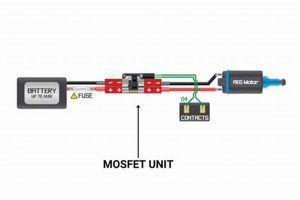
ETUs replace the mechanical trigger contacts with electronic circuits, enabling programmable firing modes, improved trigger response, and active braking functionality. Programmable firing modes can include burst fire, pre-cocking, and adjustable trigger sensitivity. Active braking prevents overspin of the motor, improving semi-automatic accuracy. ETUs offer advanced control over the unit’s operation and can significantly enhance overall responsiveness.
- Spring Guide and Piston Head Modifications
The spring guide and piston head are critical components influencing compression and power. Upgraded spring guides, often featuring bearings, reduce spring torsion and improve consistency. Piston heads with improved air seals maximize compression efficiency, leading to increased muzzle velocity. Modifying these components can improve power output and reduce stress on other internal parts.
- Air Nozzle Enhancements
The air nozzle plays a pivotal role in feeding BBs into the hop-up chamber and maintaining air seal integrity. Upgraded air nozzles, often constructed from durable materials like aluminum, can improve feeding reliability and air seal consistency. Adjustable nozzles allow for fine-tuning of the air seal, optimizing performance for different BB weights and hop-up settings.
The combination of internal component replacement, electronic trigger units, spring guide and piston head modifications, and air nozzle enhancements allows for a high degree of customization of the Version 2 assembly. This extensive upgradeability is a key factor in its continued popularity and relevance within the airsoft community, enabling users to adapt and optimize their airsoft rifles to meet evolving gameplay requirements and personal preferences.
5. Maintainability
The maintainability of the Version 2 electromechanical unit is directly linked to its longevity and consistent performance. This attribute reflects the ease with which the assembly can be inspected, cleaned, repaired, and lubricated. High maintainability translates to reduced downtime, lower repair costs, and an extended operational lifespan. Conversely, a design that complicates access to internal components or necessitates specialized tools hinders maintenance efforts and increases the likelihood of premature failure. Regular cleaning and lubrication are paramount to preserving function.
Several design features contribute to or detract from maintainability. For example, a shell design that requires complete disassembly to access internal components significantly increases the complexity of routine maintenance. The use of standardized screw sizes and readily available replacement parts simplifies repairs and reduces the reliance on specialized tools. Easily accessible lubrication points allow for routine maintenance without extensive disassembly. A real-world example of the impact of maintainability can be seen in the comparison between different shell designs. Shells that split into two halves, secured by screws, generally offer easier access to internal components than single-piece designs, facilitating tasks such as gear shimming and piston replacement. Regular cleaning and proper lubrication with silicone oil ensures the O-rings are functioning as designed. This minimizes air leakage and keeps FPS consistent.
In summary, maintainability is a crucial aspect of the Version 2 assembly, influencing its long-term performance and cost of ownership. Design features that promote ease of access, standardized components, and simplified lubrication procedures contribute significantly to maintainability. Prioritizing maintainability in selection and emphasizing regular maintenance practices ensures extended operational life and consistent performance of airsoft rifles employing this central component.
6. Standardization
The Version 2 electromechanical unit’s pervasive adoption stems directly from its adherence to established dimensional and functional standards. This standardization dictates component interchangeability across various airsoft rifle platforms and manufacturers. The adherence to common specifications reduces the complexities associated with sourcing replacement parts and performing upgrades. Without standardization, each rifle model might necessitate proprietary components, significantly increasing maintenance costs and limiting customization options. The standardization means that regardless of the brand of M4/AR-15-style airsoft rifle, the core internal components within this assembly gears, pistons, springs often adhere to predefined dimensions and specifications.
The impact of this standardization extends beyond mere component interchangeability. It fosters a competitive marketplace, incentivizing manufacturers to innovate and improve component designs while maintaining compatibility. This competitive pressure results in a wider range of available options, benefiting end-users with choices tailored to diverse performance requirements and budget constraints. For instance, numerous manufacturers produce reinforced gear sets adhering to the Version 2 standard, allowing consumers to select based on material composition, gear ratio, and manufacturing quality. Without this common standard, such a competitive aftermarket could not exist.
In conclusion, standardization is not merely a design characteristic of the Version 2 electromechanical unit; it is a foundational principle underpinning its widespread success and utility. The ease of maintenance, the availability of diverse aftermarket components, and the fostering of a competitive market are all direct consequences of this standardization. The ongoing adherence to these established standards remains critical for ensuring the continued viability and relevance of the Version 2 platform within the airsoft community.
7. Reliability

Reliability, in the context of the Version 2 electromechanical unit, represents its capacity to consistently perform its intended function under specified operating conditions for a defined period. It’s the measure of its dependability and freedom from failure. The reliability of this assembly directly impacts the user’s experience, influencing the gun’s consistent performance during gameplay and its long-term operational lifespan. A high degree of reliability minimizes malfunctions, reduces the need for repairs, and maximizes the usability of the airsoft rifle.
Several factors contribute to or detract from reliability. Material selection and manufacturing precision are paramount. The use of durable materials like steel for gears and reinforced polymers for the piston can significantly enhance the unit’s ability to withstand stress and wear. Precise manufacturing tolerances ensure proper alignment and minimize friction, reducing the likelihood of component failure. Proper maintenance practices, including consistent lubrication and regular inspection, also play a crucial role in maintaining reliability. Conversely, the use of low-quality materials, poor manufacturing tolerances, and inadequate maintenance can drastically reduce the assembly’s operational lifespan and increase the frequency of malfunctions. For example, a gearbox that is not properly shimmed can cause the internal gears to grind against each other, causing them to wear out prematurely.
The practical significance of understanding reliability lies in its ability to inform purchasing decisions and maintenance strategies. Selecting airsoft rifles equipped with Version 2 assemblies constructed from durable materials and manufactured to high standards is a key first step in ensuring reliable performance. Implementing a regular maintenance schedule, including lubrication, cleaning, and inspection, further extends the unit’s operational lifespan and minimizes the risk of unexpected failures. Ultimately, understanding the factors that influence reliability empowers airsoft enthusiasts to maximize their investment and minimize downtime, resulting in a more enjoyable and consistent gameplay experience.
Frequently Asked Questions
The following section addresses common queries regarding the Version 2 electromechanical unit, providing factual answers and clarifying misconceptions.
Question 1: What airsoft rifle platforms commonly utilize the Version 2 assembly?
The Version 2 unit is most frequently found in airsoft replicas of the AR-15/M4 family of rifles. Certain MP5 and G3 variants also employ this design.
Question 2: What are the primary benefits of the standardized Version 2 design?
Standardization facilitates component interchangeability, simplifies repairs, enables performance upgrades, and contributes to a robust aftermarket ecosystem.
Question 3: What factors most significantly impact the durability of a Version 2 unit?
Material composition, manufacturing precision, stress point reinforcement, and environmental conditions are key determinants of durability.
Question 4: How can the rate of fire (ROF) be enhanced within a Version 2 system?
ROF can be increased by upgrading the motor, modifying gear ratios, and utilizing higher voltage batteries. However, these modifications may necessitate reinforced internal components.
Question 5: What maintenance procedures are essential for preserving the reliability of a Version 2 assembly?
Regular lubrication, thorough cleaning, and periodic inspection for wear or damage are crucial for maintaining reliability.
Question 6: Are all Version 2 components universally interchangeable across different manufacturers?
While standardization promotes interchangeability, minor variations in dimensions or specifications may exist between manufacturers. Consultation with compatibility resources is recommended before component swapping.
Understanding these fundamental questions provides a solid foundation for navigating the complexities of the Version 2 assembly and optimizing its performance.
The subsequent section will delve into the process of troubleshooting common issues encountered with this system.
Airsoft Gearbox V2
This exploration has dissected the Version 2 electromechanical unit, a cornerstone component in numerous airsoft rifle platforms. From analyzing its compatibility and durability to assessing its upgradeability and maintainability, a comprehensive understanding of its inner workings has been established. The significance of standardization and reliability has been underscored, highlighting their contribution to the system’s widespread adoption and continued utility.
Continued advancements in material science, manufacturing techniques, and electronic control systems will undoubtedly shape the future of this technology. A rigorous approach to maintenance and a comprehensive understanding of component interactions will be essential for maximizing the performance and longevity of airsoft rifles reliant upon this design. The pursuit of informed decision-making remains paramount for ensuring optimal outcomes within the airsoft community.