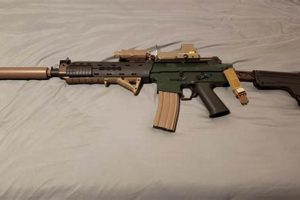
A buttstock designed for airsoft rifles, primarily M4 variants, provides structural support for the weapon against the user’s shoulder. It often incorporates adjustable positions to cater to different user preferences and body types. This component frequently houses the battery powering the electric motor within the airsoft gun. An example would be a retractable unit with multiple locking points, allowing the user to shorten or lengthen the rifle’s overall dimension.
The incorporation of a compartment for battery storage offers considerable advantages in terms of convenience and aesthetics. This design eliminates the need for external battery pouches or wiring, contributing to a cleaner and more streamlined appearance for the airsoft replica. Historically, this design provided an alternative to external battery bags and offered more flexibility than fixed stocks.
Further details regarding the assembly process, compatible battery types, available materials, and common adjustments will be elaborated upon in the following sections. The subsequent discussion will also cover factors to consider when selecting the appropriate component for specific airsoft rifle models and intended applications.
Optimizing Airsoft Rifle Performance
The following recommendations are designed to enhance the functionality and longevity of airsoft rifles incorporating adjustable buttstocks.
Tip 1: Battery Compatibility: Ensure the battery type and dimensions are fully compatible with the internal compartment. Forcing an oversized battery can damage the compartment or the battery itself.
Tip 2: Adjustment Mechanism Maintenance: Regularly inspect the adjustment mechanism for debris or wear. Clean and lubricate the locking points to maintain smooth and reliable adjustments.
Tip 3: Wiring Inspection: Periodically examine the internal wiring for fraying or damage, particularly at the points where the wires connect to the battery terminals. Damaged wiring can lead to reduced performance or electrical shorts.
Tip 4: Secure Attachment: Verify that the unit is securely fastened to the receiver. A loose stock can affect accuracy and stability during gameplay.
Tip 5: Material Considerations: Be mindful of the material composition. Polymer units offer lightweight durability, while metal components provide increased robustness but may add weight.
Tip 6: Ergonomic Evaluation: Assess the ergonomics of the unit to ensure it complements the user’s shooting style and body type. An ill-fitting stock can contribute to discomfort and reduced accuracy.
Tip 7: Cable Management: Proper cable management within the battery compartment is crucial to prevent pinching or damage to the wires. Organize the cables neatly to avoid interference with the adjustment mechanism.
Implementing these suggestions will help maintain the functionality, reliability, and overall performance of airsoft rifles equipped with this type of adjustable buttstock.
The subsequent sections will explore the various models and materials commonly found in these buttstocks, aiding in informed decision-making during the selection process.
1. Battery Compartment Volume

The available space within the buttstock is directly correlated with the type and capacity of battery the airsoft rifle can utilize. A larger compartment volume permits the use of higher-capacity batteries, resulting in extended operational runtime. Conversely, a smaller volume restricts battery options, potentially necessitating more frequent battery changes during gameplay. Many of these buttstocks are designed to accommodate nunchuck-style batteries that divide the cells into two connected pods, allowing them to fit around the buffer tube. A lack of sufficient volume effectively limits the power available to the airsoft gun’s motor, impacting its rate of fire and overall performance.
The design of the battery compartment impacts the rifle’s balance. A larger battery, while providing greater runtime, can shift the center of gravity toward the rear of the rifle. This shift may affect handling characteristics, requiring the user to adapt their technique for optimal performance. Furthermore, the compartment’s internal dimensions influence the ease of battery insertion and removal. A poorly designed compartment can complicate battery changes, particularly during time-sensitive situations in the field. Some designs feature quick-access doors or mechanisms to streamline this process, prioritizing user convenience. Conversely, other models might require tools for battery replacement, adding complexity and potentially hindering rapid response during games.
In summary, understanding the relationship between battery compartment volume and the overall functionality of the buttstock is paramount for maximizing airsoft rifle effectiveness. Selecting a component with an appropriate battery capacity ensures adequate power for sustained gameplay, while careful consideration of design features promotes user-friendly operation. The design also has implications for weight distribution and handling.
2. Adjustability Range
The adjustability range of an airsoft buttstock directly impacts its adaptability to diverse user physiques and tactical scenarios. A broader adjustment range permits the user to modify the rifle’s length of pull, accommodating variations in arm length, body armor thickness, and preferred shooting stances. Conversely, a limited range restricts customization options, potentially compromising comfort and effectiveness. For instance, a player wearing substantial body armor requires a longer length of pull to maintain a comfortable and stable shooting platform. An insufficient adjustment range on the stock might force the player to adopt a less optimal stance, negatively affecting accuracy and maneuverability.
The practical significance of understanding adjustability range extends to diverse operational roles within airsoft games. A CQB (Close Quarters Battle) specialist might prefer a shorter configuration for enhanced maneuverability in confined spaces. In contrast, a designated marksman engaging targets at longer distances requires a longer, more stable setup to promote accuracy. A stock with a wide adjustability range allows a single rifle to be adapted to both roles, increasing its versatility. Certain units employ multiple locking positions along the buffer tube, offering fine-grained control over the length of pull. Others utilize more rudimentary systems with fewer adjustment options, limiting user customization. Furthermore, the robustness of the adjustment mechanism itself is a critical factor. A flimsy mechanism prone to slippage undermines the benefits of a wide adjustability range, potentially leading to instability and inconsistent performance.
In summary, the adjustability range constitutes a pivotal aspect of any unit designed for modularity. A well-designed system, offering a broad range and robust locking mechanism, enhances the rifle’s adaptability and overall effectiveness across varied tactical situations and user preferences. Compromises in this area can lead to discomfort, reduced accuracy, and a limitation of the rifle’s operational potential.
3. Material Durability

Material durability represents a critical factor influencing the longevity and performance of an airsoft crane stock. The selection of materials directly correlates with the unit’s resistance to physical stress, environmental degradation, and overall operational lifespan. A compromised material composition can lead to premature failure, impacting the rifle’s handling and functionality.
- Polymer Composition
Many airsoft crane stocks utilize polymer blends, offering a balance between weight and impact resistance. However, the specific polymer used significantly impacts durability. Higher-grade polymers, such as glass-filled nylon, exhibit enhanced resistance to cracking, chipping, and deformation compared to standard ABS plastics. An example is the difference between a low-quality ABS stock shattering upon impact during a game versus a reinforced nylon stock sustaining similar impacts without damage. The choice of polymer impacts the operational lifespan.
- Metal Reinforcement
Certain stocks incorporate metal components to reinforce critical stress points, such as the buffer tube interface or adjustment mechanism. Aluminum alloys are commonly used for this purpose, providing increased strength and rigidity compared to all-polymer designs. The presence and quality of metal reinforcement directly influences the stock’s ability to withstand repeated adjustments and impacts without developing play or structural weaknesses. For example, a metal buffer tube ring provides a more secure and durable attachment point compared to a plastic counterpart, reducing the risk of failure under stress.
- Environmental Resistance
Exposure to environmental factors, such as ultraviolet radiation, moisture, and temperature fluctuations, can degrade the materials used in construction. Polymers may become brittle and prone to cracking under prolonged UV exposure, while metal components are susceptible to corrosion in humid environments. A durable airsoft crane stock should be constructed from materials that exhibit resistance to these environmental stressors, ensuring consistent performance over time. UV-resistant polymers and corrosion-resistant metal coatings contribute to the stock’s longevity in diverse conditions.
- Impact Resistance
The ability to withstand impacts and sudden shocks is paramount for a durable airsoft crane stock. During gameplay, the rifle may be subjected to accidental drops, collisions with obstacles, or other forms of physical stress. A robust stock material will absorb and dissipate these impacts without sustaining permanent damage. The material’s impact resistance is often quantified using standardized testing methods, providing a comparative measure of its ability to withstand physical stress. A higher impact resistance rating indicates a more durable and resilient stock.
These material-related factors collectively determine the overall durability and reliability of an airsoft crane stock. Selecting a unit constructed from high-quality, environmentally resistant materials, with appropriate reinforcement, ensures sustained performance and longevity in the demanding conditions of airsoft gameplay.
4. Receiver Attachment Security
The security with which an airsoft crane stock attaches to the rifle receiver is paramount for stability, accuracy, and overall weapon functionality. A compromised attachment can introduce wobble, affect aiming consistency, and potentially lead to component failure. Several factors contribute to the robustness of this connection.
- Buffer Tube Thread Engagement
The depth and quality of the threads on both the buffer tube and the receiver dictate the strength of the connection. Insufficient thread engagement, or damaged threads, reduces the contact area and increases the likelihood of the stock loosening during use. High-quality threading ensures a secure and stable interface. An example of a weak buffer tube can lead to thread stripping upon minimal stress.
- Locking Ring Mechanism
The locking ring, also referred to as the castle nut, secures the buffer tube to the receiver. The design and material of this component significantly impact its effectiveness. A robust locking ring, constructed from durable metal, effectively prevents the buffer tube from unscrewing under recoil or stress. Conversely, a poorly designed or weakened locking ring can fail to maintain sufficient tension, resulting in instability. The failure of locking ring is a significant reduction of weapon functionality.
- Receiver Plate Stability
The receiver plate, situated between the receiver and the buffer tube, plays a crucial role in distributing stress and preventing damage to the receiver. A sturdy receiver plate, made from reinforced steel, provides a stable platform for the buffer tube and helps to mitigate the effects of impact and vibration. A weak or ill-fitting receiver plate can contribute to receiver damage and a loose stock attachment. The choice of receiver plate is vital on weapon security.
- Anti-Rotation Features
Some designs incorporate anti-rotation features, such as indexing tabs or set screws, to prevent the buffer tube from rotating independently of the receiver. These features enhance stability and prevent the locking ring from loosening over time. The absence of anti-rotation measures can lead to gradual loosening of the stock, requiring frequent tightening or adjustment. The importance of anti-rotation features is often overlook, which can affect the stability of the weapon.
In conclusion, the security of the receiver attachment directly influences the performance and reliability of any airsoft rifle utilizing a crane stock. Paying close attention to these factors during installation and maintenance is essential for ensuring a stable and consistent shooting platform, and preventing component failures during gameplay. Poor installment can affect the receiver attachments.
5. Wiring Channel Design
The configuration of wiring channels within an airsoft crane stock significantly influences the reliability, performance, and ease of maintenance of the airsoft rifle’s electrical system. Adequate channel design protects wiring from damage, facilitates efficient battery connection, and minimizes interference with stock adjustment mechanisms.
- Channel Dimensions and Capacity
The dimensions of the wiring channels must accommodate the gauge and number of wires required to connect the battery to the motor. Insufficient channel capacity can lead to pinched or strained wires, increasing resistance and potentially causing short circuits. An example would be attempting to force thick, low-resistance wiring into a channel designed for thinner wires, resulting in insulation damage and reduced electrical conductivity. This compromise negatively affects the rifle’s rate of fire and trigger response.
- Routing and Bend Radius
The path taken by the wiring within the stock should minimize sharp bends and potential pinch points. Excessive bending can fatigue the wires and compromise the insulation, leading to electrical failures. A well-designed channel incorporates smooth curves and gradual transitions to reduce stress on the wiring. For instance, sharp 90-degree bends near the battery connector can cause the wires to break over time due to repeated flexing during stock adjustments. Smooth, sweeping curves are preferable.
- Protection and Insulation
The wiring channels should provide adequate protection against physical damage and short circuits. This may involve the use of insulated sleeves, protective barriers, or dedicated compartments to isolate the wiring from other components within the stock. Failure to adequately protect the wiring can result in damage from impacts, friction, or contact with sharp edges. Exposed wiring can also create a fire hazard if it comes into contact with conductive materials. The protection to the wiring is critical for a long-term use.
- Accessibility and Serviceability
The design of the wiring channels should allow for easy access to the wiring for inspection, maintenance, and replacement. This may involve the use of removable panels, access ports, or modular wiring harnesses. Difficult-to-access wiring complicates repairs and increases the risk of damage during servicing. A well-designed system prioritizes ease of access and simplifies troubleshooting.
Collectively, these aspects of wiring channel design play a pivotal role in the overall reliability and functionality of the airsoft crane stock. Prioritizing adequate channel dimensions, proper routing, robust protection, and ease of accessibility ensures a stable and dependable electrical system, minimizing the risk of failures and maximizing the rifle’s performance. Careful assessment of these characteristics is crucial when selecting a stock for optimal performance.
6. Ergonomic Compatibility

Ergonomic compatibility, in the context of the airsoft crane stock, refers to the degree to which the component conforms to the user’s body and shooting style, optimizing comfort, control, and overall performance. This compatibility is not merely a matter of subjective preference; rather, it directly influences the shooter’s ability to maintain a stable shooting platform, acquire targets quickly, and sustain accurate fire over extended periods. A stock that is poorly suited to the user’s physique can induce discomfort, muscle strain, and ultimately, degraded shooting performance. The adjustability features of the stock are there to support the ergonomic compatibility, with some adjustability of the stock, the user will be able to use the airsoft weapon with ease.
The length of pull, cheek weld, and overall stock shape are key determinants of ergonomic compatibility. Length of pull, the distance from the trigger to the butt of the stock, dictates the shooter’s arm extension and posture. A length of pull that is too short can result in a cramped and unstable shooting stance, while a length of pull that is too long can lead to overextension and reduced control. The cheek weld, the point of contact between the shooter’s cheek and the stock, is critical for consistent eye alignment with the sights or optics. A poorly designed cheek weld can force the shooter to crane their neck or adopt an unnatural head position, compromising sight alignment and accuracy. The overall shape of the stock, including its curvature and surface texture, contributes to the shooter’s grip and recoil management. A stock with a comfortable and secure grip enhances control and reduces fatigue.
Ultimately, ergonomic compatibility represents a critical design consideration for airsoft crane stocks, directly impacting user comfort, shooting proficiency, and overall enjoyment of the sport. The design of the stock needs to be considered to make sure it supports user ergonomic needs and to avoid injury of the airsoft user. Prioritizing ergonomic compatibility ensures that the airsoft rifle becomes an extension of the shooter, fostering a seamless and intuitive shooting experience. Failure to address ergonomic considerations can result in discomfort, reduced accuracy, and a diminished sense of control, detracting from the overall airsoft experience.
Frequently Asked Questions
The following questions address common inquiries regarding the function, compatibility, and maintenance of this type of adjustable airsoft rifle buttstock.
Question 1: What specific battery types are compatible?
Typically, NiMH (Nickel-Metal Hydride) or LiPo (Lithium Polymer) batteries in a ‘nunchuck’ or stick configuration are suitable. Compatibility is contingent on the compartment dimensions; therefore, verifying physical size is crucial. Voltage must also be aligned with the airsoft guns specifications.
Question 2: How does the adjustment mechanism function?
Most designs employ a retractable system with multiple locking positions along the buffer tube. A lever or button disengages the locking mechanism, allowing the user to slide the stock to the desired length. Releasing the lever re-engages the lock, securing the stock in place.
Question 3: What materials are typically used in the construction?
Common materials include reinforced polymers and metal alloys. Polymers offer a lightweight and durable option, while metal components add strength and rigidity to critical stress points.
Question 4: Is this component universally compatible with all M4-style airsoft rifles?
While designed for M4 platforms, some variations in receiver dimensions or buffer tube specifications may require modification or adapter. Cross-compatibility should be confirmed prior to purchase.
Question 5: How is the unit installed and removed?
Installation typically involves sliding the stock onto the buffer tube after loosening the locking ring. Removal follows the reverse process. Specific instructions may vary depending on the design.
Question 6: What maintenance procedures are recommended?
Regularly inspect the adjustment mechanism for debris or wear, cleaning and lubricating as needed. Also, periodically examine the internal wiring for damage or fraying.
Proper understanding of these aspects contributes to informed decision-making and optimal utilization.
Conclusion
The preceding analysis has explored the key characteristics, performance factors, and practical considerations surrounding the use of the airsoft crane stock. Factors like battery compatibility, adjustability, material durability, receiver attachment security, wiring channel design, and ergonomic compatibility have shown a vital influence on the overall effectiveness of any airsoft rifle. Understanding the various aspects of this component is crucial for maximizing the performance and reliability of airsoft replicas.
Proper selection, installation, and maintenance of the airsoft crane stock will ensures user satisfaction and optimal gameplay. These considerations allow airsoft enthusiasts to equip their rifles with a well-integrated buttstock, enhancing their experience in the sport. Future advancements may bring further innovation in design and materials of this essential airsoft rifle component.