![Airsoft 101: What ARE Airsoft Weapons? [Explained]](data:image/svg+xml;base64,PHN2ZyB4bWxucz0iaHR0cDovL3d3dy53My5vcmcvMjAwMC9zdmciIHdpZHRoPSI0NzQiIGhlaWdodD0iNTYiIHZpZXdCb3g9IjAgMCA0NzQgNTYiPjxyZWN0IHdpZHRoPSIxMDAlIiBoZWlnaHQ9IjEwMCUiIHN0eWxlPSJmaWxsOiNjZmQ0ZGI7ZmlsbC1vcGFjaXR5OiAwLjE7Ii8+PC9zdmc+ "Airsoft 101: What ARE Airsoft Weapons? [Explained] Ultimate Airsoft Guide for Beginners, Tactics & Gear Reviews")
Devices that launch projectiles, typically 6mm plastic BBs, using compressed gas or spring mechanisms are employed in the sport of airsoft. These replicas are designed to resemble real firearms, often mirroring their appearance and handling characteristics for recreational and training purposes. The power output of these devices is typically regulated to ensure player safety, with velocity limits varying by location and gameplay type.
The popularity of these recreational devices stems from their use in simulated combat scenarios, offering a relatively safe and accessible alternative to real firearms training. These devices allow participants to engage in tactical gameplay, developing teamwork, strategic thinking, and physical fitness. Historically, their use has expanded from simple backyard games to organized events involving intricate scenarios and realistic environments.
The following sections will delve into the specific mechanisms of operation, safety considerations, the legal landscape surrounding their use, and the various game types in which these devices are commonly employed. This provides a comprehensive understanding of their role in the sport of airsoft and their broader impact.
Essential Considerations Regarding Airsoft Replicas
The effective and responsible utilization of devices designed to launch projectiles in airsoft necessitates adherence to safety protocols and a thorough understanding of their functionalities. The following recommendations address critical aspects for both novice and experienced participants.
Tip 1: Prioritize Eye Protection: Due to the nature of airsoft projectiles, full-seal goggles or a protective mask are non-negotiable. Ensure the selected eye protection meets ANSI Z87.1 or equivalent safety standards to withstand the impact of BBs.
Tip 2: Understand Velocity Limits: Familiarize yourself with the specific velocity restrictions mandated by the field or event. Chronograph your device before each game to ensure compliance and prevent potential injury.
Tip 3: Maintain Safe Handling Practices: Treat every replica as if it were loaded. Keep the muzzle pointed in a safe direction, and avoid placing your finger on the trigger until ready to fire. Implement muzzle covers when not actively engaged in gameplay.
Tip 4: Opt for Quality Ammunition: Utilize high-quality, seamless 6mm BBs to minimize the risk of jams or damage to the device’s internal components. Biodegradable options contribute to environmental responsibility.
Tip 5: Perform Regular Maintenance: Clean and lubricate the airsoft replica according to the manufacturer’s instructions. This preventative measure will ensure optimal performance and extend the lifespan of the device.
Tip 6: Store Responsibly: Secure devices in a locked case or storage container, separate from ammunition, to prevent unauthorized access, especially in households with children. Consider local laws regarding transportation and storage.
Tip 7: Be Aware of Legal Regulations: Research and comply with all applicable federal, state, and local laws pertaining to ownership, transportation, and use of airsoft replicas. Many jurisdictions require orange tip markings to distinguish them from real firearms.
Adherence to these guidelines promotes safety, ensures responsible participation in the sport of airsoft, and mitigates potential legal ramifications. Consistent application of these practices cultivates a safe environment for all participants.
The subsequent sections will explore advanced customization options and discuss various tactical strategies commonly employed in airsoft scenarios.
1. Projectile Propulsion Systems

The method by which devices used in airsoft propel projectiles is central to their operation and categorizes their functional types. These systems determine the device’s power source, rate of fire, and overall performance characteristics. Different mechanisms are employed to achieve the desired projection of plastic BBs, each with unique advantages and limitations.
- Gas Blowback Systems
These systems utilize compressed gas, such as CO2 or green gas, to propel the projectile and cycle the action, mimicking the operation of a real firearm. Examples include pistols and rifles that feature a realistic recoil effect. The performance is influenced by temperature, and consistent gas pressure is crucial for reliable operation.
- Electric Powered Systems (AEGs)
AEGs employ an electric motor to drive a gearbox, which in turn compresses a spring to propel the BB. They offer a consistent rate of fire and are typically powered by rechargeable batteries. Examples include commonly used assault rifles and machine guns. The power and reliability are linked to motor and battery quality.
- Spring Powered Systems
Spring-powered systems require manual cocking before each shot, compressing a spring that subsequently releases to propel the projectile. Bolt-action sniper rifles are a common example. They are simpler in design and generally more affordable but lack the rapid firing capability of gas or electric systems.
- High-Pressure Air (HPA) Systems
HPA systems use an external compressed air tank connected to the device via a hose. They offer highly consistent performance and adjustable power output. Often favored for competitive play, they require specialized equipment and careful regulation of air pressure.
These propulsion methods dictate the device’s suitability for different play styles and environments. Understanding the nuances of each system allows users to select the appropriate airsoft replica for their needs and to maintain it effectively. The choice of propulsion system fundamentally defines “what are airsoft weapons” and their diverse capabilities.
2. Replica Firearm Design

The design of devices used in airsoft as replicas of real firearms is a defining characteristic. This design impacts handling, aesthetics, and the overall realism of the sport, contributing significantly to the experience. The degree of replication varies, but the intent to emulate real weaponry is central to the concept.
- External Appearance and Dimensions
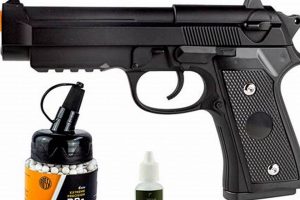
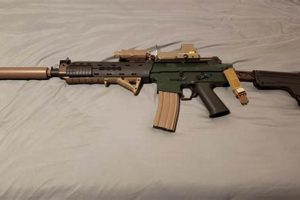
Replicas often mirror the external dimensions, weight, and contours of their real firearm counterparts. This attention to detail extends to the inclusion of features such as rails for accessory attachment, realistic magazine dimensions, and accurate reproduction of stock and grip designs. For example, a replica of an M4 carbine will strive to match the length, weight, and key features of the actual M4, contributing to a more immersive experience. The visual similarity is crucial for training simulations and scenario-based gameplay.
- Functional Controls and Mechanisms
Many airsoft replicas feature functional controls similar to those of real firearms, including working safeties, magazine releases, and bolt catches. While the internal mechanisms differ, the external operation mimics that of the real weapon. An airsoft pistol, for instance, may have a functional slide that locks back when the magazine is empty, simulating the real firearm action. The presence of these functional controls enhances the realism and training value of airsoft devices.
- Material Composition and Finish
The materials used in the construction of airsoft replicas range from polymers and metals to composites, mirroring the composition of real firearms to varying degrees. The finish, including color and texture, is often replicated to enhance the visual similarity. Some high-end replicas utilize aluminum alloys and steel components to achieve a more realistic weight and feel. The selection of materials directly affects the durability, weight, and overall realism of the replica, impacting the user’s perception of authenticity.
- Markings and Trademarks
Some airsoft manufacturers produce officially licensed replicas that bear the trademarks and markings of real firearm manufacturers. These markings add to the authenticity of the replica and can be an important consideration for collectors and enthusiasts. However, the unauthorized reproduction of trademarks is a legal concern, and manufacturers must navigate licensing agreements to avoid infringement. The presence of accurate markings significantly enhances the perceived value and realism of the airsoft replica.
These elements of replica firearm design collectively contribute to the defining characteristics of devices used in airsoft. They influence the user’s experience, the realism of the sport, and the potential training applications of these devices. The emphasis on visual and functional accuracy distinguishes airsoft replicas from other toy guns and underscores their intended purpose as simulations of real firearms. This contributes to the core understanding of “what are airsoft weapons.”
3. Caliber and Ammunition

The caliber of devices used in airsoft, and the corresponding ammunition they employ, are fundamental specifications that define their operational parameters. These characteristics directly influence safety regulations, effective range, and overall gameplay dynamics. The standardized use of specific caliber and ammunition types contributes to the uniformity and safety of airsoft activities.
- Standard 6mm Caliber
The vast majority of airsoft devices utilize a 6mm caliber projectile. This standardization promotes compatibility and simplifies the manufacturing of airsoft BBs. The 6mm designation refers to the approximate diameter of the spherical plastic projectile. Deviations from this standard are uncommon and generally restricted to specialized devices. The adherence to a consistent 6mm caliber allows for uniform regulations and safety guidelines across different airsoft fields and organizations.
- BB Material Composition
Airsoft BBs are typically manufactured from plastic, although biodegradable options are increasingly prevalent. The plastic composition affects the projectile’s weight, density, and biodegradability. Heavier BBs tend to offer improved accuracy and wind resistance, while biodegradable BBs reduce environmental impact. The specific plastic formulation also influences the BB’s shatter resistance and potential for fragmentation upon impact. High-quality BBs are seamless and free from imperfections to ensure smooth passage through the device’s barrel and minimize the risk of jamming.
- BB Weight and its Effects
The weight of airsoft BBs is measured in grams (g) and varies depending on the intended application. Common weights range from 0.12g to 0.30g or higher. Lighter BBs offer higher initial velocities but are more susceptible to wind drift and reduced range. Heavier BBs retain energy better and provide greater accuracy in outdoor environments. The selection of appropriate BB weight is crucial for optimizing performance and ensuring consistent results. Players often experiment with different weights to determine the optimal balance for their specific device and playing conditions. The ideal BB weight depends upon the capabilities of the devices, establishing a relation to “what are airsoft weapons.”
- Ammunition Quality and Safety
The quality of airsoft BBs significantly impacts the performance and safety of the device. Low-quality BBs may exhibit inconsistencies in size, shape, and weight, leading to jams, inaccurate shots, and potential damage to the device’s internal components. Moreover, substandard BBs may shatter upon impact, increasing the risk of eye injury. Reputable manufacturers produce high-quality BBs that undergo rigorous quality control measures to ensure consistency and minimize the risk of malfunction or injury. Utilizing only high-quality BBs is essential for responsible airsoft participation. Substandard BBs deviate from the qualities of what are airsoft weapons, compromising the intention and safety.
The consistent 6mm caliber and the selection of appropriate BB weight and material are paramount considerations in the operation and safety of airsoft devices. The standardization and quality control within the ammunition manufacturing process contribute to the reliability and predictability of these devices, further defining their characteristics within the context of recreational simulation.
4. Velocity Regulation

Velocity regulation forms a critical component in the definition and safe operation of devices used in airsoft. The maximum velocity at which these devices can project BBs is strictly limited by regulations that vary across different jurisdictions and airsoft fields. These regulations are not arbitrary; they are directly linked to mitigating the risk of injury associated with projectile impact. Higher velocities equate to greater impact force, thus increasing the potential for harm, particularly to sensitive areas such as the eyes and face. Compliance with established velocity limits is, therefore, a fundamental safety consideration and an integral part of the airsoft experience. These regulations constrain the capabilities of “what are airsoft weapons” for safety.
The practical application of velocity regulation manifests in the routine practice of “chronoing” airsoft devices before gameplay. This involves using a chronograph device to measure the BB’s velocity as it exits the barrel. If the measured velocity exceeds the prescribed limit, the device must be adjusted or deemed unsuitable for use until brought into compliance. Examples include fields that commonly enforce a 400 feet-per-second (FPS) limit for rifles and a 350 FPS limit for pistols, measured with 0.20g BBs. Some fields also impose minimum engagement distances that vary based on the measured FPS. This practical approach ensures adherence to safety protocols and prevents the negligent or intentional use of excessively powerful devices. This is the tangible consequence of regulating “what are airsoft weapons.”
In summary, velocity regulation is not merely a peripheral concern but a central aspect of the safe design, operation, and legal compliance of devices used in airsoft. This regulation ensures that these recreational devices remain within acceptable safety parameters, minimizing the potential for injury and promoting responsible use. While challenges may arise in enforcing these regulations uniformly across diverse environments, the underlying principle of velocity limitation is essential for maintaining the safety and integrity of the sport and defining the characteristics of “what are airsoft weapons.”
5. Safety Mechanisms
The incorporation of safety mechanisms is paramount in the design and operation of devices used in airsoft. These mechanisms are not merely added features, but integral components that mitigate the risk of accidental discharge and potential injury. The presence and functionality of these safety features are critical to defining what these devices are and how they are safely employed.
- Functional Safety Switches
A functional safety switch is a common feature on many airsoft devices, mirroring the design of real firearms. This switch mechanically prevents the trigger from being pulled or the firing mechanism from being engaged, thereby preventing accidental discharge when the device is not intended for use. For example, a selector switch on an airsoft rifle may have “safe,” “semi-automatic,” and “automatic” positions, with the “safe” position rendering the device inoperable. The reliability of this switch is crucial, as a malfunctioning safety can lead to unintended firing. Therefore, the presence and proper functioning of a safety switch is a fundamental element in responsible airsoft operation and device design.
- Muzzle Devices and Barrel Blocking
Muzzle devices, such as barrel socks or plugs, are often required to physically block the barrel of an airsoft device when it is not in use. These devices prevent the accidental discharge of BBs and serve as a visual indicator that the device is not intended to be fired. For instance, a bright orange barrel sock covering the muzzle clearly indicates that the device is in a safe condition. These devices are particularly important during transportation and storage, preventing accidental discharge if the trigger is inadvertently pulled. These simple yet effective mechanisms are critical to ensuring the safe handling of airsoft devices.
- Velocity Limiters and Regulators
As previously discussed, velocity limits are a key safety consideration, and some devices incorporate internal mechanisms to regulate the projectile velocity. These mechanisms may include adjustable valves or regulators that restrict the amount of compressed gas or spring tension applied to the BB. For example, some high-pressure air (HPA) systems feature adjustable regulators that allow the user to precisely control the output pressure, thereby limiting the BB’s velocity. These internal regulators ensure that the device remains within established safety parameters, minimizing the risk of injury. Tampering with or removing these regulators is strongly discouraged and may violate field regulations and legal requirements.
- Anti-Dry Firing Mechanisms
Some advanced airsoft devices incorporate anti-dry firing mechanisms that prevent the device from operating when the magazine is empty. This feature prevents the potential damage to internal components that can occur when the device is fired without a BB in the chamber. Additionally, it provides a tactile feedback to the user that the magazine is empty, promoting more realistic and tactical reloading procedures. For example, some gas blowback pistols will lock the slide back when the magazine is empty, mimicking the operation of a real firearm. This feature not only protects the device but also enhances the user’s training and awareness.
In conclusion, the incorporation of these safety mechanisms is essential to defining devices used in airsoft. The functional safety switch, muzzle devices, velocity limiters, and anti-dry firing mechanisms work in concert to minimize the risk of accidental discharge, injury, and damage to the device. The presence and proper functioning of these features are critical to responsible airsoft operation and contribute to the overall safety and integrity of the sport. The absence of such mechanisms would fundamentally alter the nature of the devices, potentially rendering them unsafe and unsuitable for recreational use. Therefore, they are integral to understanding “what are airsoft weapons.”
Frequently Asked Questions Regarding Airsoft Devices
The following section addresses common inquiries concerning the nature, regulation, and safe handling of devices used in airsoft. These answers aim to clarify misconceptions and provide a factual basis for understanding these devices.
Question 1: Are airsoft weapons considered firearms?
Airsoft weapons are generally not classified as firearms under federal law, though state and local regulations vary. The primary distinction lies in the projectile; airsoft devices launch plastic BBs, while firearms discharge lethal projectiles. Many jurisdictions require airsoft devices to be marked with an orange tip to further differentiate them from real firearms.
Question 2: What is the typical range of these devices?
The effective range of devices used in airsoft typically falls between 50 and 200 feet. Factors such as the device’s power source, BB weight, and environmental conditions influence the range. Sniping configurations may achieve longer ranges, but are typically limited by field rules to ensure player safety at close distances.
Question 3: What safety precautions are necessary when handling airsoft weapons?
Eye protection, specifically full-seal goggles or masks meeting ANSI Z87.1 standards, is mandatory. These devices should be treated as if loaded, with the muzzle consistently pointed in a safe direction. Safe handling practices, including keeping the finger off the trigger until ready to fire, are essential.
Question 4: Are there age restrictions on owning or using airsoft weapons?
Many jurisdictions impose age restrictions on the purchase and use of airsoft devices. These restrictions often mirror those pertaining to BB guns or air rifles. Individuals under a certain age may require parental supervision or consent to participate in airsoft activities. Adherence to local regulations is crucial.
Question 5: Can airsoft weapons be modified to increase their power?
While modifications to increase the power output are possible, they are strongly discouraged and often illegal. Increasing the velocity beyond established safety limits significantly increases the risk of injury and may result in legal penalties. Compliance with field rules and safety regulations is paramount.
Question 6: What is the purpose of the orange tip on many airsoft weapons?
The orange tip serves as a visual indicator that the device is not a real firearm. This marking helps law enforcement and the public distinguish airsoft devices from real weapons, preventing potential misunderstandings and ensuring public safety. Removal or alteration of the orange tip is often illegal and can result in serious consequences.
In summary, airsoft devices are recreational tools with specific safety considerations and legal regulations. Responsible handling and adherence to established guidelines are crucial for safe and enjoyable participation in the sport.
The following section will delve into the various game types and tactical strategies employed in airsoft scenarios.
Conclusion
This exposition has examined devices utilized in airsoft, emphasizing their design as replicas of real firearms employing non-lethal projectiles. Key attributes include their distinct projectile propulsion systems, mandated velocity limitations, essential safety mechanisms, and ammunition specifics. These elements collectively define these devices, distinguishing them from actual firearms and regulating their responsible use within recreational contexts.
Comprehension of these devices’ characteristics is crucial for safe participation and compliance with legal standards. Further research into evolving technologies and regulatory changes within the realm of airsoft is encouraged, fostering a culture of informed engagement and responsible utilization. This continued awareness will ensure the ongoing safety and integrity of the sport.