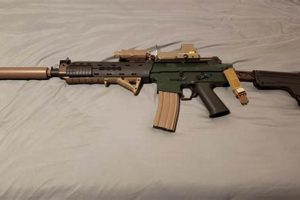
The discussion concerns a subset of airsoft replicas that mimic the appearance of firearms with shortened barrels. These replicas are designed for recreational use in simulated combat scenarios. Their reduced size can offer advantages in maneuverability within close-quarters environments, but alterations from standard configurations may be subject to specific regulations depending on the jurisdiction.
The appeal of such replicas stems from several factors, including their aesthetic similarity to real-world counterparts and their potential for enhanced handling in certain gameplay situations. Historically, modifications to projectile-launching devices have been present across various applications, and the airsoft adaptation reflects this trend within a recreational context. Understanding the legal and safety implications associated with these modified replicas is crucial for responsible ownership and use.
The following sections will delve deeper into the construction, potential applications, safety considerations, and legal ramifications associated with this particular class of airsoft equipment, ensuring a comprehensive understanding for both enthusiasts and those unfamiliar with the subject matter.
Tips for Utilizing a Short-Barreled Airsoft Shotgun Replica
This section provides practical guidelines for the safe and effective handling of airsoft replicas modeled after short-barreled shotguns. These recommendations address performance, maintenance, and adherence to legal guidelines.
Tip 1: Prioritize Safety Gear. Eye protection certified to withstand airsoft projectile impacts is mandatory. Face protection, such as a mesh mask, is strongly recommended to minimize potential injury during gameplay.
Tip 2: Understand Range Limitations. The shortened barrel may affect projectile velocity and accuracy at longer distances. Calibration of hop-up settings is crucial to optimize effective range.
Tip 3: Maintain Consistent Internal Pressure. Gas-powered variants require proper gas levels for consistent performance. Regularly inspect and refill gas reservoirs according to manufacturer specifications.
Tip 4: Ensure Proper Storage. When not in use, store the replica in a secure location inaccessible to unauthorized individuals, particularly children. Consider using a locked case to prevent accidental discharge or misuse.
Tip 5: Adhere to Field Regulations. Always comply with the specific rules and guidelines established by the airsoft field or event organizer. Chronograph testing is essential to ensure adherence to velocity limits.
Tip 6: Regularly Inspect Components. Check for wear and tear on critical parts, such as the trigger mechanism, shell ejection system (if applicable), and barrel assembly. Address any damage promptly to prevent malfunctions.
Tip 7: Employ Proper Loading Techniques. Use the correct type of ammunition (BBs) and loading procedures as outlined by the manufacturer. Overloading or using incorrect ammunition can damage the replica.
Adhering to these guidelines will enhance the user experience and mitigate potential risks associated with this type of airsoft replica. Safe handling and responsible usage are paramount.
The following sections will offer further insights into the legal and ethical considerations pertaining to the possession and use of these airsoft replicas, emphasizing responsible participation in the sport.
1. Maneuverability
The reduced length inherent in replicas of short-barreled shotguns directly enhances maneuverability, particularly within confined spaces. The shortened barrel allows for swifter weapon manipulation in close-quarters combat (CQB) scenarios often encountered in indoor airsoft arenas or dense, wooded environments. This contrasts sharply with standard-length airsoft rifles or shotguns, which can become cumbersome and restrictive when navigating tight corners or narrow passageways. The cause is the reduced overall dimension, and the effect is improved agility and responsiveness in tactical engagements.
The importance of maneuverability as a component of a short-barreled shotgun airsoft replica lies in its practical application during gameplay. For example, imagine an airsoft player clearing a building room by room. A longer weapon could snag on doorways or furniture, potentially alerting opponents or hindering the player’s reaction time. The shorter profile minimizes these risks, enabling faster target acquisition and engagement. Similarly, in outdoor scenarios with dense foliage, the compact design permits easier movement through underbrush without the impediment of a longer barrel.
In summary, the connection between the design and maneuverability is significant. A short-barreled design improves agility in confined spaces, enabling swift target engagement. Comprehending this link is crucial for choosing appropriate airsoft equipment based on the anticipated playing environment. This design focuses on close-quarters and swift engagements which can impact effectiveness in diverse scenarios. Therefore, airsoft players must consider the trade-offs between maneuverability and other factors such as range and accuracy when selecting a short-barreled design.
2. Close-Quarters
The efficacy of airsoft replicas modeled after short-barreled shotguns is intrinsically linked to their performance in close-quarters environments. The design characteristics of these replicas prioritize maneuverability and rapid target acquisition within confined spaces, making them particularly suited for indoor airsoft arenas and other scenarios where engagements occur at close range.
- Enhanced Maneuverability
The primary advantage of a shortened barrel is the significant increase in maneuverability. This characteristic is crucial in navigating tight corners, doorways, and narrow corridors commonly found in indoor airsoft facilities. The reduced length minimizes the risk of snagging or obstruction, allowing for quicker weapon handling and transitions. The design is not for open terrains, but designed for agile movements.
- Faster Target Acquisition
The reduced weight and compact size contribute to faster target acquisition. Airsoft players can transition between targets more rapidly, providing a tactical edge in dynamic close-quarters engagements. The ability to quickly bring the replica to bear on a target is essential for maximizing effectiveness in fast-paced scenarios. This allows for quick reactions and target acquisition.
- CQB Tactics Adaptation
The use of these replicas often necessitates the adoption of specific close-quarters battle (CQB) tactics. These tactics emphasize swift movement, coordinated team maneuvers, and the efficient clearing of rooms. The replica’s design complements these tactics, facilitating aggressive engagement and maximizing the player’s effectiveness within confined spaces. It is essential to coordinate as a group, and plan strategic movements.
- Limitations in Range
The trade-off for enhanced maneuverability is often a reduction in effective range and accuracy at longer distances. The shorter barrel can impact projectile velocity and trajectory, limiting the replica’s effectiveness in open areas. Understanding these limitations is crucial for airsoft players to adapt their tactics and weapon selection based on the specific environment. As a result, this means it is not for long range fights.
The design characteristics and tactical applications highlight the symbiotic relationship between short-barreled shotgun airsoft replicas and close-quarters environments. While these replicas excel in CQB scenarios due to their maneuverability and rapid target acquisition, their limitations in range necessitate a nuanced understanding of their strengths and weaknesses. Responsible use requires adaptation of tactics to the specific demands of the playing field.
3. Velocity Variance

The consistency of projectile velocity is a critical performance aspect of any airsoft device. When considering airsoft replicas modeled after short-barreled shotguns, velocity variance takes on added significance due to potential design modifications and the inherent limitations of shorter barrels.
- Barrel Length Influence
Shorter barrels typically result in lower projectile velocities compared to their longer counterparts. This reduction stems from the diminished time and distance available for the propellant (gas or spring) to accelerate the BB. This physical constraint introduces a degree of velocity variance due to the reduced margin for optimal propellant efficiency. Examples from physics relate to this concept.
- Gas System Instability (Gas-Powered Replicas)
Gas-powered airsoft shotguns, including those mimicking sawed-off configurations, can exhibit increased velocity variance if the gas system is not meticulously maintained. Fluctuations in gas pressure, temperature, or valve efficiency directly translate to inconsistencies in projectile velocity. This can be seen through poorly-maintained gas valves and air leakage, which leads to unstable velocities.
- Spring Compression Variability (Spring-Powered Replicas)
For spring-powered replicas, inconsistencies in spring compression or piston seal integrity can lead to velocity fluctuations. Over time, springs may weaken, or seals may degrade, resulting in less efficient energy transfer to the BB and, consequently, inconsistent velocities. This leads to low power and unstable velocities.
- Ammunition Quality and Weight
The quality and weight consistency of the BBs used also contribute to velocity variance. Inconsistent BB weights introduce variations in the force required for acceleration, leading to velocity fluctuations. Using high-quality, consistently weighted BBs is essential for minimizing this source of variance. This will ensure a more predictable rate of fire.
Understanding and mitigating velocity variance is crucial for ensuring fair and safe gameplay. Significant velocity inconsistencies can affect accuracy, range, and adherence to field velocity limits, potentially leading to disqualification or, more importantly, posing a safety risk to other participants. Proper maintenance, careful component selection, and the use of high-quality ammunition are essential practices for minimizing velocity variance in these replicas. The variations must be within the field range.
4. Aesthetic Realism

Aesthetic realism constitutes a significant factor influencing the appeal of airsoft replicas modeled after short-barreled shotguns. This realism encompasses visual accuracy and the tactile experience, contributing to the overall sense of authenticity for enthusiasts and collectors alike.
- Visual Similarity to Real Firearms
The primary draw of aesthetic realism lies in the faithful replication of the external appearance of actual firearms. This includes details such as the receiver design, stock configuration (or lack thereof), barrel length, and overall proportions. Replicas often incorporate realistic finishes, markings, and engravings, further enhancing the visual resemblance. For example, a well-crafted replica may mirror the weathering and wear patterns seen on actual firearms, adding to its authenticity. The visual similarities attract collectors.
- Material Fidelity
The choice of materials plays a crucial role in achieving aesthetic realism. High-quality replicas often utilize materials that mimic those found in real firearms, such as metal alloys for the receiver and barrel, and polymers for the grip or stock. The weight and texture of these materials contribute to a more realistic tactile experience. Using polymer to mimic the appearance of wood contributes to a sense of visual consistency. It attempts to mimic real life materials.
- Functional Mimicry
Beyond visual and tactile aspects, some replicas incorporate functional features that mirror those of real firearms. This may include operational charging handles, functional safeties, and realistic shell ejection mechanisms (in the case of shotgun replicas). The presence of these features enhances the sense of realism by replicating the operational steps involved in handling a real firearm. The operation is designed to mimic a functional fire arm.
- Historical or Tactical Significance
Certain replicas are designed to represent specific historical or tactical configurations, further enhancing their appeal to collectors and enthusiasts. For example, a replica might be modeled after a particular shotgun used by law enforcement or military units, adding a layer of historical significance to its aesthetic appeal. Representing real life historical configuration makes the replica look even more realistic.
The pursuit of aesthetic realism in these replicas reflects a desire for authenticity and immersion within the airsoft hobby. While performance and functionality remain important considerations, the visual and tactile experience contributes significantly to the overall satisfaction derived from owning and using these replicas. This focus on realism also underscores the importance of responsible handling and storage practices, given the potential for confusion with actual firearms.
5. Legal Restrictions

The possession and use of airsoft replicas resembling short-barreled shotguns are subject to a complex web of legal restrictions that vary significantly across jurisdictions. These regulations often stem from concerns about public safety and the potential for misidentification of these replicas as actual firearms. The cause is the resemblance to dangerous weapons. The effect is strict legal control. Understanding these legal constraints is a crucial component of responsible ownership and participation in the airsoft hobby. For instance, in some regions, the overall length of an airsoft replica is regulated, and models falling below a certain minimum length may be prohibited or require specific markings to distinguish them from real firearms. Failure to comply with such regulations can result in legal penalties, including fines and confiscation of the replica.
The practical significance of understanding these legal restrictions extends beyond mere compliance. It directly impacts the types of airsoft replicas that can be legally purchased, modified, and used in a particular area. For example, some jurisdictions may restrict the sale or possession of airsoft replicas that closely resemble specific types of firearms favored by criminals, such as sawed-off shotguns. Furthermore, modifications that alter the appearance or functionality of an airsoft replica may also be subject to legal scrutiny. Transporting these replicas across state or national borders can also trigger additional legal requirements, such as notification to relevant authorities or adherence to specific packaging and storage protocols. The legality varies across jurisdictions.
In summary, legal restrictions surrounding airsoft replicas of short-barreled shotguns are multifaceted and demand careful consideration. The patchwork of regulations necessitates thorough research and adherence to local laws to ensure responsible ownership and use. Failure to do so can expose individuals to legal risks and undermine the reputation of the airsoft community. Consulting with legal professionals or relevant authorities is recommended to clarify any ambiguities or uncertainties regarding applicable laws. The primary challenge is navigating a complex and varying legal landscape, requiring diligence and proactive engagement to ensure compliance.
6. Safe Handling

The responsible operation of any airsoft device necessitates adherence to strict safety protocols. The reduced dimensions and inherent characteristics of airsoft replicas modeled after short-barreled shotguns amplify the importance of rigorous safe handling practices to mitigate potential risks.
- Eye Protection Compliance
Certified eye protection is non-negotiable. Airsoft projectiles, regardless of the replica’s design, can cause serious eye injuries. Full-seal goggles meeting or exceeding ANSI Z87.1 standards are mandatory during operation and in designated staging areas. Examples of non-compliance leading to injury are readily documented within the airsoft community, highlighting the severity of this requirement. The primary implication is a reduced risk of irreversible eye damage. This is not an option, but a must.
- Muzzle Discipline Adherence
Maintaining strict muzzle discipline is fundamental. The muzzle of the airsoft replica must always be pointed in a safe direction, regardless of whether it is loaded. This prevents unintentional discharge from causing harm to oneself or others. Scenarios involving accidental discharges resulting in injury underscore the critical need for constant vigilance and adherence to this principle. This is crucial at all times.
- Secure Storage Protocols
Airsoft replicas must be stored securely when not in use. This includes storing them in locked cases or containers, inaccessible to unauthorized individuals, particularly children. This prevents accidental misuse or discharge that could result in injury or property damage. Failure to secure airsoft devices has led to numerous incidents involving unintended harm, emphasizing the necessity of responsible storage practices. The key here is to secure, lock, and hide airsoft guns.
- Adherence to Field Regulations
Airsoft fields and events establish specific rules and regulations to ensure player safety. These regulations may include velocity limits, minimum engagement distances, and restrictions on certain types of airsoft devices. Strict adherence to these rules is essential for maintaining a safe and controlled environment. Violations of field regulations can result in expulsion from the field and potential injury to other participants. The rule is to comply and obey.
The convergence of these safe handling facets underscores the importance of responsible ownership and operation of airsoft replicas, particularly those resembling short-barreled shotguns. Proactive adherence to these protocols minimizes the potential for accidents and promotes a safer environment for all participants within the airsoft community. These rules are designed to protect and save lives.
7. Storage protocols

Storage protocols for airsoft replicas, specifically those resembling sawed-off shotguns, are paramount due to their heightened potential for misidentification and misuse. The shortened barrel and overall diminished size can increase the likelihood of these replicas being mistaken for actual firearms, thereby necessitating stringent storage practices. The cause stems from the reduced size and increased concealability of these replicas, and the effect is a greater need for secure storage. A replica improperly stored can fall into the wrong hands, leading to unintentional harm or, worse, criminal activity. Therefore, the implementation of robust storage protocols becomes an indispensable safety measure.
The importance of secure storage is underscored by real-world incidents involving airsoft replicas. In cases where replicas were easily accessible, unauthorized individuals, including children, have gained access, leading to accidental discharges and injuries. The legal repercussions of such incidents can be severe, with owners facing potential criminal charges and civil lawsuits. Therefore, practical application demands employing locked cases, gun safes, or other secure storage containers to prevent unauthorized access. Furthermore, ammunition should be stored separately to minimize the risk of accidental loading and discharge. Regular inspections of storage locations are essential to ensure continued security and prevent tampering.
In summary, storage protocols represent a critical link in the safe and responsible handling of airsoft replicas mimicking sawed-off shotguns. The inherent risk of misidentification and the potential for misuse necessitate diligent adherence to these protocols. Locked storage, separate ammunition storage, and routine inspections are essential components of a comprehensive storage strategy. Failure to implement these measures can have severe consequences, ranging from accidental injuries to legal liabilities, highlighting the significance of responsible storage practices within the airsoft community.
Frequently Asked Questions Regarding Sawed Off Shotgun Airsoft Replicas
This section addresses common inquiries and misconceptions surrounding airsoft replicas resembling sawed-off shotguns, providing factual information for informed decision-making.
Question 1: Are airsoft replicas of sawed-off shotguns legal to own?
Legality varies significantly by jurisdiction. Some regions impose restrictions based on overall length, requiring replicas to meet minimum dimensional standards to differentiate them from actual firearms. Consult local laws for definitive guidance.
Question 2: Do these replicas offer a performance advantage compared to standard airsoft shotguns?
The primary advantage lies in enhanced maneuverability within confined spaces. However, the shortened barrel may result in reduced range and velocity compared to full-length counterparts.
Question 3: What safety precautions are essential when using these replicas?
Certified eye protection is mandatory. Strict muzzle discipline, secure storage, and adherence to field regulations are also crucial for preventing accidents and injuries.
Question 4: Can modifications be made to further shorten the barrel of these replicas?
Modifying the external appearance or functionality of an airsoft replica may violate local laws and regulations. Such alterations can also compromise the replica’s safety and performance.
Question 5: What type of ammunition is recommended for use in these replicas?
Using high-quality, consistently weighted 6mm BBs is essential for ensuring reliable performance and minimizing velocity variations. Follow the manufacturer’s recommendations regarding BB weight and type.
Question 6: How should these replicas be stored when not in use?
Store replicas in a locked case or container, inaccessible to unauthorized individuals, particularly children. Ammunition should be stored separately to prevent accidental loading and discharge.
These FAQs emphasize the importance of legal compliance, safety awareness, and responsible ownership when dealing with airsoft replicas of sawed-off shotguns. Prudent decision-making is paramount.
The following section provides a conclusion to the discussion on these airsoft replicas.
Conclusion
The preceding analysis has explored the various facets of airsoft replicas resembling sawed-off shotguns. Key areas of focus included maneuverability, close-quarters effectiveness, velocity variance, aesthetic realism, legal restrictions, safe handling practices, and storage protocols. Each of these elements plays a crucial role in determining the suitability, legality, and responsible usage of these replicas within the airsoft hobby.
Ultimately, the responsible ownership and employment of any airsoft device, including a sawed off shotgun airsoft replica, demands comprehensive awareness of applicable laws, rigorous adherence to safety guidelines, and a commitment to ethical conduct. The information presented serves to promote informed decision-making and responsible participation in the sport, fostering a safer and more sustainable environment for all airsoft enthusiasts.