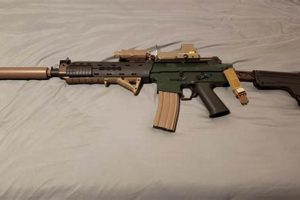
Hearing protection designed for the airsoft sport typically consists of devices worn over or in the ears. These devices attenuate, or reduce, the intensity of loud sounds, such as those produced by pyrotechnics or nearby replicas. An example includes earmuffs with a noise reduction rating suitable for environments with moderate to high decibel levels.
Employing such protective measures is crucial for safeguarding auditory health during airsoft activities. Repeated exposure to elevated noise levels can lead to long-term hearing damage, including tinnitus and noise-induced hearing loss. While specialized equipment has become increasingly prevalent, rudimentary forms of hearing protection, like makeshift earplugs, have historically been utilized in recreational shooting activities.
The subsequent sections will delve into the specific types of hearing protection available, the factors to consider when selecting appropriate devices, and best practices for their use and maintenance to ensure optimal hearing preservation during airsoft gameplay.
Airsoft Ear Defender Tips
Proper selection and utilization of hearing protection is paramount for preserving auditory health during airsoft activities. The following tips provide guidance on maximizing the effectiveness and longevity of devices designed for this purpose.
Tip 1: Select Appropriate Noise Reduction Rating (NRR): The NRR indicates the level of noise reduction provided by the device. Choose a rating suitable for the expected sound levels on the airsoft field. A higher NRR is advisable for environments with frequent or intense pyrotechnics.
Tip 2: Ensure Proper Fit: Ill-fitting earmuffs or earplugs may not provide the advertised level of noise reduction. Follow the manufacturer’s instructions for proper insertion and adjustment to ensure a secure and complete seal.
Tip 3: Inspect for Damage Regularly: Periodically inspect the devices for any signs of wear and tear, such as cracks, tears, or deformation. Damaged equipment should be replaced immediately to maintain optimal protection.
Tip 4: Use Consistently: Employ the equipment consistently throughout all airsoft activities, even during brief periods of exposure to loud noises. Intermittent use significantly reduces the overall protection afforded.
Tip 5: Clean and Store Properly: Clean the devices according to the manufacturer’s instructions to prevent the buildup of dirt, sweat, and debris, which can compromise performance and hygiene. Store the equipment in a clean, dry place when not in use.
Tip 6: Consider Electronic Options: Electronic options can amplify ambient sounds, allowing for improved situational awareness while simultaneously providing noise reduction during loud events. Adjust the volume appropriately to avoid overexposure.
Adhering to these guidelines helps mitigate the risk of noise-induced hearing loss associated with airsoft activities, ensuring long-term auditory well-being and continued enjoyment of the sport.
The subsequent discussion will address the various types of hearing protection available and their specific advantages and disadvantages in the context of airsoft.
1. Noise Reduction Rating and Airsoft Ear Defenders

Noise Reduction Rating (NRR) is a critical specification for devices intended to protect hearing during airsoft activities. It quantifies the level of sound attenuation provided by hearing protection, indicating the degree to which a device reduces environmental noise reaching the ear. Selecting protectors with an insufficient NRR for the typical sound pressure levels encountered on an airsoft field will result in inadequate protection, potentially leading to noise-induced hearing loss. For example, if ambient noise consistently reaches 100 dB and the protectors have an NRR of 20 dB, the effective noise exposure would still be 80 dB, a level that, over prolonged exposure, can cause damage.
The accurate assessment of sound levels on an airsoft field is thus fundamental for selecting appropriately rated protectors. Factors such as pyrotechnic use, the proximity of replicas firing, and the acoustic properties of the playing environment significantly influence sound pressure levels. Furthermore, the effectiveness of the NRR is contingent upon the proper fit and consistent use of the protector. A poorly fitted protector, regardless of its NRR, will not provide the claimed level of attenuation, as sound can leak through gaps between the device and the ear. In such cases, custom-molded earplugs can offer a more secure and effective seal than generic options.
In summary, the NRR serves as a key metric for evaluating the protective capabilities of airsoft hearing devices. It is, however, not the sole determinant of effective hearing conservation. A comprehensive approach includes accurate sound level assessment, proper device selection and fitting, and consistent utilization, working together to mitigate the risk of auditory damage during airsoft activities. In the end, users must be able to select the best rated product to sustain their own ear health.
2. Proper Fit

The correlation between a proper fit and the effective performance of hearing protection is significant. Devices intended for use in airsoft activities, are designed to attenuate sound waves before they reach the inner ear. However, the specified noise reduction rating of these devices is contingent upon a complete and secure seal between the protector and the ear. A compromised seal introduces pathways through which sound can bypass the protective barrier, diminishing its effectiveness. For instance, an earmuff with gaps around the edges or an earplug that is not fully inserted will allow sound waves to diffract around the protector, reducing the level of attenuation achieved.
Achieving a proper fit requires careful attention to several factors. These include selecting the appropriate size and style of protector for the individual’s ear anatomy. Earmuffs come in various sizes and headband adjustments to accommodate different head shapes, while earplugs are available in multiple sizes and materials to conform to varying ear canal dimensions. Additionally, adherence to the manufacturer’s instructions for insertion and adjustment is crucial. Improper insertion techniques, such as failing to fully compress foam earplugs before insertion, can lead to a poor seal and reduced protection. Real-world examples of this correlation can be observed on airsoft fields, where players using ill-fitting hearing protection report experiencing greater sound exposure than those with properly fitted devices.
In conclusion, the effectiveness of hearing protection is inextricably linked to achieving a proper fit. The selection of appropriate devices, coupled with diligent adherence to insertion and adjustment protocols, is paramount for maximizing the protective benefits. Compromising on fit undermines the device’s design and significantly increases the risk of noise-induced hearing damage. A focused approach to ensuring proper fit is, therefore, an essential component of any hearing conservation strategy.
3. Consistent Use

The efficacy of devices intended to protect hearing during airsoft activities hinges significantly on consistent utilization. Sound attenuation, regardless of a protector’s Noise Reduction Rating, becomes compromised without continuous wear throughout the duration of potential noise exposure. Intermittent removal, even for brief intervals, allows sound waves to bypass the protective barrier, potentially negating the cumulative benefits derived from its prolonged use. For example, removing earmuffs for only a few minutes during intense gameplay or near pyrotechnic devices can expose the auditory system to substantial sound pressure levels.
The practical significance of consistent use extends to various scenarios encountered during airsoft engagements. Situational awareness is paramount; however, removing protection to enhance communication or auditory perception exposes one to impulsive noises. Similarly, comfort considerations must be balanced against the risk of potential auditory damage. A device may be perceived as cumbersome or uncomfortable, potentially leading to infrequent wear. The cause-and-effect relationship is direct: a protector left unused offers no protection. For instance, an individual who only dons hearing protection when anticipating a loud noise will likely experience auditory damage from unexpected bursts of sound.
In summary, the consistent application of hearing protection devices represents an essential component of responsible airsoft practices. The integration of proper hearing protection practices contributes to a safer gaming environment and promotes long-term auditory well-being, leading to a healthier gameplay.
4. Device Integrity
The structural and functional soundness of hearing protection devices is crucial for safeguarding auditory health during airsoft activities. Compromised integrity negates the intended protective capabilities of such devices, rendering them ineffective against potentially damaging noise levels.
- Material Degradation
Environmental factors and repeated use can lead to material degradation in ear defenders. Polymers may become brittle and crack, foams can lose elasticity, and metallic components may corrode. Such degradation compromises the acoustic seal and reduces the overall noise reduction effectiveness. For example, prolonged exposure to ultraviolet radiation can cause plastic earmuff cups to weaken, potentially shattering upon impact from a BB.
- Seal Compromise
The integrity of the seal between the device and the ear is paramount for effective noise attenuation. Tears or perforations in earmuff cushions or earplug surfaces create pathways for sound leakage, diminishing the device’s Noise Reduction Rating. If the cushions of a worn out earmuff are torn, external sounds may reach the ear.
- Functional Failure of Electronic Components
Certain hearing protection devices incorporate electronic components, such as active noise cancellation circuits or communication systems. Failure of these components due to water intrusion, impact damage, or battery malfunctions can compromise both hearing protection and communication capabilities. For example, a short circuit in an electronic earmuff may result in unexpected amplification of sounds, posing an auditory hazard.
- Structural Damage from Impact
Airsoft gameplay involves potential exposure to BB impacts and collisions. The structural integrity of the ear defender’s housing and suspension system is thus critical for withstanding such forces without compromising its protective function. A cracked earmuff cup or a broken headband may render the device incapable of providing adequate protection against loud noises.
The maintenance of device integrity through regular inspection, proper storage, and timely replacement is essential for ensuring reliable hearing protection during airsoft activities. Reliance on compromised devices exposes individuals to unnecessary auditory risks, potentially leading to irreversible hearing damage and is not something to be taken lightly.
5. Hygiene Practices

The maintenance of appropriate hygiene standards with hearing protection devices is crucial for mitigating the risk of infections and skin irritations. Devices, particularly those worn directly in or on the ear, accumulate sweat, sebum, and debris during use, creating a breeding ground for bacteria and fungi. Failure to address these accumulations through regular cleaning and disinfection can lead to otitis externa, folliculitis, and other dermatological conditions that compromise comfort and potentially necessitate medical intervention. As a direct consequence, players who neglect cleaning their earplugs may experience itching, discomfort, and even ear infections.
Proper cleaning protocols involve the use of mild soap and water or specialized cleaning solutions recommended by the manufacturer. Abrasive cleaners and harsh solvents should be avoided, as they can damage the device materials and compromise their protective properties. Furthermore, devices should be thoroughly dried before storage to prevent the proliferation of microorganisms. Sharing devices, even among teammates, should be strictly prohibited to minimize the risk of cross-contamination and the spread of infection. For example, earmuffs with cloth earcups, if shared, are a common transmission vector for bacteria.
In summary, adherence to rigorous hygiene practices is an integral component of responsible hearing protection usage. Regular cleaning, proper drying, and avoidance of device sharing are essential steps in minimizing the risk of infections and skin irritations. Neglecting these hygiene considerations not only undermines user comfort but also potentially compromises long-term auditory health, reinforcing the need for a comprehensive approach to both hearing protection and hygiene maintenance during airsoft activities.
6. Situational Awareness
Situational awareness, defined as the perception of environmental elements with respect to time and space, the comprehension of their meaning, and the projection of their status in the near future, is a critical element within the context of airsoft activities. While protective devices reduce auditory input, they can inadvertently impair a player’s ability to perceive critical audio cues. The sound of approaching footsteps, the distinct report of a replica firing, or shouted warnings from teammates often provide essential information about the location of adversaries and the unfolding dynamics of the engagement. Any reduction in the ability to discern these sounds can compromise tactical decision-making and increase vulnerability to unexpected threats. The use of hearing protection introduces a potential trade-off between auditory protection and situational awareness.
Technological advancements have led to the development of devices aimed at mitigating the detrimental effects of hearing protection on situational awareness. Electronic earmuffs, for example, often incorporate microphones and amplifiers that allow users to selectively amplify ambient sounds while simultaneously attenuating high-decibel noises. By enhancing the perception of low-level environmental sounds, these devices can improve a player’s ability to detect approaching opponents or discern subtle audio cues. However, reliance on electronic amplification also introduces potential drawbacks, such as the risk of battery failure, distortion of natural sounds, and the potential for over-amplification of background noise, which can itself be distracting. Therefore, the effective use of such technologies requires careful calibration and a thorough understanding of their limitations. Users must understand to properly use their devices or risk damage to their ear.
In conclusion, situational awareness and hearing protection represent competing priorities within the environment. Effective mitigation of auditory risks necessitates a balanced approach that considers both the need for hearing protection and the maintenance of adequate environmental awareness. Strategies such as selective use of electronic devices, the incorporation of visual cues, and enhanced communication protocols can help to reconcile these competing demands, minimizing the risk of auditory damage without unduly compromising tactical effectiveness. A deep understanding of this interrelationship enables players to better protect themselves while maintaining an edge in airsoft gameplay.
Frequently Asked Questions About Airsoft Ear Defenders
The following section addresses common queries regarding hearing protection devices utilized during airsoft activities. These questions are designed to provide clarity on various aspects of device selection, usage, and maintenance.
Question 1: What constitutes an acceptable Noise Reduction Rating (NRR) for devices utilized during airsoft activities?
The appropriate NRR is contingent upon the sound pressure levels encountered on the airsoft field. Assess the environment to determine the decibel level produced by replicas, pyrotechnics, and other noise sources. Select a device with an NRR sufficient to reduce the effective noise exposure to levels below 85 dB, the generally accepted threshold for safe auditory exposure over prolonged periods.
Question 2: How does improper fit compromise the effectiveness of airsoft ear defenders?
An inadequate seal between the device and the ear allows sound waves to bypass the intended protective barrier. This phenomenon, known as acoustic leakage, significantly reduces the device’s overall noise attenuation capabilities. Ensuring a snug and complete fit, following manufacturer instructions, is essential for achieving the stated NRR.
Question 3: Is occasional use of devices sufficient to protect against noise-induced hearing loss?
Intermittent employment offers limited protection. Auditory damage can occur from brief, high-intensity noise exposure. Therefore, consistent wear throughout all airsoft activities, including brief periods of anticipated or unexpected loud noises, is essential for effective hearing conservation.
Question 4: What are the indicators of compromised device integrity?
Inspect devices regularly for signs of wear and tear, including cracks, tears, and deformations. Compromised components, such as degraded foam or damaged seals, diminish the device’s protective capabilities. Replace damaged devices promptly to ensure adequate noise attenuation.
Question 5: What cleaning procedures are recommended for maintaining hygiene with airsoft ear defenders?
Clean devices regularly with mild soap and water or specialized cleaning solutions. Avoid abrasive cleaners or harsh solvents, which can damage the device materials. Thoroughly dry devices before storage to prevent microbial growth. Sharing devices is discouraged to prevent cross-contamination.
Question 6: How do electronic options balance the need for hearing protection with maintaining situational awareness?
Electronic devices often incorporate microphones and amplifiers that selectively amplify ambient sounds while attenuating high-decibel noises. This feature allows users to maintain awareness of their surroundings while minimizing the risk of auditory damage. Adjust volume levels appropriately to avoid overexposure to amplified sounds.
Prioritizing device integrity and consistent usage allows players to reduce the liklihood of hearing loss, and allows for a safer Airsoft experience.
The following discussion will focus on future trends in hearing protection technology for Airsoft gaming
Conclusion
Throughout this exploration, the critical role of airsoft ear defenders in safeguarding auditory health has been established. Device selection, fit, consistent use, integrity, hygiene, and situational awareness are all interwoven components. Prioritizing these factors mitigates the risk of noise-induced hearing loss, contributing to the long-term well-being of participants.
Responsible engagement with the sport mandates a commitment to hearing conservation. Continued diligence in the selection, maintenance, and proper use of airsoft ear defenders remains paramount for sustaining auditory health. It is the responsibility of every player to protect their hearing.