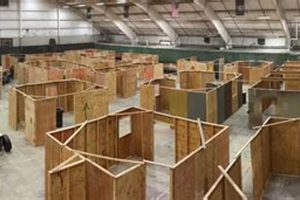
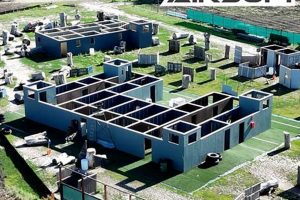
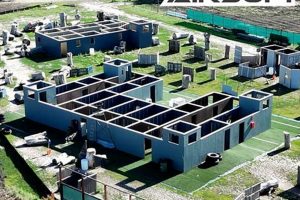
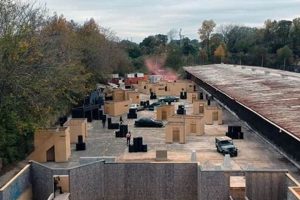
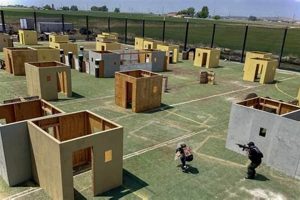
Close Quarters Battle (CQB) environments designed for airsoft are simulated combat zones emphasizing confined spaces and rapid engagement scenarios. These locations often mimic interior structures, such as buildings, warehouses, or complexes constructed with interconnected rooms, corridors, and obstacles to replicate realistic urban warfare conditions. An example would be a multi-story building with rooms connected by narrow hallways, populated with simulated office furniture and barriers.
These specialized areas provide a distinct advantage for players seeking intense, action-packed gameplay centered on tactical maneuvering and swift decision-making. The restricted spaces necessitate teamwork, communication, and proficiency in close-range weapon handling. Historically, the rise in popularity of this gaming environment parallels the increased interest in realistic military simulation and scenario-based challenges within the broader airsoft community, providing a more concentrated and adrenaline-fueled experience.
The following sections will delve into specific design considerations for these contained battlegrounds, explore common gameplay strategies employed within them, and address safety protocols crucial to ensuring a secure and enjoyable experience for all participants. Further discussion will address the equipment commonly used, and considerations for hosting successful events within these settings.
Tactical Recommendations for Close Quarters Battle Airsoft Environments
Successful navigation and engagement within close quarters battle airsoft environments necessitate adherence to specific tactical principles and a heightened awareness of the surrounding space. The following recommendations provide guidance for optimizing performance and ensuring effective team coordination.
Tip 1: Prioritize Situational Awareness: Constant observation of the immediate vicinity is paramount. Utilizing peripheral vision and maintaining a mental map of the layout can provide a crucial advantage. For example, quickly scanning a room upon entry to identify potential threats and escape routes allows for faster reactions.
Tip 2: Master Room Clearing Techniques: Efficiently and systematically clearing rooms reduces the risk of ambush. Pieing corners, utilizing multiple entry points, and communicating observed threats are essential. A team might implement a “slice the pie” method, gradually exposing the room while minimizing personal exposure.
Tip 3: Emphasize Communication: Clear and concise communication within the team is vital for coordinating movements and relaying enemy positions. Implementing pre-determined hand signals or using designated callouts can enhance response times. Example: “Contact left hallway, two individuals.”
Tip 4: Utilize Cover Effectively: Employ all available cover to minimize exposure to enemy fire. Move between cover points strategically, avoiding prolonged exposure in open areas. For instance, using barrels, walls, and debris as temporary shields while advancing.
Tip 5: Control Angles and Choke Points: Understanding and controlling key angles and choke points can restrict enemy movement and create tactical advantages. Defending a narrow hallway or doorway allows a smaller force to effectively contain a larger group. Fortifying key locations is also important.
Tip 6: Adapt Weapon Configuration: Selecting appropriate weaponry and customizing it for CQB scenarios is crucial. Shorter barrel lengths, red dot sights, and tactical flashlights are common modifications. Using a pistol as a secondary weapon to navigate tight corners is another example.
Tip 7: Maintain Discipline: Adhering to established safety rules and demonstrating responsible conduct is paramount for a safe and enjoyable experience. Always check fields minimum engagement distance before engaging.
These recommendations underscore the importance of tactical awareness, disciplined execution, and effective communication within contained battlegrounds. By implementing these strategies, participants can enhance their gameplay and contribute to a more dynamic and strategic engagement. The subsequent sections will further explore the practical application of these principles in various CQB scenarios.
1. Enclosed arena design
Enclosed arena design forms the structural and functional core of CQB airsoft environments, dictating the parameters of engagement and tactical considerations within these simulated combat zones. The specific layout and construction of these arenas directly influence gameplay dynamics, necessitating specialized strategies and equipment.
- Internal Layout Configuration
The internal layout configuration encompasses the arrangement of rooms, hallways, and obstacles within the arena. These layouts often simulate interior spaces, like office buildings or warehouses, and dictate movement patterns and sightlines. Complex layouts increase tactical depth, demanding careful planning and execution for successful navigation and engagement. A typical example is a maze-like structure with multiple interconnected rooms and blind corners, requiring players to utilize flanking maneuvers and coordinated room clearing techniques.
- Material Composition and Construction
The materials used in the construction of enclosed airsoft arenas impact both player safety and the realism of the simulation. Walls, barriers, and other structures are typically constructed from durable, non-splintering materials like plywood or reinforced plastic to minimize the risk of injury during gameplay. The strategic placement of these structures affects the flow of combat and provides opportunities for cover and concealment. An example is the incorporation of ballistic barriers made of reinforced materials to simulate realistic cover points during simulated firefights.
- Lighting and Visibility Management
Lighting and visibility management play a critical role in shaping the intensity and tactical complexity of CQB airsoft arenas. Variations in lighting levels, including areas of complete darkness or strobe effects, can create challenging scenarios that require players to adapt their strategies and equipment. Low-light conditions, for example, necessitate the use of tactical flashlights and night vision devices to maintain situational awareness and effectively engage opponents.
- Safety Features and Emergency Protocols
Safety features are paramount in enclosed arena designs to mitigate the inherent risks associated with close-quarters combat simulations. Features such as emergency exits, clearly marked pathways, and strategically positioned safety zones are crucial for ensuring player safety and facilitating rapid evacuation in case of emergency. Strict enforcement of safety rules, like minimum engagement distances and eye protection requirements, minimizes the potential for injuries and promotes a safe and enjoyable experience for all participants. A practical example involves implementing a “safe zone” policy where players can remove their eye protection without risk of being shot.
These facets of enclosed arena design highlight the interconnected nature of structural considerations, tactical gameplay, and safety protocols within CQB airsoft environments. The specific choices made in arena design directly impact the style of play, the challenges faced by participants, and the overall safety and realism of the simulated combat experience.
2. Close-range engagements

Close-range engagements represent a defining characteristic of Close Quarters Battle (CQB) airsoft fields, fundamentally shaping tactical considerations and equipment choices within these environments. The compressed distances inherent in these arenas necessitate a shift in strategy and proficiency compared to outdoor, long-range airsoft scenarios.
- Reduced Engagement Distances
The defining characteristic of close-range engagements is the significantly reduced distance between opposing players. This necessitates rapid reaction times, precise aiming, and mastery of close-quarters combat techniques. For example, a typical engagement might occur within 10-20 feet, requiring players to prioritize speed and maneuverability over long-range accuracy. The implementation of Minimum Engagement Distances (MED) becomes crucial for safety, dictating rules on weapon usage based on proximity to an opponent.
- Dominance of CQB Weapon Platforms
The limitations imposed by confined spaces and close-range confrontations dictate specific weapon preferences. Submachine guns (SMGs), pistols, and short-barreled rifles (SBRs) are favored for their maneuverability and ease of handling in tight spaces. These weapons allow for quicker target acquisition and faster transitions between firing positions. An example is the prevalent use of a compact MP5 or P90 for its ability to navigate narrow corridors and engage targets quickly.
- Emphasis on Tactical Movement and Cover
In environments where engagements are likely to occur at extremely close range, tactical movement and effective utilization of cover become paramount. Players must master techniques such as pieing corners, quick-peeking, and controlled bursts of fire to maximize their survivability and effectiveness. A practical example is the strategic use of a doorway or window frame to gain a fleeting advantage while minimizing exposure to enemy fire.
- Heightened Sensory Awareness and Reflexes
The fast-paced and unpredictable nature of close-range engagements necessitates heightened sensory awareness and lightning-fast reflexes. Players must be able to react instantly to sudden encounters, anticipate enemy movements, and make split-second decisions under pressure. Training drills focused on improving reaction time and peripheral awareness are essential for success in these dynamic environments. For example, a player who anticipates an enemy’s movement based on sound cues and proactively positions themselves for an ambush demonstrates heightened sensory awareness.
These facets of close-range engagements are inextricably linked to the design and purpose of CQB airsoft fields. The limitations imposed by confined spaces dictate specific tactical approaches and equipment choices, fostering a unique and intense style of gameplay. Successfully navigating these challenges requires a combination of skill, strategy, and adherence to established safety protocols.
3. Restricted maneuverability

Restricted maneuverability is an inherent design constraint and consequential gameplay element of Close Quarters Battle (CQB) airsoft fields. The deliberate creation of confined spaces, narrow corridors, and obstacle-laden environments directly limits freedom of movement, forcing participants to adapt tactical approaches. This limitation stems from the desire to simulate realistic interior combat scenarios, replicating the challenges faced in urban warfare where open spaces are minimal. The cause is the intentional design; the effect is a significant alteration of player strategy.
The importance of restricted maneuverability within CQB airsoft lies in its forced emphasis on teamwork, communication, and close-range weapon proficiency. Tactical strategies that rely on flanking maneuvers or rapid repositioning become significantly more challenging to execute, demanding tighter coordination between team members. For example, attempting to breach a room in a CQB environment with multiple entrances necessitates synchronized entry and suppression of potential threats, owing to the lack of open space for individual maneuvering. One real-life example is the “mouse-holing” tactic employed in urban combat, where soldiers create small openings in walls to bypass barricades – a tactic mirrored in CQB airsoft to overcome maneuverability restrictions. The practical significance of understanding this constraint enables players and field designers to prioritize appropriate training and safety protocols, thereby improving the overall CQB airsoft experience.
Ultimately, restricted maneuverability functions as a core component of CQB airsoft, transforming the game into a deliberate challenge that demands strategic problem-solving and tactical adaptation. While presenting logistical challenges in field design and player training, it simultaneously enhances the realism and intensity of the simulated combat environment. Recognizing and adapting to the limitations imposed by restricted maneuverability is crucial for success and safety on any CQB airsoft field.
4. Dynamic team tactics
Dynamic team tactics are crucial in close quarters battle (CQB) airsoft fields. The confined spaces and unpredictable engagements necessitate adaptable and coordinated strategies for success.
- Communication Protocols
Effective communication is paramount for coordinating movements, relaying enemy positions, and adapting to changing circumstances within a CQB environment. Pre-established callouts, hand signals, and clear radio communication are essential. In a real-world context, military units utilize similar protocols to maintain situational awareness and coordinate actions in urban combat scenarios. In CQB airsoft, failing to communicate effectively can lead to friendly fire incidents or tactical disadvantages.
- Breaching and Room Clearing Procedures
Breaching and room clearing are fundamental dynamic team tactics for CQB scenarios. Teams must employ coordinated entry methods, such as slicing the pie or utilizing multiple entry points simultaneously, to overwhelm potential adversaries within enclosed spaces. These tactics mirror those used by law enforcement and special operations units when clearing buildings. Improper execution can expose team members to unnecessary risk and hinder mission objectives.
- Cover and Movement Techniques
Effective utilization of cover and coordinated movement are critical for minimizing exposure to enemy fire and advancing through a CQB environment. Teams must employ techniques such as bounding overwatch, where one element provides cover fire while another advances, to maintain momentum while minimizing risk. Real-world military doctrine emphasizes similar principles for navigating hazardous environments. Failure to move cohesively and utilize cover effectively can lead to casualties and tactical setbacks.
- Adaptability and Improvisation
The dynamic nature of CQB necessitates adaptability and improvisation. Teams must be prepared to adjust their strategies on the fly in response to unforeseen circumstances, such as unexpected enemy positions or changes in the environment. Similar principles are observed in real-world special operations, where mission plans often require modification due to unforeseen variables. A lack of adaptability can lead to strategic paralysis and mission failure.
The successful implementation of dynamic team tactics is essential for dominating CQB airsoft fields. These tactics, rooted in real-world military and law enforcement practices, require diligent training, effective communication, and adaptability to thrive in the intense and unpredictable environment of close-quarters combat simulation.
5. Safety compliance

Safety compliance is an indispensable element within Close Quarters Battle (CQB) airsoft fields, directly impacting participant well-being and the overall viability of such recreational environments. Stringent adherence to established regulations and protocols is not merely a recommendation but a necessity for mitigating inherent risks.
- Mandatory Protective Gear
The implementation and enforcement of mandatory protective gear requirements form a cornerstone of safety compliance. Full-seal eye protection, designed to withstand direct impact from airsoft projectiles, is universally mandated. Furthermore, face protection, such as mesh masks or full-face helmets, is often required to minimize the risk of facial injuries. An example is the consistent enforcement of ANSI Z87.1 rated eyewear, which ensures that all participants are adequately protected against projectile impacts. Non-compliance results in immediate expulsion from the playing field.
- Velocity Limits and Chronographing
Velocity limits, typically measured in feet per second (FPS) with 0.20g BBs, are established to restrict the energy of airsoft projectiles. Chronographing, the process of measuring the velocity of airsoft guns, is employed to ensure compliance with these limits. CQB fields often implement lower FPS limits compared to outdoor fields due to the closer engagement distances. For instance, a field might enforce a maximum of 350 FPS for automatic weapons and 400 FPS for single-shot rifles. Regular chronograph checks are conducted to prevent the use of illegally modified or excessively powerful airsoft guns.
- Minimum Engagement Distances (MED)
Minimum engagement distances (MED) are established to reduce the risk of injury from close-range shots. These distances dictate the minimum separation required between players before firing. When within the MED, players are often required to shout “bang” or utilize a secondary weapon with a lower FPS. For example, a CQB field might set a 10-foot MED, requiring players to use a pistol or shout “bang” if they are closer than 10 feet to an opponent. Enforcement of MEDs prevents unnecessarily painful or potentially harmful close-range impacts.
- Field Marshalling and Rule Enforcement
The presence of trained field marshals is crucial for monitoring gameplay, enforcing safety rules, and resolving disputes. Field marshals patrol the playing field, observing player behavior and intervening when necessary to address safety violations or rule infractions. These individuals are responsible for ensuring a safe and fair playing environment. An example is a field marshal intervening when a player removes their eye protection within the designated playing area or when a player engages in unsafe or unsportsmanlike conduct.
The aforementioned facets of safety compliance are inextricably linked to the responsible operation of CQB airsoft fields. Rigorous enforcement of these measures is paramount for minimizing the risk of injury, promoting ethical gameplay, and maintaining the integrity of the airsoft community. Failure to prioritize safety compliance can result in serious injuries, legal liabilities, and damage to the reputation of the sport.
Frequently Asked Questions Regarding CQB Airsoft Fields
The following section addresses commonly raised inquiries concerning Close Quarters Battle (CQB) airsoft environments. The information presented aims to provide clarity and facilitate informed participation.
Question 1: What distinguishes CQB airsoft fields from outdoor airsoft fields?
CQB airsoft fields are characterized by confined spaces, simulating interior structures such as buildings or warehouses. Outdoor airsoft fields, conversely, encompass expansive terrains, including forests, fields, and simulated military installations. This fundamental difference in environment dictates tactical approaches, weapon selection, and engagement distances.
Question 2: What protective gear is mandatory on CQB airsoft fields?
Full-seal eye protection meeting ANSI Z87.1 standards is universally mandated. Additional protective gear, such as face masks or helmets, is frequently required to minimize the risk of facial injuries. Some fields may also mandate the use of gloves and knee/elbow protection.
Question 3: What are the typical velocity limits on CQB airsoft fields?
Velocity limits are generally lower on CQB airsoft fields compared to outdoor fields due to the closer engagement distances. Typical limits range from 300-350 FPS (feet per second) with 0.20g BBs for automatic weapons and 350-400 FPS for single-shot rifles. These limits are enforced through chronographing.
Question 4: What is the purpose of Minimum Engagement Distances (MEDs) on CQB airsoft fields?
Minimum engagement distances (MEDs) are implemented to reduce the risk of injury from close-range shots. When within the MED, players are often required to shout “bang” or utilize a secondary weapon with a lower FPS. The specific MED varies by field but typically ranges from 5-15 feet.
Question 5: What types of weapons are best suited for CQB airsoft fields?
Submachine guns (SMGs), pistols, and short-barreled rifles (SBRs) are generally favored due to their maneuverability and ease of handling in confined spaces. Weapons with high rates of fire and compact designs are advantageous for engaging multiple targets quickly.
Question 6: What are the key tactical considerations for CQB airsoft?
Key tactical considerations include maintaining situational awareness, mastering room clearing techniques, emphasizing communication, utilizing cover effectively, and adapting weapon configuration to the specific environment. Teamwork and coordination are essential for success in CQB scenarios.
Understanding these fundamental aspects of CQB airsoft fields is crucial for ensuring a safe, enjoyable, and tactically engaging experience. Adherence to established safety protocols and the adoption of appropriate strategies will contribute to a positive outcome.
The subsequent section will address specific equipment recommendations tailored for CQB airsoft environments.
Conclusion
The preceding analysis has comprehensively explored various facets of CQB airsoft fields, emphasizing design considerations, tactical implications, and safety protocols. Understanding these specialized environments enables participants to engage more effectively and responsibly, thereby maximizing enjoyment and minimizing risk.
Continued adherence to established guidelines and the pursuit of advanced training are crucial for the sustained integrity and safety of CQB airsoft activities. Responsible gameplay ensures the longevity and positive perception of the sport within the broader community.