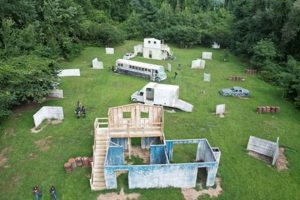
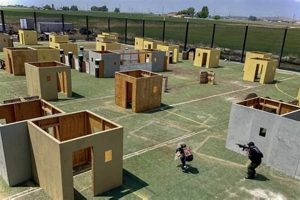
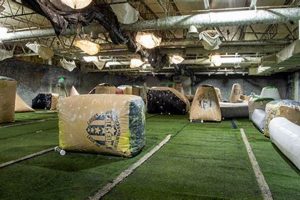
An airsoft action field is a designated area designed and equipped for simulated combat using airsoft guns. These fields often feature diverse terrain, including natural environments like woods and hills, as well as constructed obstacles such as bunkers, buildings, and trenches. The purpose of this setup is to replicate realistic combat scenarios for recreational or training purposes. For example, a field might simulate an urban environment with mock buildings and streets, providing a setting for close-quarters battle simulations.
These fields serve as essential spaces for airsoft enthusiasts to engage in organized and safe gameplay. The structured environment promotes teamwork, strategic thinking, and physical activity. Historically, airsoft fields have evolved from informal gatherings in open spaces to professionally managed facilities with standardized rules and safety protocols. The benefit of dedicated fields lies in their controlled environments, minimizing risks associated with unregulated play and providing insurance coverage which is important.
Having defined the fundamental nature and purpose of a dedicated play space, the subsequent sections will delve into specific aspects. Topics include the diverse types of fields available, essential safety guidelines and equipment requirements, and finally, popular game modes and strategies employed within these immersive environments.
Airsoft Action Field
Navigating an airsoft action field effectively requires preparation, tactical awareness, and adherence to safety guidelines. The following tips are designed to enhance a participant’s experience and contribute to a safe and enjoyable environment for all.
Tip 1: Prioritize Safety Gear: Full-seal eye protection is non-negotiable. Additionally, consider face protection, gloves, and appropriate footwear to mitigate potential injuries from impacts or terrain hazards. Field regulations often mandate minimum protection standards, which must be strictly observed.
Tip 2: Know the Field Layout: Familiarize oneself with the field’s map, boundaries, and any designated safe zones before engaging in gameplay. Understanding the terrain and available cover is crucial for strategic positioning and movement.
Tip 3: Master Communication: Effective communication with teammates is paramount. Use clear and concise language, employing pre-determined callouts for enemy positions, movements, and intentions. A well-coordinated team significantly enhances tactical advantage.
Tip 4: Understand Weapon Mechanics: Familiarity with the operation and limitations of one’s airsoft gun is essential. Practice reloading drills, understand range limitations, and be proficient in adjusting hop-up settings for optimal accuracy. Regular maintenance ensures reliable performance during gameplay.
Tip 5: Practice Concealment and Movement: Utilize available cover effectively, moving strategically between positions to minimize exposure. Employ techniques such as crawling, flanking, and using the environment to one’s advantage. Avoid predictable movement patterns that make oneself an easy target.
Tip 6: Adhere to Field Rules: Strict adherence to field rules and regulations is crucial for maintaining a safe and fair playing environment. Understand and respect the established FPS limits, minimum engagement distances, and any specific gameplay restrictions.
Tip 7: Maintain Situational Awareness: Constantly assess the surrounding environment, monitoring enemy positions, teammate locations, and potential threats. Situational awareness is key to making informed decisions and reacting effectively to changing circumstances.
A proactive approach to safety, combined with tactical awareness and clear communication, will improve the experience at play. Observing these guidelines contributes to an enjoyable environment for everyone involved.
Building upon these fundamental principles, the subsequent section will address strategic gameplay considerations within dedicated environments.
1. Field Size

Field size is a defining characteristic that significantly influences the dynamics of an airsoft action field. The dimensions of the playing area directly impact engagement distances, tactical maneuvering options, and the overall pacing of simulated combat. A larger field typically allows for longer-range engagements, necessitating the use of rifles and strategic positioning. Conversely, smaller fields often result in close-quarters battles, favoring shotguns and submachine guns. The available space dictates how players can move, flank, and utilize cover, influencing the strategic depth of gameplay. For instance, a sprawling woodland area permits extensive flanking maneuvers, while a compact indoor arena may prioritize quick, decisive actions.
Understanding the connection between field size and engagement dynamics is crucial for effective gameplay and tactical planning. For example, if the arena is small, carrying long-range sniper rifle might not be beneficial. Instead, you would want to use a short compact airsoft gun to move through the area. Conversely, larger fields require players to consider factors such as ammunition capacity, communication range, and physical endurance, as covering large distances becomes a significant factor. Many larger fields incorporate vehicle usage, further expanding the scope of strategic possibilities and logistical considerations. Field owners and designers consider the average player’s physical capabilities and equipment limitations when deciding on appropriate field sizes to maximize engagement and minimize instances of prolonged inactivity or overwhelming dominance by certain weapon types.
In summary, field size is a critical component that fundamentally shapes the airsoft action field experience. It is not simply a matter of square footage, but rather a defining constraint that influences weapon selection, tactical approaches, and the overall strategic depth of gameplay. An informed understanding of this relationship allows players to adapt their strategies, optimize their equipment choices, and contribute to a more balanced and engaging simulated combat scenario. The relationship also serves as a guiding principle for field operators in designing and managing environments that cater to diverse playstyles and preferences.
2. Terrain Variety

Terrain variety is a crucial determinant of the strategic depth and immersive quality within an airsoft action field. The diversity of the environment dictates player movement, tactical options, and the overall realism of simulated combat scenarios. A field lacking varied terrain can lead to predictable gameplay and reduced engagement.
- Elevation Changes
Elevation changes, such as hills, slopes, and trenches, introduce advantageous firing positions and challenging lines of sight. Hilltops can serve as strategic overwatch points, while trenches offer concealed movement pathways. The presence of varying elevations compels players to adapt their firing angles and tactical approaches. A field with flat, featureless terrain eliminates these tactical considerations, potentially simplifying gameplay.
- Natural Obstacles
Natural obstacles, including trees, bushes, rocks, and water features, provide cover and concealment opportunities. Trees offer vertical cover, limiting visibility, while dense bushes can facilitate ambushes. Water features may restrict movement and create specific tactical challenges. The strategic placement of natural obstacles enhances the realism and complexity of the environment, encouraging players to utilize their surroundings for tactical advantage.
- Constructed Structures
Constructed structures, such as bunkers, buildings, and barricades, provide defined engagement zones and opportunities for close-quarters combat. Buildings offer multi-level tactical options, while bunkers provide defensive strongholds. Barricades create temporary cover points and funnel player movement. The design and placement of constructed structures shape the flow of combat and encourage the use of different weapon types and tactical strategies.
- Surface Composition
The surface composition of the field, including grass, dirt, gravel, and concrete, affects player movement and footing. Uneven terrain can impede movement and increase the risk of injury, while smooth surfaces allow for faster traversal. The presence of different surface types can also influence the effectiveness of certain camouflage patterns and equipment choices. Varying surface composition adds another layer of realism and tactical consideration to the airsoft action field.
In synthesis, terrain variety is a critical component of a well-designed airsoft action field, contributing significantly to tactical depth, immersive realism, and overall player engagement. The interplay of elevation changes, natural obstacles, constructed structures, and surface composition shapes the strategic possibilities and challenges presented to players, creating a dynamic and compelling simulated combat environment.
3. Safety Zones
Safety zones are integral to any functional airsoft action field, serving as designated areas where specific safety protocols are strictly enforced. These zones provide a controlled environment where players can safely remove eye protection, adjust equipment, and perform necessary maintenance without the risk of accidental discharge or injury. The presence of clearly defined and well-maintained safety zones directly reduces the potential for accidents, such as accidental eye injuries or unintended engagements outside of designated gameplay areas. Without these zones, the likelihood of safety breaches and subsequent injuries would increase substantially. For example, a player needing to clear a jammed airsoft gun can do so safely within the zone, eliminating the risk of unintentionally discharging the weapon towards other individuals on the field.
The establishment and adherence to rules within safety zones are paramount for fostering a culture of safety and responsibility. Typical regulations prohibit firing airsoft guns, engaging in physical altercations, and the use of pyrotechnics. The consistent enforcement of these rules by field marshals and adherence by players ensures that the zone remains a secure and predictable environment. Practically, this translates to fewer accidents, improved player confidence, and a more enjoyable overall experience. Moreover, well-maintained safety zones often include amenities such as charging stations, repair benches, and staging areas for equipment, further contributing to player convenience and preparedness. Ignoring the function of safety zones can easily cause chaos. For example, a field not designating safety zone may experience players pointing guns at each other which is against common field rules.
In conclusion, safety zones are not merely peripheral areas of an airsoft action field, but rather critical components that ensure player well-being and promote responsible gameplay. Their proper implementation, coupled with strict adherence to safety protocols, is essential for mitigating risks, fostering a safe environment, and maximizing the enjoyment of the airsoft experience. Challenges in maintaining effective safety zones, such as overcrowding or rule violations, require constant vigilance and proactive enforcement to uphold the integrity of these critical spaces.
4. Scenario Design
Scenario design fundamentally shapes the airsoft action field experience, dictating the objectives, rules, and overall narrative within which simulated combat unfolds. The design process directly impacts player engagement, tactical decision-making, and the extent to which the field environment is effectively utilized. A well-crafted scenario transforms a generic playing area into a dynamic and immersive battlefield. For instance, a scenario focused on capturing a strategic objective will compel players to coordinate their movements, employ flanking maneuvers, and manage resources effectively. Conversely, a poorly designed scenario, lacking clear objectives or strategic depth, may result in aimless gameplay and reduced player satisfaction. The impact is such that the quality of scenario design can often determine the overall success of an airsoft event.
Scenario designs vary widely, ranging from straightforward team deathmatches to complex, multi-stage operations involving resource management, intelligence gathering, and asymmetrical objectives. Consider a “search and destroy” scenario where one team must locate and disable a series of targets while the opposing team defends them. This requires the attacking team to prioritize reconnaissance, communication, and coordinated assaults, while the defending team must establish defensive positions, anticipate enemy movements, and manage their defensive resources. The practical application of scenario design extends to military and law enforcement training, where simulated combat scenarios are used to prepare personnel for real-world operations. For example, scenarios can be tailored to simulate urban warfare, hostage rescue situations, or border patrol operations, providing valuable experience in tactical decision-making under pressure. The effectiveness of such training exercises relies heavily on the realism and complexity of the scenario design.
In summary, scenario design is a critical element of the airsoft action field, transforming a physical space into a dynamic and engaging environment for simulated combat. It directly influences player tactics, strategic decision-making, and the overall level of immersion. While challenges such as balancing objectives, managing player numbers, and adapting to diverse skill levels exist, a well-designed scenario is essential for creating a memorable and impactful airsoft experience. The connection is clear: effective scenario design maximizes the potential of the field and enhances the overall quality of gameplay.
5. Rules Enforcement
Rules enforcement is a cornerstone of safe and fair play within an airsoft action field. A direct causal relationship exists between rigorous enforcement and the reduction of injuries, disputes, and unsportsmanlike conduct. The absence of consistent rule application inevitably leads to an increase in incidents that compromise player safety and erode the integrity of the game. Consider a field where velocity limits for airsoft guns are inconsistently monitored. Players exceeding these limits pose a heightened risk of causing injury to others, directly undermining the field’s safety standards. Consequently, the degree to which rules are enforced has a demonstrable impact on the overall experience and the well-being of participants.
The practical application of rules enforcement extends beyond basic safety protocols. It also encompasses regulations concerning fair play, such as hit confirmation, minimum engagement distances, and boundaries. Consistent adherence to these rules prevents disputes and ensures a level playing field for all participants. For example, a clear and enforced rule regarding hit confirmation prevents players from ignoring impacts and continuing to engage, thereby maintaining the integrity of the game. Field marshals play a crucial role in monitoring gameplay, mediating disputes, and issuing penalties for violations. Their presence serves as a deterrent to rule-breaking behavior and ensures that the game remains fair and enjoyable. A notable example of effective rules enforcement is the implementation of mandatory chronographs to verify airsoft gun velocity before gameplay, thereby preventing the use of overpowered weapons.
In summary, rules enforcement is not merely an ancillary aspect of the airsoft action field but rather a foundational component essential for ensuring safety, fairness, and overall player satisfaction. The challenges associated with maintaining consistent enforcement, such as player resistance or limitations in marshal staffing, necessitate proactive measures and a commitment to upholding established standards. The link between stringent rules enforcement and a positive airsoft experience is undeniable, underscoring its significance in the broader context of responsible gameplay and field management.
6. Player Capacity
Player capacity, in the context of an airsoft action field, represents the maximum number of participants that a designated playing area can safely and effectively accommodate during a game. This parameter is not arbitrary but is instead intrinsically linked to the physical dimensions of the field, the complexity of the terrain, and the intended style of gameplay. Exceeding the recommended player capacity can lead to a variety of negative consequences, including increased risk of injury, reduced tactical maneuvering options, and a diminished overall playing experience. As an example, a field designed for 30 players that is instead populated with 50 will likely experience congested areas, increased instances of friendly fire, and limited opportunities for individual or team-based strategic movements. Therefore, understanding and adhering to appropriate player capacity levels is a crucial aspect of safe and enjoyable airsoft gameplay.
Maintaining optimal player capacity levels requires careful consideration of several factors. Field operators must assess the available playing area, accounting for obstacles, buildings, and natural features that may restrict movement or create bottlenecks. Game scenarios should also be factored in, as certain game types, such as large-scale objective-based scenarios, may necessitate a lower player density to allow for effective coordination and tactical depth. Furthermore, the skill level and experience of the participants should be taken into account. A field predominantly populated by experienced players may be able to accommodate a slightly higher player density due to their enhanced awareness and adherence to safety protocols. Conversely, fields catering to novice players may require lower capacities to ensure adequate supervision and minimize the risk of accidental injury. The practical application of these considerations involves actively monitoring player numbers, implementing registration systems to track attendance, and adjusting game scenarios accordingly to maintain a balanced and engaging environment.
In summary, player capacity is a critical component of airsoft action field management that directly impacts safety, gameplay quality, and overall player satisfaction. While challenges such as balancing revenue generation with player comfort and implementing effective monitoring systems exist, adhering to appropriate player capacity levels is essential for creating a positive and responsible airsoft experience. Failing to prioritize player capacity can have detrimental effects on the field’s reputation and long-term sustainability, underscoring the importance of careful planning and proactive management.
Frequently Asked Questions About Airsoft Action Fields
This section addresses common inquiries regarding airsoft action fields, providing clear and concise answers to enhance understanding of their operation and purpose.
Question 1: What constitutes an “airsoft action field?”
An airsoft action field is a designated area designed and equipped for simulated combat using airsoft guns. These fields often feature varied terrain and obstacles to replicate realistic combat scenarios. The fields are used for recreational and training purposes.
Question 2: What safety measures are typically in place at an airsoft action field?
Safety measures at these fields usually include mandatory eye protection, velocity limits for airsoft guns, designated safety zones, and enforcement of rules by field marshals. The primary goal is to minimize the risk of injury and ensure a safe playing environment for all participants.
Question 3: What types of terrain are commonly found in these fields?
The terrain within an airsoft action field varies, but may include woodland areas, urban environments with mock buildings, trenches, and constructed obstacles such as bunkers and barricades. Terrain diversity enhances tactical options and realism.
Question 4: How are disputes resolved at an airsoft action field?
Disputes are generally resolved by field marshals, who are responsible for enforcing the rules and mediating conflicts between players. Their decisions are typically final and intended to maintain fair play.
Question 5: Is there an age restriction for participating in activities at these fields?
Many fields impose age restrictions, typically requiring participants to be at least 13 or 16 years of age. These restrictions may vary depending on local regulations and field policies. Parental consent is often required for minors.
Question 6: What equipment is essential for participating in airsoft activities at a field?
Essential equipment generally includes an airsoft gun, eye protection (full-seal goggles), appropriate clothing, and footwear. Additional equipment such as face protection, gloves, and tactical gear is recommended, but the minimum requirements usually involve eye protection and a functional airsoft gun that meets field velocity limits.
Understanding these fundamental aspects of airsoft action fields can enhance participation and improve awareness of safety and gameplay protocols.
Further exploration of tactical strategies and gameplay considerations will be addressed in the subsequent section.
Conclusion
The preceding examination of the airsoft action field highlights its multifaceted nature, encompassing elements of safety, strategic gameplay, and organized field management. From the initial creation of immersive environments to the critical enforcement of rules and the careful consideration of player capacity, the viability of such a setting relies upon a complex interplay of factors. These fields offer a controlled venue for simulated combat, fostering teamwork and strategic thinking while adhering to established safety protocols.
Continued adherence to these principles is vital for the ongoing success and responsible development of airsoft as a recreational activity. As the airsoft action field evolves, a dedication to safety, fair play, and strategic innovation will ensure its continued relevance as a space for both recreation and training. Operators and participants share the responsibility of upholding these standards for the benefit of the community.