The endeavor of establishing a recreational venue for airsoft, a sport simulating military combat through the use of realistic replica firearms that expel non-lethal projectiles, constitutes a significant business undertaking. It necessitates careful planning, considerable investment, and adherence to local regulations. The process encompasses site selection, safety protocol development, equipment procurement, and marketing strategy formulation to attract and retain players.
Successfully launching such a venture can contribute to the local economy by generating employment opportunities and attracting tourism. It provides a safe and controlled environment for enthusiasts to engage in a strategic and physically demanding activity. Furthermore, these fields often serve as community hubs, fostering camaraderie and sportsmanship among participants. Historically, the growth of these dedicated spaces has paralleled the increasing popularity of airsoft as a recreational pursuit, providing a designated area where the activity can be pursued responsibly and legally.
The subsequent sections will delve into the critical aspects associated with creating this type of business, focusing on the specific considerations involved in each stage of development, from initial planning to ongoing operation and maintenance.
Crucial Guidance for Establishing an Airsoft Field
The creation of a viable and successful airsoft field requires careful consideration of multiple factors. Diligence in these areas will significantly increase the likelihood of long-term sustainability and profitability.
Tip 1: Conduct Thorough Market Research: A comprehensive analysis of the local market is essential. Identify the target demographic, assess competitor offerings, and determine the potential demand for airsoft activities in the area. This research will inform business planning and resource allocation.
Tip 2: Secure a Suitable Location: The field’s location is paramount. Consider accessibility, size, terrain, and zoning regulations. Ideally, the site should offer a varied landscape conducive to diverse gameplay scenarios and be easily accessible to the target customer base.
Tip 3: Develop Comprehensive Safety Protocols: Prioritize safety by establishing stringent rules and regulations. Mandatory safety briefings, eye protection requirements, and field marshall oversight are crucial. Regular inspections and maintenance of playing areas are also necessary to mitigate potential hazards.
Tip 4: Invest in Quality Equipment: Procure reliable and well-maintained airsoft guns, protective gear, and field infrastructure. This investment will enhance the player experience and contribute to the field’s reputation for professionalism and safety.
Tip 5: Obtain Necessary Permits and Insurance: Ensure full compliance with all local, state, and federal regulations. Secure appropriate business licenses, liability insurance, and any required environmental permits. Failure to do so can result in legal repercussions and operational shutdowns.
Tip 6: Implement Effective Marketing Strategies: Promote the airsoft field through online channels, social media, and local advertising. Consider offering introductory packages, membership programs, and special events to attract new players and retain existing customers.
Tip 7: Provide Excellent Customer Service: Create a welcoming and positive environment for all players. Train staff to be knowledgeable, helpful, and responsive to customer inquiries. Positive word-of-mouth referrals are invaluable for business growth.
Tip 8: Establish Clear Rules and Fair Gameplay: Promote integrity and sportsmanship by establishing clear rules and fair gameplay protocols. This ensures a positive experience for all players and helps to avoid disputes.
Adherence to these guidelines will significantly increase the probability of establishing a successful and sustainable airsoft field. Comprehensive planning, safety consciousness, and a commitment to customer satisfaction are paramount to long-term prosperity.
The subsequent section will address legal and regulatory considerations crucial to successful operation.
1. Location Feasibility

Location feasibility is a critical determinant in the success of opening an airsoft field. The chosen site directly impacts accessibility for the target demographic, influences operational costs, and dictates the potential scope of gameplay scenarios. A site in a remote area may offer lower land costs and more expansive terrain, but it risks limited player accessibility, particularly for those without reliable transportation. Conversely, a site closer to urban centers increases accessibility but may be subject to higher land costs, zoning restrictions, and noise ordinances that limit operational hours or gameplay styles. Therefore, thorough due diligence is essential to weigh these factors.
The connection between location and viability is evident in numerous instances. Consider fields located near military bases or colleges with ROTC programs. These benefit from a pre-existing pool of potential players already interested in tactical simulations. Similarly, proximity to major highways or public transport routes is vital for attracting a broader customer base. Real-world examples demonstrate that even well-funded fields struggle when located in areas with poor accessibility or limited population density. Furthermore, the physical characteristics of the land are essential. A flat, featureless field offers limited tactical possibilities, potentially reducing player engagement. Conversely, a site with varied terrain, natural obstacles, and forested areas can enhance the gameplay experience. This necessitates careful consideration of topography, vegetation, and existing infrastructure.
In conclusion, location feasibility is not merely a matter of finding an available space; it is a strategic decision that influences nearly every aspect of airsoft field operation. Thorough analysis of market demographics, accessibility, zoning regulations, and terrain characteristics is crucial for minimizing risks and maximizing the potential for a sustainable and profitable business. Ignoring this fundamental aspect can severely impede the long-term viability of the endeavor, regardless of investment in equipment or marketing efforts.
2. Safety Regulations
The integration of robust safety regulations is paramount to the successful operation of any airsoft field. These regulations not only protect participants from injury but also mitigate legal liabilities and contribute to the overall reputation and sustainability of the business. The following points outline key facets of implementing and maintaining comprehensive safety protocols.
- Mandatory Eye Protection
The enforcement of mandatory eye protection is the single most critical safety measure. All participants, without exception, must wear full-seal goggles or a full-face mask specifically designed to withstand the impact of airsoft projectiles. Real-world incidents demonstrate that failure to enforce this rule can result in severe eye injuries, including permanent vision loss. The implication for field operators is clear: strict adherence to eye protection standards is non-negotiable.
- Velocity Limits and Chronographing
Airsoft guns must adhere to strict velocity limits, typically measured in feet per second (FPS) using a chronograph. These limits are designed to prevent excessive projectile force that could cause injury. Field operators must implement a system for regularly chronographing all airsoft guns to ensure compliance. Failure to maintain these limits can lead to serious injury and potential legal action. For instance, exceeding FPS limits at close range can cause welts, bruising, and even broken skin.
- Safe Zones and Barrel Covers
Designated safe zones, where airsoft guns must be unloaded and magazines removed, are essential for preventing accidental discharges and maintaining a controlled environment. Within these zones, barrel covers or “socks” must be utilized to physically prevent any projectiles from leaving the barrel. These precautions are crucial in minimizing the risk of unintended injuries. Examples of accidents occurring in safe zones highlight the importance of strict enforcement and clearly marked boundaries.
- Rules of Engagement and Field Marshall Oversight
Clear rules of engagement, including minimum engagement distances and restrictions on blind firing, are necessary to prevent close-range injuries and promote fair play. The presence of trained field marshals is crucial for enforcing these rules, resolving disputes, and ensuring overall safety. Field marshals serve as on-site authorities responsible for maintaining order and addressing any potential hazards. A well-trained and attentive staff is a key factor in minimizing safety risks.
The elements outlined above are fundamental to establishing a safe and responsible airsoft environment. Ignoring these core safety regulations poses significant risks to participants, jeopardizes the business’s legal standing, and ultimately undermines the long-term prospects of the airsoft field. Proactive safety management is not merely a compliance obligation but a vital component of a thriving and reputable business.
3. Equipment Procurement

Equipment procurement represents a significant capital expenditure and an operational cornerstone in establishing an airsoft field. The selection, acquisition, and maintenance of appropriate equipment directly impact player safety, gameplay quality, and the overall financial viability of the enterprise. Strategic planning in this area is therefore essential for the business’s long-term success.
- Airsoft Guns and Protective Gear
The core of any airsoft field lies in providing reliable and safe equipment for players. This includes airsoft guns of varying types (rifles, pistols, shotguns) to cater to different play styles and skill levels. Simultaneously, a sufficient inventory of high-quality protective gearspecifically full-seal eye protection, face masks, and potentially vests or body armoris non-negotiable. A field that prioritizes substandard equipment risks injury, legal liabilities, and a diminished player experience. Real-world examples demonstrate that scrimping on these essentials often leads to player dissatisfaction and a negative reputation.
- Field Infrastructure and Obstacles
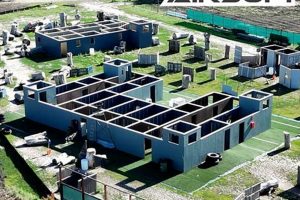
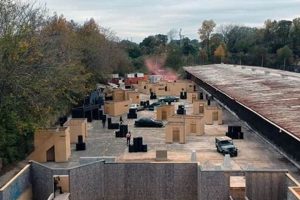
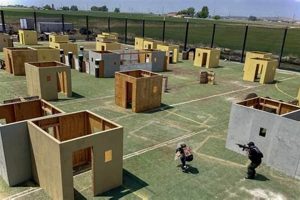
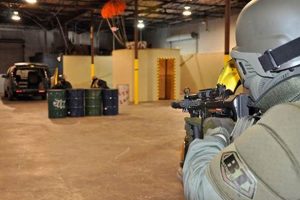
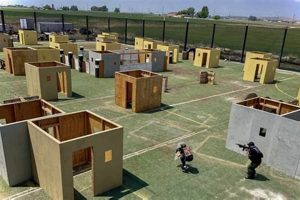
The physical layout of the airsoft field requires investment in durable and strategically placed obstacles. These may include bunkers, barricades, walls, and simulated structures (buildings, vehicles). The materials used must withstand repeated use and weather exposure. Furthermore, the configuration of these obstacles is crucial for creating diverse and engaging gameplay scenarios. A poorly designed field with inadequate cover offers a limited and ultimately unfulfilling experience for players. Well-planned infrastructure, on the other hand, enhances strategic depth and promotes player retention.
- Maintenance and Repair Tools
The continuous operation of an airsoft field necessitates a dedicated maintenance and repair program. This involves procuring the necessary tools and equipment for repairing airsoft guns, maintaining field infrastructure, and ensuring the overall functionality of the facility. Ignoring maintenance can lead to equipment failures, safety hazards, and increased downtime. Establishing a designated repair station and training staff in basic maintenance procedures can significantly reduce operational disruptions and extend the lifespan of the field’s assets. Examples of successful fields often highlight the presence of a well-equipped and staffed maintenance department.
- Communication Systems
Effective communication is vital for safety and coordination on an airsoft field. Investing in reliable communication systems, such as two-way radios, enables field marshals to monitor gameplay, respond to emergencies, and manage player interactions. Clear and consistent communication minimizes the risk of accidents and facilitates a smooth and organized gameplay experience. Furthermore, strategically placed public address systems can be used for announcements, safety briefings, and emergency alerts. A field that lacks adequate communication infrastructure risks confusion, delays, and potential safety breaches.
In summary, equipment procurement represents a strategic investment in the viability of an airsoft field. Careful consideration of the types, quality, and maintenance of equipment is crucial for creating a safe, engaging, and sustainable business. A well-equipped and maintained field attracts and retains players, fosters a positive reputation, and ultimately contributes to long-term financial success.
4. Insurance Coverage
Securing adequate insurance coverage is a fundamental and non-negotiable aspect of opening and operating an airsoft field. The inherently risky nature of the activity, involving projectiles and simulated combat scenarios, necessitates comprehensive insurance policies to mitigate potential financial liabilities arising from injuries or property damage.
- General Liability Insurance
General liability insurance protects the business from claims of bodily injury or property damage sustained by third parties on the premises. This coverage is crucial for addressing incidents such as slips and falls, equipment malfunctions resulting in injury, or damage to visitor vehicles parked on the property. A real-world example would be a player tripping over an unmarked obstacle and breaking an ankle; general liability insurance would cover the resulting medical expenses and potential legal fees. Failure to maintain adequate general liability coverage can expose the business to crippling financial losses in the event of a lawsuit.
- Participant Accident Insurance
Participant accident insurance specifically covers injuries sustained by players while participating in airsoft activities. This type of coverage supplements individual health insurance policies and can help cover out-of-pocket medical expenses, such as deductibles or co-pays. For instance, if a player is struck by an airsoft projectile and requires medical attention, participant accident insurance can help defray the costs. This coverage is especially important given the potential for minor injuries, such as welts and bruises, which may not be fully covered by standard health insurance. Providing this insurance can also enhance the field’s attractiveness to players concerned about potential medical expenses.
- Property Insurance
Property insurance protects the physical assets of the airsoft field, including buildings, equipment, and inventory, from damage or loss due to fire, theft, vandalism, or natural disasters. This coverage is essential for safeguarding the business’s investments and ensuring its ability to resume operations in the event of a catastrophic event. An example would be a fire destroying the field’s staging area and equipment storage building; property insurance would cover the costs of rebuilding and replacing lost assets. Neglecting property insurance can leave the business vulnerable to devastating financial losses that could lead to permanent closure.
- Workers’ Compensation Insurance
Workers’ compensation insurance provides coverage for employees who sustain injuries or illnesses while performing their job duties at the airsoft field. This includes medical expenses, lost wages, and rehabilitation costs. If, for instance, a field marshal is injured while supervising gameplay or a maintenance worker is hurt while repairing equipment, workers’ compensation insurance would provide benefits. Compliance with workers’ compensation laws is mandatory in most jurisdictions, and failure to secure adequate coverage can result in significant fines and legal penalties. Furthermore, providing this coverage demonstrates a commitment to employee well-being and can improve employee morale.
These facets of insurance coverage are indispensable for mitigating the inherent risks associated with operating an airsoft field. Neglecting to secure adequate insurance can expose the business to substantial financial liabilities, potentially leading to bankruptcy or closure. A proactive approach to risk management, including comprehensive insurance coverage, is essential for ensuring the long-term sustainability and success of the enterprise.
5. Marketing Outreach
Effective marketing outreach directly correlates with the success of any attempt to open an airsoft field. The endeavor’s viability hinges on its ability to attract and retain a consistent player base. Marketing, therefore, forms a critical bridge between the field’s existence and its utilization by the target demographic. Without strategic and comprehensive marketing efforts, a newly established field risks obscurity, underutilization of resources, and ultimately, financial failure. Consider the case of several airsoft fields that invested heavily in facilities and equipment but neglected targeted marketing. These fields struggled to attract players beyond a small, localized group, resulting in significant losses and eventual closure. Conversely, fields with robust marketing plans, even with less impressive initial facilities, have achieved greater success by effectively reaching their target audience and building a loyal customer base. Marketing outreach, encompassing digital advertising, social media engagement, and participation in relevant events, is not merely a promotional activity but a core operational requirement.
The practical application of marketing outreach extends beyond simple advertising. It involves identifying the specific needs and preferences of the target demographic. For example, a field targeting experienced players might emphasize tactical gameplay scenarios and realistic simulation, whereas a field targeting beginners might focus on introductory packages, safety training, and a welcoming atmosphere. Furthermore, successful marketing requires consistent engagement with the airsoft community. This can include sponsoring local airsoft teams, organizing themed events, offering discounts and promotions, and actively participating in online forums and social media groups. These actions contribute to building brand awareness, fostering customer loyalty, and generating positive word-of-mouth referrals. The effectiveness of marketing outreach can be directly measured through key performance indicators (KPIs) such as website traffic, social media engagement, booking rates, and customer feedback.
In conclusion, marketing outreach is not a supplementary element but an integral component of establishing a successful airsoft field. The ability to effectively communicate the field’s value proposition, engage with the target audience, and build a strong brand presence directly impacts its long-term viability. Challenges in marketing outreach include adapting to evolving trends in digital advertising, competing with established fields, and managing marketing budgets effectively. However, a strategic and consistent marketing plan, tailored to the specific needs and preferences of the target demographic, remains essential for achieving sustained growth and profitability in the competitive airsoft market.
6. Operational Sustainability
Achieving long-term operational sustainability represents the ultimate objective for any entity venturing into opening an airsoft field. It transcends mere short-term profitability, encompassing efficient resource utilization, responsible environmental practices, and a robust business model capable of adapting to evolving market dynamics. The following elucidates critical facets that contribute to the sustainable operation of an airsoft field.
- Financial Management and Resource Allocation
Sustainable operations demand meticulous financial planning, encompassing accurate budgeting, cost control measures, and diversified revenue streams. Reliance solely on game fees renders the business vulnerable to seasonal fluctuations and market shifts. Alternative revenue sources, such as equipment rentals, merchandise sales, event hosting, and corporate team-building activities, enhance financial resilience. Prudent resource allocation further entails optimizing staffing levels, minimizing energy consumption, and effectively managing inventory. Airsoft fields that implemented detailed financial forecasting and diversified their income streams have consistently demonstrated greater longevity compared to those that did not. The significance lies in maintaining a positive cash flow and securing sufficient reserves for reinvestment and unexpected expenses.
- Environmental Stewardship and Waste Reduction
Responsible environmental practices are increasingly vital for operational sustainability. Airsoft fields should actively minimize their environmental footprint through measures such as waste recycling programs, responsible disposal of airsoft BBs (biodegradable options preferred), and conservation of water resources. Engaging in eco-friendly practices not only reduces environmental impact but also enhances the field’s public image and appeal to environmentally conscious players. Examples of successful integration include solar power utilization, rainwater harvesting systems, and partnerships with local environmental organizations. Neglecting environmental stewardship can result in negative publicity, regulatory penalties, and a diminishing customer base.
- Community Engagement and Stakeholder Relations
Building strong relationships with the local community is crucial for long-term sustainability. This involves actively engaging with neighboring residents, addressing concerns regarding noise or traffic, and contributing positively to the local economy. Establishing partnerships with local businesses and organizations can also generate mutual benefits and foster goodwill. Airsoft fields that actively participate in community events and support local initiatives tend to experience greater acceptance and support from the community. Conversely, neglecting community relations can lead to opposition, zoning disputes, and negative impacts on business operations. Successful examples include sponsoring local charities, hosting community events at the field, and collaborating with local law enforcement on safety initiatives.
- Adaptability and Innovation
The airsoft market is dynamic, influenced by evolving technologies, changing player preferences, and emerging trends. Operational sustainability requires a willingness to adapt and innovate. This involves staying abreast of new airsoft equipment, experimenting with different gameplay scenarios, and leveraging technology to enhance the player experience. Airsoft fields that embrace innovation and adapt to market changes are better positioned to maintain their competitive edge and attract new players. Examples include incorporating electronic scoring systems, developing specialized game modes, and utilizing virtual reality or augmented reality technologies to enhance gameplay. A static business model risks obsolescence and declining market share. Therefore, a proactive approach to innovation is essential for long-term relevance and profitability.
These considerations highlight the interdependent nature of various factors influencing the long-term viability of an airsoft field. Operational sustainability is not a static end-state but an ongoing process of optimization, adaptation, and responsible management. Adherence to these principles increases the likelihood of establishing a successful and enduring business that contributes positively to both the airsoft community and the local environment.
Frequently Asked Questions
This section addresses common inquiries concerning the process of establishing an airsoft field, providing clarity on crucial aspects of the endeavor.
Question 1: What is the minimum land area required to establish an airsoft field?
The necessary land area varies based on the intended scope of operations. A smaller, CQB-focused (Close Quarters Battle) field may function on 1-2 acres, while a larger, more expansive field incorporating diverse terrain and tactical elements may necessitate 5 acres or more. Factors to consider include the number of concurrent players, desired game types, and local zoning regulations.
Question 2: What is the estimated initial investment required to open an airsoft field?
Initial investment fluctuates depending on land costs, infrastructure development, equipment procurement, and insurance premiums. A basic operation may necessitate $50,000 to $100,000, while a more elaborate establishment could require upwards of $250,000. Detailed market research and a comprehensive business plan are essential for accurate cost assessment.
Question 3: What types of insurance are necessary for operating an airsoft field?
Essential insurance coverage includes general liability insurance, participant accident insurance, property insurance, and workers’ compensation insurance. These policies protect against financial liabilities arising from injuries, property damage, and legal claims. Consult with an insurance professional to determine the appropriate coverage levels for the specific operation.
Question 4: What are the legal considerations involved in opening an airsoft field?
Legal considerations encompass compliance with local zoning ordinances, business licensing requirements, and state and federal regulations governing the use of airsoft guns. It is crucial to ensure compliance with all applicable laws and regulations to avoid legal penalties and operational disruptions.
Question 5: How can potential owners ensure the safety of players at an airsoft field?
Ensuring player safety requires strict adherence to safety protocols, including mandatory eye protection, velocity limits on airsoft guns, designated safe zones, and trained field marshal oversight. Regular inspections of the playing area and comprehensive safety briefings are also essential for minimizing risks.
Question 6: What marketing strategies are effective for attracting players to an airsoft field?
Effective marketing strategies include online advertising, social media engagement, participation in local airsoft events, and the offering of introductory packages and membership programs. Building a strong brand presence and fostering positive word-of-mouth referrals are also crucial for attracting and retaining players.
Successfully establishing and operating an airsoft field necessitates meticulous planning, a commitment to safety, and effective management of financial and operational resources. Thorough research and adherence to best practices are essential for maximizing the potential for long-term success.
The subsequent section will delve into ongoing management and operational refinement.
Concluding Summary
The preceding analysis has explored the multifaceted considerations pertinent to how to open an airsoft field. Topics included market research, site selection, safety protocols, equipment procurement, regulatory compliance, and marketing strategies. The exploration emphasizes that successful establishment demands comprehensive planning, meticulous attention to safety, and effective resource management.
The creation of a thriving airsoft field constitutes a significant undertaking, necessitating rigorous adherence to established best practices. Prospective operators are encouraged to approach the process with diligence, prioritizing player safety and long-term sustainability. Continuous monitoring of market dynamics and adaptation to evolving industry trends are essential for sustained viability in the competitive recreational landscape.