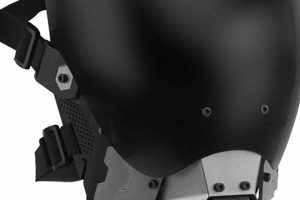
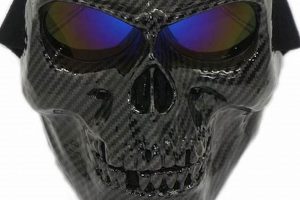
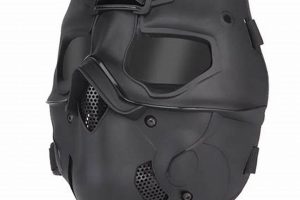
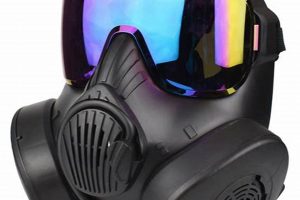
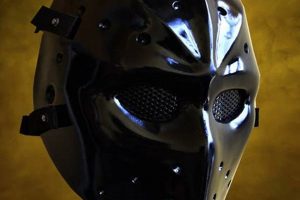
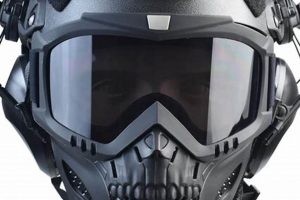
Protective headgear, often incorporating a full-face shield and sometimes resembling equipment used by aviators, finds application within simulated combat scenarios. These items are designed to offer comprehensive facial protection during airsoft activities, shielding the eyes, nose, mouth, and forehead from impacts associated with projectiles used in the sport. An example would be a fully enclosed mask with integrated goggles and ventilation designed to mimic the appearance of flight equipment.
The utilization of robust facial protection is paramount for player safety in airsoft. These devices mitigate the risk of injuries such as eye damage, lacerations, and dental trauma resulting from high-velocity BBs. The adoption of such protective measures contributes to a safer and more enjoyable experience for all participants. Historically, the development of specialized headgear for simulated combat has mirrored advancements in real-world protective equipment, driven by a continuous effort to enhance player safety and realism.
The subsequent discussion will delve into the various types of these protective devices, material considerations, factors influencing user comfort, and relevant safety standards pertinent to their use in airsoft.
Protective Headgear Guidance
The following provides essential guidance for selecting and maintaining protective headgear intended for simulated combat activities. Prioritizing safety and equipment integrity is crucial for optimal performance and injury prevention.
Tip 1: Verify Impact Resistance: Ensure the chosen face mask meets or exceeds relevant safety standards, such as ANSI Z87.1. Check for certifications printed directly on the product or provided in the accompanying documentation.
Tip 2: Prioritize Adequate Ventilation: Select models that incorporate sufficient ventilation to minimize fogging and maintain comfort during extended periods of use. Anti-fog coatings can provide supplementary assistance.
Tip 3: Confirm Secure Fit: A properly fitted face mask is essential for optimal protection and stability. Adjust straps and padding to ensure a snug, secure fit without causing excessive pressure or discomfort.
Tip 4: Assess Material Durability: Investigate the construction materials used in the face mask’s composition. Polycarbonate lenses and durable plastic frames offer enhanced resistance to impact and wear.
Tip 5: Inspect for Damage Regularly: Conduct routine inspections of the face mask before each use. Examine lenses for scratches or cracks and verify that all straps and fasteners are in good working order.
Tip 6: Adhere to Cleaning Protocols: Clean the face mask with appropriate cleaning solutions and microfiber cloths to avoid scratching or damaging the lens. Avoid using abrasive cleaners or solvents.
Tip 7: Consider Compatibility with Other Gear: Before purchasing, evaluate compatibility with other equipment, such as helmets, communication devices, and eyewear. Ensure that all components integrate seamlessly without compromising safety or functionality.
Adherence to these guidelines enhances user safety, maximizes equipment lifespan, and contributes to a more secure and enjoyable simulated combat experience. Compromising on protection can result in preventable injuries and diminished performance.
The following section provides a comparative analysis of various face mask models available on the market.
1. Full facial protection

In the context of simulated combat scenarios, full facial protection represents a fundamental requirement for participant safety. Headgear designs incorporating aviator aesthetics are often selected to meet this protective imperative. The following details outline specific facets of this crucial safety feature.
- Impact Resistance Standards
Ensuring adequate protection necessitates compliance with recognized safety standards, such as ANSI Z87.1 or ASTM F1776. These standards define minimum impact resistance levels required to withstand projectile impacts typically encountered in airsoft, thus minimizing the risk of facial injuries. For example, masks intended for airsoft use should demonstrably resist penetration or deformation from BB projectiles fired at close range and specified velocities.
- Material Composition
The materials utilized in the construction of headgear significantly contribute to its protective capabilities. Polycarbonate lenses, known for their high impact resistance, are commonly employed for face shields, while durable polymers form the mask’s frame. Examples include ballistic-grade plastics, reinforced with materials that enhance structural integrity and resistance to shattering upon impact.
- Coverage Area
Effective protection necessitates comprehensive coverage of vulnerable facial areas, including the eyes, nose, mouth, and forehead. Designs should minimize gaps or openings that could expose the wearer to potential projectile strikes. For instance, a well-designed mask extends sufficiently to protect the lower jaw and temples without impeding peripheral vision.
- Retention System Integrity
A secure retention system is critical for maintaining the mask’s position during dynamic movements and potential impacts. Adjustable straps and fasteners must ensure a snug and stable fit to prevent displacement, which could compromise protective coverage. Examples include multi-point adjustable straps that secure the mask to the head and prevent it from shifting during rigorous activity.
These considerations collectively contribute to the effectiveness of “pilot face mask airsoft” in providing full facial protection. By adhering to rigorous safety standards, employing durable materials, ensuring comprehensive coverage, and implementing secure retention systems, manufacturers and users can mitigate the risk of facial injuries during simulated combat activities. This underscores the importance of prioritizing protection when selecting and utilizing such equipment.
2. Aviator aesthetic

The incorporation of the aviator aesthetic into protective headgear designed for simulated combat represents a deliberate design choice that blends functionality with visual appeal. This styling cue draws inspiration from the equipment historically associated with pilots, lending a specific character to these protective devices.
- Goggle Integration
A defining characteristic of the aviator aesthetic is the inclusion of integrated goggles. These protective lenses, often large and rounded, mimic the appearance of flight goggles worn by pilots. In the context of “pilot face mask airsoft,” these goggles serve the practical purpose of eye protection while simultaneously contributing to the desired visual effect. For instance, clear or tinted lenses are incorporated into the mask design, providing impact resistance and enhancing the overall impression of pilot-related equipment.
- Breathing Apparatus Simulation
Many designs incorporating the aviator aesthetic include stylized elements that simulate a pilot’s breathing apparatus. This can manifest as decorative tubes, filters, or stylized vents positioned around the mouth and nose area. While these elements are typically non-functional in the context of “pilot face mask airsoft,” they contribute to the overall visual fidelity, reinforcing the association with aviation equipment. An example would be the molded plastic components that resemble oxygen masks and related hardware commonly seen in historical and contemporary pilot gear.
- Head Harness and Fastening Systems
The head harness and fastening systems utilized in “pilot face mask airsoft” often incorporate design elements reminiscent of pilot headgear. These may include multiple adjustable straps, buckles, and padding that mimic the look and feel of flight helmets. The emphasis is on creating a secure and comfortable fit while maintaining the visual association with aviator equipment. An example includes the use of leather or leather-like materials in the construction of straps and padding, lending an air of authenticity to the design.
- Color Palettes and Markings
The color palettes and markings applied to “pilot face mask airsoft” frequently reflect those found on actual aviation equipment. This can include shades of green, grey, black, and tan, as well as stenciled markings or insignia that evoke military or aviation themes. These visual cues further enhance the association with pilot-related equipment and contribute to the overall aesthetic appeal of the mask. Examples are the incorporation of military-style identification numbers and hazard warnings, adding realism.
In conclusion, the aviator aesthetic in “pilot face mask airsoft” serves not only to enhance the visual appeal of the protective gear but also to create a thematic connection to the world of aviation. By incorporating design elements such as integrated goggles, simulated breathing apparatus, and aviator-inspired head harnesses, manufacturers create products that appeal to individuals seeking a combination of functional protection and distinctive styling. The integration of specific color palettes and markings serves to further solidify this aesthetic link, culminating in equipment that evokes the imagery of pilots and aviation.
3. Impact resistance
Impact resistance represents a critical performance characteristic for protective headgear utilized in simulated combat scenarios, specifically concerning headgear designed with aviator aesthetics. The capacity to withstand projectile impacts is paramount for mitigating potential injuries and ensuring player safety. The following points detail key facets of this performance aspect.
- Material Composition and Testing Standards
The choice of materials fundamentally influences the impact resistance of “pilot face mask airsoft.” Polycarbonate, known for its high impact strength, is commonly employed for lenses and face shields. Compliance with industry standards, such as ANSI Z87.1 or ASTM F1776, ensures that the mask has undergone rigorous testing to withstand specified projectile velocities without fracturing or deforming. These standards dictate the testing procedures, projectile types, and velocity thresholds that the mask must meet to achieve certification. For instance, a mask certified to ANSI Z87.1 must resist penetration by a steel ball traveling at a specified velocity, mimicking the impact of an airsoft BB.
- Lens Integrity and Protection
The lens constitutes a primary point of impact, requiring robust construction to prevent shattering or penetration. Lens thickness, material density, and impact-resistant coatings contribute to its overall protective capabilities. Certain “pilot face mask airsoft” designs may incorporate dual-lens systems or reinforced lens frames to enhance impact resistance further. An example is the use of a multi-layer lens system consisting of an outer scratch-resistant layer and an inner impact-resistant layer to maximize protection and durability.
- Frame Design and Structural Support
The structural design of the mask frame is crucial for distributing impact forces and preventing localized failure. A well-designed frame provides reinforcement around the lens and facial area, minimizing the risk of injury upon impact. Frame materials, such as high-impact polymers, are chosen for their ability to absorb and dissipate energy. For example, some designs incorporate internal ribbing or reinforced sections to strengthen the frame and prevent deformation under stress.
- Full-Face Coverage and Protection Zones
Effective impact resistance relies on complete coverage of vulnerable facial areas, including the eyes, nose, mouth, and forehead. The mask’s design should minimize gaps or exposed areas that could allow projectile penetration. Specific zones, such as the eye sockets and nasal area, may require additional reinforcement to withstand direct impacts. An instance is a design extending downward to protect the chin and jawline, mitigating potential injuries to the lower face.
These factors collectively contribute to the impact resistance of “pilot face mask airsoft,” emphasizing the importance of material selection, lens integrity, frame design, and comprehensive coverage. Prioritizing impact resistance is essential for ensuring the safety and well-being of participants in simulated combat activities. The design and testing protocols must adhere to established industry standards to provide reliable protection against projectile impacts. The integration of robust materials and a structurally sound design maximizes protection.
4. Fog mitigation

The effectiveness of “pilot face mask airsoft” is directly contingent upon the implementation of robust fog mitigation strategies. Condensation buildup within the mask, resulting from exhaled breath and ambient humidity, can severely obstruct vision, thereby compromising user safety and tactical awareness. Effective fog mitigation is not merely a comfort feature, but a critical functional requirement for ensuring the device’s usability in simulated combat scenarios. For instance, masks lacking adequate fog mitigation can render participants effectively blind within minutes of commencing activity, necessitating removal and thereby exposing the face to potential injury.
Various methods are employed to address fogging issues. These include the application of anti-fog coatings to lens surfaces, the incorporation of ventilation systems designed to promote airflow, and the utilization of dual-pane lens designs to minimize temperature differentials. Anti-fog coatings function by altering the surface tension of water, preventing the formation of droplets and facilitating a uniform, transparent film. Ventilation systems, ranging from simple perforations to powered fans, actively circulate air to reduce humidity levels. Dual-pane lenses create an insulating barrier that minimizes temperature differences between the inner and outer surfaces, thereby reducing condensation. An example of successful implementation is a “pilot face mask airsoft” model featuring a combination of an anti-fog coating and active ventilation, enabling clear vision even in high-humidity conditions. The integration of these features contributes to superior performance during gameplay and decreases interruptions caused by impaired vision.
In summary, fog mitigation is an indispensable component of “pilot face mask airsoft,” directly affecting user safety, visual acuity, and overall performance. The selection and implementation of appropriate fog mitigation techniques, whether through coatings, ventilation, or lens design, are crucial for ensuring the device’s effectiveness in a wide range of environmental conditions. Challenges remain in developing fog mitigation solutions that are both durable and effective over extended periods of use. This underscores the need for ongoing research and development to further enhance the performance of these protective devices within the context of simulated combat.
5. Secure fit
The concept of a secure fit is paramount to the effective function of any protective headgear, particularly within the context of “pilot face mask airsoft.” A poorly fitted mask compromises its ability to provide adequate protection and can impede the wearer’s mobility and situational awareness. The following points delineate the crucial aspects of a secure fit in relation to this specific type of protective equipment.
- Retention System Components
The retention system, comprising straps, buckles, and padding, is the primary determinant of a secure fit. These components must be adjustable to accommodate a wide range of head sizes and shapes. The straps, typically constructed from durable nylon or elastic materials, should provide sufficient tension to hold the mask firmly in place without causing discomfort or pressure points. Buckles must be robust and reliable, preventing accidental loosening during dynamic movements. Padding, strategically placed within the mask’s interior, enhances comfort and contributes to a more stable fit. An example of an effective retention system includes a five-point adjustable harness, distributing pressure evenly across the head and minimizing the risk of slippage.
- Ergonomic Design and Facial Contours
The ergonomic design of the mask shell is critical for achieving a secure fit. The mask should conform closely to the wearer’s facial contours, minimizing gaps that could expose vulnerable areas to projectile impacts. The shape of the nose bridge, cheekbones, and forehead should be carefully considered to ensure a snug and comfortable fit. Masks designed with anatomical accuracy tend to provide superior protection and stability compared to generic designs. For instance, some “pilot face mask airsoft” models incorporate flexible materials or adjustable nose pieces to accommodate individual facial features, resulting in a more personalized and secure fit.
- Integration with Other Gear
A secure fit must also account for the integration of the mask with other essential gear, such as helmets, communication headsets, and eyewear. The mask should not interfere with the proper fit or function of these other components. Compatibility testing is essential to ensure that all equipment works harmoniously without compromising protection or comfort. For example, a “pilot face mask airsoft” designed for use with helmets may feature a low-profile design or adjustable straps to accommodate the helmet’s chin strap and headgear. This integration is crucial for maintaining situational awareness and avoiding distractions during simulated combat scenarios.
- Dynamic Stability Under Stress
The true measure of a secure fit is its ability to maintain its position during periods of high activity and potential impacts. The mask should remain firmly in place during running, jumping, and other dynamic movements, without shifting or dislodging. Impact testing, simulating projectile strikes or collisions, can assess the mask’s ability to maintain its secure fit under stress. Masks that exhibit minimal movement during these tests are deemed to provide superior protection. An example is a “pilot face mask airsoft” that incorporates a chin cup or integrated neck support to prevent upward movement of the mask upon impact, maintaining full facial coverage at all times.
In conclusion, a secure fit is not merely a matter of comfort, but a fundamental requirement for the effective performance of “pilot face mask airsoft.” The retention system, ergonomic design, integration with other gear, and dynamic stability under stress all contribute to a secure fit that maximizes protection and minimizes distractions. Failure to achieve a secure fit compromises the user’s safety and reduces the overall effectiveness of the protective equipment. Regular adjustment and maintenance of the mask’s components are essential to ensure a consistently secure fit over time.
Frequently Asked Questions
This section addresses common inquiries and misconceptions regarding protective headgear, specifically those designed with aviator aesthetics, utilized in simulated combat scenarios. The information provided aims to clarify aspects related to safety, functionality, and appropriate usage.
Question 1: What is the primary purpose of a “pilot face mask airsoft”?
The primary purpose is to provide comprehensive facial protection during airsoft activities. This includes shielding the eyes, nose, mouth, and forehead from impacts caused by projectiles, minimizing the risk of injury.
Question 2: Are “pilot face mask airsoft” devices certified for impact resistance?
Legitimate protective headgear should meet or exceed recognized safety standards, such as ANSI Z87.1 or ASTM F1776. Verification of certification marks or documentation is essential to ensure adequate impact resistance.
Question 3: How should one properly maintain a “pilot face mask airsoft”?
Routine maintenance involves regular inspection for damage, cleaning with appropriate solutions, and proper storage. Avoiding abrasive cleaners and ensuring all straps and fasteners are in good working order are crucial for preserving the mask’s integrity.
Question 4: What are the key considerations for selecting a “pilot face mask airsoft”?
Key considerations include impact resistance, ventilation, secure fit, material durability, and compatibility with other equipment. Prioritizing these factors contributes to a safer and more effective user experience.
Question 5: How does the aviator aesthetic influence the functionality of “pilot face mask airsoft”?
The aviator aesthetic primarily impacts the visual design, often incorporating elements such as integrated goggles and stylized breathing apparatus simulations. Functionality, particularly impact resistance and ventilation, should not be compromised by the aesthetic design.
Question 6: What steps can be taken to mitigate fogging in a “pilot face mask airsoft”?
Fog mitigation strategies include the application of anti-fog coatings, the incorporation of ventilation systems, and the use of dual-pane lenses. These methods aim to reduce condensation buildup and maintain clear vision during use.
In summary, responsible utilization of protective headgear necessitates a thorough understanding of its purpose, safety standards, maintenance requirements, and key selection criteria. Prioritizing these factors ensures the well-being of participants in simulated combat activities.
The subsequent section will explore real-world examples of such face masks.
Conclusion
The preceding analysis has explored the diverse facets of “pilot face mask airsoft,” emphasizing its role in providing comprehensive facial protection during simulated combat activities. Key aspects such as impact resistance, fog mitigation, secure fit, and the influence of the aviator aesthetic have been examined. The importance of adhering to safety standards, selecting appropriate materials, and ensuring proper maintenance have been underscored to maximize user safety and equipment longevity.
Ultimately, the selection and utilization of appropriate protective headgear are paramount for mitigating potential injuries and promoting a safer environment within the airsoft community. Further research and development in materials science and design are crucial to enhance the protective capabilities and overall user experience. Participants are encouraged to prioritize safety, select certified equipment, and maintain a vigilant approach to risk mitigation during simulated combat engagements.