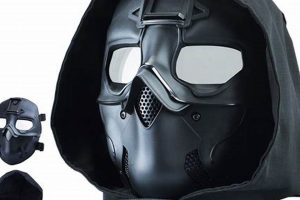
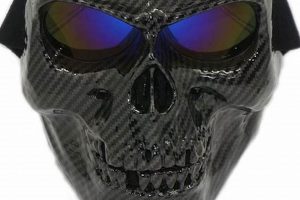
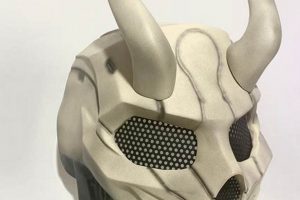
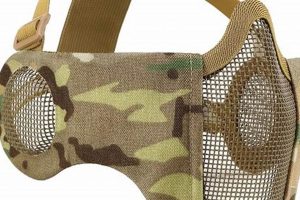
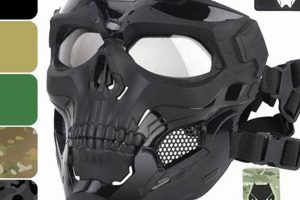
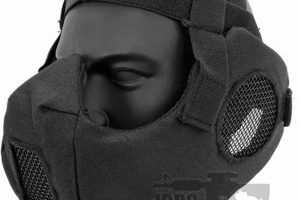
Mesh facial protection designed for airsoft applications serves as a critical piece of safety equipment. These devices are constructed from a woven metal material, typically steel, and are shaped to conform to the contours of the face, covering the mouth, nose, and sometimes the lower portion of the eyes. A prime example would be a low-profile mesh mask that allows for close cheek weld when aiming a rifle.
The importance of adequately safeguarding the face during airsoft activities cannot be overstated. These protective devices offer significant advantages in terms of breathability and reduced fogging compared to solid lens alternatives. Historically, facial injuries were a common concern within the airsoft community, driving the development and refinement of this essential gear. By mitigating the risk of projectile impacts to vulnerable areas, players can engage in the sport with increased confidence and reduced potential for lasting harm.
Consequently, the selection process for effective facial protection necessitates careful consideration of several factors, including material strength, fit, comfort, and compatibility with other protective equipment such as goggles and helmets. Further discussion will delve into specific models, design variations, and crucial performance characteristics relevant to making an informed purchasing decision.
Selection and Usage Guidance for Mesh Airsoft Facial Protection
The following guidelines are designed to assist in the selection and proper use of mesh facial protection in airsoft, focusing on optimal safety and performance.
Tip 1: Material Integrity Assessment: Prioritize models constructed from high-gauge steel mesh to ensure sufficient resistance against projectile penetration. A visual inspection for deformities or weaknesses in the mesh is advised prior to each use.
Tip 2: Secure and Contoured Fit: Proper fit is crucial for effective protection. Select a mask that conforms closely to the facial structure without creating gaps or pressure points. Adjustable straps contribute to a secure and customizable fit.
Tip 3: Goggle Compatibility Verification: Ensure seamless integration with eye protection. The lower edge of goggles should overlap the upper edge of the mesh mask without creating a gap, preventing projectile ingress.
Tip 4: Breathability Considerations: While offering enhanced ventilation compared to full-face masks, some mesh designs may still restrict airflow. Models with strategically placed ventilation holes can improve breathability without compromising protection.
Tip 5: Regular Maintenance and Inspection: Routinely inspect the mesh for signs of damage, such as dents, rust, or broken welds. Clean the mask after each use to remove debris and prevent corrosion.
Tip 6: Compatibility with Headgear: Consider the mask’s compatibility with helmets and other headgear. Select a low-profile design that allows for unrestricted movement and proper positioning of protective eyewear.
Tip 7: Field of View Optimization: Masks that minimally obstruct peripheral vision are advantageous for maintaining situational awareness during gameplay.
Adhering to these guidelines can significantly enhance the effectiveness of mesh facial protection, contributing to a safer and more enjoyable airsoft experience.
Following sections will cover the common problems and solution regarding this topic.
1. Impact Resistance
Impact resistance is a paramount attribute of airsoft facial protection. It directly relates to the capacity of the mesh material to withstand the force of projectiles, preventing penetration or deformation that could result in injury. The effectiveness of a given device is predicated on its ability to absorb and dissipate the energy of an incoming projectile. A mask failing to adequately absorb an impact can lead to facial trauma, ranging from minor bruising to more severe lacerations or eye damage. Therefore, achieving superior impact resistance is a fundamental criterion in evaluating the suitability of mesh masks for airsoft activities.
Consider, for instance, a scenario involving a close-quarters engagement where a player receives a direct hit to the face from a high-velocity BB. A mask with insufficient impact resistance could deform, potentially allowing the projectile to strike the skin or, more critically, the eyes. Alternatively, a mask constructed from higher-gauge steel and featuring a robust mesh pattern would likely absorb the impact without significant deformation, thereby safeguarding the wearer from injury. This underscores the direct correlation between material quality, construction, and the level of protection afforded to the user. This quality of material also adds for airsoft mesh mask longevity.
Ultimately, the focus must remain on source material for achieving protection. Airsoft participants should recognize impact resistance as a key determinant in the selection of airsoft mesh facial wear. Prioritizing models rigorously tested and verified to meet or exceed established safety standards is critical. A complete understanding of impact resistance promotes safety and supports an improved play experience.
2. Breathability
Breathability is a critical performance attribute directly influencing user comfort and operational effectiveness. The restricted airflow associated with certain facial protection designs can lead to overheating, increased perspiration, and fogging of eye protection. Reduced airflow may negatively affect physical performance. Therefore, a design that maximizes airflow while maintaining adequate protection is crucial for sustained gameplay. A mask constructed with a more open mesh pattern, for instance, permits greater air circulation compared to designs with tightly woven mesh, thereby mitigating the potential for discomfort and impaired vision.
Airsoft participants frequently operate in dynamic environments, involving physical exertion and rapid changes in activity level. In these situations, masks with limited ventilation can quickly become uncomfortable, leading to decreased focus and compromised performance. For example, a player engaged in a prolonged firefight may experience significant fogging of their goggles due to trapped moisture if the mask lacks sufficient breathability. Consequently, the individuals ability to effectively target and engage opponents is diminished. Conversely, a well-ventilated mask facilitates moisture evaporation, maintaining clear vision and optimizing overall performance.
Adequate breathability is not merely a comfort feature; it is a functional requirement that contributes directly to player safety and competitive advantage. The selection of a highly rated design promotes both physical well-being and enhanced effectiveness on the field. Prioritizing devices engineered for optimal airflow ensures a more comfortable and ultimately more successful airsoft experience.
3. Goggle Compatibility

Goggle compatibility represents a crucial consideration in the selection of effective airsoft facial protection. The successful integration of a mesh mask with eye protection devices directly influences player safety and overall field performance. The interrelationship between these two essential components necessitates careful evaluation.
- Seamless Integration
Proper goggle compatibility ensures a seamless interface between the mask and the eye protection. The lower edge of the goggles should overlap the upper edge of the mesh mask without creating gaps. This prevents small projectiles from entering the space between the mask and goggles, mitigating the risk of eye injury. Incompatibility may require the use of specialized goggle and mask designs.
- Fog Prevention
The design of both the mesh mask and the goggles impacts the effectiveness of fog prevention measures. A mask that restricts airflow can exacerbate fogging issues within the goggles, impairing vision. Compatible goggle designs often incorporate ventilation features that work in conjunction with the mask’s breathability to minimize fogging. Failure to address fogging can compromise a players situational awareness.
- Profile Considerations
The combined profile of the mask and goggles affects a player’s ability to aim accurately. A bulky combination may impede the proper cheek weld against the stock of a rifle, leading to inaccurate shots. Low-profile mesh masks, when paired with compatible goggles, can minimize this interference, preserving aiming accuracy. Practical experience shows that a streamlined profile allows for more fluid movement and better target acquisition.
- Strap Management
The goggle strap configuration must be compatible with the design of the mesh mask. Some masks feature integrated strap retention systems or may require adjustments to the goggle strap to ensure a secure fit. Poor strap management can result in discomfort, slippage, and potential compromise of eye protection during dynamic movements. Careful strap adjustment is essential to preventing these issues.
The facets discussed above highlight the importance of goggle compatibility in the context of airsoft facial protection. Prioritizing models designed for seamless integration, effective fog prevention, streamlined profiles, and proper strap management will lead to enhanced safety and performance in the field.
4. Facial Conformance
Facial conformance is a primary determinant of the protective capabilities and usability of mesh masks in airsoft. Masks engineered with designs that accurately mirror the contours of the face ensure a secure fit, reducing the potential for slippage or displacement during periods of activity. The degree to which a mask adheres to facial structure influences both comfort and the level of protection offered.
- Coverage Consistency
Effective facial conformance ensures consistent coverage across critical areas, including the mouth, nose, and cheeks. A mask failing to adequately conform to the facial structure may leave gaps or exposed areas vulnerable to projectile impacts. The design should account for variations in facial anatomy to accommodate a broad range of users without compromising protective coverage. A mask that fits tightly around the cheekbones, for example, is more likely to maintain proper positioning compared to one that sits loosely on the face.
- Stability During Movement
Proper conformance directly impacts the stability of the mask during dynamic movements. Airsoft participants often engage in running, crouching, and rapid changes in direction. A mask with a secure, conforming fit is less likely to shift or become dislodged during these activities, preserving the intended level of protection. Stability is particularly important when utilizing aiming devices, as mask displacement can obstruct sight and reduce accuracy. The shape of the mask is essential to stability.
- Compatibility with Accessories
Facial conformance should be considered in conjunction with other protective gear. Masks with overly rigid or inflexible designs may interfere with the fit and function of goggles, helmets, or communication devices. A well-conforming mask integrates seamlessly with these accessories, avoiding pressure points and maintaining a comfortable, secure fit. A low-profile design, for instance, may provide greater compatibility with various helmet styles.
- Impact Energy Distribution
The ability of a mask to distribute impact energy across a broader area depends on its level of facial conformance. A mask that fits snugly against the face can better absorb and dissipate the force of a projectile impact, reducing the concentration of energy at any single point. This is particularly important in areas with thin skin or underlying bone structure, such as the nose and cheeks. A conforming design offers enhanced protection against blunt force trauma.
The characteristics of coverage, stability, accessory compatibility, and energy distribution underscore the importance of facial conformance in airsoft facial protection. Prioritizing models with designs that accurately mirror the contours of the face will result in enhanced comfort, improved performance, and a heightened level of protection. The correct fit results in a more effective and enjoyable game.
5. Weight Distribution
Weight distribution, in the context of mesh facial protection for airsoft, directly influences user comfort and endurance during extended periods of gameplay. A poorly balanced mask, characterized by excessive weight concentrated in a specific area, can induce fatigue and strain on the wearer’s neck and facial muscles. This discomfort detracts from focus and reaction time, negatively affecting performance. An uneven weight distribution can manifest as a mask constantly slipping down the nose or creating pressure points on the cheeks or forehead. For example, a full-face mesh mask with a heavy lower section may cause the wearer to experience neck strain after only a short time, hindering their ability to effectively maneuver and engage opponents. Conversely, an optimally designed mask will distribute its weight evenly across the facial area, minimizing localized pressure and promoting a more comfortable and stable fit. This balance contributes significantly to sustained alertness and enhances the overall playing experience.
The optimization of weight distribution relies on factors such as material selection, structural design, and the placement of attachment points. Lightweight materials, such as specific grades of stainless steel, can reduce the overall mass of the mask without compromising its protective capabilities. A well-engineered frame and strategic placement of adjustable straps contribute to evenly distributing the weight across the face, ensuring a secure and balanced fit. Mask manufacturers employ techniques such as finite element analysis to simulate and refine the weight distribution characteristics of their products, optimizing for comfort and stability. Field testing, involving airsoft participants, further validates these design choices and identifies areas for improvement.
Achieving proper weight distribution in mesh masks for airsoft presents a persistent engineering challenge. However, its contribution to user comfort, performance, and sustained focus necessitates prioritization. Ongoing innovation in material science and structural design will continue to improve the weight distribution characteristics of airsoft facial protection, further enhancing the safety and enjoyment of the sport. As mask designs evolve, assessing weight balance will be a key factor in differentiating superior products, aiding consumers in making informed purchasing decisions that support both protection and performance.
6. Durability
Durability, as it pertains to mesh facial protection for airsoft, signifies the ability of the mask to withstand repeated impacts, environmental stressors, and general wear-and-tear without compromising its protective integrity. This characteristic is a critical factor in determining the long-term value and reliability of these devices. The selection of a durable mask ensures that the user is consistently protected throughout numerous airsoft engagements, reducing the need for frequent replacements and mitigating the risk of equipment failure during critical moments.
- Material Fatigue Resistance
Material fatigue resistance refers to the capacity of the mesh material to endure repeated stress cycles without fracturing or weakening. In the context of airsoft, a mask constructed from high-fatigue-resistant materials will maintain its protective integrity even after numerous impacts from projectiles. For example, a mask made from low-grade steel may exhibit fatigue cracking after only a few games, increasing the risk of projectile penetration. Conversely, a mask constructed from hardened steel alloys will withstand many impacts without showing signs of fatigue, providing consistent and reliable protection over an extended period. Testing standards for airsoft masks often incorporate material fatigue assessments to ensure compliance with safety regulations.
- Corrosion Resistance
Corrosion resistance is the ability of the mask’s materials to withstand degradation caused by exposure to moisture, sweat, and other environmental elements. Masks used in outdoor airsoft environments are particularly susceptible to corrosion, which can weaken the metal mesh and compromise its structural integrity. Treatments such as powder coating or galvanization are often applied to mesh masks to enhance their corrosion resistance. For example, a mask that is not properly treated may develop rust spots after exposure to rain, weakening the mesh and reducing its protective capacity. Effective corrosion resistance is paramount in preserving the longevity and safety of airsoft facial protection.
- Structural Integrity Under Stress
Structural integrity under stress defines the mask’s ability to maintain its shape and form when subjected to external forces. A durable mask will retain its structural integrity even after experiencing impacts from projectiles or accidental bending during storage or transport. Masks with weak structural designs may deform easily, creating gaps in coverage or compromising the fit of the mask. Reinforced frames, strategic welding, and robust attachment points contribute to the structural integrity of airsoft mesh masks. A mask that is easily bent out of shape may not provide adequate protection in the event of an impact, underscoring the significance of structural integrity.
- Strap and Fastener Longevity
The straps and fasteners used to secure the mask to the wearer’s head are critical components that directly affect the mask’s overall durability. Straps made from low-quality materials may fray, stretch, or break after repeated use, compromising the secure fit of the mask. Similarly, fasteners that are prone to corrosion or breakage can render the mask unusable. Durable masks incorporate high-strength straps made from materials such as nylon or elastic webbing, along with robust fasteners that can withstand repeated adjustments and use. Regular inspection of the straps and fasteners is essential to ensure the continued reliability of the mask’s retention system.
These characteristics collectively determine the durability of airsoft mesh facial protection, directly impacting its ability to provide consistent and reliable protection over an extended period. Individuals selecting a mask should prioritize models with demonstrated resistance to material fatigue, corrosion, structural deformation, and strap failure to ensure a long-lasting and effective protective device.
Frequently Asked Questions
The following addresses common inquiries concerning airsoft mesh facial protection, providing factual information and addressing prevalent misconceptions.
Question 1: Does mesh facial protection offer sufficient protection against high-velocity projectiles in airsoft?
The protective capability of mesh facial protection depends on material composition, gauge, and construction. High-quality steel mesh, properly manufactured, can effectively mitigate the risk of projectile penetration. Models not adhering to established safety standards may offer insufficient protection.
Question 2: Does mesh facial protection impede visibility during airsoft gameplay?
The impact on visibility is design-dependent. Mesh masks with finer weaves or obstructed peripheral views may impair situational awareness. Optimal designs prioritize a balance between protection and unobstructed field of vision.
Question 3: Is mesh facial protection prone to fogging compared to solid lens alternatives?
Mesh construction inherently promotes increased airflow, reducing the likelihood of fogging compared to full-face masks with solid lenses. However, environmental conditions and individual physiology can still influence fogging potential.
Question 4: How should mesh facial protection be cleaned and maintained to ensure longevity?
Routine cleaning with mild soap and water removes debris and minimizes corrosion. Regular inspections for damage, such as dents or rust, are recommended. Promptly address any identified issues to prevent further degradation.
Question 5: Does all mesh facial protection conform to standardized safety regulations within the airsoft community?
Compliance with safety regulations varies. Reputable manufacturers adhere to established standards. Verification of compliance is advised prior to purchase and use to ensure the device offers adequate protection.
Question 6: Can mesh facial protection be effectively combined with other protective gear, such as goggles and helmets?
Compatibility varies depending on the design of individual components. Prioritize selecting masks and goggles engineered for seamless integration. Incompatible combinations may compromise protection or comfort.
These points emphasize the nuanced considerations involved in evaluating airsoft mesh facial protection. Awareness of these factors contributes to informed decision-making and enhanced safety.
Subsequent discussion will explore case studies and performance comparisons of specific mesh mask models.
Conclusion
The preceding analysis has examined the critical attributes of airsoft mesh facial protection, emphasizing the importance of impact resistance, breathability, goggle compatibility, facial conformance, weight distribution, and durability. These factors interrelate to determine the overall effectiveness and suitability of a given design for mitigating potential injuries during airsoft activities. Selecting the “best mesh mask airsoft” solution requires careful consideration of individual needs, playing style, and environmental conditions, coupled with a thorough assessment of available product specifications and safety certifications.
Ultimately, the pursuit of optimal facial protection represents a commitment to personal safety and responsible gameplay within the airsoft community. Continued research, development, and adherence to established safety standards are essential to further enhance the protective capabilities and usability of mesh masks. Players are encouraged to prioritize safety above all else, actively seeking out and utilizing equipment that offers a validated level of protection, thereby contributing to a safer and more enjoyable sport for all participants.