These compact, electrically operated replicas of submachine guns are designed for airsoft skirmishes. They utilize rechargeable batteries to power an internal mechanism that propels plastic projectiles. These units provide a viable option for players seeking maneuverability and a higher rate of fire compared to spring-powered or gas-powered alternatives, making them suitable for close-quarters combat scenarios.
The significance of these devices lies in their balance of performance and ease of use. They offer a consistent power source, unlike gas-powered models, and require less manual effort than spring-powered variants. Their historical context within airsoft involves the pursuit of realism and functionality, evolving from simpler designs to more sophisticated models with adjustable features and realistic aesthetics. This evolution has enabled players to more closely emulate real-world tactical scenarios.
The following sections will delve into specific aspects, including technical specifications, battery types, performance characteristics, and maintenance procedures. Additionally, considerations for selecting an appropriate model based on individual playing style and field conditions will be addressed.
Optimizing Performance of Electrically Powered Airsoft Submachine Guns
The following tips are designed to enhance the functionality and longevity of these airsoft devices, ensuring optimal performance on the field.
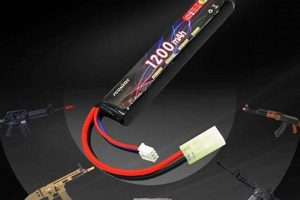
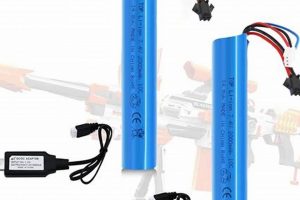
Tip 1: Battery Selection is Paramount. Utilize batteries specifically designed for airsoft replicas. Incorrect voltage or amperage can damage the internal motor and electronics. Research appropriate battery specifications for the selected model and adhere to manufacturer recommendations. Examples include using a 7.4v LiPo battery in a replica designed for that voltage, rather than a 9.6v NiMH battery.
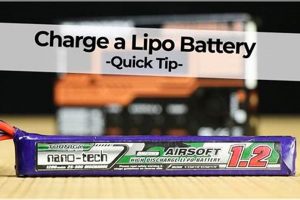
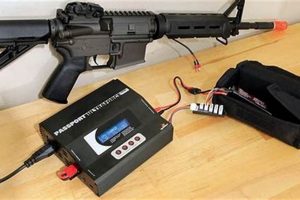
Tip 2: Proper Battery Maintenance Extends Lifespan. Fully discharge NiCad and NiMH batteries periodically to prevent memory effect. LiPo batteries should be stored at a storage charge (approximately 3.8V per cell) when not in use. Avoid overcharging or deep discharging LiPo batteries, as this can lead to damage and potential fire hazards.
Tip 3: Regular Gearbox Maintenance is Crucial. Consistent use can lead to wear and tear on the internal gearbox components. Regular lubrication with appropriate silicone grease and inspection for worn gears, pistons, and other parts is essential for maintaining optimal performance and preventing malfunctions. This typically involves disassembling the gearbox, cleaning the components, and applying fresh lubricant.
Tip 4: Barrel Cleaning Enhances Accuracy. Residue buildup in the inner barrel can significantly impact projectile accuracy. Regularly clean the inner barrel with a cleaning rod and silicone oil to remove debris and maintain consistent projectile trajectory.
Tip 5: Motor Adjustment Improves Efficiency. The motor height adjustment screw should be properly configured to ensure optimal gear mesh. Improper adjustment can lead to increased motor wear, reduced battery efficiency, and potential damage to the gears. Listen for excessive whining or grinding noises, which may indicate a need for adjustment.
Tip 6: Upgrade Components Judiciously. Consider upgrading internal components, such as the motor, gears, or piston, to enhance performance. However, ensure that upgraded parts are compatible with the existing system and that installation is performed by a qualified technician. Overpowering the system without proper reinforcement can lead to premature failure.
Tip 7: Monitor Wiring and Connections. Inspect wiring and connectors for signs of damage or corrosion. Replace frayed or damaged wiring to prevent electrical shorts and ensure consistent power delivery. Secure loose connections to prevent intermittent power loss.
Adhering to these guidelines will contribute to the sustained operational effectiveness and longevity of electrically powered airsoft submachine guns.
The subsequent section will focus on troubleshooting common issues and providing solutions for resolving performance-related problems.
1. Battery Voltage Selection

Battery voltage selection is a critical parameter in the operation of electrically powered airsoft submachine guns. The voltage rating of the battery directly impacts the performance and longevity of the internal motor and associated components. Incorrect selection can result in diminished performance, component failure, or potential safety hazards.
- Motor Compatibility and Performance
Electrically powered airsoft submachine guns are designed to operate within a specific voltage range. Using a battery with a voltage that is too low will result in reduced motor speed, rate of fire, and overall performance. Conversely, exceeding the recommended voltage can overload the motor, causing overheating, premature wear, and eventual failure. For example, a replica designed for 7.4V LiPo battery operation will exhibit suboptimal performance with a 6.0V NiMH battery, and could be damaged by an 11.1V LiPo battery.
- Electronic Speed Controller (ESC) Limitations
Many electrically powered airsoft submachine guns incorporate an electronic speed controller (ESC) to regulate the power delivered to the motor. The ESC has a maximum voltage rating that must not be exceeded. Using a battery with a voltage above the ESC’s rating can damage or destroy the ESC, rendering the device inoperable. The ESC’s specifications should be consulted prior to battery selection to ensure compatibility.
- Internal Wiring and Connector Integrity
The voltage supplied by the battery directly affects the current flowing through the internal wiring and connectors of electrically powered airsoft submachine guns. Using a higher voltage can increase current flow, potentially leading to overheating, melting, or damage to the wiring and connectors. This is particularly important in older models or those with thinner gauge wiring. Upgrading the wiring and connectors to higher capacity components may be necessary when using higher voltage batteries.
- Battery Chemistry and Discharge Rates
Different battery chemistries, such as Nickel-Metal Hydride (NiMH) and Lithium Polymer (LiPo), exhibit different voltage characteristics and discharge rates. NiMH batteries typically provide a consistent voltage output throughout their discharge cycle, while LiPo batteries exhibit a gradually decreasing voltage. Understanding the discharge characteristics of the chosen battery chemistry is crucial for predicting performance and ensuring compatibility with the device’s internal electronics. Furthermore, the battery’s discharge rate (C-rating) should be appropriate for the motor’s current draw to prevent voltage sag and performance degradation.
Therefore, the selection of an appropriate battery voltage is paramount for the reliable and safe operation of electrically powered airsoft submachine guns. Careful consideration of motor compatibility, ESC limitations, wiring integrity, and battery chemistry is essential for achieving optimal performance and preventing damage to the system. Consulting the manufacturer’s specifications and seeking advice from experienced airsoft technicians is recommended to ensure proper battery voltage selection.
2. Gearbox Lubrication Frequency

Gearbox lubrication frequency represents a critical factor in the sustained performance and operational lifespan of electrically powered airsoft submachine guns. The gearbox, housing the intricate system of gears, pistons, and springs responsible for projectile propulsion, is subjected to significant mechanical stress during operation. Inadequate lubrication leads to increased friction, accelerated wear, and eventual component failure. Therefore, establishing an appropriate lubrication schedule is essential.
- Mitigation of Friction and Wear
The primary function of gearbox lubrication is to minimize friction between moving parts. The cyclical operation of the gears, piston, and other components generates substantial friction, leading to heat buildup and wear. Consistent lubrication with appropriate silicone-based grease forms a protective film, reducing friction and extending the lifespan of critical parts. Lack of lubrication manifests as increased noise, reduced rate of fire, and eventual gear stripping or piston breakage. A well-lubricated gearbox operates smoothly, efficiently, and reliably.
- Temperature Regulation
Friction generates heat within the gearbox, potentially exceeding the tolerance of internal components. Excessive heat can degrade the grease itself, reducing its lubricating properties and further exacerbating wear. Lubrication not only minimizes friction but also aids in heat dissipation, maintaining a stable operating temperature. Certain high-performance greases are specifically formulated for enhanced thermal stability, providing superior protection against heat-induced degradation. This is particularly important for models with high rates of fire.
- Maintenance of Air Seal Integrity
Proper lubrication contributes to the integrity of the air seal within the piston assembly. The piston O-ring, responsible for creating an airtight seal within the cylinder, requires lubrication to maintain its elasticity and sealing effectiveness. Dry or cracked O-rings result in air leaks, diminished projectile velocity, and inconsistent performance. Regular lubrication ensures that the O-ring remains pliable and maintains a secure seal, maximizing air compression and projectile power.
- Prevention of Corrosion and Degradation
In addition to reducing friction, lubrication provides a protective barrier against corrosion and degradation of internal components. Exposure to moisture and environmental contaminants can lead to rust and deterioration of metal parts. The grease film acts as a sealant, preventing moisture from contacting the metal surfaces and inhibiting corrosion. This is especially important for models stored in humid environments or exposed to inclement weather. Regular lubrication ensures the long-term integrity and reliability of the gearbox.
In summary, appropriate gearbox lubrication frequency is intrinsically linked to the operational performance and longevity of electrically powered airsoft submachine guns. Regular maintenance, utilizing suitable lubricants, is crucial for minimizing friction, regulating temperature, maintaining air seal integrity, and preventing corrosion. Adhering to a consistent lubrication schedule, as recommended by the manufacturer or experienced technicians, ensures reliable performance and maximizes the lifespan of these devices.
3. Projectile Velocity Consistency

Projectile velocity consistency is a critical performance metric for electrically powered airsoft submachine guns. This consistency directly impacts accuracy, effective range, and the overall tactical effectiveness of the device. Inconsistent velocity translates to unpredictable projectile trajectories, hindering the user’s ability to accurately engage targets. This inconsistency arises from fluctuations in the power output of the motor, air seal variations within the piston assembly, or projectile inconsistencies.
The mechanism within electrically powered airsoft submachine guns relies on a precise sequence of events to propel the projectile. The motor, powered by the battery, drives a series of gears that compress a spring. Upon release, the spring forces a piston forward, creating a burst of air that propels the projectile down the barrel. Variations in motor speed, potentially caused by inconsistent battery voltage or motor wear, directly influence the force applied to the piston. Similarly, imperfections in the air seal between the piston and cylinder allow air to escape, reducing the pressure behind the projectile. The choice of projectile also affects velocity; variations in weight or shape influence the efficiency of air transfer. For example, a submachine gun consistently firing projectiles at 350 feet per second (FPS) provides a predictable trajectory. Conversely, variations of +/- 20 FPS result in significant deviations in range and accuracy, particularly at longer distances. Such inconsistencies are unacceptable in competitive scenarios.
Achieving and maintaining projectile velocity consistency requires attention to several key areas. Consistent battery voltage, achieved through proper battery maintenance and selection, is paramount. Regular gearbox maintenance, including lubrication and inspection of the piston assembly, ensures optimal air seal integrity. Finally, utilizing high-quality, consistent projectiles minimizes variations in weight and shape. Implementing these measures improves the performance and reliability of electrically powered airsoft submachine guns, leading to enhanced accuracy and tactical effectiveness in airsoft skirmishes.
4. Effective Range Optimization

Effective range optimization for electrically powered airsoft submachine guns directly impacts their practical application and tactical utility. This optimization involves maximizing the distance at which the device can consistently and accurately engage targets. Several factors influence the effective range, including projectile velocity, barrel length, hop-up system efficiency, and projectile quality. Projectile velocity, dictated by the power output of the gearbox and battery system, determines the initial kinetic energy imparted to the projectile. A higher velocity translates to a flatter trajectory and increased range. Barrel length influences the stabilization of the projectile during its passage, with longer barrels generally providing improved accuracy at extended distances, up to a point of diminishing returns. The hop-up system imparts backspin to the projectile, counteracting the effects of gravity and extending its range. Projectile quality affects aerodynamic stability and consistency, influencing accuracy and range. For example, a device with a poorly adjusted hop-up system might exhibit erratic projectile flight, significantly reducing its effective range despite having a high initial projectile velocity.
The interplay of these elements necessitates a holistic approach to effective range optimization. A well-tuned hop-up system, combined with high-quality projectiles and a consistent power source, can significantly extend the effective range of electrically powered airsoft submachine guns. Upgrading internal components, such as the motor, gearbox, and hop-up unit, can further enhance performance. However, modifications must be implemented with careful consideration to maintain compatibility and reliability. For instance, an upgraded motor delivering increased power might necessitate a stronger gearbox to withstand the increased stress. Field conditions also play a role; wind and environmental factors can influence projectile trajectory, requiring adjustments to aiming techniques to compensate. This necessitates understanding the weapon’s limitations and adapting tactics to maximize its effectiveness within those constraints.
Ultimately, effective range optimization is a multifaceted process that demands a comprehensive understanding of the factors influencing projectile trajectory and accuracy. Continuous refinement and adjustments are often necessary to achieve optimal performance in diverse playing environments. Prioritizing this optimization enhances the overall effectiveness and versatility of electrically powered airsoft submachine guns, allowing users to engage targets with greater precision and confidence.
5. Internal Component Durability

The functional lifespan and operational reliability of electrically powered airsoft submachine guns are intrinsically linked to the durability of their internal components. These devices, subjected to repetitive stress and mechanical strain, rely on robust internal mechanisms to consistently propel projectiles. Component failure within the gearbox, motor, or other critical systems leads to diminished performance, malfunctions, and ultimately, inoperability. The materials used, manufacturing tolerances, and design characteristics of internal components directly influence their ability to withstand the stresses of sustained use. For example, a gearbox constructed from low-grade metal alloys is prone to stripping gears or cracking under the strain of a high-torque motor, whereas a gearbox utilizing reinforced steel gears demonstrates significantly improved resilience. Similarly, a piston head constructed from brittle plastic is susceptible to shattering upon impact within the cylinder, contrasting with the enhanced durability of a reinforced polycarbonate piston head.
Selecting electrically powered airsoft submachine guns with durable internal components translates to tangible benefits in practical application. A device exhibiting superior durability requires less frequent maintenance and repairs, reducing downtime and associated costs. Moreover, increased reliability enhances performance consistency, enabling users to maintain accuracy and effectiveness over extended periods. This is particularly crucial in competitive airsoft scenarios where malfunctions can result in significant tactical disadvantages. Investing in models with reinforced gearboxes, high-torque motors with heat-resistant wiring, and durable piston assemblies can mitigate the risk of component failure and ensure consistent performance under demanding conditions. For example, models utilizing metal bushings instead of plastic bushings in the gearbox experience reduced friction and wear on the gears, extending the lifespan of both components.
The long-term operational costs and performance effectiveness of electrically powered airsoft submachine guns are directly correlated to the durability of their internal mechanisms. Choosing models with robust components, adhering to recommended maintenance procedures, and implementing strategic upgrades can significantly enhance the overall value and reliability of these devices. Addressing durability concerns proactively mitigates the risk of premature failure, ensures consistent performance, and maximizes the investment in electrically powered airsoft submachine guns. While initial costs may be higher for models with reinforced internals, the long-term savings in maintenance and enhanced reliability often outweigh the initial investment.
6. Trigger Response Enhancement

Trigger response enhancement in electrically powered airsoft submachine guns directly influences the time elapsed between trigger actuation and projectile discharge. A minimized delay equates to a tactical advantage, allowing for quicker target engagement and enhanced maneuverability in dynamic skirmishes. The inherent design of these replicas introduces a mechanical and electrical lag; the trigger switch activates the motor, which in turn drives the gearbox through a cycle to compress and release the air, propelling the projectile. This process, however brief, creates a noticeable delay. Enhancing trigger response seeks to shorten this delay, bringing the performance closer to that of a real firearm.
Several factors influence trigger response. The motor’s torque and speed characteristics are paramount; a high-torque motor accelerates the gearbox cycle more rapidly. The gear ratio within the gearbox also impacts cycle time; lower ratios provide faster response but may sacrifice rate of fire. Electronic components, such as MOSFETs (Metal-Oxide-Semiconductor Field-Effect Transistors), can optimize electrical flow to the motor, reducing electrical resistance and enhancing responsiveness. Battery selection also plays a crucial role; a battery with a higher discharge rate delivers power more effectively, minimizing motor lag. For example, replacing a standard motor with a high-torque motor and installing a MOSFET can demonstrably reduce trigger delay from approximately 0.5 seconds to 0.2 seconds or less, a significant improvement in a fast-paced engagement.
Ultimately, trigger response enhancement constitutes a critical element in optimizing the performance of electrically powered airsoft submachine guns. The practical impact of a faster trigger response translates to improved tactical effectiveness and a more realistic simulation experience. While achieving optimal trigger response often requires upgrading internal components and careful system tuning, the resulting performance gains justify the effort. Understanding these enhancements and their impact addresses a core performance limitation often cited by airsoft enthusiasts, thereby improving overall user satisfaction.
Frequently Asked Questions
The following section addresses common inquiries regarding electrically powered airsoft submachine guns, providing clarity and technical insight.
Question 1: What differentiates electrically powered airsoft submachine guns from gas-powered or spring-powered alternatives?
Electrically powered airsoft submachine guns utilize rechargeable batteries to power an internal motor and gearbox system, offering consistent power output and a relatively high rate of fire. Gas-powered models rely on compressed gas cartridges, which can exhibit performance fluctuations based on temperature and gas pressure. Spring-powered models require manual cocking before each shot, limiting their rate of fire.
Question 2: What are the typical battery types used in electrically powered airsoft submachine guns, and what are their respective advantages and disadvantages?
Common battery types include Nickel-Metal Hydride (NiMH) and Lithium Polymer (LiPo) batteries. NiMH batteries are generally more durable and less prone to damage, but offer lower energy density and discharge rates. LiPo batteries provide higher energy density and discharge rates, resulting in improved performance, but require more careful handling and storage due to their increased sensitivity to overcharging and deep discharging.
Question 3: What is the expected lifespan of the battery in electrically powered airsoft submachine guns, and how can its longevity be maximized?
Battery lifespan varies depending on usage patterns, battery type, and charging practices. Proper charging and storage procedures, avoiding overcharging and deep discharging, are crucial for maximizing battery lifespan. Regular maintenance, such as balancing LiPo batteries, also contributes to longevity. Typically, a well-maintained battery should provide several hundred charging cycles.
Question 4: What factors influence the accuracy and effective range of electrically powered airsoft submachine guns?
Accuracy and effective range are influenced by several factors, including projectile velocity, barrel length, hop-up system efficiency, and projectile quality. A consistent power source, a properly adjusted hop-up system, and the use of high-quality projectiles are essential for achieving optimal accuracy and range.
Question 5: What are the common maintenance requirements for electrically powered airsoft submachine guns, and how frequently should these tasks be performed?
Common maintenance requirements include gearbox lubrication, barrel cleaning, and battery maintenance. Gearbox lubrication should be performed periodically, typically after every 5,000 to 10,000 rounds fired. Barrel cleaning should be performed more frequently, depending on usage and environmental conditions. Battery maintenance should be performed after each use, following manufacturer recommendations.
Question 6: What safety precautions should be observed when handling and operating electrically powered airsoft submachine guns?
Appropriate eye protection is mandatory for all participants in airsoft activities. Responsible gun handling, including muzzle awareness and adherence to field regulations, is essential. Batteries should be handled with care, avoiding exposure to extreme temperatures or physical damage. These devices should be treated with the same respect and caution as any potentially dangerous instrument.
In summary, electrically powered airsoft submachine guns represent a balance of performance, convenience, and tactical utility. Addressing these considerations enhances the overall experience and ensures safe and responsible operation.
The subsequent section will explore aftermarket upgrades and modifications for enhancing the capabilities of electrically powered airsoft submachine guns.
Conclusion
This exploration of battery powered airsoft smg has illuminated key aspects pertinent to their functionality, maintenance, and optimization. From battery selection and gearbox lubrication to projectile velocity consistency and trigger response enhancement, a comprehensive understanding of these factors is essential for maximizing the performance and lifespan of these devices. The analysis has underscored the interconnectedness of various internal components and the importance of a holistic approach to maintenance and modification.
The continued evolution of battery powered airsoft smg technology promises further advancements in performance, realism, and tactical utility. Responsible ownership and adherence to established safety protocols remain paramount. Future research and development should prioritize enhanced battery technology, improved internal component durability, and greater overall operational efficiency. The informed and judicious application of this knowledge will contribute to a more engaging and safe airsoft experience.