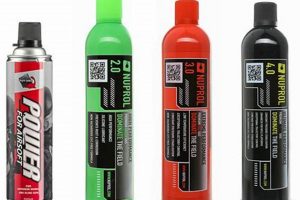
A self-contained, pressurized vessel provides a source of propellant for certain types of airsoft guns. These units typically contain a mixture of compressed gas, often propane or a similar compound with silicone oil added for lubrication. The gas, under pressure, propels the projectile out of the airsoft gun’s barrel. A common application is in gas blowback pistols, where the gas both fires the BB and cycles the slide to simulate recoil.
The use of these devices offers several advantages in airsoft gameplay. They provide a more realistic shooting experience, particularly with gas blowback models. They are relatively easy to refill, and offer a consistent power source compared to spring-powered alternatives. Their historical context stems from the desire to replicate the function and feel of real firearms within the airsoft sport.
The following sections will delve into the specific types of gases used in these units, the maintenance procedures required for safe operation, and the performance characteristics one can expect from systems powered by this method of propulsion. Understanding these aspects is crucial for both safety and optimizing the performance of compatible airsoft equipment.
Operational Tips for Airsoft Gas Reservoirs
The following guidelines ensure the safe and efficient utilization of gas-powered airsoft systems. Adherence to these recommendations will maximize performance and prolong equipment lifespan.
Tip 1: Proper Filling Technique: Always fill the reservoir in short bursts to prevent overfilling and potential leaks. Observe the manufacturer’s recommended fill time and capacity limits.
Tip 2: Regular Lubrication: Periodically apply silicone oil to the seals and valves. This maintenance prevents drying and cracking, which can lead to gas leaks and reduced performance.
Tip 3: Storage Considerations: Store the filled reservoir in a cool, dry place away from direct sunlight and extreme temperatures. Excessive heat can cause the gas to expand, potentially damaging the tank or creating a hazardous situation.
Tip 4: Valve Maintenance: Inspect the valve for debris or damage regularly. Use a specialized valve tool to carefully clean or replace the valve as needed. A faulty valve can lead to inconsistent gas flow and reduced firing power.
Tip 5: Pressure Monitoring: Utilize a pressure gauge to monitor the gas level within the reservoir. This allows for optimal performance and prevents unexpected gas depletion during gameplay. Avoid exceeding the recommended pressure limit.
Tip 6: Compatibility Verification: Ensure that the gas used is compatible with the specific airsoft gun model. Using incompatible gases can damage internal components and void warranties.
Tip 7: Safe Handling Practices: Always handle the reservoir with care. Avoid dropping or subjecting it to impact. Damage to the tank can compromise its structural integrity and lead to leaks or ruptures.
Implementing these recommendations ensures the user will experience reliable, consistent, and safe operation. Prioritizing these actions maximizes the lifespan and performance capabilities of airsoft equipment reliant on compressed gas propulsion.
The concluding section will provide a comprehensive overview of safety protocols and further resources for optimal airsoft equipment maintenance.
1. Pressure Consistency

Pressure consistency represents a critical determinant in the performance and reliability of airsoft systems that utilize compressed gas as a propellant. Stable pressure output ensures consistent projectile velocity and predictable trajectory, directly impacting accuracy and effective range. Fluctuations compromise these factors, leading to diminished performance and potential safety concerns.
- Gas Volume Regulation
The tank’s internal regulation mechanism directly controls the rate at which gas is released. A properly functioning regulator ensures a stable pressure output across multiple shots, even as the overall gas volume decreases. Malfunctioning regulators result in pressure drop-off, particularly noticeable during rapid firing scenarios, causing significant deviations in projectile velocity.
- Temperature Sensitivity Mitigation
Compressed gases are sensitive to temperature changes. Lower temperatures reduce gas pressure, while higher temperatures increase it. Effective systems incorporate design features and gas mixtures that minimize these temperature-induced variations, maintaining more consistent pressure across a wider range of environmental conditions. Temperature fluctuations can dramatically impact the performance of systems lacking such mitigation.
- Seal Integrity and Leak Prevention
Any leakage within the system, whether from valve seals, tank connections, or internal components, directly reduces pressure. Even minor leaks contribute to gradual pressure decay, leading to inconsistent performance and requiring more frequent refills. Maintaining seal integrity through proper lubrication and component maintenance is essential for preserving pressure consistency.
- Valve Design and Functionality
The valve mechanism is responsible for releasing the compressed gas in a controlled manner with each trigger pull. Valve design directly influences the consistency of gas flow. A poorly designed or worn valve can introduce inconsistencies in the amount of gas released, causing pressure variations between shots. Regular maintenance and replacement of worn valves are critical to maintaining consistent gas delivery and pressure output.
The interplay of these elements underscores the fundamental importance of pressure consistency within compressed gas powered airsoft systems. Optimizing each area leads to enhanced accuracy, reliability, and overall user experience, solidifying the crucial link between consistent pressure output and the performance of these systems.
2. Seal Integrity

Seal integrity directly affects the performance and safe operation of pressurized airsoft gas systems. The components rely on airtight seals to contain the compressed propellant. Compromised seals result in gas leakage, leading to decreased power output and potential safety hazards. For instance, a deteriorated O-ring in a valve mechanism allows gas to escape, reducing the projectile velocity and efficiency of the system. The presence of silicone oil on the seals is crucial for maintaining their elasticity and preventing drying which leads to cracking and subsequent leakage.
The quality of the seals, the materials used, and the maintenance procedures significantly impact seal integrity. High-grade polymers exhibit superior resistance to wear and degradation compared to lower-quality alternatives. Regular lubrication with appropriate silicone-based products prevents the seals from drying out and cracking, thereby extending their lifespan. Conversely, the use of incompatible lubricants can accelerate seal degradation, leading to premature failure. A practical example is the use of petroleum-based products which can rapidly dissolve or swell the seals.
Maintaining seal integrity is crucial for operational reliability and safe handling. A failure in this area not only diminishes performance but also poses risks associated with uncontrolled gas release. Regular inspection and appropriate maintenance protocols are essential for preserving the integrity of the seals and ensuring continued performance. This understanding is imperative for those who utilize or maintain these airsoft gas systems.
3. Valve Reliability
Valve reliability is a cornerstone of safe and consistent operation in compressed gas-powered airsoft systems. The valve mechanism governs the release of propellant, and its functionality directly impacts performance metrics such as projectile velocity and shot consistency. Compromised valve integrity undermines the efficiency and predictability of the entire system.
- Material Composition and Durability
The materials used in valve construction influence its resistance to wear, corrosion, and deformation under pressure. High-grade metals, such as stainless steel or hardened alloys, offer enhanced durability compared to polymers or softer metals. Material selection affects the valve’s ability to withstand repetitive cycling and exposure to various gas compositions without degradation.
- Sealing Mechanism and Leak Prevention
The valve’s sealing mechanism ensures a precise and airtight closure when not activated, preventing gas leakage and maintaining consistent pressure. Effective sealing designs incorporate durable O-rings or specialized valve seats that create a reliable barrier. Failures in the sealing mechanism result in gas wastage, reduced power output, and potential safety hazards due to uncontrolled gas release.
- Trigger Responsiveness and Activation Consistency
The valve’s responsiveness to trigger input affects the speed and consistency of gas release. A properly functioning valve allows for rapid and uniform gas flow upon trigger activation, maximizing projectile velocity and minimizing delay. Delayed or inconsistent valve activation can lead to erratic shot performance and reduced accuracy.
- Maintenance Requirements and Longevity
Valve reliability is intrinsically linked to proper maintenance and care. Regular cleaning and lubrication prevent the accumulation of debris and corrosion, extending the valve’s lifespan. Replacement of worn or damaged components, such as O-rings or springs, restores optimal valve functionality. Neglecting maintenance leads to premature valve failure and diminished system performance.
These considerations illustrate the integral role of valve reliability in airsoft systems. An understanding of these factors facilitates informed decision-making in the selection, maintenance, and operation of related equipment. The user must consider the importance of valve function and integrity to ensure safety.
4. Gas Composition

Gas composition in compressed gas-powered airsoft systems constitutes a pivotal determinant of performance, reliability, and safety. The specific blend of gases and additives directly influences pressure output, operating temperature, and compatibility with internal components. Understanding the intricacies of gas composition is, therefore, essential for optimal system utilization.
- Propane Content and Pressure Output
Propane serves as a primary constituent in many airsoft gas blends, contributing significantly to pressure output. Higher propane concentrations typically yield greater pressure, resulting in increased projectile velocity. However, excessive propane levels can strain internal components, potentially leading to premature wear or damage. Balancing propane content with other components is critical for achieving desired performance without compromising system longevity. For instance, some systems utilize a lower propane concentration to reduce stress on polymer components.
- Lubricant Additives and Component Compatibility
Lubricant additives, such as silicone oil, are incorporated into the gas mixture to mitigate friction and wear within the system’s internal mechanisms. These additives lubricate seals, valves, and other moving parts, extending their lifespan and maintaining consistent performance. The type and concentration of lubricant additives must be carefully selected to ensure compatibility with the specific materials used in the airsoft gun. Incompatible additives can cause swelling, degradation, or other damage to internal components.
- Moisture Content and Corrosion Prevention
The presence of moisture within the gas mixture promotes corrosion and rust formation, particularly in metallic components. Gas blends with low moisture content minimize these risks, preserving the integrity and functionality of internal parts. Dehydrating agents are sometimes added to the mixture to further reduce moisture levels and enhance corrosion resistance. The long-term performance of systems is closely linked to measures taken to mitigate moisture-induced corrosion.
- Odorants and Leak Detection
Odorants, such as ethyl mercaptan, are added to the gas mixture as a safety measure, enabling the detection of gas leaks. The distinctive smell of these odorants provides a warning signal, allowing users to identify and address leaks before they escalate into hazardous situations. Odorant concentration must be sufficient to provide timely leak detection without being excessively pungent or irritating.
These facets of gas composition highlight the complex interplay of factors that influence the performance and safety of airsoft systems. A comprehensive understanding of these principles is paramount for informed decision-making regarding gas selection and system maintenance. Proper implementation guarantees safety.
5. Tank Material
The selection of tank material for compressed gas airsoft systems directly influences the vessel’s durability, weight, and operational safety. These attributes are critical considerations in the design and use of equipment reliant on pressurized gas as a propellant. The material must withstand internal pressures while remaining lightweight enough for practical use.
- Aluminum Alloys
Aluminum alloys are frequently employed due to their favorable strength-to-weight ratio. These alloys provide adequate structural integrity to contain compressed gas while minimizing overall weight. Example alloys include 6061 and 7075. Their use facilitates maneuverability in airsoft gameplay. However, aluminum alloys exhibit lower resistance to certain types of corrosion compared to other materials, necessitating protective coatings or surface treatments. The relatively lower cost of aluminum contributes to its widespread adoption in airsoft gas systems.
- Steel Alloys
Steel alloys offer enhanced strength and durability compared to aluminum. Steel tanks can withstand higher pressures and are less susceptible to deformation under stress. However, steel’s increased density translates to a heavier system, potentially hindering user mobility. Certain steel alloys are also prone to corrosion, requiring protective coatings or surface treatments to prevent degradation. The higher cost of steel alloys limits their application to premium airsoft gas systems where durability and safety are paramount.
- Composite Materials
Composite materials, such as carbon fiber reinforced polymers, offer the potential for significant weight reduction while maintaining adequate strength. These materials are typically used in high-end airsoft systems where minimizing weight is a critical design objective. Composite tanks are generally more expensive to manufacture than metal tanks, restricting their use to specialized applications. The resistance of composite materials to corrosion is a key advantage over metal alternatives.
- Wall Thickness and Construction Methods
Irrespective of the material selected, the tank’s wall thickness and construction methods are crucial for ensuring structural integrity. Thicker walls provide greater resistance to pressure and impact, enhancing safety. Manufacturing processes, such as deep drawing or forging, influence the material’s grain structure and overall strength. Proper quality control measures are essential to detect any flaws or weaknesses that could compromise the tank’s ability to withstand internal pressure.
The interplay between material selection, construction methods, and safety considerations underscores the importance of selecting appropriate tank materials for airsoft gas systems. The ultimate choice involves balancing factors such as strength, weight, cost, and corrosion resistance to meet the specific performance requirements and budgetary constraints of the application. An understanding of these factors is crucial for both manufacturers and end-users seeking to optimize the performance and safety of compressed gas-powered airsoft equipment.
6. Temperature Sensitivity

Temperature sensitivity represents a significant variable in the operation of compressed gas airsoft systems. The thermodynamic properties of the gases used as propellants are inherently sensitive to temperature fluctuations, impacting pressure output and overall performance. Understanding this relationship is crucial for consistent and predictable operation.
- Pressure Variation with Temperature
The pressure inside a compressed gas reservoir is directly proportional to temperature, as described by the ideal gas law. Elevated temperatures increase internal pressure, potentially leading to over-pressurization and safety hazards. Conversely, reduced temperatures decrease pressure, resulting in diminished projectile velocity and reduced effective range. A system performing optimally at 25C may exhibit significantly reduced performance at 10C due to the lower gas pressure.
- Gas Phase Transition and Performance
Some gas blends, particularly those containing a mixture of different gases, exhibit phase transitions at specific temperatures. As temperature decreases, certain components may condense from a gaseous to a liquid state, altering the gas composition and pressure characteristics. This phase transition can lead to inconsistent performance and reduced power output. For example, the silicone oil component in the gas may condense at lower temperatures, reducing its lubricating effectiveness and potentially causing seal damage.
- Material Expansion and Contraction
Temperature fluctuations induce expansion and contraction in the materials used in airsoft gas systems. Differing coefficients of thermal expansion between components can create stress and strain on seals, valves, and other critical parts. This differential expansion can lead to gas leaks, reduced seal integrity, and compromised valve function. For instance, a metal valve body may expand at a different rate than a polymer seal, leading to a temporary loss of seal integrity during rapid temperature changes.
- Performance Optimization Strategies
Mitigating temperature sensitivity requires strategic approaches to gas selection, system design, and operational practices. The use of gas blends with reduced temperature sensitivity, the implementation of temperature-compensating mechanisms in regulator valves, and adherence to recommended operating temperature ranges can help minimize performance variations. Storing gas reservoirs at stable temperatures and allowing the system to acclimatize to the ambient environment before use are also effective strategies. An airsoft system designed for consistent performance will integrate temperature-resistant materials and design features.
The various facets of temperature sensitivity underscore its pervasive influence on compressed gas airsoft systems. The complex interactions of gas thermodynamics, material properties, and system design require careful consideration to achieve reliable and consistent operation across a range of environmental conditions. Addressing temperature-related challenges is essential for maximizing performance and ensuring user safety in airsoft applications.
7. Storage Safety

Improper storage of compressed gas airsoft reservoirs poses significant safety risks. The pressurized nature of these tanks necessitates adherence to specific storage protocols to prevent accidents. Elevated temperatures, direct sunlight, or physical damage to the tank can lead to pressure build-up, potentially resulting in rupture or explosion. For example, leaving a filled reservoir in a vehicle on a hot day can cause the internal pressure to exceed the tank’s safety limits, leading to a catastrophic failure. Such incidents not only damage the equipment but also present a serious risk of personal injury.
Safe storage practices include storing the reservoirs in a cool, dry, and well-ventilated location away from heat sources and direct sunlight. It is critical to avoid storing tanks near flammable materials or in areas accessible to unauthorized individuals. Regular inspection of the tanks for signs of damage, such as dents, corrosion, or leaks, is also essential. Depleting the gas before prolonged storage reduces the risk of pressure build-up and potential leakage. Some manufacturers recommend storing the tanks partially filled to maintain seal integrity and prevent drying. Following these precautions significantly reduces the likelihood of accidents related to compressed gas storage.
Adherence to safe storage protocols is not merely a recommendation but a necessity for responsible airsoft equipment management. Failure to observe these guidelines can result in property damage, physical injury, and even life-threatening situations. Storage safety is an integral component of compressed gas airsoft use, linking directly to user well-being. By prioritizing safe storage, individuals minimize the risks associated with compressed gas, ensuring a safer and more enjoyable airsoft experience. Understanding and implementing these safety measures is a critical aspect of responsible airsoft practices.
Frequently Asked Questions about Airsoft Gas Reservoirs
The following section addresses common inquiries regarding the usage, safety, and maintenance of compressed gas reservoirs employed in airsoft applications. The information presented aims to provide clarity and promote responsible equipment handling.
Question 1: What is the typical lifespan of an airsoft gas reservoir?
Lifespan varies depending on the quality of the tank, frequency of use, and maintenance practices. High-quality tanks, properly maintained, can last for several years. Regular inspection for damage and adherence to recommended storage procedures are critical for maximizing longevity.
Question 2: Can different types of gas be used interchangeably in the same reservoir?
No, different types of gas are not interchangeable. Using an incompatible gas can damage the reservoir seals, valve mechanisms, and internal components. Always refer to the manufacturer’s recommendations for compatible gas types.
Question 3: What safety precautions should be taken when filling an airsoft gas reservoir?
Filling should occur in a well-ventilated area, away from open flames or heat sources. Overfilling must be avoided as it can lead to tank rupture. Protective eyewear should be worn to prevent eye injury from accidental gas leaks. Following the manufacturer’s filling instructions is crucial.
Question 4: How should an airsoft gas reservoir be transported?
Transport should be conducted with the reservoir securely stored in a protective case or container. Avoid exposing the tank to extreme temperatures or direct sunlight during transport. Ensure the valve is properly closed to prevent accidental gas leakage.
Question 5: What are the signs of a damaged or failing airsoft gas reservoir?
Signs include visible dents, corrosion, leaks, or a bulging tank. A hissing sound emanating from the valve or tank indicates a potential leak. Any of these signs necessitate immediate cessation of use and proper disposal of the reservoir.
Question 6: How should a leaking airsoft gas reservoir be handled?
A leaking reservoir should be immediately removed from service and depressurized in a safe, open area. Avoid attempting to repair a leaking tank, as this can be dangerous. Contact a qualified technician or dispose of the tank according to local regulations.
Understanding these frequently asked questions fosters responsible usage and minimizes potential hazards associated with airsoft gas reservoirs. Prioritizing safety and adherence to recommended practices ensures a safer and more enjoyable airsoft experience.
The concluding section will provide resources for further reading on airsoft equipment maintenance and safety protocols.
Conclusion
The preceding discussion has elucidated various facets of the airsoft compressed gas system, focusing on performance characteristics, safety protocols, and storage recommendations. These elements are interrelated and exert a significant influence on the reliability and safety of equipment utilizing the designated “green gas tank airsoft” propulsion method. Emphasis on understanding the gas composition, material properties, and temperature sensitivity mitigates safety risks.
Maintaining vigilance in equipment inspection and adhering to recommended operational procedures ensure a secure and reliable airsoft experience. Continued diligence in safety practices and expanding awareness in the community remains paramount. Prioritizing these measures solidifies the sport’s safety standards.