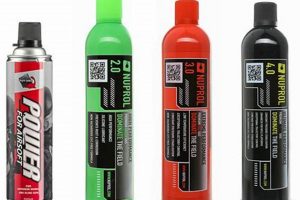
These devices are a type of airsoft replica firearm that utilizes compressed gas as their propellant. This gas, typically either green gas, propane (with an adapter), or CO2, is stored within the gun’s magazine or a separate reservoir. Upon triggering the mechanism, the gas is released, propelling the projectile (usually a 6mm plastic BB) down the barrel. An example would be a pistol replica used in simulated combat scenarios, relying on a magazine filled with green gas to fire BBs.
Their significance lies in their realism and performance characteristics. The use of gas often results in a more realistic recoil sensation, enhancing the user’s immersion. Moreover, these systems often allow for higher velocities and greater shot consistency compared to their spring-powered counterparts. Historically, these variants have evolved from simple gas-powered mechanisms to more sophisticated systems incorporating blowback action and adjustable hop-up units, increasing their accuracy and range. This evolution reflects a growing demand for realistic and performance-oriented airsoft replicas.
The following sections will delve into the specific mechanisms, types, maintenance, and considerations relevant to these gas-propelled airsoft devices. Discussions will cover the advantages and disadvantages of different gas types, optimal maintenance strategies, and the factors that influence performance and longevity.
Operational and Maintenance Recommendations
The following recommendations are intended to optimize performance and extend the service life of devices that use compressed gas as a propellant for airsoft projectiles.
Tip 1: Select the Appropriate Gas. Green gas and propane (with an adapter) are generally suitable for most models designed for these propellants. CO2, while offering higher power, may damage systems not specifically rated for its higher pressure. Consult the manufacturer’s specifications before use.
Tip 2: Lubricate Regularly. Silicone oil is crucial for maintaining the integrity of O-rings and internal components. Apply a light coating to the magazine valve, gas route bucking, and any other moving parts that come into contact with the gas. Avoid petroleum-based lubricants, as they can degrade rubber seals.
Tip 3: Store Magazines Properly. When not in use, store magazines with a small amount of gas to prevent the O-rings from drying out and cracking. Avoid fully emptying the magazine after each use.
Tip 4: Clean the Barrel. Regular cleaning of the inner barrel is essential for maintaining accuracy. Use a cleaning rod and a small patch of silicone oil to remove any debris that may accumulate. A dirty barrel can significantly reduce range and accuracy.
Tip 5: Inspect for Leaks. Periodically check the magazine and the internal components for gas leaks. Submerge the magazine in water to identify the source of any leaks. Replace any damaged O-rings or seals promptly.
Tip 6: Maintain Consistent Fill Pressure. Inconsistent gas pressure can lead to variations in shot power and accuracy. Invest in a quality regulator if using an external gas source to ensure consistent pressure output.
Tip 7: Consider Operating Temperature. Gas pressure is affected by temperature. Colder temperatures reduce gas pressure, leading to decreased performance. Warmer temperatures increase pressure, which may exceed the recommended limits of the system. Adjust gas type or use a regulator to compensate for temperature fluctuations.
Adhering to these recommendations promotes consistent operation, reduces the likelihood of malfunctions, and extends the overall operational lifespan. The long-term benefit of proper maintenance outweighs the initial investment of time and resources.
The final section will present safety considerations and responsible usage guidelines.
1. Propellant Options

The selection of propellant is a critical determinant in the functionality and performance of compressed gas airsoft devices. Propellant choice dictates the operational pressure within the system, directly influencing the projectile’s velocity and the felt recoil. The most common propellants include green gas, propane (often used with an adapter), and CO2. Each possesses distinct pressure characteristics that necessitate compatibility with the device’s internal components. For instance, utilizing CO2 in a device designed solely for green gas can lead to component failure due to the significantly higher pressures involved. A real-world example involves pistol models, where some are explicitly designed for CO2, featuring reinforced valves and robust construction to withstand the increased stress, while others are only suitable for green gas to maintain safe operation and prevent damage. Therefore, understanding the correlation between propellant and device compatibility is paramount.
Furthermore, propellant selection affects the device’s performance under varying environmental conditions. Green gas and propane exhibit a pressure decrease in colder temperatures, leading to a reduction in projectile velocity and overall performance. Conversely, CO2 is less susceptible to temperature-induced pressure fluctuations, making it a potentially more reliable choice in colder environments, provided the device is compatible. Practical application of this knowledge dictates that users in colder climates may opt for CO2-compatible systems or adapt their green gas/propane systems by using higher pressure variants (if device compatibility allows). The correct propellant choice can substantially influence gameplay consistency and tactical advantage.
In summary, propellant options are not merely interchangeable fuel sources; they represent a foundational design consideration impacting device durability, performance consistency, and adaptability to environmental conditions. Incorrect propellant selection poses a risk of damage or malfunction, while informed selection maximizes performance and extends the lifespan of the airsoft device. Awareness of these interdependencies facilitates informed decision-making for users of gas-powered systems.
2. Internal Mechanisms

The functionality of gas-powered airsoft replicas is fundamentally dependent on their internal mechanisms. These components mediate the release of compressed gas to propel a projectile. A malfunction in any of these mechanisms directly impacts the device’s ability to operate effectively. For example, a damaged or worn-out valve within the gas magazine can lead to gas leakage, resulting in reduced projectile velocity and, ultimately, rendering the device inoperable. Similarly, issues with the hammer assembly or firing pin mechanism can prevent the controlled release of gas, disrupting the firing sequence.
Specific internal mechanisms, such as the blowback system, significantly influence the operational realism of these airsoft devices. A blowback system utilizes a portion of the released gas to cycle the slide or bolt, simulating the recoil action of a real firearm. This feature enhances user experience and training applications. However, the increased complexity of blowback systems necessitates more frequent maintenance and introduces additional points of potential failure. Another critical mechanism is the hop-up unit, responsible for imparting backspin to the projectile. Accurate hop-up adjustment is essential for achieving optimal range and trajectory. Improperly adjusted or damaged hop-up units can significantly degrade accuracy and effective range.
Understanding the intricacies of these internal mechanisms is crucial for effective troubleshooting and maintenance. Regular inspection, cleaning, and lubrication of internal components are essential for ensuring reliable operation. A comprehensive understanding allows for informed decision-making regarding upgrades, repairs, and overall device management. Furthermore, knowledge of internal mechanisms facilitates the safe and responsible handling of these airsoft replicas, mitigating the risk of accidental discharge or component failure during operation.
3. Performance Metrics

Performance metrics are quantifiable indicators used to evaluate the operational effectiveness and efficiency of gas-powered airsoft devices. These metrics provide a standardized means of assessing various aspects of the devices, from projectile velocity to gas consumption, informing users about the capabilities and limitations of specific models and configurations.
- Projectile Velocity (Feet Per Second – FPS)
FPS measures the speed at which the projectile exits the barrel, directly influencing the range and impact force. Higher FPS values generally correspond to greater effective range. However, regulatory limits often dictate maximum allowable FPS levels for safety purposes. For example, a device achieving 400 FPS with a 0.20g BB may be suitable for outdoor play, while indoor facilities typically require lower FPS limits to minimize the risk of injury. This metric is crucial for determining a device’s suitability for specific gameplay scenarios.
- Rate of Fire (Rounds Per Minute – RPM)
RPM indicates the number of projectiles that can be fired within a minute. This metric is particularly relevant in automatic or burst-fire modes, influencing the device’s suppressive fire capabilities. A higher RPM can provide a tactical advantage in certain situations. However, excessive RPM can also lead to increased gas consumption and reduced accuracy. Consider a model with an adjustable rate of fire, allowing the user to balance suppressive capabilities with gas efficiency.
- Gas Efficiency (Shots Per Gas Charge)
This metric quantifies the number of projectiles that can be fired from a single charge of gas. Gas efficiency is influenced by factors such as the device’s internal design, operating temperature, and the type of gas used. Higher gas efficiency translates to reduced operational costs and less frequent magazine refills during gameplay. This makes it a crucial metric for users engaging in prolonged skirmishes or training exercises.
- Accuracy (Grouping Size at Specific Distances)
Accuracy measures the consistency with which projectiles impact a target at a given distance. It is typically assessed by measuring the grouping size (diameter of the area containing a series of shots) at various distances. Factors such as barrel quality, hop-up performance, and projectile quality influence accuracy. Superior accuracy translates to a greater probability of hitting a target, enhancing the device’s effectiveness in both offensive and defensive roles. Measurements are commonly taken at ranges like 50 feet or 100 feet to evaluate effective accuracy.
These performance metrics provide a comprehensive overview of gas-powered airsoft device capabilities. Evaluating these factors allows users to make informed decisions regarding device selection, customization, and operational tactics. The interrelation of these metrics dictates the overall effectiveness of the replica in various combat scenarios, thereby highlighting the importance of considering all factors, rather than focusing solely on one particular aspect such as FPS.
4. Maintenance Regimen

The operational longevity and consistent performance of gas-powered airsoft devices are intrinsically linked to the implementation of a rigorous maintenance regimen. The complexities inherent in their pneumatic systems, involving pressurized gases and intricate valve mechanisms, render them particularly susceptible to degradation if not properly maintained. A deficient maintenance schedule precipitates a cascade of detrimental effects, including decreased projectile velocity, gas leakage, inconsistent firing rates, and, ultimately, component failure. Consider, for example, a scenario where the O-rings within the gas magazine are not regularly lubricated. The drying and subsequent cracking of these seals results in gas leakage, diminishing the available pressure and impairing the device’s ability to propel projectiles with the intended force.
Effective maintenance protocols encompass several critical aspects. Regular cleaning of the inner barrel is paramount for maintaining accuracy, as accumulated residue can disrupt the projectile’s trajectory. Lubrication of moving parts, such as valves, seals, and the hammer assembly, using appropriate silicone-based lubricants minimizes friction and prevents premature wear. Inspection for gas leaks is also essential, requiring periodic checks of magazines, gas lines, and internal components. Timely replacement of worn or damaged parts, such as O-rings and buckings, is crucial for preventing more extensive system failures. The practical implications of these maintenance practices are significant; a well-maintained device exhibits consistent performance characteristics, provides a more enjoyable user experience, and minimizes the need for costly repairs or replacements.
In conclusion, the maintenance regimen is not merely an ancillary aspect of owning a gas-powered airsoft device; it is a fundamental component directly influencing the device’s functionality, reliability, and overall lifespan. Challenges in adhering to a consistent maintenance schedule may arise from a lack of user knowledge or a perception of time commitment. Overcoming these challenges requires accessible educational resources and a clear understanding of the long-term benefits associated with proactive maintenance. The implementation of a comprehensive maintenance regimen is thus essential for maximizing the performance and value of these specialized devices.
5. Safety Protocols

Adherence to rigorous safety protocols is paramount when operating gas-powered airsoft devices. These devices, while designed for recreational use, are capable of causing injury if mishandled or used irresponsibly. Strict adherence to safety guidelines mitigates potential risks associated with compressed gas systems and projectile impact, ensuring the well-being of users and bystanders.
- Eye Protection
Appropriate eye protection is mandatory at all times when operating or in the vicinity of operational gas-powered airsoft devices. Full-seal goggles or masks specifically designed for airsoft provide a barrier against projectile impact, preventing potential eye injuries. Standard eyewear or safety glasses may not provide sufficient protection against high-velocity projectiles. For example, many airsoft fields mandate the use of ANSI Z87.1 rated eye protection to ensure adequate impact resistance. Failure to wear appropriate eye protection can result in severe and permanent vision impairment.
- Safe Handling Practices
Safe handling practices encompass a range of precautions, including treating every device as if it were loaded, keeping the muzzle pointed in a safe direction, and ensuring the finger is off the trigger until ready to fire. Accidental discharges can occur due to mishandling, leading to unintended injuries or property damage. For instance, prior to performing maintenance or storage, the device should be de-gassed and unloaded to eliminate the risk of accidental discharge. Emphasizing proper handling techniques minimizes the likelihood of unintentional incidents.
- Velocity Limits and Range Considerations
Operating gas-powered airsoft devices within established velocity limits is crucial for minimizing the risk of injury. Exceeding maximum velocity limits, often regulated by airsoft fields or organizations, increases the potential for projectile-related injuries. Furthermore, understanding the effective range of the device is essential for avoiding unintended impacts beyond designated play areas. For example, adjusting the hop-up system can significantly extend the range, necessitating careful consideration to ensure projectiles remain within safe zones. Consideration of both velocity and range parameters is crucial in maintaining a safe operational environment.
- Storage and Transportation
Proper storage and transportation protocols are necessary to prevent unauthorized access and accidental discharges. Storing devices in secure cases or containers, unloaded and de-gassed, minimizes the risk of unintentional activation. During transportation, the devices should be concealed and transported in a manner compliant with local regulations. For instance, many jurisdictions require that airsoft replicas be transported in locked cases to prevent misidentification as real firearms. Adherence to these protocols safeguards against misuse and potential legal repercussions.
These safety protocols collectively contribute to a responsible and safe environment for operating gas-powered airsoft devices. Neglecting any of these protocols can have severe consequences, including physical injuries, property damage, and legal liabilities. A thorough understanding and consistent application of these safety measures are essential for all users.
6. Regulation Compliance
Regulation compliance is an indispensable aspect of owning and operating gas-powered airsoft devices. The legal landscape surrounding these devices varies significantly across jurisdictions, necessitating a thorough understanding of local, regional, and national regulations to avoid potential legal ramifications.
- Velocity Restrictions and Energy Limits
Many jurisdictions impose velocity restrictions or energy limits on airsoft devices, typically measured in feet per second (FPS) with a standard weight projectile. Exceeding these limits can result in legal penalties, including fines, confiscation of the device, or even criminal charges. For instance, some regions may restrict FPS to 350 or 400 with 0.20g BBs, while others may regulate the energy output in Joules. Compliance with these regulations requires careful consideration of the device’s performance characteristics and potential modifications.
- Marking and Identification Requirements
Certain jurisdictions mandate specific markings or identification features on airsoft devices to distinguish them from actual firearms. These markings may include orange tips, brightly colored receivers, or permanent serial numbers. The absence of these markings can lead to misidentification by law enforcement, potentially resulting in serious legal consequences. For example, some countries require a prominent orange tip on the barrel to indicate that the device is not a real firearm. Adherence to these marking requirements is essential for avoiding confusion and ensuring legal compliance.
- Age Restrictions and Usage Limitations
Age restrictions and usage limitations are frequently imposed to regulate who can possess and operate gas-powered airsoft devices and where they can be used. These restrictions may prohibit minors from owning or using these devices without adult supervision or restrict their use to designated airsoft fields or private property. Violations of these age restrictions or usage limitations can result in legal penalties for both the user and their guardians. For example, many jurisdictions prohibit the use of airsoft devices in public areas, citing safety concerns and potential disturbances. Compliance with these regulations requires awareness of age limits, permissible locations, and responsible usage practices.
- Import and Export Regulations
Import and export regulations govern the cross-border movement of gas-powered airsoft devices. These regulations may require specific permits, licenses, or certifications, and they may prohibit the import or export of certain types of devices altogether. Failure to comply with these regulations can result in confiscation of the device, fines, or even criminal charges. For instance, some countries may restrict the import of airsoft devices that closely resemble real firearms, citing concerns about illegal firearm trafficking. Compliance with these regulations requires thorough research of the import and export laws of both the originating and destination countries.
These regulatory considerations underscore the importance of responsible ownership and operation of gas-powered airsoft devices. Navigating this complex legal landscape requires due diligence and adherence to all applicable regulations to avoid legal entanglements and promote safe and responsible airsoft practices.
Frequently Asked Questions
The following addresses commonly encountered questions regarding gas-powered airsoft devices. The intent is to provide clarity on operational characteristics, maintenance requirements, and safety considerations.
Question 1: What are the primary advantages of utilizing a gas-powered airsoft device compared to electric or spring-powered alternatives?
Gas-powered systems often provide a more realistic shooting experience due to the presence of recoil, particularly in models featuring blowback mechanisms. They can also deliver higher projectile velocities and more consistent performance compared to spring-powered devices. However, they typically require more frequent maintenance and are subject to performance variations due to temperature fluctuations.
Question 2: What types of gas are commonly used to power these devices, and what are the key differences between them?
The most common propellants are green gas, propane (with an adapter), and CO2. Green gas and propane are similar in pressure output and are generally suitable for most gas-powered airsoft devices. CO2 offers higher pressure but may damage systems not designed for it. Propane is more cost-effective but possesses a distinct odor unless specifically treated.
Question 3: How does temperature affect the performance of a gas-powered airsoft device?
Temperature significantly influences gas pressure. Colder temperatures reduce pressure, leading to decreased projectile velocity and range. Warmer temperatures increase pressure, potentially exceeding the device’s safe operating limits. Adjustments to gas type or the use of a regulator may be necessary to compensate for temperature fluctuations.
Question 4: What are the essential maintenance procedures for ensuring the longevity and optimal performance of a gas-powered airsoft device?
Essential maintenance includes regular lubrication of O-rings and internal components with silicone oil, cleaning the inner barrel to remove residue, inspecting for gas leaks, and storing magazines with a small amount of gas to prevent seal degradation. Neglecting these procedures can lead to performance decline and component failure.
Question 5: What safety precautions should be observed when handling a gas-powered airsoft device?
Mandatory safety precautions include wearing appropriate eye protection, treating the device as if it were loaded at all times, keeping the muzzle pointed in a safe direction, and storing the device unloaded and de-gassed when not in use. Failure to adhere to these precautions can result in serious injuries.
Question 6: Are there any legal restrictions or regulations governing the ownership and use of gas-powered airsoft devices?
Legal restrictions vary significantly by jurisdiction. Common regulations include velocity limits, marking requirements (e.g., orange tips), age restrictions, and restrictions on usage in public areas. Thorough research of local and regional laws is essential to ensure compliance.
These responses provide a foundational understanding of gas-powered airsoft devices. Adherence to these principles promotes safe and responsible operation.
The following section offers supplementary resources for further exploration.
Conclusion
This exposition has detailed critical aspects of the compressed gas-propelled airsoft mechanism. The exploration encompassed propellant options, internal mechanisms, performance metrics, required maintenance, safety protocols, and regulatory compliance. A comprehensive understanding of these elements is essential for responsible ownership and operation. Each area influences not only performance but also safety and legality.
Continued diligence in adhering to safety guidelines and a commitment to staying informed about evolving regulations are paramount. The responsible utilization and maintenance of these systems ensure both individual well-being and the sustained viability of the airsoft activity.