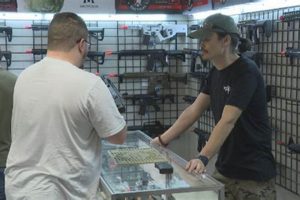
The legality surrounding airsoft activities and equipment within the state of New Jersey dictates the permissible use, ownership, and transportation of these items. Compliance with these regulations is crucial for individuals engaging in the sport or hobby and for retailers selling related products.
Understanding these regulations promotes safe practices and prevents legal complications. Knowledge of age restrictions, permissible locations for play, and the proper handling of airsoft devices contributes to responsible participation. Awareness of these stipulations also helps ensure that the sport remains a safe and enjoyable activity for all involved, while simultaneously protecting the community.
The following sections will explore specific aspects of state law related to airsoft markers, including acceptable modifications, transportation guidelines, and areas where use is permitted or prohibited. A deeper dive into these topics will provide a more complete understanding of the legal framework.
Considerations for Adhering to Airsoft Regulations in New Jersey
The following guidelines emphasize key aspects of state regulations pertaining to airsoft equipment and activities, designed to minimize legal risks.
Tip 1: Age Verification: Retailers should rigorously verify the age of purchasers to ensure compliance with minimum age requirements for owning or operating airsoft devices. Demand proof of age and maintain records of verification.
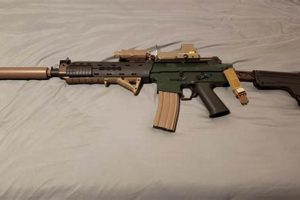
Tip 2: Marker Modification Restrictions: Airsoft markers must not be altered to resemble functional firearms. Refrain from modifying the device’s appearance to mimic real weapons, as this could lead to legal penalties.
Tip 3: Transportation Protocol: When transporting airsoft markers, they should be stored in a closed and opaque container. Keep them unloaded and separate from ammunition to mitigate misinterpretation as a threat.
Tip 4: Permissible Locations: Airsoft activities should be confined to designated fields or private property with express permission. Avoid using airsoft markers in public areas or any location where doing so might cause alarm or be misconstrued as a dangerous situation.
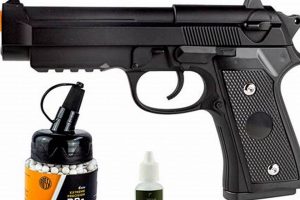
Tip 5: Orange Tip Requirement: Ensure all airsoft markers have a blaze orange tip permanently affixed. This visual identifier is crucial for differentiating them from actual firearms and prevents potential misunderstandings with law enforcement.
Tip 6: Local Ordinances: Investigate and comply with any local municipal ordinances that may supplement state regulations regarding airsoft activities. Specific towns or counties may have additional restrictions.
Adherence to these guidelines facilitates responsible participation in the sport while minimizing potential legal repercussions. Diligence and awareness are paramount in navigating the regulatory landscape.
The subsequent sections will delve into additional compliance strategies and address common misconceptions surrounding airsoft regulations.
1. Age restrictions

Age restrictions are a primary component of regulations regarding the possession and use of airsoft equipment within New Jersey. These restrictions aim to prevent misuse, promote safety, and align airsoft activities with responsible practices. Non-compliance can result in legal penalties for both the individual violating the restriction and any retailer enabling the violation.
- Minimum Age for Purchase and Possession
New Jersey law establishes a minimum age for purchasing and possessing airsoft guns. This age is typically 16 for having airsoft guns. This regulation is intended to prevent minors from acquiring airsoft equipment without parental or guardian supervision, mitigating the risk of accidental injuries or misuse. Retailers are legally obligated to verify the age of purchasers. Failure to do so can result in fines and potential legal action.
- Parental/Guardian Consent for Minors
Even if an individual meets the minimum age requirement, parental or guardian consent may be necessary, particularly for those under 18. This requirement ensures that adults are aware of and responsible for the minor’s airsoft activities. Parental consent often involves written permission or direct supervision during the use of airsoft equipment. This safeguard aims to create a more responsible environment for young participants and prevent unsupervised or reckless behavior.
- Age-Specific Restrictions on Usage
Certain locations or airsoft fields may impose additional age-specific restrictions on airsoft activities. These restrictions might involve segregating players by age groups to ensure fair play and minimize potential injuries due to disparities in experience or physical maturity. Airsoft facilities frequently require participants to present valid identification to verify their age and eligibility to participate. These measures contribute to a safer and more controlled environment for all participants.
- Legal Consequences of Violations
Violations of age restriction laws can result in various legal consequences, including fines, confiscation of airsoft equipment, and potential criminal charges. Retailers who sell airsoft guns to underage individuals face legal action. Similarly, individuals who provide airsoft guns to minors in violation of the law may be held liable for any resulting damages or injuries. These penalties are designed to deter non-compliance and reinforce the importance of adhering to age-related regulations.
In conclusion, age restrictions are a critical aspect of New Jersey regulations. The legal ramifications associated with these stipulations demonstrate the significance of enforcing age limits to promote safety and prevent misuse of airsoft equipment. Understanding and complying with these age-related rules are essential for all participants and retailers involved in airsoft activities within the state.
2. Orange tip requirement

The orange tip requirement serves as a crucial visual indicator distinguishing airsoft devices from actual firearms within New Jersey. This requirement is a fundamental component of state law. Its primary effect is to minimize the risk of misidentification by law enforcement and the general public, thereby preventing potentially dangerous situations. For example, the presence of a clearly visible orange tip can prevent an airsoft gun from being mistaken for a real weapon during transportation or in public areas, thereby reducing the likelihood of a confrontation with law enforcement.
The orange tip’s importance stems from its role in preventing misinterpretation and ensuring public safety. The absence of an orange tip or any attempt to conceal or remove it can lead to severe legal repercussions, including confiscation of the airsoft device, fines, and potential criminal charges. Retailers are obligated to sell airsoft guns with a permanently affixed orange tip. Individuals are prohibited from altering or removing this feature. This regulatory measure ensures a consistent visual standard, aiding law enforcement in swiftly identifying airsoft devices and differentiating them from actual firearms.
In summary, the orange tip requirement is an essential aspect of responsible airsoft practices and compliance with New Jersey law. The challenge of ensuring consistent adherence to this regulation involves both the diligent enforcement by authorities and the commitment of airsoft enthusiasts and retailers to comply with the law. This compliance is vital to maintain safety and responsible use of airsoft equipment.
3. Transportation rules

Transportation regulations are a crucial component of the legal framework governing airsoft activities within New Jersey. These rules are designed to minimize potential risks associated with the movement of airsoft devices, ensuring public safety and preventing misinterpretation by law enforcement.
- Secure Containment Mandate
New Jersey law dictates that airsoft guns must be transported in a closed and opaque case or container. This requirement aims to prevent the device from being visible during transit, which could cause alarm or be mistaken for a real firearm. For example, an airsoft gun transported in a locked hard case in the trunk of a vehicle complies with this regulation, while carrying it openly in the back seat does not. Compliance reduces the potential for misunderstandings and ensures that the device is not readily accessible.
- Separation of Components
A best practice for adhering to transportation regulations involves storing airsoft guns separately from ammunition or any accessories that could enable their immediate use. This measure further reduces the risk of misinterpretation and demonstrates a commitment to responsible handling. For instance, an airsoft gun should be transported in one container while the BBs and magazines are stored in a separate compartment or bag. This separation ensures that the device cannot be readily deployed during transport.
- Direct Route Requirement
Transportation of airsoft devices should ideally follow a direct route from one permissible location to another, such as from a residence to a designated airsoft field. Unnecessary stops in public areas or deviations from a direct path could raise suspicion and increase the likelihood of encountering law enforcement. For example, making multiple stops at stores or loitering in public parks while transporting an airsoft gun could be viewed as irresponsible behavior and may attract unwanted attention.
- Legal Destinations Only
Airsoft guns may only be transported to locations where their use is permitted by law, such as licensed airsoft fields or private property with the owner’s consent. Transporting these devices to prohibited areas, such as school zones or government buildings, is a violation of the law and can result in serious consequences. It is incumbent upon the individual transporting the airsoft gun to verify that the intended destination is legally sanctioned for airsoft activities.
Adherence to these transportation regulations is essential for all individuals involved in airsoft activities within New Jersey. By following these guidelines, participants contribute to public safety, minimize the risk of legal complications, and demonstrate responsible gun ownership. Compliance reinforces the legitimacy of the sport and promotes positive interactions with law enforcement and the community.
4. Permitted locations
Within the legal framework governing airsoft activities in New Jersey, the designation of permissible locations constitutes a critical component. The concept of “permitted locations” directly affects compliance with state law. The state’s regulations restrict the use of airsoft devices to specific areas, thus preventing their operation in zones where they could pose a risk to public safety or cause alarm. For example, licensed airsoft fields, private properties with explicit owner consent, and designated shooting ranges generally qualify as permitted locations. Conversely, public parks, school zones, and government facilities are typically prohibited, and the illegal use of airsoft guns there can trigger penalties.
The identification and adherence to permitted locations for airsoft activities in New Jersey are vital for several reasons. Firstly, it ensures the safety and security of the general public by confining airsoft play to controlled environments. Secondly, it protects airsoft participants from potential legal repercussions, such as fines or confiscation of equipment, that may result from unauthorized use. Lastly, responsible participation in airsoft promotes a positive image of the sport and helps maintain the community’s support. An example could be an airsoft club securing permission from a private landowner to use their property for organized games, after confirming it is not within restricted areas by local ordinances. This action shows consideration for the law, respects the sport and its players, and also shows how community building occurs with this legal designation.
In conclusion, the concept of permitted locations is fundamental to responsible and lawful airsoft participation within New Jersey. The importance of adhering to these designations cannot be overstated, as it directly correlates with maintaining safety, avoiding legal penalties, and fostering a positive perception of the sport. Recognizing and respecting the restrictions on permissible locations is not merely a suggestion but a legal necessity for all individuals engaging in airsoft activities. Challenges include the necessity for continuous awareness of zoning regulations and securing the necessary permission from private property owners.
5. Modification limitations
Modification limitations are a significant determinant in the lawful operation of airsoft equipment within New Jersey. State statutes impose restrictions on alterations made to airsoft devices, primarily aimed at preventing their conversion into functional firearms or creating a resemblance that could cause alarm. These limitations serve to maintain a clear distinction between recreational airsoft guns and potentially dangerous weapons. For example, altering an airsoft gun to fire projectiles at a velocity exceeding legal limits, or modifying its external appearance to replicate a specific firearm model, constitutes a violation of modification limitations and thus, conflicts with established law.
The cause and effect relationship between prohibited modifications and legality is direct. Legal repercussions, including fines and confiscation of equipment, are triggered by alterations that contravene the mandated limitations. An illustrative scenario involves an airsoft enthusiast who replaces internal components to increase the device’s firing power beyond legally permissible levels. If discovered, this modification renders the airsoft gun illegal, subjecting the individual to potential legal penalties. Adherence to these restrictions is not merely a suggestion but a legal requirement for all participants and retailers involved in airsoft activities in New Jersey. Furthermore, it protects law enforcement and civilians from confusing modified equipment with real dangerous firearms.
In summary, modification limitations are an indispensable component of airsoft legality within New Jersey. Understanding and complying with these restrictions is crucial for ensuring responsible participation in the sport and avoiding legal complications. The challenge lies in the balance between individual customization and adherence to safety standards, necessitating vigilance among airsoft enthusiasts and diligent enforcement by regulatory bodies. Linking back to the broader theme, modification limitations exemplify the state’s efforts to regulate airsoft activities in a manner that safeguards public safety while allowing for recreational engagement.
6. Local ordinances
Local ordinances represent a critical, and often overlooked, layer within the legal framework governing airsoft activities in New Jersey. While state law provides a broad set of regulations pertaining to airsoft devices, individual municipalities retain the authority to enact supplementary restrictions that can significantly impact airsoft activities within their jurisdiction. Therefore, an understanding of state regulations alone is insufficient to guarantee compliance; adherence to local ordinances is equally essential. Failure to comply with local ordinances, even if one is in compliance with state law, can result in legal penalties, including fines and confiscation of equipment.
The cause-and-effect relationship between local ordinances and airsoft legality is straightforward. Local ordinances dictate where and how airsoft activities may occur within a specific town or city. For example, a municipality may prohibit the use of airsoft guns in all public parks, even if state law allows their use in certain recreational areas. Another common local ordinance might regulate the hours during which airsoft games can be played, often restricting nighttime activities to minimize noise complaints. These ordinances are often determined by local government and enforcement rests on local police resources. Checking for local ordinance is a must before engaging in the sport. An airsoft enthusiast who uses an airsoft gun in a prohibited location is in violation of a local regulation, regardless of whether that activity complies with state law. Ignoring such local regulations creates legal liability, demonstrating the profound effect of local ordinances on airsoft legality. Not checking with them puts at risk any player.
In summary, local ordinances are an indispensable component of the legal landscape governing airsoft in New Jersey. Although state law provides a general framework, local municipalities possess the power to supplement these regulations with more specific restrictions. Therefore, those engaged in airsoft must thoroughly investigate and comply with all applicable local ordinances to ensure full compliance with the law. The challenge lies in remaining informed about the ever-changing landscape of local regulations, which often require proactive research and communication with local authorities. The impact of local ordinances extends beyond mere legal compliance. This action promotes community trust and fosters a more favorable environment for the sport.
7. Safe handling

The concept of safe handling is inextricably linked to the legality of airsoft activities within New Jersey. State regulations pertaining to airsoft are predicated on the assumption that participants will handle these devices responsibly, minimizing the risk of injury, property damage, and misinterpretation by law enforcement and the general public. Thus, adherence to safe handling practices is not merely a matter of personal responsibility but a prerequisite for maintaining the legal permissibility of airsoft within the state.
- Proper Storage and Transportation
Safe handling begins with appropriate storage and transportation practices. Airsoft devices must be stored in a manner that prevents unauthorized access, particularly by minors. During transportation, they should be unloaded, contained within a closed case or container, and kept separate from ammunition. Non-compliance with these protocols can result in legal repercussions, including fines and the confiscation of equipment. For instance, leaving an airsoft gun unsecured in a vehicle or transporting it openly in public violates safe handling practices and state law.
- Protective Gear Requirements
The use of appropriate protective gear, including eye protection, is a fundamental aspect of safe handling. Airsoft projectiles, while non-lethal, can cause serious injury to the eyes. Consequently, the failure to wear ANSI-rated eye protection during airsoft activities constitutes a breach of safe handling practices. Licensed airsoft fields in New Jersey typically mandate the use of protective gear, and failure to comply with these rules can result in expulsion from the facility and potential legal liability for any resulting injuries.
- Responsible Usage in Designated Areas
Safe handling extends to the responsible use of airsoft devices only in designated and legally permissible areas. Operating airsoft guns in public parks, school zones, or other unauthorized locations creates a significant risk of causing alarm or injury, and violates state law. Practicing safe handling involves restricting airsoft activities to licensed fields, private property with explicit permission, or other areas specifically authorized for such use. Disregarding these location-based restrictions can result in criminal charges.
- Maintenance and Modification Standards
Proper maintenance and adherence to modification limitations are also integral to safe handling. Modifying an airsoft gun to increase its firing velocity beyond legal limits or altering its appearance to resemble a real firearm not only violates state law but also compromises the safety of the device. Safe handling includes regularly inspecting and maintaining airsoft guns to ensure their proper functioning and refraining from any modifications that could render them unsafe or illegal.
These facets collectively highlight the crucial link between safe handling and the legality of airsoft in New Jersey. The extent to which individuals and organizations adhere to these practices directly impacts the viability and acceptance of airsoft as a legitimate recreational activity within the state. By prioritizing safe handling, participants not only minimize the risk of accidents and injuries but also contribute to fostering a responsible and legally compliant airsoft community.
Frequently Asked Questions
This section addresses frequently asked questions concerning the legal parameters governing airsoft activities and equipment within the state of New Jersey. The information provided is for informational purposes only and does not constitute legal advice.
Question 1: Is there a minimum age requirement for owning or using airsoft guns in New Jersey?
Yes, New Jersey law stipulates a minimum age for possessing and using airsoft devices. Individuals must be at least 16 years of age to legally own an airsoft gun. Retailers are obligated to verify the age of purchasers to ensure compliance. Parental supervision or consent may also be required for individuals under 18 years of age.
Question 2: What is the orange tip requirement for airsoft guns, and why is it important?
New Jersey law mandates that all airsoft guns have a permanently affixed blaze orange tip. This visual identifier distinguishes airsoft devices from actual firearms, minimizing the risk of misidentification by law enforcement and the general public. Altering or removing the orange tip is illegal and can result in legal penalties.
Question 3: Are there specific rules regarding the transportation of airsoft guns in New Jersey?
Yes, airsoft guns must be transported in a closed and opaque case or container. They should be unloaded and stored separately from ammunition. Transportation should be direct, avoiding unnecessary stops in public areas. These precautions mitigate the risk of misinterpretation and ensure safe transit.
Question 4: Where are airsoft activities legally permitted in New Jersey?
Airsoft activities are generally permitted at licensed airsoft fields, private properties with the owner’s explicit consent, and designated shooting ranges. Use in public parks, school zones, government facilities, and other unauthorized locations is prohibited and can result in legal action.
Question 5: Are there any restrictions on modifying airsoft guns in New Jersey?
Yes, state law imposes limitations on modifying airsoft guns. Alterations that increase the firing velocity beyond legal limits or that create a resemblance to actual firearms are prohibited. Such modifications can lead to legal penalties, including fines and confiscation of equipment.
Question 6: How can one ensure compliance with local ordinances related to airsoft activities?
Compliance requires proactive research and communication with local authorities. Individuals should contact their municipal government or local law enforcement agencies to inquire about any specific ordinances that may supplement state law. Adherence to local regulations is essential for avoiding legal complications.
Understanding and adhering to these regulations is crucial for ensuring responsible participation in airsoft activities and maintaining compliance with New Jersey law. Awareness of these guidelines helps promote safety and prevents legal issues.
The following section will summarize the key legal considerations for airsoft in New Jersey.
Airsoft Legal in NJ
This examination has provided an overview of the statutory and regulatory landscape governing airsoft activities within New Jersey. Key areas covered include age restrictions, the orange tip requirement, transportation protocols, permitted locations, modification limitations, and the relevance of local ordinances. Adherence to these stipulations constitutes the foundation of lawful engagement in the sport.
Continued diligence is crucial for all stakeholders involved in the airsoft community, including players, retailers, and facility operators. Staying informed of evolving regulations and prioritizing responsible practices remains paramount. The preservation of a safe and legally compliant environment will ensure the sustained viability of airsoft within the state.