![Airsoft Guns: Do I Need a License? [Laws Explained]](data:image/svg+xml;base64,PHN2ZyB4bWxucz0iaHR0cDovL3d3dy53My5vcmcvMjAwMC9zdmciIHdpZHRoPSI0NzQiIGhlaWdodD0iNjQiIHZpZXdCb3g9IjAgMCA0NzQgNjQiPjxyZWN0IHdpZHRoPSIxMDAlIiBoZWlnaHQ9IjEwMCUiIHN0eWxlPSJmaWxsOiNjZmQ0ZGI7ZmlsbC1vcGFjaXR5OiAwLjE7Ii8+PC9zdmc+ "Airsoft Guns: Do I Need a License? [Laws Explained] Ultimate Airsoft Guide for Beginners, Tactics & Gear Reviews")
The legal requirements surrounding the possession of airsoft guns vary considerably based on geographical location. The absence of a universal standard necessitates careful investigation into the specific laws of a given jurisdiction before acquiring such items. Some regions may classify these devices as toys, requiring no permits, while others consider them firearms, necessitating licenses and adherence to stringent regulations.
Understanding the legal landscape is crucial for responsible ownership and avoids potential legal ramifications. Historically, the regulation of these devices has evolved as their realism and capabilities have increased, leading to concerns about public safety and misuse. Compliance with local ordinances ensures responsible participation in the sport and protects individuals from unintentional violations of the law.
The following sections will delve into specific examples of regional regulations, discuss factors influencing legal classifications, and provide guidance on how to determine the requirements applicable to a particular individual’s location.
Guidance on Legal Compliance for Airsoft Gun Ownership
Navigating the legal requirements for owning an airsoft gun requires careful consideration of local, state, and federal regulations. The following tips offer guidance on ensuring full compliance.
Tip 1: Research Local Ordinances: Contact local law enforcement or municipal authorities to obtain the most current and specific regulations regarding airsoft guns. City and county ordinances may impose restrictions beyond those at the state or federal level.
Tip 2: Consult State Laws: State laws often classify airsoft guns differently, impacting permissible ages for ownership, storage requirements, and where the device may be used. Reviewing state statutes is critical for understanding the legal framework.
Tip 3: Understand Federal Regulations: While federal law does not generally regulate airsoft gun ownership, certain markings or modifications could potentially alter their classification under the National Firearms Act. Stay informed about federal interpretations of relevant laws.
Tip 4: Check Age Restrictions: Many jurisdictions have age limits for airsoft gun ownership or use. These age restrictions may require adult supervision or parental consent.
Tip 5: Secure Safe Storage: Laws may mandate secure storage of airsoft guns to prevent unauthorized access, particularly by minors. Consider using gun safes or trigger locks.
Tip 6: Understand Transportation Laws: Regulations often govern how airsoft guns may be transported, frequently requiring them to be unloaded, contained in a case, and kept out of plain view. Research transportation laws before moving an airsoft gun from one location to another.
Tip 7: Comply with Field Regulations: If participating in organized airsoft games, understand and adhere to the field’s specific rules, including velocity limits and protective gear requirements. This demonstrates responsible use and avoids potential incidents.
Adherence to these tips promotes responsible airsoft gun ownership and minimizes the risk of legal complications. Diligent research and proactive compliance are essential for navigating the regulatory landscape.
The subsequent sections will provide examples of legal variation and offer resources for further investigation.
1. Local regulations

Local regulations represent a primary determinant in whether a license is required to possess an airsoft gun. Municipalities and counties frequently enact ordinances that impose more stringent requirements than state or federal laws. These local rules can mandate permits, registration, or specific storage conditions, irrespective of broader legal frameworks. Failure to comply with these local ordinances can result in fines, confiscation of the device, or even legal charges, underscoring their critical role in responsible ownership.
For example, a city might classify airsoft guns as “replica firearms,” subjecting them to regulations similar to actual firearms. This could necessitate obtaining a permit analogous to a firearms license, undergoing background checks, and adhering to strict storage guidelines. Conversely, a neighboring municipality might treat airsoft guns as toys, requiring no registration or permits whatsoever. Consequently, individuals must proactively investigate the specific ordinances within their jurisdiction before purchasing or possessing an airsoft gun.
In summary, the connection between local regulations and the necessity of a license is direct and significant. Local ordinances can override or supplement state and federal laws, dictating whether permits, registration, or specific storage conditions apply. Individuals must prioritize researching local ordinances to ensure legal compliance and responsible ownership of airsoft guns. Ignoring this step can result in unforeseen legal consequences.
2. State laws

State laws exert a significant influence on the necessity of a license for airsoft gun ownership. These legal frameworks establish classifications for such devices, which, in turn, dictate whether permits, registration, or other restrictions apply. The variance across state lines is considerable, with some states treating airsoft guns akin to traditional firearms while others regulate them minimally. Therefore, the state in which an individual resides directly impacts their obligations regarding airsoft gun possession.
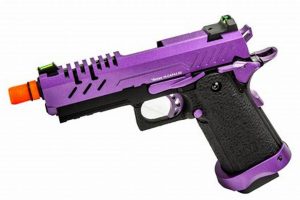
For instance, certain states mandate that airsoft guns possess specific markings, such as orange tips, to differentiate them from genuine firearms. Failure to comply with these marking requirements can result in confiscation and potential legal penalties. Furthermore, some state laws establish age restrictions for airsoft gun ownership, prohibiting minors from possessing these devices without adult supervision or parental consent. The practical significance of understanding state laws is that it informs responsible behavior and prevents unintentional violations of the law. Knowledge of state statutes allows individuals to comply with storage, transportation, and usage requirements, thereby mitigating the risk of legal repercussions.
In summary, the connection between state laws and the necessity of a license is a critical factor in determining an individual’s legal obligations related to airsoft gun ownership. Disparities in state regulations necessitate thorough research and understanding of the specific laws in a given jurisdiction. This proactive approach ensures compliance and promotes responsible engagement in airsoft activities. The patchwork nature of state laws presents a challenge for individuals relocating across state lines or engaging in airsoft activities in different states, highlighting the ongoing need for awareness and due diligence.
3. Federal oversight

Federal oversight of airsoft guns is relatively limited, primarily focusing on aspects related to importation and interstate commerce. Consequently, the direct impact of federal regulations on the requirement of a license for airsoft gun ownership is generally less pronounced than that of state and local laws. However, certain federal statutes and agencies can influence the regulatory landscape.
- Importation Regulations
The Bureau of Alcohol, Tobacco, Firearms and Explosives (ATF) regulates the importation of airsoft guns to ensure compliance with federal marking requirements. While an airsoft gun is not inherently considered a firearm under federal law, failure to comply with marking stipulations, such as the presence of a blaze orange barrel tip, can lead to seizure and potential penalties. This indirect influence on possession is relevant because improperly imported devices might face greater scrutiny at the state or local level, potentially triggering licensing requirements imposed by those jurisdictions.
- Interstate Commerce
Federal laws pertaining to interstate commerce can impact the sale and distribution of airsoft guns. For instance, federal regulations may govern the shipment of these devices across state lines, particularly concerning labeling and packaging requirements. While these laws do not directly mandate licensing for individual ownership, they contribute to the overall regulatory environment, ensuring accountability and traceability in the supply chain. This could indirectly affect ownership if state or local laws require documentation related to the provenance of the airsoft gun.
- National Firearms Act (NFA) Implications
Although typically not classified as firearms, airsoft guns could fall under the purview of the National Firearms Act (NFA) if modified to discharge a projectile via explosive means or if they are designed to resemble specific NFA-regulated items, such as short-barreled rifles or shotguns. Modification leading to NFA classification would necessitate compliance with federal registration and taxation requirements, effectively imposing a federal licensing regime. However, this scenario is relatively uncommon and arises from specific alterations rather than the inherent nature of the airsoft gun.
In summary, while federal oversight does not typically mandate a license for mere ownership of an unaltered airsoft gun, regulations related to importation, interstate commerce, and potential NFA classifications can indirectly influence state and local licensing requirements or trigger federal regulations in specific circumstances. Understanding the interplay between federal and sub-federal laws is crucial for ensuring full compliance and responsible ownership.
4. Age restrictions

Age restrictions frequently constitute a critical component in determining whether a license is required to possess an airsoft gun. Jurisdictions often impose age limits on the ownership and use of these devices, with consequences varying according to the applicable legal framework. In many instances, individuals below a specified age are prohibited from owning or using airsoft guns without adult supervision or parental consent, a regulation directly influencing the necessity for any form of permit or registration.
The imposition of age restrictions reflects concerns regarding the potential for misuse or accidental injury involving airsoft guns, especially among younger individuals. For example, some states require individuals under the age of 18 to obtain parental permission before purchasing an airsoft gun, and they must be supervised by an adult when using the device in public. This implicitly necessitates a form of adult responsibility, potentially obviating the need for a separate individual license for the minor but shifting the onus of responsible use onto the supervising adult. Conversely, certain municipalities may demand a specific permit or license, regardless of parental consent, for individuals below a designated age to possess an airsoft gun, underscoring the variability of age-related regulations across different locales.
In summary, the presence and nature of age restrictions represent a vital consideration in assessing whether licensing is required for airsoft gun ownership. The impact of age limitations ranges from mandatory adult supervision to outright prohibitions on possession without a permit, emphasizing the need for prospective owners to diligently investigate age-related regulations in their specific jurisdiction. Disregarding these restrictions can result in legal penalties for both the minor and any responsible adults, highlighting the practical significance of understanding and complying with age-based limitations.
5. Storage Mandates

Storage mandates represent a facet of airsoft gun regulation that can indirectly influence the necessity of a license. While storage requirements may not explicitly mandate licensing, compliance with these regulations is often a prerequisite for responsible ownership and can be a factor in determining legal permissibility.
- Safe Storage Requirements
Many jurisdictions implement safe storage laws that require airsoft guns to be stored unloaded and in a locked container, such as a gun safe or trigger lock, when not in use. Adherence to these requirements, while not a direct licensing procedure, demonstrates responsible ownership. Proof of compliance with safe storage laws can be a mitigating factor in legal proceedings if an airsoft gun is involved in an incident, even in the absence of a formal licensing requirement. Conversely, failure to comply with safe storage mandates can result in legal penalties, potentially including restrictions on future ownership of airsoft guns or other firearms.
- Accessibility Prevention
Storage mandates frequently aim to prevent unauthorized access to airsoft guns, particularly by minors or individuals prohibited from possessing firearms. These regulations may necessitate storing airsoft guns separately from ammunition or other related accessories. Compliance with accessibility prevention measures can contribute to a perception of responsible ownership, potentially influencing decisions related to licensing or permits at the local level. For instance, if a municipality is considering implementing licensing requirements for airsoft guns, a high rate of compliance with existing safe storage regulations might mitigate the perceived need for more stringent controls.
- Impact on Liability
Compliance with storage mandates can impact an individual’s liability in the event of an incident involving an airsoft gun. If an airsoft gun is stolen and subsequently used in a crime, demonstrating adherence to safe storage practices can reduce the owner’s potential legal culpability. Conversely, failure to comply with storage requirements can increase the likelihood of liability if the airsoft gun is misused. Although this connection is indirect, it underscores the importance of storage mandates as a component of responsible ownership, regardless of whether a formal license is required.
- Regulatory Alignment
Storage mandates often align with broader regulatory frameworks governing firearms and other potentially dangerous items. Jurisdictions that impose strict storage requirements for airsoft guns may be more likely to implement or consider licensing programs as part of a comprehensive approach to public safety. Conversely, areas with lax storage regulations may be less inclined to pursue licensing requirements, relying instead on individual responsibility and other less restrictive measures. This alignment indicates that storage mandates can be indicative of the overall regulatory climate surrounding airsoft guns, potentially influencing the likelihood of future licensing requirements.
In summary, storage mandates, while not directly equating to a licensing requirement, contribute to the overall regulatory landscape surrounding airsoft gun ownership. Compliance with these mandates demonstrates responsible ownership, potentially influencing legal perceptions and mitigation factors in liability scenarios. Moreover, the presence and stringency of storage mandates can reflect a jurisdiction’s broader approach to regulating potentially dangerous items, thereby indirectly affecting the likelihood of licensing requirements. Therefore, understanding and adhering to storage mandates is a critical aspect of responsible airsoft gun ownership, regardless of whether a formal license is currently required.
6. Transportation rules

Transportation rules represent a crucial, often overlooked, component in the overall regulatory environment surrounding airsoft gun ownership. While these rules may not directly mandate a license in every jurisdiction, they can significantly influence the practical need for and legal consequences of possessing such a device, particularly when moving it from one location to another. The stringency of transportation regulations often correlates with the perception of airsoft guns as potentially dangerous items, thus shaping the overall regulatory landscape.
Many jurisdictions mandate that airsoft guns be transported unloaded, encased in a suitable container (such as a gun case), and kept out of plain view during transport. Failure to adhere to these regulations can result in fines, confiscation of the airsoft gun, or even more severe legal penalties, particularly if the device is mistaken for a real firearm. In states or municipalities where licensing is not explicitly required for mere possession, strict transportation rules may effectively create a de facto need for documentation or proof of ownership. For example, possessing a bill of sale or other documentation during transport can help to clarify the device’s status and prevent misunderstandings with law enforcement officials. Moreover, in regions considering implementing licensing programs, the effectiveness of existing transportation regulations can influence the decision-making process. If current transportation rules are deemed inadequate to prevent misuse or unauthorized access, licensing may be viewed as a necessary additional measure.
In summary, the connection between transportation rules and the need for a license to possess an airsoft gun is nuanced but significant. Strict transportation regulations can create a practical need for documentation, serve as a proxy for licensing requirements in the absence of formal permits, and influence the broader regulatory environment. Prospective airsoft gun owners should thoroughly research and comply with all applicable transportation rules in their jurisdiction to avoid legal complications and ensure responsible ownership. Adherence to these rules demonstrates respect for public safety and reduces the likelihood of misunderstandings that could lead to unnecessary legal scrutiny.
7. Field requirements
Field requirements, while not typically dictating whether a license is needed for airsoft gun ownership outright, play a critical role in regulating airsoft activities and indirectly influencing the overall regulatory environment. The specific rules and regulations enforced at airsoft fields often serve as a practical layer of control, impacting how airsoft guns are used and perceived, thereby potentially shaping local perceptions and legal interpretations.
- Velocity Limits
Airsoft fields commonly enforce velocity limits, measured in feet per second (FPS), to ensure player safety. These limits often vary based on the type of airsoft gun used and the engagement distance. While exceeding these limits does not automatically trigger a licensing requirement, repeated violations or intentional disregard for velocity limits can result in expulsion from the field and potential reporting to local authorities. In jurisdictions where licensing is being considered, the prevalence of responsible field operations, including adherence to velocity limits, may mitigate the perceived need for stricter licensing laws.
- Protective Gear Mandates
Airsoft fields universally mandate the use of protective gear, most notably eye protection, to prevent injuries. Strict enforcement of these mandates contributes to a safety-conscious environment, reducing the likelihood of accidents and subsequent legal issues. A strong track record of protective gear compliance at airsoft fields can positively influence public perception of the sport, potentially alleviating concerns that might otherwise lead to calls for stricter regulation, including licensing.
- Gameplay Rules and Restrictions
Airsoft fields establish specific gameplay rules, such as minimum engagement distances, prohibited areas, and limitations on the use of certain types of airsoft guns. These rules are designed to promote fair play and prevent injuries. Violations of these rules can lead to penalties, including suspension or expulsion from the field. The consistent application of gameplay rules reinforces the idea that airsoft is a regulated activity with established standards of conduct, potentially reducing the perceived need for external regulation through licensing.
- Field Insurance and Permits
Many airsoft fields carry liability insurance to cover potential injuries or damages that may occur on their property. Additionally, some fields may be required to obtain local permits to operate legally. The presence of insurance and permits demonstrates a commitment to responsible operation and risk management, which can positively influence local authorities’ perception of the sport. Fields operating with valid insurance and permits may be viewed as self-regulating entities, reducing the pressure for additional licensing requirements.
In conclusion, field requirements, while not a direct substitute for licensing, create a framework of self-regulation that can impact the perception and legal treatment of airsoft guns. By promoting safety, responsible conduct, and adherence to established standards, airsoft fields contribute to a positive image of the sport, potentially mitigating the perceived need for more restrictive regulations, including licensing. The effectiveness of field-level self-regulation is a factor that local authorities may consider when evaluating the necessity of implementing licensing programs.
Frequently Asked Questions
The following questions address common inquiries regarding the licensing requirements for airsoft gun ownership. The information presented aims to clarify legal obligations and promote responsible ownership.
Question 1: Does federal law require a license to own an airsoft gun?
Federal law generally does not mandate a license for airsoft gun ownership. However, modifications that cause an airsoft gun to meet the definition of a firearm under the National Firearms Act would necessitate compliance with federal regulations, including registration and taxation.
Question 2: Are there age restrictions for airsoft gun ownership?
Age restrictions vary by jurisdiction. Many states and municipalities impose age limits on airsoft gun ownership and use, often requiring adult supervision or parental consent for individuals below a specified age.
Question 3: Do I need a license if the airsoft gun resembles a real firearm?
The resemblance to a real firearm can influence local regulations. Some jurisdictions may classify airsoft guns that closely resemble real firearms as “imitation firearms,” subjecting them to stricter regulations, potentially including licensing requirements.
Question 4: Are there any situations where an airsoft gun might be considered a firearm?
Yes. If an airsoft gun is altered to fire projectiles using explosive means or if it is designed or modified to resemble certain NFA-regulated items (e.g., short-barreled rifles), it may be classified as a firearm under federal law, triggering licensing and registration requirements.
Question 5: If I move to a different state, does my airsoft gun ownership status change?
Yes, moving to a different state may significantly alter airsoft gun ownership status. Each state has its own laws and regulations regarding airsoft guns, so it is crucial to research the specific requirements of the new state of residence.
Question 6: Where can I find accurate information about local airsoft gun laws?
Consult local law enforcement agencies, municipal authorities, and legal professionals to obtain the most current and specific regulations regarding airsoft guns in a particular jurisdiction. Online resources should be verified against official sources.
In summary, licensing requirements for airsoft guns vary greatly depending on location and specific circumstances. Thorough research and compliance with local, state, and federal regulations are essential for responsible ownership and avoiding legal complications.
The subsequent sections will provide resources for further investigation and legal consultation.
Do I Need a License to Own an Airsoft Gun?
The preceding analysis underscores the complex and variable nature of regulations pertaining to airsoft gun ownership. The necessity of a license is not a uniform legal requirement; rather, it hinges on a confluence of factors, including local ordinances, state statutes, federal oversight, age restrictions, storage mandates, transportation rules, and field requirements. Diligent investigation into the specific legal landscape of a given jurisdiction is paramount.
The responsibility for understanding and adhering to applicable laws rests solely with the individual. Failure to comply with pertinent regulations can result in significant legal consequences. Therefore, proactive engagement with local authorities and legal professionals is strongly encouraged to ensure responsible and lawful airsoft gun ownership.