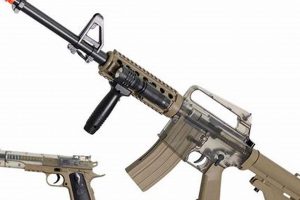
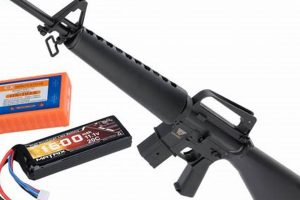
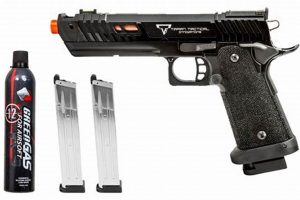
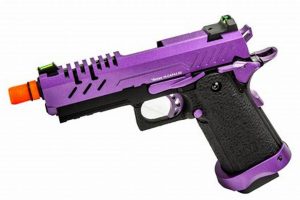
The potential for injury to a small animal from a projectile weapon warrants careful consideration. Airsoft guns, while designed primarily for recreational use, propel plastic pellets at relatively high speeds. The impact force generated by these pellets presents a risk of causing harm to vulnerable creatures.
Understanding the potential consequences is vital for responsible gun ownership and animal welfare. While airsoft is often viewed as a harmless game, the energy transfer upon impact can be significant, particularly for smaller animals. Historically, concerns about the inhumane treatment of animals have led to legislation and regulations regarding the use of projectile weapons.
This article will explore the factors that determine the level of potential injury, including pellet velocity, distance, and the squirrel’s physical characteristics. Ethical considerations surrounding the use of airsoft guns in areas inhabited by wildlife will also be addressed.
Mitigating Risk to Squirrels
Responsible usage is paramount. Airsoft activities conducted in areas frequented by wildlife require the adoption of specific precautions.
Tip 1: Select Appropriate Play Areas: Avoid areas known to be habitats for squirrels and other wildlife. Parks, wooded areas, and residential yards with established squirrel populations should be bypassed for airsoft activities.
Tip 2: Assess the Surroundings: Before engaging in airsoft, conduct a thorough scan of the immediate area. Identify any signs of squirrel activity, such as nests, feeding areas, or direct sightings, and adjust play boundaries accordingly.
Tip 3: Reduce Projectile Velocity: Lowering the power of airsoft guns can significantly reduce the risk of injury. Consider using models with adjustable velocity settings and opting for the lowest effective power level.
Tip 4: Enforce Strict Targeting Rules: Establish and adhere to rules that explicitly prohibit targeting or shooting at any animal. Emphasize ethical gameplay among all participants.
Tip 5: Use Biodegradable Pellets: While not directly impacting injury, using biodegradable pellets minimizes environmental impact if projectiles are inadvertently fired into natural areas.
Tip 6: Educate Participants: Ensure all players are aware of the potential risks to wildlife and the importance of responsible airsoft practices. Emphasize respect for the environment and its inhabitants.
Tip 7: Cease Activity Upon Sighting: If a squirrel or other animal is observed in the playing area, immediately halt the game. Resume only after the animal has left the vicinity.
Adherence to these tips significantly reduces the likelihood of harming squirrels during airsoft activities. Prioritizing animal welfare is a fundamental aspect of responsible recreation.
The subsequent section will address the legal and ethical considerations relevant to interacting with wildlife during recreational activities.
1. Projectile Velocity

Projectile velocity is a critical determinant in assessing the potential for injury to a squirrel from an airsoft gun. The speed at which a pellet travels directly influences the kinetic energy transferred upon impact. A higher velocity translates to greater kinetic energy, thereby increasing the likelihood of penetration, blunt force trauma, or internal injuries. For instance, a pellet traveling at 400 feet per second (FPS) possesses significantly more kinetic energy than one traveling at 200 FPS, resulting in a disproportionately greater risk to a small animal like a squirrel.
The relationship is further complicated by distance. Projectile velocity decreases over distance due to air resistance. While a pellet fired from close range may retain nearly its initial velocity, a pellet fired from a longer range will lose speed, potentially reducing the impact force. However, even a reduced velocity can still cause injury, particularly to sensitive areas such as the eyes or head. Real-world examples of small animals injured by seemingly low-impact projectiles demonstrate the importance of minimizing projectile velocity when airsoft activities are conducted in environments inhabited by wildlife. Understanding this velocity-impact relationship allows for a more informed assessment of risk.
In summary, projectile velocity is a primary factor determining the potential severity of injury to a squirrel. Lowering the velocity of airsoft projectiles, especially in areas where squirrels are present, is a direct and effective method of mitigating risk. The practical application of this understanding requires responsible gun ownership and a commitment to prioritizing animal welfare. While reduced velocity does not eliminate risk entirely, it substantially lowers the chances of serious harm.
2. Impact Energy

Impact energy, the kinetic energy transferred upon collision, directly correlates with the potential for harm inflicted by an airsoft pellet. The quantity of energy delivered to the squirrel’s body dictates the severity of the resultant injury. Greater impact energy increases the likelihood of tissue damage, bone fractures, or internal hemorrhaging. The relationship adheres to physical laws: kinetic energy is proportional to mass and the square of velocity. Consequently, even small variations in pellet speed significantly affect the impact energy and thus, the potential for harm.
Factors such as pellet material and point of impact further modulate the effect of impact energy. A hard, non-deformable pellet will concentrate the force over a smaller area, increasing the penetration risk. Conversely, a softer pellet may distribute the energy more broadly, leading to blunt force trauma. Impact location also plays a crucial role; a direct hit to the head or torso poses a considerably greater threat than a glancing blow to a limb. The small size and fragile skeletal structure of squirrels render them particularly vulnerable to injuries resulting from even relatively low-energy impacts. Reports of wildlife rehabilitation centers treating animals with injuries consistent with projectile weapons serve as practical examples of the damaging consequences.
Understanding the relationship between impact energy and potential harm underscores the importance of responsible airsoft gun usage. While airsoft is often perceived as a harmless recreational activity, the capacity for injury, particularly to vulnerable animals like squirrels, exists. By minimizing projectile velocity, selecting appropriate pellet materials, and avoiding airsoft activities in areas frequented by wildlife, the risk can be significantly reduced. Recognizing impact energy as a critical component in the injury equation fosters ethical decision-making and promotes animal welfare.
3. Squirrel Size

The physical dimensions of a squirrel are a pivotal factor in determining the severity of injury inflicted by an airsoft projectile. The relatively small size and delicate anatomy render them particularly vulnerable to harm from impacts that would be less significant to larger animals. The ratio of projectile size and energy to the target animal’s body mass is critical.
- Surface Area to Mass Ratio
A squirrels high surface area to mass ratio means that a greater proportion of its body is exposed to the impact force of a projectile. This increases the risk of both blunt force trauma and penetration. Unlike larger animals with more substantial muscle mass and subcutaneous fat, squirrels offer less natural protection against external forces. The relatively larger surface area also facilitates easier penetration by a projectile.
- Skeletal Vulnerability
The skeletal structure of a squirrel is lightweight and lacks the density and robustness of larger mammals. Consequently, even low-energy impacts can result in bone fractures, particularly in the limbs or ribs. The skull, which protects the brain, is also thinner and more susceptible to damage compared to that of larger animals. This increased skeletal vulnerability makes squirrels disproportionately susceptible to injuries from airsoft projectiles.
- Organ Proximity and Protection
The internal organs of a squirrel are situated in close proximity to one another and are not as well protected by surrounding tissue as in larger animals. This compactness increases the risk of multiple organ damage from a single projectile impact. The lungs, heart, and liver are particularly susceptible to injury. The absence of significant protective layers of fat or muscle allows for direct impact and subsequent damage to these vital organs.
- Limited Physiological Reserves
Due to their smaller size, squirrels possess limited physiological reserves to cope with injury. Blood loss, for instance, can quickly become life-threatening. The smaller circulatory volume and higher metabolic rate mean that the effects of trauma, such as shock or infection, can escalate rapidly. Consequently, an injury that might be survivable for a larger animal can prove fatal to a squirrel due to its reduced physiological capacity to recover.
In conclusion, squirrel size significantly amplifies the potential for injury from airsoft guns. The combination of a high surface area to mass ratio, skeletal vulnerability, proximity of internal organs, and limited physiological reserves renders them exceedingly susceptible to harm. These factors underscore the ethical imperative of avoiding airsoft activities in areas inhabited by squirrels to prevent unnecessary suffering and mortality.
4. Distance

The separation between the airsoft gun and the squirrel, quantified as distance, exerts a substantial influence on the severity of potential harm. While close proximity invariably heightens the risk, distance introduces complex variables that moderate the impact energy and trajectory of projectiles, affecting the ultimate outcome.
- Velocity Decay
Air resistance gradually decelerates an airsoft pellet during its flight. This velocity decay reduces the kinetic energy upon impact, lessening the potential for penetration and blunt force trauma. A pellet fired from a distance of 50 feet will possess considerably less velocity, and therefore less impact energy, than one fired from 10 feet. The degree of deceleration is dependent on pellet weight, shape, and atmospheric conditions. While distance may mitigate some risk, it does not eliminate it entirely; even a pellet traveling at a reduced velocity can still cause injury, particularly to sensitive areas.
- Trajectory Instability
As distance increases, the trajectory of an airsoft pellet becomes more susceptible to external factors such as wind. Deviations from the intended target become more pronounced, reducing the likelihood of a direct hit but also increasing the potential for unintended impacts on other areas of the squirrel’s body or even other animals. Trajectory instability introduces an element of unpredictability, making accurate targeting difficult and increasing the risk of accidental injury due to misdirection.
- Energy Dispersion
At longer ranges, the energy of the pellet is dispersed over a wider area upon impact. This dispersion reduces the concentration of force, potentially lessening the severity of localized injuries. However, the dispersed energy can still cause contusions or tissue damage, particularly if the impact occurs on a vulnerable area. Furthermore, the tumbling effect of the pellet at longer ranges can cause unpredictable wound patterns.
- Influence on Accuracy
Distance severely degrades accuracy, increasing the odds of missing a target entirely. While this can seem beneficial, it also raises the probability of unintentionally hitting an animal that was not the intended target. The inherent inaccuracy at longer ranges means that firing at a greater distance does not guarantee safety, and could, in fact, increase the likelihood of striking an animal unintentionally. Ethical considerations dictate against firing indiscriminately, regardless of range.
Distance serves as a modulating factor in the relationship between airsoft guns and potential injury to squirrels. While increased distance generally reduces impact energy, it introduces trajectory instability and does not eliminate the possibility of harm. The interplay of these factors underscores the importance of responsible airsoft practices, including avoiding areas inhabited by wildlife and adhering to strict targeting rules. Ethical gun ownership necessitates a comprehensive understanding of how distance influences both the probability and severity of potential injuries to small animals.
5. Pellet Material
The composition of airsoft pellets significantly influences the potential for harm to squirrels. Different materials exhibit varying degrees of hardness, density, and biodegradability, directly affecting impact force, penetration ability, and environmental impact.
- Plastic Pellets (Standard BBs)
The most common type of airsoft ammunition, plastic pellets are typically made from ABS or PLA plastics. These pellets, while relatively inexpensive and widely available, pose a significant risk to squirrels due to their hardness and potential for fragmentation upon impact. The non-biodegradable nature of many plastic pellets also contributes to environmental pollution, indirectly affecting wildlife habitats. Real-world examples include instances of small animals ingesting plastic debris, leading to digestive problems and other health issues.
- Biodegradable Pellets (Bio BBs)
Biodegradable pellets are designed to decompose naturally over time, reducing their environmental impact. These pellets are typically made from materials like cornstarch, resin, or other plant-based polymers. While they break down faster than traditional plastic pellets, the timeframe for complete decomposition can still be considerable, and they may still pose a risk to squirrels if ingested. Furthermore, the hardness and impact energy of biodegradable pellets are often comparable to those of standard plastic pellets, meaning they can still cause injury upon impact.
- Metal Pellets
The use of metal pellets in airsoft guns is generally discouraged and often prohibited due to their increased potential for causing serious injury. Metal pellets possess significantly higher density and hardness compared to plastic or biodegradable options. Their impact energy is substantially greater, making them capable of penetrating skin and causing severe tissue damage. Using metal pellets against a squirrel would likely result in severe injury or death. The illegality of using metal pellets in many jurisdictions reflects an understanding of their inherent danger.
- Paint-Filled Pellets
Paint-filled pellets, designed to mark targets, are generally less harmful than solid plastic or metal pellets due to their softer composition and tendency to rupture upon impact. However, even these pellets can cause injury if they strike sensitive areas such as the eyes or head. The chemical composition of the paint itself can also pose a risk if ingested by a squirrel. While less likely to cause serious physical trauma, paint-filled pellets are not entirely risk-free and should be used with caution in areas inhabited by wildlife.
The choice of pellet material directly influences the potential for injury to a squirrel. While biodegradable options offer some environmental benefits, they do not eliminate the risk of harm upon impact. Metal pellets present the greatest threat, while paint-filled pellets pose a lesser but still significant risk. Responsible airsoft practices necessitate careful consideration of pellet material to minimize the potential for harm to wildlife.
Frequently Asked Questions
This section addresses common inquiries regarding the potential for airsoft guns to cause harm to squirrels, providing factual information to promote responsible recreation.
Question 1: Can an airsoft gun pellet penetrate a squirrel’s skin?
Yes, under certain conditions. The likelihood of penetration depends on several factors, including pellet velocity, distance, and the pellet’s material. At close range, with a high-velocity airsoft gun, penetration is possible, particularly with hard plastic or metal pellets.
Question 2: What types of injuries can an airsoft gun inflict on a squirrel?
Airsoft guns can cause a range of injuries, including contusions, lacerations, bone fractures, and internal organ damage. The severity of the injury depends on the impact energy and the location of the hit. Impacts to the head or torso pose the greatest risk.
Question 3: Are biodegradable airsoft pellets safer for squirrels than standard plastic pellets?
While biodegradable pellets decompose more readily in the environment, they do not necessarily pose a significantly reduced risk of immediate injury compared to standard plastic pellets. The impact energy remains similar, and both types can cause harm upon impact.
Question 4: How does distance affect the potential for injury?
As distance increases, the velocity and impact energy of the pellet decrease due to air resistance. However, even at longer ranges, a pellet can still cause injury, particularly to sensitive areas such as the eyes. Furthermore, accuracy decreases with distance, increasing the risk of unintentional hits.
Question 5: Is it ethical to target squirrels or other wildlife with airsoft guns?
No. Targeting squirrels or other wildlife with airsoft guns is unethical and can be illegal. Such actions inflict unnecessary suffering and can disrupt ecological balance. Responsible airsoft participants avoid targeting animals under all circumstances.
Question 6: What precautions can be taken to minimize the risk of harming squirrels during airsoft activities?
Precautions include avoiding play in areas known to be squirrel habitats, lowering projectile velocity, using biodegradable pellets, enforcing strict targeting rules that prohibit shooting at animals, and immediately ceasing play if a squirrel is observed in the area.
The information provided underscores the importance of responsible airsoft practices and the potential consequences of irresponsible actions. Animal welfare should always be a primary consideration.
The following section will address the legal aspects of discharging airsoft guns and the potential consequences related to harming wildlife.
The Potential for Harm
This exploration has meticulously detailed the risks associated with the use of airsoft guns in proximity to squirrels. Factors such as projectile velocity, impact energy, the physical vulnerability of squirrels, distance, and pellet material all contribute to the potential for injury. The information presented clarifies that airsoft guns are not harmless toys and can inflict significant harm on these small animals.
Given the clear capacity for airsoft guns to cause injury, responsible and ethical behavior dictates that these devices should never be used in a manner that could endanger wildlife. Awareness, caution, and respect for animal welfare are paramount. Protecting vulnerable creatures from unnecessary harm is a shared responsibility, and a commitment to these principles is essential for ensuring a humane and sustainable coexistence.