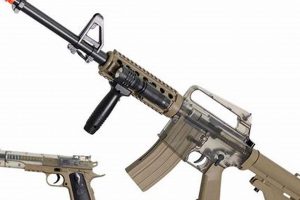
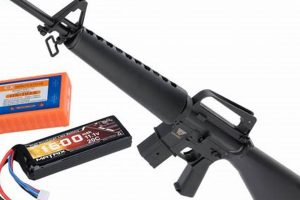
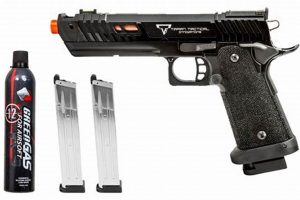
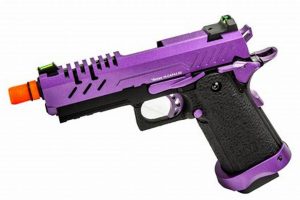
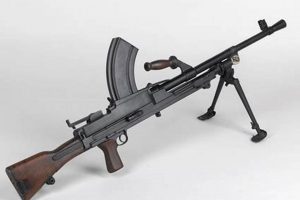
The assembly of an airsoft replica weapon involves acquiring individual components and integrating them to create a functional projectile-launching device. This process typically requires a combination of mechanical aptitude, access to appropriate tools, and a thorough understanding of the internal mechanisms of airsoft guns. An example would be sourcing a receiver, gearbox, motor, inner barrel, and hop-up unit, then assembling them according to a specific model’s design.
The ability to construct an airsoft replica can offer a deeper understanding of its operational principles and allow for customized performance enhancements. Furthermore, it provides opportunities for cost savings when compared to purchasing pre-assembled units and can serve as a valuable skill for maintenance and repair. Historically, this practice has emerged from a desire for greater control over the functionality and aesthetic of airsoft equipment.
The subsequent sections will delve into the specific considerations, tools, and steps involved in the parts sourcing, assembly procedure and safety measures essential to successfully realizing a personal airsoft project. These areas are crucial for anyone embarking on this kind of venture.
Tips for Airsoft Replica Construction
Successful construction of an airsoft replica requires careful planning, meticulous execution, and adherence to safety protocols. The following tips are designed to provide guidance throughout the assembly process.
Tip 1: Thoroughly Research Compatibility: Before acquiring any parts, verify the compatibility of all components. Different airsoft replica platforms (e.g., AR-15, AK-47) have varying standards. Ensure the gearbox, receiver, hop-up unit, and other parts are designed to work together within the selected platform.
Tip 2: Invest in Quality Tools: The use of appropriate tools is crucial for avoiding damage to components. A set of precision screwdrivers, Allen wrenches, pliers, and a spring compressor are essential. Using the correct tool minimizes the risk of stripping screws or damaging delicate parts.
Tip 3: Follow a Detailed Assembly Guide: Whether using a pre-existing guide or creating a personal schematic, a clear plan is vital. Disassemble a similar unit (if possible) and document each step. Maintaining a detailed record helps prevent errors during reassembly.
Tip 4: Prioritize Safety Measures: Always wear appropriate eye protection during assembly. Be mindful of spring tension and potential for injury. When working with electrical components, ensure proper grounding and follow established safety guidelines.
Tip 5: Test Functionality Incrementally: As components are assembled, test their functionality before proceeding. Check for proper alignment, smooth operation, and secure connections. Early identification of problems prevents compounding issues.
Tip 6: Properly Shim the Gearbox: Gearbox shimming is critical for minimizing wear and maximizing performance. Incorrect shimming can lead to premature gear failure. Experiment with different shim combinations to achieve optimal gear mesh.
Tip 7: Apply Lubrication Strategically: Use appropriate lubricants on moving parts within the gearbox and hop-up unit. Avoid over-lubrication, as excessive grease can attract dirt and debris, hindering performance. Use silicone grease on O-rings and gears.
Successfully assembling an airsoft replica offers significant advantages, including enhanced understanding of its mechanics, potential for performance customization, and cost savings on maintenance. Careful adherence to these tips can improve the likelihood of a successful project.
The subsequent sections will explore the legal and ethical considerations associated with airsoft replica ownership and usage, thereby ensuring a responsible approach to the hobby.
1. Component Compatibility

Component compatibility is a fundamental consideration in the assembly of an airsoft replica. The interoperability of individual parts dictates the functionality and operational integrity of the completed device. Mismatched components can result in performance degradation, mechanical failure, or a complete inability to function.
- Platform Specificity
Airsoft replicas are often based on real-world firearms platforms, such as the AR-15 or AK-47. Components designed for one platform are generally incompatible with another due to differing dimensions, mounting points, and operational mechanics. Attempting to integrate an AK-pattern gearbox into an AR-pattern receiver, for instance, will invariably fail due to fundamental design differences.
- Gearbox Standards
Airsoft gearboxes exist in various versions (e.g., Version 2, Version 3). While some components, like motors, may be universally compatible, critical parts like gears, pistons, and cylinders are typically version-specific. Installing a Version 2 piston into a Version 3 gearbox will likely result in improper cycling and potential damage to the unit.
- Hop-Up Unit Integration
The hop-up unit imparts backspin on the BB, extending its range and accuracy. Compatibility between the hop-up unit and the inner barrel is crucial. Incorrectly sized or designed units can lead to air leaks, inconsistent BB trajectory, and reduced effective range. For example, using a hop-up unit designed for a standard AEG barrel with a non-standard bore size will lead to performance issues.
- Electrical System Matching
Airsoft replicas utilize electrical systems to power the motor, which drives the gearbox. Components like batteries, MOSFETs, and wiring must be appropriately matched to the motor’s voltage and current requirements. Using a battery with insufficient voltage can result in poor performance, while using a battery with excessive voltage can damage the motor or other electrical components.
The successful assembly of an airsoft replica hinges upon a comprehensive understanding of component compatibility. Failure to adhere to these considerations can lead to a non-functional or unreliable device, negating the benefits of custom construction. The preceding points highlight the importance of diligent research and meticulous planning when selecting parts for an airsoft project.
2. Tool Acquisition

The procurement of appropriate tools is integral to the successful assembly and maintenance of airsoft replicas. The complexity and precision involved in manipulating small, intricate parts necessitate specialized implements to avoid damage and ensure proper function. Insufficient or inadequate tools can impede the assembly process and compromise the final product’s reliability.
- Precision Screwdrivers and Hex Keys
Airsoft replicas utilize numerous small screws and hex bolts to secure components. Using improperly sized screwdrivers can strip screw heads, rendering them unusable. A set of high-quality precision screwdrivers and hex keys, including metric sizes, is essential for disassembling and reassembling airsoft internals. For example, accessing the motor inside the grip of an M4-style airsoft gun often requires a small hex key to remove the base plate screws, while disassembling the gearbox necessitates a Phillips head screwdriver for housing screws.
- Spring Compressor
Airsoft gearboxes contain powerful springs that drive the piston. Disassembling a gearbox without a spring compressor can result in injury due to the sudden release of spring tension. A spring compressor safely contains the spring, allowing for controlled disassembly and reassembly. Attempting to open a gearbox without one is akin to trying to contain an uncapped pressurized pipe – dangerous and ill-advised.
- Pliers and Wire Cutters
Modifying or repairing the electrical components of an airsoft replica often requires cutting, stripping, and crimping wires. Pliers are also useful for manipulating small parts and securing connections. Using dull or inappropriate wire cutters can damage wiring or create poor connections, resulting in electrical malfunctions. Consider the example of installing a MOSFET, which often requires wire modifications and secure crimping for reliable performance.
- Multi-meter
When troubleshooting or upgrading airsoft replicas, it’s essential to confirm the electrical currents and voltages in the system. A multi-meter can test the voltage of a battery to measure the electrical current in certain components. An airsoft technician is going to use it to measure the voltage of a battery to confirm if it is not damaged or measure if the mosfet is working in the electronic circuit.
The acquisition of appropriate tools directly influences the quality and longevity of a constructed airsoft replica. Neglecting this aspect of the building process can result in damaged components, unsafe operating conditions, and ultimately, a dysfunctional or unreliable device. Therefore, a focused approach to procuring the necessary tools is paramount.
3. Schematic Comprehension
Schematic comprehension is an indispensable facet of airsoft replica construction. The ability to interpret and apply technical diagrams directly influences the success and safety of the assembly process. Without a firm grasp of schematics, the likelihood of errors, damage to components, and potential injury increases significantly.
- Exploded Diagrams
Exploded diagrams provide a visual representation of component placement and assembly sequence. Understanding these diagrams is crucial for correctly positioning internal parts within the gearbox, receiver, and other assemblies. For example, an exploded diagram of a Version 2 gearbox clarifies the precise order in which gears, shims, and the piston are installed, preventing improper assembly that could lead to mechanical failure.
- Electrical Wiring Diagrams
Airsoft replicas incorporate electrical systems for powering the motor and controlling firing modes. Electrical wiring diagrams illustrate the connections between the battery, motor, MOSFET (if present), and trigger switch. Comprehending these diagrams is essential for correctly wiring the replica, preventing short circuits, and ensuring proper operation of the firing mechanism. An example would be correctly wiring a MOSFET to protect the trigger contacts from excessive current, requiring a clear understanding of the wiring diagram to identify the appropriate connection points.
- Parts Lists and Nomenclature
Schematics typically include parts lists that identify each component by name and reference number. Familiarity with airsoft terminology and nomenclature is necessary for correctly identifying and sourcing replacement parts. For example, a schematic might refer to a “cylinder head” or a “hop-up bucking,” and the builder must be able to locate and procure these parts based on their specific descriptions.
- Tolerance and Dimensional Data
Some advanced schematics provide information on component tolerances and dimensions. This data is crucial for making modifications or custom parts. For example, if a builder desires to replace a worn-out inner barrel with a custom-length barrel, understanding the dimensional data in the schematic is necessary to ensure proper fit and function within the hop-up unit and outer barrel assembly.
The insights gained from schematic comprehension translate directly into a more efficient, safer, and ultimately more successful build. Understanding these diagrams ensures that components are assembled correctly, electrical systems are wired properly, and replacement parts can be sourced accurately, contributing to the overall reliability and performance of the completed airsoft replica.
4. Safety Adherence
Safety adherence is not merely a peripheral consideration but an intrinsic element of airsoft replica construction. A direct causal relationship exists between rigorous adherence to safety protocols and the prevention of injuries, component damage, or operational failures during the building process. Disregarding safety guidelines increases the probability of incidents ranging from minor cuts and abrasions to more severe eye injuries or electrical shocks. Examples include wearing eye protection while disassembling a gearbox under spring tension, or disconnecting the battery before working on electrical components.
Practical application of safety protocols extends beyond personal protection to encompass the integrity of the replica itself. Improper handling of components, such as using excessive force during assembly, can result in cracked casings, stripped threads, or damaged internal mechanisms. Furthermore, neglecting electrical safety measures, like failing to discharge capacitors, can lead to short circuits and irreversible damage to sensitive electronic components. Properly using tools and following safety guidelines also prevent accidental misfires that can damage the airsoft’s internal components.
In summary, Safety adherence constitutes an indispensable component of the airsoft replica construction process. Overlooking safety protocols introduces substantial risks to both the builder and the integrity of the device. The diligent application of safety measures promotes a secure and productive building experience, culminating in a reliable and safely operable airsoft replica. This connection reinforces the responsible approach to building and using airsoft replicas.
5. Incremental Testing
Incremental testing, as a methodology, is directly linked to the successful construction of airsoft replicas. This approach emphasizes verifying functionality at each stage of assembly rather than waiting until completion. The effect of this practice is early detection of errors, facilitating corrective action before subsequent steps are undertaken. This proactive identification of issues reduces the potential for compounding problems and minimizes the risk of extensive rework.
The integration of incremental testing into the construction process is a component of quality control, ensuring that each sub-assembly functions as intended before being incorporated into the larger system. For instance, after assembling the gearbox, functionality should be tested using a low-power battery before installing it within the receiver. This test verifies proper gear meshing, piston movement, and motor function. Similarly, after wiring the electrical components, a brief test confirms that the trigger mechanism engages the motor and that the fire selector switch operates correctly. Failing to implement these incremental checks often leads to a completed build exhibiting multiple malfunctions, making diagnosis and repair significantly more complex.
In summary, incremental testing offers a strategic advantage in the assembly of airsoft replicas. By verifying functionality at each stage, potential issues are identified and resolved efficiently, resulting in a more robust and reliable final product. While it may seem time-consuming, this approach ultimately saves time and resources by preventing major setbacks and ensuring a higher probability of successful construction. Implementing such procedures contributes directly to the reliability of the constructed airsoft gun.
6. Gearbox Shimming
Gearbox shimming, in the context of airsoft replica construction, represents a critical adjustment procedure directly influencing operational efficiency, component longevity, and overall performance. Its significance becomes particularly acute during the assembly phase, where proper execution minimizes mechanical stress and optimizes energy transfer within the gearbox assembly.
- Gear Height Optimization
Shimming primarily involves adjusting the vertical positioning of gears on their axles within the gearbox housing. This adjustment aims to achieve optimal gear mesh, preventing excessive friction and wear. For instance, gears that are too tightly meshed will generate excessive heat and consume more power, while gears that are too loosely meshed will exhibit play, reducing efficiency and potentially leading to stripped teeth. Proper shimming ensures gears rotate smoothly with minimal resistance, maximizing the replica’s rate of fire and battery efficiency. Gear Height Optimization is necessary when deciding how to build airsoft gun, making sure each component is align and height requirement have been achieved.
- Axial Play Reduction
Shimming also addresses axial play, which is the unwanted lateral movement of gears along their axles. Excessive axial play can cause gears to wobble, leading to inconsistent engagement and increased stress on bearings and bushings. Shimming strategically eliminates this play, stabilizing the gears and promoting consistent power delivery to the piston assembly. A wobble gear will cause more damage in high speed, while stabilized gear will promote less wear and tear for building airsoft gun
- Bearing/Bushing Stress Mitigation
Bearings and bushings support the axles on which the gears rotate. Improper shimming can place undue stress on these components, leading to premature failure. Over-tightening the shims can bind the bearings/bushings, while insufficient shimming allows excessive play. Proper shimming distributes the load evenly across the bearings/bushings, extending their lifespan and maintaining the gearbox’s overall structural integrity. With this in mind, having a robust build can enhance the gear from breaking and lessen the stress being held.
- Performance Consistency Enhancement
The cumulative effect of proper shimming is enhanced performance consistency. By optimizing gear mesh, reducing axial play, and mitigating bearing/bushing stress, shimming ensures that each shot is delivered with consistent power and accuracy. This consistency is particularly critical in competitive airsoft scenarios, where even slight variations in performance can significantly impact gameplay. Having a consistent performance is also vital in how to build airsoft gun, because each test run or skirmish, the quality will be tested every shot with no variations.
In conclusion, gearbox shimming constitutes a foundational element in the construction of high-performance airsoft replicas. Its proper execution yields tangible benefits in terms of operational efficiency, component longevity, and performance consistency. Understanding the principles of shimming and applying them meticulously is essential for anyone seeking to maximize the potential of a custom-built airsoft system.
7. Lubrication Strategy

Lubrication strategy, within the framework of airsoft replica construction, directly affects the operational reliability and lifespan of internal components. Insufficient or improper lubrication accelerates wear, increases friction, and diminishes performance, ultimately leading to mechanical failure. Conversely, a well-defined lubrication strategy mitigates these issues, optimizing performance and extending the service life of the replica. A practical example is the lubrication of gearbox gears; without appropriate grease, gears experience increased friction, generating heat and potentially stripping teeth under stress. The type of lubricant also matters. Using petroleum-based lubricants on rubber O-rings, for instance, will cause the rubber to swell and degrade, compromising air seal and performance.
The application of appropriate lubricants to specific components is equally crucial. Silicone grease is typically recommended for O-rings and air seals within the hop-up unit and cylinder head, ensuring a tight seal and consistent air pressure. High-pressure grease is commonly used on gearbox gears to reduce friction and dissipate heat. Furthermore, the quantity of lubricant applied must be carefully controlled. Over-lubrication can attract dirt and debris, forming a abrasive paste that accelerates wear. Conversely, under-lubrication leaves components vulnerable to friction and heat damage. Correct application contributes to efficient energy transfer, a higher rate of fire, and greater accuracy due to consistent air seal.
In summary, lubrication strategy is an indispensable consideration in airsoft replica construction. Precise application of appropriate lubricants to specific components minimizes friction, reduces wear, and optimizes overall performance. While seemingly a minor detail, a comprehensive lubrication strategy directly contributes to the longevity, reliability, and consistent operation of a custom-built airsoft replica, providing a link to the overall build. Improper or lack of maintenance can also affect how to build airsoft gun in a long term. With the right maintenance applied, the build of the airsoft replica will promote longevity.
Frequently Asked Questions
The following questions address common inquiries regarding the assembly of airsoft replicas. They provide clarification on key aspects of the construction process.
Question 1: What are the fundamental skills necessary to successfully construct an airsoft replica?
The construction of an airsoft replica necessitates a combination of mechanical aptitude, familiarity with basic hand tools, and a thorough understanding of the replica’s internal mechanisms. Prior experience with small-scale mechanical assembly is beneficial.
Question 2: What is the typical cost associated with assembling an airsoft replica from individual components?
The cost varies significantly depending on the quality of components, desired performance level, and complexity of the replica. Expect to invest more than purchasing a pre-assembled, entry-level unit, but potentially less than purchasing a high-end, pre-upgraded model. Researching individual component prices is essential.
Question 3: What are the most common challenges encountered during the assembly of airsoft replicas?
Common challenges include component compatibility issues, difficulty with gearbox assembly (particularly shimming), electrical wiring errors, and troubleshooting malfunctions. Thorough research, careful planning, and incremental testing can mitigate these challenges.
Question 4: How important is it to adhere to safety protocols during the construction process?
Strict adherence to safety protocols is paramount. Eye protection is mandatory when handling components under spring tension. Electrical components should be handled with caution, and appropriate grounding measures should be taken. Disregarding safety protocols can result in injury or component damage.
Question 5: Can assembling an airsoft replica void any warranties?
Yes, disassembling or modifying a pre-assembled airsoft replica typically voids any existing warranties. Constructing a replica from individual components inherently eliminates any manufacturer warranties.
Question 6: What resources are available to assist with the construction of airsoft replicas?
Numerous online resources, including forums, video tutorials, and technical guides, provide detailed instructions and troubleshooting advice. Consulting experienced airsoft technicians or builders is also a valuable resource.
In summary, constructing an airsoft replica requires a commitment to learning, careful planning, and meticulous execution. While challenges exist, the experience can provide valuable insights into the mechanics of airsoft weaponry and offer opportunities for customization and performance enhancement.
The subsequent sections will explore the legal and ethical considerations associated with airsoft replica ownership and usage, thereby ensuring a responsible approach to the hobby.
Conclusion
The preceding exploration of “how to build airsoft gun” encompasses a range of critical considerations, from component compatibility and tool acquisition to schematic comprehension, safety adherence, incremental testing, gearbox shimming, and lubrication strategy. Mastery of these elements is essential for achieving a functional and reliable airsoft replica. A comprehensive grasp of mechanics, safety, and problem-solving techniques will allow constructors to have an effective product.
The decision to embark on the construction of an airsoft replica necessitates a commitment to diligent research, meticulous execution, and unwavering adherence to safety protocols. While the process presents inherent challenges, the resulting device allows for personalized performance enhancements and greater control over the technology. Continuing this project in the future, will promote a safer environment for people. The responsible application of acquired knowledge will not only create a viable airsoft system but also foster a deeper understanding of the engineering principles involved.