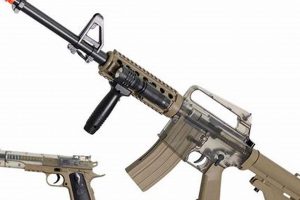
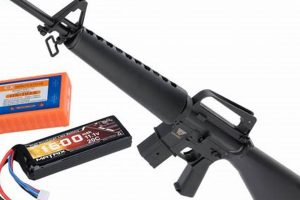
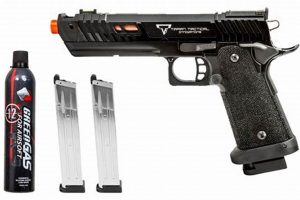
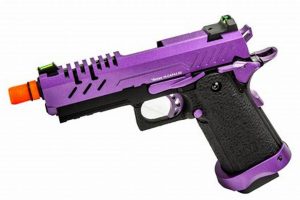
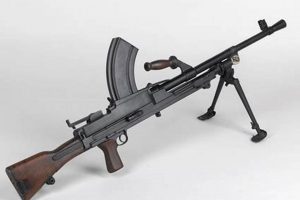
Replica firearms designed to resemble those used during the First World War, but modified to fire plastic BBs for recreational simulation, are a niche within the broader airsoft market. These items allow enthusiasts to participate in simulated combat scenarios while utilizing equipment that aesthetically mirrors the weaponry of a bygone era. For instance, one might find airsoft versions of the Mauser Gewehr 98, the Lee-Enfield rifle, or even early submachine guns adapted for airsoft use.
The appeal of such replicas lies in their ability to provide a tangible connection to a significant period in military history. Beyond simple recreation, these items facilitate historical reenactments and allow participants to engage with the tactical doctrines and equipment limitations of the early 20th century. The use of these replicas in organized games promotes an understanding of the challenges faced by soldiers of that era, offering a unique educational and recreational experience.
The following sections will explore the availability, construction, and practical considerations associated with acquiring and utilizing these specific airsoft replicas. Furthermore, the article will address the ethical and safety aspects relevant to the use of replica firearms in general, particularly in public spaces or during organized events.
Guidance on Acquiring and Utilizing Replicated World War One-Era Airsoft Weapons
The responsible acquisition and use of replicated weaponry necessitates careful consideration. The following guidelines aim to provide individuals with pertinent information regarding these items.
Tip 1: Prioritize Safety Equipment. Eye protection is paramount. Full-seal goggles designed to withstand impacts from airsoft projectiles are essential to prevent injury. Additionally, consider facial protection such as a mesh mask to safeguard teeth and other vulnerable areas.
Tip 2: Research Replica Authenticity. Manufacturers vary in their attention to detail. Individuals seeking a high degree of realism should thoroughly research available models, comparing them to historical references to ensure accuracy in terms of appearance and operation (where possible within the constraints of airsoft mechanisms).
Tip 3: Understand Local Regulations. Laws regarding replica firearms vary significantly by jurisdiction. Before purchasing or using a replicated firearm, ensure compliance with all applicable local, regional, and national regulations concerning ownership, transportation, and use in public or private spaces.
Tip 4: Consider Internal Mechanisms and Performance. Replicated weapons utilize various power sources, including electric, gas, and spring mechanisms. Evaluate the performance characteristics of each system in relation to intended use. Electric-powered (AEG) offer consistent performance, while gas-powered (GBB) replicate recoil action more closely.
Tip 5: Practice Responsible Handling. Treat replicated firearms as if they were real firearms. Keep the muzzle pointed in a safe direction, keep the weapon on “safe” until ready to fire, and never point it at anything one is not prepared to shoot. Familiarize oneself with the specific operation of the chosen replica and practice safe handling techniques.
Tip 6: Storage Considerations. Store the replicated weapon securely, out of reach of children and unauthorized individuals. Consider using a locked case or container to prevent accidental use or misuse.
Adhering to these guidelines promotes a safe and informed approach to the acquisition and utilization of replicated World War One-era airsoft weapons. Responsible practices protect both the user and the wider community.
The subsequent sections will address potential modifications and customization options for those seeking to enhance the realism or performance of their chosen replica.
1. Historical Accuracy

Historical accuracy forms a critical component in the appeal and value of replicated World War One-era airsoft weaponry. The degree to which these replicas mirror the appearance, function, and dimensions of their historical counterparts dictates their suitability for reenactments, collection, and immersive gameplay.
- External Detailing
The external appearance of the replica, including the shape of the stock, receiver, barrel, and sights, must closely resemble the original firearm. Markings, such as manufacturer stamps, proof marks, and unit designations, add to the authenticity. Inaccuracies in these details can detract significantly from the perceived realism of the replica, diminishing its appeal for collectors and reenactors. For example, an airsoft replica of a Mauser Gewehr 98 must accurately reflect the distinctive bolt action and receiver design of the original rifle.
- Material Composition
The materials used in the construction of the airsoft replica contribute to its historical accuracy. While it may not be feasible or cost-effective to replicate every component using the exact materials of the original, the use of materials that visually approximate them, such as wood for stocks and metal alloys for receivers, enhances the overall impression of authenticity. For instance, a replicated Lee-Enfield rifle should ideally feature a wooden stock and a metal receiver, similar to the original design.
- Functional Realism
The operation of the airsoft replica should, to the extent possible within the limitations of airsoft technology, mimic the function of the original firearm. This includes features such as the operation of the bolt action, the loading and ejection of magazines or cartridges, and the function of the safety mechanism. While replicating the full functionality of a firearm is not possible, simulating key aspects of its operation enhances the immersive experience. An example would be an airsoft replica of a Maxim machine gun that incorporates a simulated recoil mechanism.
- Scale and Dimensions
The overall size and weight of the airsoft replica are crucial factors in its historical accuracy. A replica that is significantly smaller or lighter than the original firearm will lack the heft and feel of the real weapon, detracting from the experience. Accurate scaling ensures that the replica handles and feels similar to the original, enhancing its authenticity. For example, if an airsoft replica of an MP 18 submachine gun is significantly smaller than the original, it won’t accurately represent the historical design.
The pursuit of historical accuracy in replicated First World War-era weaponry is a continuous process, balancing the demands of realism with the limitations of airsoft technology and the constraints of cost and practicality. These considerations contribute to the overall value and appeal of such replicas for enthusiasts.
2. Mechanism Reliability
Mechanism reliability is paramount in the context of replicated World War One-era weaponry. The functional integrity of these replicas dictates their usability and longevity in simulated combat scenarios. Airsoft enthusiasts require dependable mechanisms to accurately recreate historical engagements and tactical simulations.
- Gearbox Durability
Electric-powered (AEG) replicas utilize gearboxes to translate motor rotation into piston movement, which propels the BB. The durability of these gearboxes, specifically the gears themselves, is critical. Inferior gears, constructed from weak metals or plastics, are prone to stripping or breakage under sustained use, rendering the replica inoperable. Reinforced steel gears are often sought to mitigate this issue. The AEG replicas should accurately reflect historic performance and construction.
- Gas System Consistency
Gas-powered (GBB) replicas rely on regulated gas pressure to propel the BB and, in some models, simulate recoil. Consistent gas flow is essential for accuracy and predictable performance. Malfunctions such as gas leaks, regulator failures, or nozzle damage can lead to inconsistent velocity, reduced range, or complete failure of the firing mechanism. High-quality seals and durable valve components are necessary to maintain gas system integrity. The GBB replicas should accurately reflect historic performance and construction.
- Magazine Feed Integrity
Reliable magazine feed mechanisms are fundamental to sustained operation. Whether utilizing high-capacity magazines or low-capacity magazines that mimic the round count of original World War One weaponry, consistent BB feeding is crucial. Malfunctions such as magazine spring fatigue, follower jamming, or damaged feed lips can interrupt the firing sequence and degrade the user experience. Properly maintained and robust magazine designs are essential for reliable operation.
- Trigger and Sear Engagement
The trigger and sear mechanism governs the release of the piston or gas valve, initiating the firing cycle. A reliable trigger and sear engagement is essential for accurate and consistent firing. Worn or improperly adjusted sears can lead to misfires, inconsistent trigger pull, or even unintentional full-automatic firing in semi-automatic replicas. Precision-machined components and proper sear engagement angles are necessary for consistent trigger response and reliable firing.
The reliability of these mechanisms directly impacts the usability and enjoyment of replicated World War One-era airsoft weapons. Dependable gearboxes, consistent gas systems, robust magazine feeds, and precise trigger engagement are all essential for creating a realistic and immersive airsoft experience. Furthermore, regular maintenance and proper component selection are crucial for preserving the long-term functionality of these replicas.
3. Material Durability
Material durability significantly influences the longevity and functionality of replicated World War One-era airsoft weaponry. The cause-and-effect relationship between the materials used and the lifespan of these replicas is direct. The choice of construction materials determines their resistance to wear, tear, and the stresses of repeated use, directly impacting their performance in simulated combat scenarios. For instance, a replica constructed with a zinc alloy receiver may be less durable than one fabricated from reinforced nylon or steel, resulting in premature failure under normal operating conditions.
The practical significance of understanding material durability lies in its impact on cost-effectiveness and operational readiness. While a less durable replica may have a lower initial purchase price, its susceptibility to breakage necessitates more frequent repairs or replacements, ultimately increasing the total cost of ownership. Conversely, a replica constructed with durable materials, such as high-impact polymers or reinforced metals, offers a longer service life and reduced maintenance requirements, making it a more practical and economical choice in the long term. Consider, for example, the impact of a plastic stock versus a reinforced polymer or wood stock on a replicated Lee-Enfield; the plastic stock is more prone to cracking during intense simulated bayonet charges or impacts with hard surfaces.
In conclusion, the durability of materials used in replicated World War One-era weaponry is a critical consideration for airsoft enthusiasts. Choosing replicas constructed with robust materials enhances reliability, reduces maintenance costs, and ensures long-term operational effectiveness. Neglecting this factor can result in premature failure and increased expenditure, ultimately diminishing the value and enjoyment derived from these replicated historical arms.
4. Regulatory Compliance

Regulatory compliance constitutes a crucial aspect of ownership and use for replicated World War One-era airsoft weaponry. This facet encompasses adherence to legal frameworks governing replica firearms, ensuring responsible handling and avoiding legal ramifications. Ignorance of these regulations does not absolve individuals from liability.
- Federal and State Laws
Many jurisdictions have specific laws pertaining to replica firearms, often distinguishing them from actual firearms based on their inability to discharge lethal projectiles. These laws may dictate permissible materials, coloration requirements (e.g., orange tips), and restrictions on public display or transportation. Failure to comply can result in confiscation, fines, or even criminal charges. For example, some states mandate that airsoft guns be transported in closed containers, unloaded, and out of plain sight.
- Import and Export Regulations
The import and export of airsoft guns, including replicated World War One models, are subject to international trade regulations and customs controls. These regulations aim to prevent the illicit trafficking of firearms and ensure compliance with safety standards. Importing non-compliant replicas can lead to seizure by customs authorities and potential legal penalties. Compliance often involves proper documentation and adherence to labeling requirements.
- Age Restrictions and Parental Consent
Many jurisdictions impose age restrictions on the purchase and use of airsoft guns, reflecting concerns about safety and responsible handling. Minors may be required to obtain parental consent or be supervised by an adult when participating in airsoft activities. Retailers may face penalties for selling airsoft guns to underage individuals without proper verification. These restrictions are designed to mitigate the risk of accidental injuries and prevent misuse.
- Public Display and Brandishing Laws
Laws governing public display and brandishing of replica firearms are intended to prevent alarm and potential misidentification as real firearms. Openly carrying or displaying an airsoft gun in a manner that could reasonably be perceived as threatening may constitute a criminal offense. Many jurisdictions prohibit the use of airsoft guns in public places, except at designated shooting ranges or authorized events. The intent is to minimize the risk of misunderstandings and ensure public safety.
The multifaceted nature of regulatory compliance necessitates that individuals involved with replicated World War One-era airsoft weaponry thoroughly research and understand the specific laws and regulations applicable in their jurisdiction. Failure to do so can result in severe legal consequences, undermining the responsible and enjoyable use of these replicas.
5. Safe Handling
Safe handling of replicated weaponry, particularly models resembling firearms from the First World War era, is of paramount importance. These items, while non-lethal, can cause injury if mishandled and may be mistaken for actual firearms, leading to potentially dangerous situations. Responsible practices are crucial for mitigating these risks.
- Eye Protection and Personal Protective Equipment (PPE)
The use of appropriate PPE is mandatory during airsoft activities. Full-seal goggles designed to withstand impacts from plastic BBs are essential to prevent eye injuries, which are among the most common airsoft-related incidents. Facial protection, such as mesh masks or balaclavas, further reduces the risk of injury to the face and teeth. Neglecting PPE can lead to serious and permanent harm. For example, a BB striking an unprotected eye can cause blindness. During reenactments and skirmishes, replicating World War One scenarios, historical accuracy should never supersede the requirement for proper PPE.
- Muzzle Discipline and Target Awareness
Maintaining muzzle discipline, the practice of keeping the muzzle pointed in a safe direction at all times, is a fundamental principle of safe handling. Never point a replica at anything one is not prepared to shoot. This precaution minimizes the risk of accidental discharge and potential injury. Before firing, positively identify the target and ensure that the area beyond the target is clear. Failure to adhere to these principles can lead to unintended injuries or property damage. An example would be negligently pointing an airsoft rifle at a bystander, even if the replica is unloaded. The act itself can be perceived as threatening and cause undue alarm. Muzzle discipline is crucial, especially with replicas that closely resemble actual firearms.
- Storage and Transportation Protocols
Proper storage and transportation protocols are essential to prevent unauthorized access and accidental discharge. Replicas should be stored unloaded, with magazines removed, in a secure location inaccessible to children or unauthorized individuals. During transportation, replicas should be placed in cases or bags to conceal them from public view and prevent misidentification as real firearms. Failure to follow these protocols can result in accidental injuries, theft, or even legal repercussions. Leaving an airsoft replica unsecured in a vehicle, for instance, could lead to its theft and subsequent misuse. Secure storage and discreet transportation minimize these risks.
- Awareness of Local Laws and Regulations
Familiarity with local laws and regulations pertaining to airsoft guns is critical. These laws may govern permissible locations for airsoft activities, restrictions on public display, and requirements for marking or coloration. Ignorance of these regulations can result in fines, confiscation of equipment, or even criminal charges. Before participating in airsoft activities, research and comply with all applicable laws. Some municipalities, for example, may prohibit the use of airsoft guns in public parks or residential areas. Adhering to legal requirements ensures responsible and lawful participation in the sport.
The integration of safe handling practices into all aspects of replicated World War One-era airsoft weaponry is indispensable. Prioritizing PPE, maintaining muzzle discipline, adhering to proper storage and transportation protocols, and remaining cognizant of local laws collectively contribute to a safe and responsible airsoft experience, minimizing the potential for accidents and mitigating legal risks.
Frequently Asked Questions
This section addresses common inquiries regarding airsoft replicas of firearms used during the First World War, providing concise and factual answers to clarify aspects of their use, legality, and acquisition.
Question 1: Are “ww1 airsoft guns” legally considered firearms?
Generally, airsoft replicas are not classified as firearms under federal law, as they do not discharge lethal projectiles. However, state and local regulations vary, and some jurisdictions may impose restrictions similar to those governing actual firearms. Compliance with all applicable laws is mandatory.
Question 2: What safety precautions are necessary when using “ww1 airsoft guns”?
Eye protection is essential. Full-seal goggles designed to withstand impacts from airsoft BBs are mandatory. Additionally, responsible handling practices, including muzzle discipline and awareness of surroundings, are crucial to prevent accidents.
Question 3: Where can “ww1 airsoft guns” be legally used?
Legal usage is typically restricted to private property with permission, designated airsoft fields, or sanctioned events. Public display or use in unauthorized locations may violate local ordinances and result in legal consequences.
Question 4: What materials are “ww1 airsoft guns” typically made from?
Airsoft replicas are commonly constructed from a combination of materials, including plastics, metal alloys (such as aluminum or zinc), and wood (or wood composites) for stocks and furniture. The specific materials vary depending on the manufacturer and the desired level of realism.
Question 5: How historically accurate are most “ww1 airsoft guns”?
The level of historical accuracy varies significantly between manufacturers and models. Some replicas prioritize external appearance, while others focus on internal mechanics and performance. Thorough research is recommended to identify replicas that meet specific accuracy requirements.
Question 6: Is modification of “ww1 airsoft guns” permissible?
Modification is generally permissible, but alterations that increase the projectile velocity beyond legal limits or compromise safety are strongly discouraged and may violate applicable regulations. Furthermore, modifications that make the replica indistinguishable from a real firearm may be illegal.
The answers provided herein are for informational purposes only and do not constitute legal advice. Individuals are responsible for complying with all applicable laws and regulations pertaining to airsoft guns.
The subsequent section will delve into maintenance and care recommendations for ensuring the longevity and optimal performance of replicated historical weaponry.
Conclusion
The examination of “ww1 airsoft guns” reveals a niche market segment with specific considerations for enthusiasts. The historical significance, material composition, regulatory landscape, safety protocols, and frequently asked questions collectively inform responsible ownership and utilization. An understanding of these elements is crucial for those engaging with these replicated historical arms.
Continued adherence to safety guidelines and diligent compliance with applicable laws remain paramount. Further research into specific models and local regulations is encouraged to ensure a safe and legally sound engagement with this segment of the airsoft hobby. The responsible pursuit of this interest preserves both personal safety and public trust.