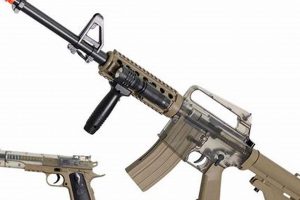
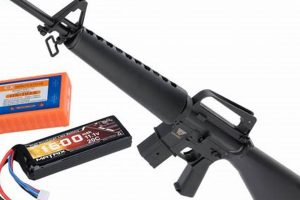
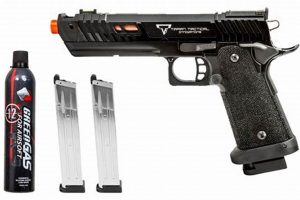
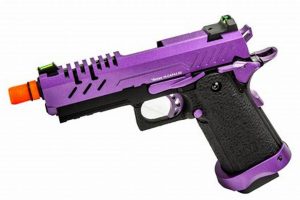
The financial outlay for an airsoft weapon varies considerably, dependent upon factors such as the type of gun, its manufacturer, materials used in construction, and its performance characteristics. Entry-level options can be relatively inexpensive, while high-end models equipped with advanced features command a significantly higher price point. For example, a basic spring-powered pistol might cost under $50, whereas a high-performance electric rifle with a metal gearbox could exceed $300.
Understanding the price ranges associated with these replicas is crucial for prospective buyers. It allows for informed decision-making based on individual needs, intended usage (casual target practice versus competitive gameplay), and budgetary constraints. Historically, the cost of airsoft equipment has decreased as manufacturing processes have become more efficient and the market has expanded, making the sport more accessible to a wider audience. The ability to accurately assess the value proposition of each item is key to a successful and enjoyable airsoft experience.
Subsequent sections will delve into the specific factors influencing the cost, categorized by gun type, performance metrics, and the impact of brand reputation. This detailed analysis will provide a comprehensive guide to navigating the airsoft market and determining the appropriate investment for various requirements.
Tips for Assessing the Value of Airsoft Guns
Evaluating the price point of an airsoft gun necessitates a comprehensive understanding of its components and expected performance. The following tips offer guidance in making informed purchasing decisions.
Tip 1: Research Gun Type. Consider the intended use: pistols are typically less expensive than rifles. Spring-powered, electric (AEG), and gas-powered (GBB) guns have different price ranges and performance characteristics. A spring-powered pistol is often the least expensive, whereas a high-end gas blowback rifle will represent a greater investment.
Tip 2: Evaluate Material Quality. Airsoft guns constructed with metal components, particularly in critical areas like the gearbox or barrel, generally command higher prices due to enhanced durability and longevity compared to plastic alternatives. Inspect product specifications carefully to ascertain the materials used.
Tip 3: Assess Performance Metrics. Feet per second (FPS) and rounds per minute (RPM) are key performance indicators. Higher FPS and RPM often correlate with increased cost, reflecting more powerful motors, higher-capacity magazines, or more sophisticated gas systems. However, consider field regulations regarding maximum FPS limits.
Tip 4: Investigate Brand Reputation. Established brands often command a premium due to their history of reliability, performance, and readily available replacement parts. Research user reviews and consult airsoft communities to gauge the reputation of specific manufacturers.
Tip 5: Compare Retailer Prices. Prices can vary significantly between online retailers and brick-and-mortar stores. Comparison shopping, including accounting for shipping costs, is essential to secure the most competitive price.
Tip 6: Consider Additional Costs. The initial purchase price of the replica itself is not the only factor. Batteries, chargers, BBs, protective gear (eye protection is mandatory), and maintenance supplies represent additional expenses that should be factored into the overall budget.
A careful evaluation of these factors ensures a sound investment in equipment suited to the intended usage and budget, maximizing both enjoyment and longevity.
The following section will provide a concluding summary of essential considerations.
1. Entry-level models

Entry-level models represent the most accessible point of entry into the airsoft hobby, significantly influencing the lower bound of the cost spectrum. These models are generally characterized by a focus on affordability and ease of use, rather than advanced features or high-end performance. Their design and construction directly impact the overall financial commitment required to begin participating in the sport.
- Initial Investment Threshold
Entry-level models establish the baseline for initial financial outlay. These replicas are typically priced to attract new players, making the sport more accessible. This lower price point allows individuals to experiment with airsoft without committing to a substantial investment. A basic spring-powered pistol or a low-powered electric rifle often serves as an entry-level option.
- Material and Construction Trade-offs
To achieve a lower price, entry-level models frequently utilize less expensive materials, such as plastic bodies and simplified internal mechanisms. While this can reduce durability and performance compared to higher-end models, it significantly lowers manufacturing costs, directly impacting the final price for consumers. The use of plastic instead of metal, for instance, is a common trade-off.
- Performance Limitations and Upgradability
Entry-level models often feature lower FPS (feet per second) and RPM (rounds per minute) compared to their more expensive counterparts. These performance limitations reflect the compromises made to reduce cost. Upgradability options may also be limited, meaning that enhancing performance later could require replacing the entire unit rather than upgrading individual components. This should be considered when evaluating the long-term cost.
- Target Audience and Intended Use
The target audience for entry-level models is primarily beginners or those seeking casual recreational use. These models are suitable for backyard target practice or informal skirmishes. However, they may not be appropriate for competitive gameplay or scenarios requiring higher levels of performance and reliability. The intended use directly correlates with the acceptable performance level and, consequently, the price point.
The affordability of entry-level models directly shapes perceptions of the overall cost of airsoft. While these replicas offer an accessible starting point, understanding their limitations and potential long-term costs (such as the need for upgrades or replacements) is critical for making informed decisions about investment in the sport. The lower price tag allows a wider audience to sample the sport before committing to more expensive equipment.
2. Material composition
The substances used in an airsoft gun’s construction exert a significant influence on its final price. The correlation between material composition and cost stems from factors including raw material expenses, manufacturing complexity, durability, and performance characteristics. The selection of materials represents a fundamental determinant of the airsoft gun’s overall value proposition.
Consider two hypothetical airsoft rifles: one constructed primarily of reinforced polymer with a metal inner barrel and gearbox, and the other fabricated entirely from aluminum alloy and steel. The latter model demonstrably commands a higher price due to the increased cost of the raw materials, the more complex machining processes required, and the resulting enhanced durability and realistic weight. Similarly, the presence of high-quality polymers in specific components, such as the pistol grip or stock, can contribute to higher costs due to the specialized engineering and enhanced ergonomics. In contrast, components constructed from cheaper, less durable plastics contribute to lower prices, albeit with a corresponding reduction in longevity and performance. The internal components, such as the gearbox and hop-up unit, also reflect this trend. A metal gearbox, for instance, offers superior reliability and longevity compared to a plastic one, justifying a higher price.
In summation, material composition serves as a critical cost driver in the airsoft gun market. The choice of materials directly affects manufacturing costs, durability, performance, and overall value. Prospective buyers must carefully weigh the benefits of enhanced material quality against budgetary constraints to make informed purchasing decisions. Ignoring material specifications can lead to premature equipment failure or underperformance, ultimately increasing the long-term cost of participation in the sport.
3. Internal mechanisms

The operational systems contained within an airsoft gun are a primary factor in determining its cost. The complexity and type of internal mechanisms dictate manufacturing expenses, performance capabilities, and ultimately, the retail price. Spring-powered, gas-powered (GBB/CO2), and electric (AEG) airsoft guns utilize vastly different internal components, each associated with a distinct price point. Spring guns, being the simplest, generally feature a manual cocking mechanism and represent the least expensive option. Gas-powered models incorporate gas reservoirs, valves, and blowback systems, increasing both complexity and cost. AEGs, employing electric motors, gearboxes, and electronic components, are often more costly than spring guns but can be cheaper or more expensive than gas guns depending on component quality and features such as MOSFETs and programmable firing modes. For example, a basic spring pistol might cost $20, while a gas blowback pistol with realistic recoil can easily exceed $150. An AEG rifle with a durable metal gearbox and upgraded motor might range from $200 to $500, or more.
The type of internal mechanism also impacts maintenance requirements and the need for aftermarket upgrades. Spring guns require minimal maintenance but offer limited performance potential. Gas guns demand regular cleaning and lubrication, and their performance is often sensitive to temperature fluctuations. AEGs can be upgraded with high-torque motors, reinforced gearboxes, and precision inner barrels to improve performance and reliability. These upgrades, however, add to the overall expense. A player seeking to enhance the accuracy and range of an AEG rifle may invest an additional $100-$200 in upgraded internal components, effectively increasing the total cost of ownership. Furthermore, the availability and cost of replacement parts for specific internal mechanisms vary significantly. Rare or proprietary parts can be expensive and difficult to obtain, potentially making repairs costly.
In summary, the internal mechanisms are a major determinant of an airsoft guns price due to their impact on manufacturing complexity, performance, and potential for customization. Understanding the specific internal components and their associated costs enables informed decision-making when selecting an airsoft gun. Balancing performance expectations with budgetary limitations requires careful consideration of the type of internal mechanism and its inherent advantages and disadvantages. The choice among spring, gas, or electric power influences both the initial investment and long-term running costs.
4. Brand recognition
Brand recognition exerts a demonstrable influence on the price of airsoft guns. Manufacturers with established reputations for quality, reliability, and performance command a premium in the market. This price differential is attributable to several factors, including perceived value, customer loyalty, and marketing investments. A well-known brand often signifies a history of consistent performance and durable construction, leading consumers to perceive a lower risk associated with the purchase. This perceived lower risk allows companies to justify higher prices.
Consider the example of Tokyo Marui, a Japanese manufacturer widely recognized for its high-quality AEGs and innovative designs. Their products, often priced higher than comparable offerings from lesser-known brands, benefit from a loyal customer base willing to pay more for the assurance of quality and performance. Similarly, brands like Krytac and VFC have cultivated strong reputations within the airsoft community, enabling them to command premium prices. Conversely, less established or generic brands, while potentially offering similar performance specifications, often struggle to compete on price due to the absence of established brand recognition. Retailers understand this dynamic and are often willing to stock and promote well-known brands more aggressively, further solidifying their market position and supporting higher prices.
In conclusion, brand recognition is a tangible component of the overall cost of an airsoft gun. While performance specifications and material quality are crucial considerations, the brand’s reputation and perceived value significantly impact the final price. Recognizing this influence is essential for consumers seeking to balance performance, reliability, and budgetary constraints. However, it is important to note that higher prices do not always equate to superior performance, and discerning buyers should carefully evaluate individual product specifications alongside brand reputation to make informed purchasing decisions.
5. Performance specifications

The operational capabilities of an airsoft gun, quantified through performance specifications, are directly proportional to its market value. These specifications, encompassing factors such as projectile velocity, firing rate, and effective range, are key determinants of the replica’s utility and, consequently, its price point.
- Feet Per Second (FPS) Rating
FPS, measured in feet per second, indicates the muzzle velocity of the BB projectile. Higher FPS values generally translate to increased range and impact force, making the airsoft gun more effective in skirmishes. Replicas with elevated FPS ratings, often achieved through more powerful internal mechanisms or enhanced gas systems, command higher prices. For instance, an AEG (Automatic Electric Gun) achieving 400 FPS will typically cost more than a similar model rated at 300 FPS, reflecting the enhanced performance capability.
- Rounds Per Minute (RPM) Capability
RPM denotes the rate at which an airsoft gun can fire BBs in full-automatic mode. Higher RPM values provide a tactical advantage in engagements, allowing for rapid suppression and target saturation. Airsoft guns with high RPM capabilities often incorporate advanced electronic components and robust internal mechanisms, contributing to their higher cost. An AEG capable of firing 1000 RPM will likely be more expensive than one with a 600 RPM rating, due to the engineering and components required to achieve the higher firing rate.
- Effective Range Considerations
Effective range signifies the distance at which an airsoft gun can consistently and accurately engage targets. Factors such as barrel length, hop-up system design, and projectile consistency contribute to the effective range. Airsoft guns with enhanced range, often achieved through precision inner barrels and adjustable hop-up units, are generally priced higher. Longer effective range allows players to engage opponents from a safer distance, increasing their tactical flexibility and overall effectiveness.
- Accuracy and Consistency Metrics
Accuracy, measured by grouping size at a specific distance, and consistency, measured by the variation in FPS between shots, impact an airsoft gun’s value. Higher accuracy and consistency often stem from tighter manufacturing tolerances, better quality components, and more sophisticated designs. Airsoft guns with excellent accuracy and consistency typically cost more due to the increased precision and quality control required in their production. A rifle that consistently shoots tight groupings at 100 feet and maintains a stable FPS will fetch a higher price than one with inconsistent performance.
In conclusion, performance specifications exert a significant influence on the price of airsoft guns. Higher FPS, RPM, effective range, accuracy and consistency translate to a more effective and competitive weapon, thus justifying a higher price point. Prospective buyers must carefully evaluate these specifications in relation to their intended use and budgetary constraints to make informed purchasing decisions. The cost of superior performance must be weighed against the actual advantages gained in specific gameplay scenarios.
6. Additional equipment
The expenditure associated with airsoft extends beyond the core replica itself; ancillary equipment represents a significant component of the total investment. Neglecting these supplementary items can lead to an underestimation of the overall cost and potential impediments to a safe and enjoyable experience.
- Protective Gear Mandates
Eye protection, typically in the form of ANSI-rated goggles or masks, is mandatory for participation in organized airsoft activities and is strongly recommended for casual use. These items range in price from basic models costing under $20 to more sophisticated systems with anti-fog coatings and enhanced impact resistance that can exceed $100. The investment in appropriate protective gear is not optional; it is a prerequisite for safe participation, adding to the overall cost of the activity. Similarly, some players choose to invest in tactical vests, gloves, and knee pads to further mitigate potential injuries, increasing the total financial commitment.
- Ammunition Expenses
Airsoft projectiles, commonly referred to as BBs, are a recurring expense. The cost of BBs varies depending on the material (plastic, biodegradable, or tracer), weight, and quantity. High-quality BBs, which are essential for preventing damage to the airsoft gun’s internal components and ensuring consistent performance, are typically more expensive than lower-grade alternatives. A bag of high-quality BBs can range from $15 to $40, depending on the quantity and brand. Regular gameplay necessitates frequent replenishment of BB supplies, adding to the ongoing cost of the sport.
- Power Source Requirements
Electric airsoft guns (AEGs) require batteries and chargers. The type and capacity of the battery, typically NiMH or LiPo, influence the cost. LiPo batteries offer superior performance but necessitate specialized chargers to prevent damage and ensure safe operation. A quality LiPo battery and charger can cost between $50 and $100. Gas-powered guns require either disposable CO2 cartridges or refillable gas canisters, representing another recurring expense. The choice of power source significantly impacts the long-term operational costs of the airsoft gun.
- Maintenance and Repair Supplies
Regular maintenance is crucial for preserving the performance and lifespan of an airsoft gun. This involves cleaning, lubrication, and occasional repairs. Maintenance supplies, such as silicone oil, cleaning rods, and spare parts, represent an additional cost. More extensive repairs may necessitate the services of a qualified technician, incurring further expenses. Proactive maintenance can mitigate the need for costly repairs, but it nonetheless contributes to the overall financial commitment.
The cumulative cost of protective gear, ammunition, power sources, and maintenance supplies significantly impacts the overall financial outlay associated with airsoft. These ancillary expenses should be factored into the initial budget to accurately assess the total cost of participation. Neglecting these items can result in an underestimation of the financial commitment and potential compromises in safety and performance.
7. Retailer markups

Retailer markups are a critical component in determining the ultimate expenditure for an airsoft gun. The price at which manufacturers sell their products to retailers is distinct from the price consumers pay. Retailers apply a markup to cover operational costs, including rent, utilities, employee wages, marketing, and profit margins. This markup directly influences the final cost and can vary considerably depending on the retailer’s business model, location, and target market.
The impact of retailer markups is readily observable in the airsoft market. A replica with a manufacturer’s suggested retail price (MSRP) of $200 might be offered at $250 by a brick-and-mortar store due to higher overhead costs. Conversely, an online retailer with lower operating expenses might sell the same item for $220. Specialty retailers, offering enhanced customer service and expert advice, may justify higher markups based on the added value they provide. Sales and promotions can temporarily reduce prices, but the underlying markup structure remains a constant factor influencing final cost. Limited edition or high-demand items often experience inflated markups due to scarcity and increased consumer willingness to pay. The availability of competitive pricing information online empowers consumers to compare retailer markups and make informed purchasing decisions.
Understanding retailer markups is essential for effective budgeting and value assessment in the airsoft market. Consumers should consider factors beyond the base product cost, including shipping fees, warranty options, and the retailer’s return policy. While minimizing costs is a common objective, it is crucial to weigh price against factors such as retailer reputation, customer service, and product availability. Awareness of retailer markup practices empowers consumers to navigate the market strategically, balancing price sensitivity with other relevant considerations.
Frequently Asked Questions
The following section addresses common inquiries concerning the pricing of airsoft guns, offering clarity and guidance to prospective buyers.
Question 1: What constitutes the primary factor influencing the cost of an airsoft gun?
Material composition and internal mechanisms are paramount. Replicas constructed from durable metals and featuring complex internal systems, such as gas blowback or advanced electric gearboxes, command higher prices.
Question 2: Is there a correlation between brand reputation and price?
Yes, established brands with a history of quality and reliability often exhibit higher price points. This reflects consumer confidence and perceived value associated with the brand name.
Question 3: How do performance specifications affect the price?
Performance characteristics, including feet per second (FPS), rounds per minute (RPM), and effective range, directly impact the price. Airsoft guns with superior performance metrics are typically more expensive.
Question 4: What are the common hidden costs associated with airsoft guns?
Recurring expenses such as ammunition (BBs), batteries, gas refills, and maintenance supplies can significantly increase the overall cost of ownership. Additionally, protective gear, including eye protection, is a mandatory expense.
Question 5: Do retailer markups significantly impact the final price?
Retailer markups play a substantial role in determining the final price paid by consumers. These markups vary depending on the retailer’s operational costs and pricing strategies.
Question 6: Is it possible to acquire a quality airsoft gun on a limited budget?
While high-end models command a premium, entry-level airsoft guns offering acceptable performance and reliability are available at more affordable price points. Research and careful selection are crucial for maximizing value within budgetary constraints.
In summary, the cost of an airsoft gun is influenced by numerous factors, including materials, brand, performance, and retailer markups. Understanding these elements enables informed decision-making and prevents unexpected expenses.
The subsequent section will provide concluding remarks and actionable advice.
Conclusion
The investigation into financial outlays for airsoft guns reveals a multifaceted pricing structure. The cost drivers extend beyond simple categorization, encompassing material quality, internal mechanisms, brand reputation, performance specifications, and retailer markups. Discernment regarding these factors empowers prospective buyers to navigate the market strategically, aligning investment with intended use and budgetary limitations. A comprehensive assessment of each element is critical for responsible purchasing.
The financial commitment extends beyond the initial acquisition. Recurring expenditures, including consumables and maintenance, represent an ongoing obligation. Prudent financial planning necessitates a holistic understanding of both the upfront and long-term costs. Continued vigilance regarding market trends and technological advancements is crucial for sustained value optimization within the airsoft domain. Prospective purchasers are encouraged to conduct thorough research and engage with informed communities prior to finalizing any acquisition.