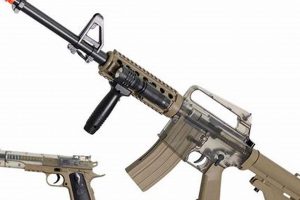
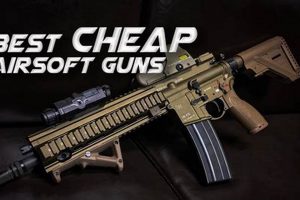
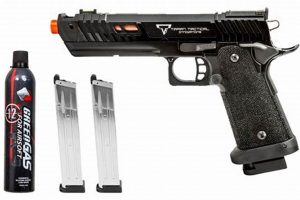
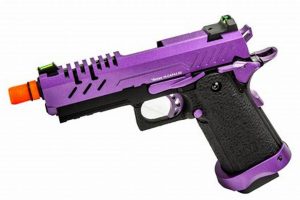
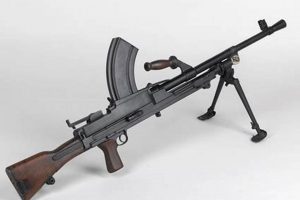
Replicas designed to mimic the appearance and operation of real firearms used by armed forces are often employed in recreational simulations. These devices, typically powered by compressed gas or electric motors, propel small plastic projectiles. Their use spans a variety of contexts, including tactical training exercises, competitive shooting sports, and historical reenactments. For example, a specific model might closely resemble an M4 carbine, featuring similar controls and magazine capacity.
The appeal stems from the realistic training experience they provide, allowing participants to practice firearm handling, tactical maneuvers, and teamwork in a safe and controlled environment. Historically, their usage has evolved from simple backyard games to organized events with intricate scenarios and rules. The benefits include enhanced physical fitness, improved strategic thinking, and the development of camaraderie among participants. They also offer a relatively inexpensive and accessible entry point into the world of firearms and tactical training.
The subsequent sections will delve into the construction materials, operational mechanisms, performance characteristics, legal considerations, and safety protocols associated with these simulated weapons. Further discussion will address the different types available, the modifications commonly performed, and the accessories designed to enhance their realism and functionality.
Operational Considerations for Simulated Military Firearms
Proper handling and maintenance are crucial for ensuring the longevity and safe operation of these devices. The following guidelines provide essential information for users at all experience levels.
Tip 1: Prioritize Eye Protection: Full-seal goggles or a mask specifically designed for airsoft are non-negotiable. Projectiles can cause serious eye injuries. Ensure that all participants on the field are equipped with adequate eye protection before commencing any activity.
Tip 2: Understand Velocity Limits: Adhere to established velocity limits (typically measured in feet per second or FPS) specific to the playing field or event. Chronograph testing should be conducted prior to participation to verify compliance. Exceeding the velocity limit poses a safety risk to all involved.
Tip 3: Regularly Inspect Internal Components: Periodically disassemble and inspect internal components, such as the gearbox (for electric models) or the gas system (for gas-powered models). Look for signs of wear, damage, or debris. Timely maintenance can prevent malfunctions and extend the lifespan of the device.
Tip 4: Use Appropriate Projectiles: Employ high-quality, seamless projectiles of the correct weight for the specific device. Using incorrect or low-quality projectiles can damage internal mechanisms and reduce accuracy.
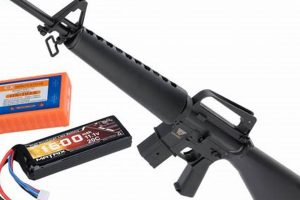
Tip 5: Maintain Adequate Battery Charge (Electric Models): For electric-powered replicas, ensure that batteries are properly charged and stored. Overcharging or improper storage can damage batteries and reduce their performance. Use a smart charger to prevent overcharging.
Tip 6: Properly Lubricate Moving Parts: Apply appropriate lubricant to moving parts, such as gears, pistons, and valves, to reduce friction and ensure smooth operation. Consult the manufacturer’s recommendations for the correct type of lubricant.
Tip 7: Securely Store the Device: When not in use, store the device in a secure location, preferably in a case or container, away from unauthorized access. This prevents accidental discharge and minimizes the risk of theft.
These guidelines emphasize the importance of safety, maintenance, and proper operation. By adhering to these recommendations, users can maximize their enjoyment and minimize the risk of accidents or equipment failure.
The following section will address the legal and ethical considerations associated with owning and using simulated military firearms.
1. Realistic Appearance

The degree of visual fidelity in simulated military firearms is a defining characteristic that significantly influences their application and perception. This realism extends beyond mere aesthetics and encompasses the replication of functional elements found in their real-world counterparts. The pursuit of realistic appearance stems from a desire to enhance training scenarios and provide a more immersive experience.
- External Replication of Firearms
This includes the meticulous reproduction of external features, such as the shape, size, and markings of the actual firearm. Materials, like metal alloys and polymers, are selected to mimic the weight and feel of real weapons. The presence of functional elements like charging handles, magazine releases, and adjustable stocks further contribute to the realistic handling experience. Examples include exact replicas of M4 carbines, AK-pattern rifles, and various sidearms utilized by global military forces.
- Functional Similarity to Real Firearms
Beyond visual resemblance, many simulated military firearms replicate the operational aspects of real weapons. This encompasses the manipulation of controls, the loading and unloading of magazines, and the cycling of the action. The sound produced during operation, while not identical, is often designed to simulate the report of a firearm. This functional similarity aids in building muscle memory and familiarization with firearm handling procedures.
- Enhanced Training Scenarios
Realistic appearance directly enhances the effectiveness of training scenarios. Participants are better able to immerse themselves in the simulation, leading to more realistic decision-making and tactical responses. This heightened level of immersion is valuable for training in areas such as squad tactics, room clearing, and force-on-force engagements. The realism bridges the gap between theoretical knowledge and practical application.
- Potential for Misidentification
The high degree of realism also introduces the potential for misidentification. Simulated military firearms can be mistaken for real weapons, particularly by individuals unfamiliar with firearms. This can lead to dangerous situations, including accidental shootings or confrontations with law enforcement. Responsible ownership and handling, including the use of brightly colored markings and secure storage, are crucial to mitigating this risk.
In conclusion, the pursuit of realistic appearance in simulated military firearms serves to enhance training and immersion, but also carries the responsibility of safe handling and storage to prevent misidentification and potential harm. The balance between realism and safety remains a critical consideration for manufacturers, users, and regulatory bodies.
2. Tactical Training

Tactical training, when coupled with simulated military firearms, presents a cost-effective and relatively safe method for individuals and organizations to hone skills essential for various operational contexts. This intersection allows for the practical application of theoretical knowledge in a controlled environment.
- Force-on-Force Simulations
Simulated military firearms facilitate realistic force-on-force scenarios, enabling trainees to practice tactical decision-making under pressure. These exercises can replicate urban warfare, reconnaissance missions, or defensive operations. The absence of lethal projectiles allows for iterative learning and the correction of errors without severe consequences. For instance, law enforcement agencies utilize these simulations to train officers in de-escalation techniques and appropriate use of force.
- Teamwork and Communication
Effective tactical training emphasizes teamwork and clear communication. Simulated military firearms require coordinated movement, strategic positioning, and concise communication to achieve objectives. Participants learn to rely on each other’s skills and to effectively convey information under stress. Military units often incorporate these tools into their training regimens to reinforce unit cohesion and communication protocols.
- Weapon Handling and Marksmanship
While not directly replicating the recoil and ballistic characteristics of live firearms, simulated military firearms allow trainees to develop fundamental weapon handling skills, such as proper grip, aiming techniques, and trigger control. These skills translate to improved accuracy and proficiency when transitioning to live firearms training. Security personnel and private military contractors often utilize these devices to maintain proficiency in weapon handling without incurring the cost and risk associated with live ammunition.
- Scenario-Based Training
Simulated military firearms can be integrated into complex scenario-based training exercises that replicate real-world situations. These scenarios can involve role-playing, environmental constraints, and evolving threats. This type of training fosters adaptability, problem-solving skills, and the ability to react effectively to unexpected challenges. Emergency response teams often use scenario-based training to prepare for various disaster scenarios, such as active shooter incidents or natural disasters.
The strategic implementation of simulated military firearms in tactical training curricula enhances operational preparedness, promotes teamwork, and provides a safe platform for skill development. However, the importance of realistic scenario design, qualified instructors, and adherence to safety protocols cannot be overstated to maximize the benefits of this training methodology.
3. Velocity Regulation

Velocity regulation constitutes a critical safety and regulatory aspect pertaining to simulated military firearms. The kinetic energy imparted to the projectile is directly proportional to the square of its velocity; consequently, even small increases in velocity can result in significant increases in impact force and potential for injury. Regulatory bodies and event organizers establish maximum velocity limits, typically measured in feet per second (FPS) using standardized projectiles. These limits aim to minimize the risk of eye injuries, skin abrasions, and other potential harm resulting from projectile impact. For example, many organized airsoft events mandate a maximum velocity of 400 FPS with 0.20-gram projectiles for rifles, and lower limits for closer engagement weapons like pistols. Exceeding these limits results in disqualification to ensure participant safety.
The practical significance of understanding and adhering to velocity regulations extends beyond participant safety. Responsible use mitigates legal liability for individuals and organizations involved in the operation or promotion of events utilizing simulated military firearms. Chronographs, devices used to measure projectile velocity, are essential tools for verifying compliance. The design and construction of simulated military firearms often incorporate features that allow for velocity adjustment, such as adjustable gas valves in gas-powered models or variable spring tension in electric-powered models. This allows users to fine-tune performance to meet specific regulatory requirements. However, modification to increase velocity beyond legal limits can lead to severe penalties.
Challenges in velocity regulation arise from the inherent variability in simulated military firearms performance due to factors such as temperature, projectile weight, and internal component wear. Continuous monitoring and periodic testing are therefore necessary. The link between velocity regulation and the broader theme of responsible use is paramount. Consistent adherence to safety standards promotes the continued acceptance and viability of simulated military firearms as a training tool and recreational activity. Failure to prioritize safety threatens the legitimacy of the activity and risks the implementation of more restrictive regulations.
4. Protective Gear

The use of appropriate protective gear is intrinsically linked to the safe operation of simulated military firearms. Due to the nature of these devices, which propel projectiles at measurable velocities, the risk of injury, particularly to the eyes and face, necessitates the consistent and comprehensive use of specialized protective equipment. Protective gear serves as the primary safeguard against projectile impact, mitigating potential harm. Its absence transforms a controlled simulation into a hazardous activity. For instance, eye protection, specifically full-seal goggles or masks meeting established impact resistance standards (e.g., ANSI Z87.1), is universally mandated at organized events to prevent irreversible ocular damage from projectile strikes. Similarly, facial protection, often in the form of lower-face mesh masks, is frequently recommended to safeguard teeth and soft tissue from injury.
The selection of suitable protective gear should align with the intensity and nature of the intended activity. Casual backyard engagements might necessitate only basic eye protection, while more structured events or training scenarios often require more comprehensive gear, including tactical vests with integrated neck protection and padded gloves to minimize injury from close-range impacts. The quality and durability of protective gear are also paramount considerations. Inferior or damaged equipment may fail under impact, rendering it ineffective and increasing the risk of injury. Regular inspection of protective gear for signs of wear, damage, or degradation is essential to ensure its continued effectiveness. Moreover, understanding the specific impact resistance ratings and certification standards associated with different types of protective gear is crucial for informed decision-making.
In summary, the consistent and appropriate use of high-quality protective gear constitutes a fundamental component of responsible engagement with simulated military firearms. It directly mitigates the risk of injury, promotes a safe environment for participants, and underscores the importance of prioritizing safety over aesthetics or perceived inconvenience. Ignoring or downplaying the significance of protective gear directly jeopardizes the well-being of participants and undermines the viability of simulated military firearms as a legitimate recreational activity or training tool.
5. Maintenance Procedures
The functional longevity and consistent performance of simulated military firearms are directly contingent upon adherence to regular maintenance procedures. These procedures, encompassing cleaning, lubrication, and component inspection, serve as preventative measures against mechanical failures, performance degradation, and premature wear. The intricate mechanisms within these devices, often comprised of precision-engineered components, are susceptible to the accumulation of dirt, debris, and lubricant breakdown, all of which can impede optimal operation. For example, the gearbox in an electric-powered replica requires periodic cleaning and re-lubrication to prevent gear stripping and motor burnout. Similarly, gas-powered replicas necessitate seal maintenance to prevent gas leaks and maintain consistent pressure output. Neglecting these procedures has a direct and detrimental effect on the device’s reliability and lifespan.
A structured maintenance regimen should incorporate several key elements. Disassembly, as per the manufacturer’s instructions, allows for thorough cleaning and inspection of internal components. Appropriate cleaning solvents and lubricants, compatible with the materials used in the device, should be employed to remove contaminants and reduce friction. Inspection for signs of wear or damage, such as cracked gears, worn seals, or damaged wiring, enables timely component replacement, preventing more significant failures. Reassembly must be performed with precision, ensuring that all components are correctly aligned and tightened to specified torque values. Failing to adhere to these steps can result in compromised performance or catastrophic failure. For example, incorrectly installed gears can lead to gearbox jamming, while over-tightened screws can damage plastic components.
Effective maintenance procedures not only extend the lifespan and improve the performance of simulated military firearms but also contribute to enhanced safety. A well-maintained device is less likely to malfunction during use, reducing the risk of accidental discharge or component failure that could potentially cause injury. Furthermore, consistent maintenance provides opportunities to identify and address potential safety hazards before they escalate. In conclusion, maintenance procedures represent an essential component of responsible ownership and operation. They safeguard the investment in these devices, ensure consistent performance, and contribute to a safer and more enjoyable user experience.
6. Legal Compliance
Legal compliance, with respect to simulated military firearms, dictates the permissibility of their ownership, sale, transportation, and use. The legal frameworks governing these devices vary significantly across jurisdictions, ranging from minimal regulation to outright prohibition. Ignorance of these laws does not constitute a defense against prosecution. Failure to adhere to applicable statutes can result in fines, confiscation of equipment, and, in certain instances, criminal charges. For example, some municipalities mandate that simulated firearms be brightly colored to distinguish them from real firearms, while others restrict their public display or transportation without specific permits. Consequently, a comprehensive understanding of local, regional, and national regulations is paramount for responsible ownership and operation.
The connection between legal compliance and simulated military firearms extends beyond mere adherence to the law; it influences the perception and acceptance of these devices within the broader community. Strict compliance minimizes the potential for misidentification, prevents accidental discharge incidents, and reduces the risk of misuse, all of which contribute to a more positive public image. Consider the example of organized airsoft events, which often implement stringent safety protocols and legal compliance measures to ensure the well-being of participants and to maintain positive relationships with local authorities. These measures might include chronograph testing to verify velocity limits, mandatory safety briefings, and coordination with law enforcement agencies. Adherence to these standards fosters trust and facilitates the continued operation of these events.
In conclusion, legal compliance serves as a cornerstone of responsible ownership and operation of simulated military firearms. It not only mitigates legal risks but also promotes safety, enhances public perception, and fosters a culture of responsible use. Navigating the complex landscape of regulations requires diligent research, ongoing awareness, and a commitment to upholding the law. The failure to prioritize legal compliance undermines the legitimacy of the activity and jeopardizes its long-term viability.
7. Secure Storage
Secure storage serves as a critical component of responsible ownership for simulated military firearms. The potential for misidentification, theft, or misuse necessitates stringent security measures. The absence of secure storage can have direct and consequential effects, ranging from accidental injuries to criminal activity. For instance, leaving a replica firearm unsecured in a vehicle or residence increases the likelihood of its theft, which could subsequently lead to the device being used in the commission of a crime. Secure storage, therefore, is not merely a suggestion but a fundamental obligation associated with owning these devices.
Practical methods of secure storage include the use of locked cases, gun safes, and trigger locks. The specific storage solution should be tailored to the individual’s circumstances, considering factors such as the number of devices owned, the presence of children or unauthorized individuals in the household, and the level of security required. Many jurisdictions mandate specific storage requirements for firearms, and while these laws may not always explicitly apply to simulated military firearms, adhering to similar standards demonstrates a commitment to responsible ownership. For example, storing replicas unloaded and separate from their power sources (batteries or gas canisters) further reduces the risk of accidental discharge or misuse. Additionally, maintaining an inventory of all simulated military firearms, including serial numbers or unique identifiers, can aid in recovery efforts in the event of theft.
In conclusion, secure storage is an indispensable aspect of responsible ownership for simulated military firearms. It mitigates the risks associated with misidentification, theft, and misuse, protecting both the owner and the broader community. The consistent implementation of appropriate storage methods demonstrates a commitment to safety, compliance, and ethical conduct, reinforcing the legitimacy of simulated military firearms as a recreational activity and training tool.
Frequently Asked Questions About Military Airsoft Guns
This section addresses common inquiries and clarifies misconceptions surrounding simulated military firearms. The information presented aims to provide a factual and objective understanding of these devices.
Question 1: Are simulated military firearms considered real firearms?
No. Simulated military firearms are designed to resemble real firearms but are not capable of firing lethal projectiles. They typically propel small plastic projectiles using compressed gas, electric motors, or spring mechanisms. While the appearance may be similar, the internal mechanisms and operational principles differ significantly from those of real firearms. Applicable laws often distinguish between the two categories, imposing different regulations and restrictions.
Question 2: What safety precautions are necessary when handling simulated military firearms?
Mandatory safety precautions include the consistent use of appropriate eye protection (full-seal goggles or masks meeting impact resistance standards), adherence to established velocity limits, and responsible handling practices. Simulated military firearms should be treated with the same respect and caution as real firearms to prevent accidental injuries or misuse. Furthermore, users should be aware of their surroundings and avoid pointing the device at individuals who are not actively participating in a simulated engagement.
Question 3: Is it legal to openly carry simulated military firearms in public?
The legality of openly carrying simulated military firearms in public varies depending on the specific jurisdiction. Many municipalities have ordinances prohibiting the public display of realistic-looking replica firearms, as they can cause alarm or confusion among the public and law enforcement officials. It is imperative to consult local regulations and to transport simulated military firearms in a discreet manner, preferably in a closed case or container, to avoid potential legal issues.
Question 4: How should simulated military firearms be stored when not in use?
Simulated military firearms should be stored securely, preferably in a locked case or gun safe, away from unauthorized access. Batteries or gas canisters should be removed and stored separately. These measures prevent accidental discharge, theft, and misuse, particularly in households with children or individuals unfamiliar with firearm safety protocols.
Question 5: What is the purpose of velocity limits in simulated military firearm engagements?
Velocity limits are established to minimize the risk of injury from projectile impact. These limits, typically measured in feet per second (FPS) using standardized projectiles, are designed to prevent eye injuries, skin abrasions, and other potential harm. Adherence to velocity limits is a fundamental safety requirement in organized airsoft events and should be observed in all simulated engagements.
Question 6: Can simulated military firearms be modified to increase their velocity or power?
While modifications to increase velocity or power are possible, they are strongly discouraged and may be illegal. Altering a simulated military firearm to exceed established velocity limits compromises safety, increases the risk of injury, and may result in legal penalties. Modifications should only be performed by qualified technicians, and any changes should be carefully considered to ensure compliance with all applicable regulations.
The information provided in this FAQ section serves as a general guide. Individuals are responsible for conducting their own research and consulting with legal professionals to ensure compliance with all applicable laws and regulations.
The subsequent section will delve into the future trends and evolving technologies associated with simulated military firearms.
Conclusion
This exploration of military airsoft guns has highlighted key facets, from operational considerations and safety protocols to legal compliance and secure storage. The devices, designed to replicate real firearms for training and recreational purposes, necessitate a comprehensive understanding of their functionalities and the responsibilities associated with their use. Velocity regulation, protective gear, and consistent maintenance form a crucial safety triad, while awareness of legal constraints ensures responsible ownership.
The continued evolution of military airsoft guns demands a sustained commitment to safety education, ethical practices, and adherence to all applicable laws. The responsible use of these devices not only mitigates potential risks but also preserves their viability as valuable tools for training and recreation. Further research and proactive engagement with relevant regulations are essential to ensure a safe and responsible future for the activity.