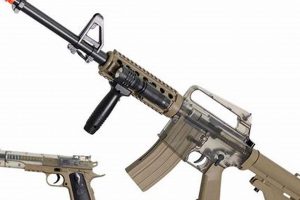
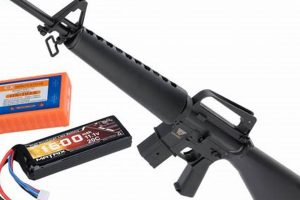
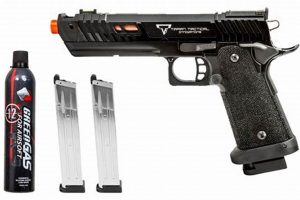
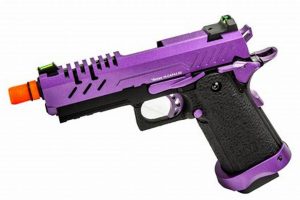
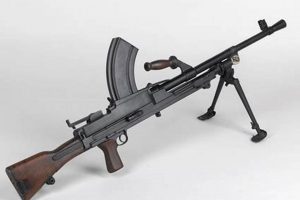
The selection of an appropriate airsoft firearm depends significantly on individual play style, field environment, and desired role. Preferences vary greatly, but understanding the core differences between available models is essential for making an informed decision. Considering factors like range, accuracy, and rate of fire will contribute to a satisfying airsoft experience.
Choosing the right airsoft replica is paramount for optimal performance and enjoyment. A well-suited gun can improve tactical effectiveness and contribute significantly to team success. Airsoft technology has advanced considerably, leading to a wide array of models tailored for different scenarios, from close-quarters combat to long-range engagements. Historically, spring-powered rifles were prevalent; however, electric and gas-powered options have gained popularity due to their enhanced capabilities.
The subsequent sections will explore various airsoft gun platforms, including spring-powered, electric (AEG), and gas blowback (GBB) models, analyzing their strengths and weaknesses to facilitate a more informed selection process. Key performance characteristics such as power source, magazine capacity, and upgrade potential will be examined to provide a comprehensive overview.
Guidelines for Optimal Airsoft Gun Selection
This section offers practical advice to aid in the selection process, ensuring the chosen airsoft gun aligns with individual requirements and playing conditions.
Tip 1: Define the Intended Role. Identify the primary purpose, whether it’s close-quarters combat (CQB), designated marksman, or support gunner. The intended role will dictate the desired characteristics, such as maneuverability, range, or rate of fire.
Tip 2: Consider the Field Environment. The playing field, whether indoor or outdoor, significantly impacts gun choice. CQB environments favor shorter, more maneuverable guns, while larger outdoor fields benefit from longer-range, higher-powered options.
Tip 3: Evaluate Power Source Options. Spring-powered guns offer simplicity and affordability. Electric (AEG) guns offer a higher rate of fire and sustained performance. Gas blowback (GBB) guns provide realistic recoil and operation. Carefully weigh the advantages and disadvantages of each power source.
Tip 4: Assess Accuracy and Range. Accuracy depends on barrel quality, hop-up system, and overall gun construction. Range is influenced by power output and projectile weight. Consider these factors in relation to the typical engagement distances encountered.
Tip 5: Research Upgrade Potential. Many airsoft guns offer upgrade paths to improve performance. Consider models with readily available upgrade parts to customize and optimize the gun to personal preferences.
Tip 6: Budget Accordingly. Airsoft gun prices vary widely. Set a realistic budget that accounts for the gun itself, along with necessary accessories like batteries, magazines, and protective gear. Prioritize essential features within the budget.
Tip 7: Prioritize Build Quality. The robustness and durability of the airsoft gun directly affects its lifespan and reliability. Look for guns constructed from high-quality materials, such as metal alloy or reinforced polymer.
Following these guidelines increases the likelihood of selecting an airsoft gun that effectively meets individual needs and enhances overall game experience. A considered approach ensures that the chosen platform aligns with the intended play style and environment, contributing to greater success and satisfaction.
The subsequent section will address common misconceptions surrounding airsoft gun selection, further clarifying the decision-making process.
1. Intended Game Type
The intended game type exerts a significant influence on the selection of an optimal airsoft gun. Cause and effect are directly linked; the specific rules and environment of a given airsoft game dictate the most effective type of armament. Close-quarters battle (CQB) games, characterized by confined spaces and rapid engagements, necessitate maneuverable and lightweight guns, such as submachine guns (SMGs) or short-barreled rifles. These weapons facilitate swift target acquisition and ease of movement within restrictive environments. Conversely, open-field or MilSim (Military Simulation) scenarios, often involving longer engagement distances and more tactical gameplay, demand rifles with greater range and accuracy, potentially favoring designated marksman rifles (DMRs) or sniper rifles. The choice directly impacts a player’s effectiveness and ability to contribute to team objectives.
The “Intended Game Type” is an indispensable component in the decision-making process of “what type of airsoft gun is best.” Ignoring this factor can result in the selection of an inappropriate weapon, hindering a player’s performance and potentially impacting team dynamics. For example, employing a long, cumbersome sniper rifle in a CQB environment would severely limit mobility and responsiveness, rendering the player a liability. Similarly, using a low-powered pistol in an open-field scenario would place the player at a significant disadvantage against opponents armed with longer-range weapons. The game type establishes the parameters within which a gun must operate effectively, making it a foundational consideration.
Understanding the connection between the intended game type and airsoft gun selection holds practical significance for both novice and experienced players. A well-informed decision leads to increased effectiveness on the field, enhanced enjoyment of the game, and a greater contribution to team success. Furthermore, this understanding allows players to tailor their equipment loadout to specific scenarios, ensuring they are optimally prepared for the challenges presented. While personal preference plays a role, the demands of the intended game type should serve as the primary guiding principle when selecting an airsoft gun. This alignment maximizes performance and contributes to a more satisfying and immersive airsoft experience.
2. Field Size

The physical dimensions of the airsoft playing field exert a considerable influence on the suitability of various airsoft gun types. The interplay between field size and weapon characteristics is critical for achieving optimal performance and tactical effectiveness. Smaller fields necessitate different weapon attributes compared to larger, more expansive environments. Consideration of field size is therefore a paramount factor in the selection process.
- Close Quarters Battle (CQB) Environments
Smaller indoor or tightly confined outdoor fields, often designated as CQB environments, favor airsoft guns with enhanced maneuverability and rapid target acquisition capabilities. Pistols, submachine guns (SMGs), and short-barreled rifles are typically preferred due to their compact size and ease of handling in close proximity. Engagement distances are generally shorter, prioritizing rate of fire and close-range accuracy over long-distance precision. For example, a player navigating a maze-like indoor arena would benefit from the agility of a pistol or SMG, facilitating swift movement and immediate response to close-range threats.
- Medium-Sized Outdoor Fields
Medium-sized outdoor fields offer a balance between close-quarters engagements and longer-range skirmishes. Assault rifles, often considered all-purpose weapons, are well-suited for these environments. These guns provide a compromise between maneuverability and range, allowing players to effectively engage targets at varying distances. A player operating in this environment might encounter both close-range encounters around bunkers and mid-range engagements across open areas, making the versatility of an assault rifle advantageous.
- Large Outdoor Fields and MilSim Environments
Large outdoor fields and MilSim (Military Simulation) events, characterized by expansive terrain and longer engagement distances, demand airsoft guns with greater range and accuracy. Sniper rifles, designated marksman rifles (DMRs), and assault rifles equipped with magnified optics are commonly employed in these scenarios. These weapons allow players to effectively engage targets at extended ranges, providing a tactical advantage in open environments. For instance, a sniper positioned on a distant ridgeline requires a high-powered rifle capable of accurately engaging targets hundreds of feet away.
- Elevation and Terrain Considerations
Beyond simply the overall size of the field, the specific terrain and elevation changes within the playing area can also influence weapon selection. Hilly or wooded areas might favor more compact and easily maneuverable guns, even on larger fields. Players navigating dense foliage require weapons that won’t be easily snagged or impede movement. The presence of elevated positions might encourage the use of longer-range weapons capable of exploiting the advantageous vantage point. Thus, a nuanced understanding of the field’s topography is crucial for optimizing weapon choice.
The correlation between field size and optimal airsoft gun selection underscores the need for a strategic approach to equipment choices. Selecting a weapon that is disproportionate to the playing environment can severely hamper a player’s effectiveness and overall game experience. Therefore, a careful assessment of the field’s dimensions, terrain, and engagement distances is paramount for making an informed decision regarding the most suitable airsoft gun for a given scenario.
3. Power Requirement

The power output of an airsoft gun, measured in feet per second (FPS) with a standard weight BB, dictates its effective range and impact force, directly influencing its suitability for specific gameplay styles and field regulations. The connection between power output and intended use is crucial in determining the selection. Higher FPS values generally correlate with increased range and impact, making such guns potentially advantageous in open outdoor fields where engagements occur at greater distances. However, CQB (Close Quarters Battle) environments often impose strict FPS limits to ensure player safety, necessitating the use of lower-powered guns. Ignoring power requirements can lead to non-compliance with field rules, potential injury, and a diminished gameplay experience. For example, a sniper rifle exceeding a field’s FPS limit would be prohibited, forcing the player to utilize an alternative weapon.
Different airsoft gun types inherently offer varying power capabilities. Spring-powered rifles, while generally the least expensive, often exhibit lower FPS values, making them suitable for beginners or restricted gameplay scenarios. Electric airsoft guns (AEGs) provide a broader range of power options, with many models offering adjustable FPS through spring changes or internal modifications. Gas-powered airsoft guns (GBBs) tend to deliver higher FPS values, simulating the recoil and power of real firearms, but may be subject to more stringent field restrictions. The practical application of this understanding lies in choosing a gun that aligns with both the player’s desired role and the specific power limitations of the intended playing field. A designated marksman, for example, might select an AEG capable of achieving a high FPS within legal limits, while a CQB player would prioritize a lower-powered gun optimized for close-range engagements.
Selecting an airsoft gun without carefully considering its power requirement can have significant consequences, ranging from game disqualification to potential injury. Understanding the relationship between FPS, field regulations, and intended gameplay is essential for making an informed choice. This understanding facilitates the selection of a gun that maximizes performance while adhering to safety guidelines and field restrictions. Therefore, power requirement serves as a critical factor in the broader determination of “what type of airsoft gun is best,” ensuring a safe, fair, and enjoyable airsoft experience. The challenge lies in balancing the desire for increased range and impact with the need for compliance and player safety, demanding a thoughtful and informed decision-making process.
4. Budget Allocation

Budget allocation exerts a fundamental influence on the selection of an airsoft gun. Financial constraints dictate the range of available options, compelling individuals to prioritize specific features and performance characteristics within defined monetary limits. Therefore, understanding the interplay between budgetary considerations and gun selection is critical for achieving a balance between cost and desired performance.
- Initial Investment vs. Long-Term Costs
The initial purchase price represents only one aspect of the total cost of ownership. Accessories, such as batteries, magazines, and protective gear, contribute significantly to the overall expenditure. Furthermore, maintenance and potential repairs should be factored into the long-term budget. For example, a less expensive airsoft gun may require frequent repairs or upgrades, ultimately exceeding the cost of a more durable, albeit pricier, model. The initial investment must be weighed against the anticipated long-term expenses to make a financially sound decision.
- Gun Types and Price Tiers
Different airsoft gun types occupy distinct price tiers. Spring-powered guns typically represent the most affordable option, followed by electric (AEG) models, and then gas blowback (GBB) guns. Within each category, variations in build quality, materials, and features result in further price differentiation. A higher budget affords access to guns constructed from more robust materials, equipped with advanced features, and exhibiting superior performance characteristics. Conversely, a limited budget may necessitate compromises on features, durability, or overall performance.
- Balancing Performance and Affordability
The challenge lies in finding a balance between desired performance and affordability. It is essential to identify the most critical performance characteristics for the intended use and allocate budgetary resources accordingly. For example, if accuracy is paramount, investing in a high-quality barrel and hop-up system may be prioritized, even if it requires compromising on other features. A strategic approach to budget allocation ensures that the most essential performance aspects are adequately addressed within the financial constraints.
- Used vs. New Airsoft Guns
The used market presents an alternative for individuals operating within a limited budget. Purchasing a used airsoft gun can provide access to higher-end models at reduced prices. However, careful inspection is crucial to assess the gun’s condition and potential repair needs. Used guns may require additional maintenance or upgrades to restore them to optimal performance. Thoroughly evaluating the risks and potential benefits associated with purchasing a used airsoft gun is essential for making an informed decision.
The effective allocation of budgetary resources directly impacts the quality and suitability of the chosen airsoft gun. A strategic approach, encompassing considerations such as long-term costs, price tiers, performance prioritization, and the used market, ensures that individuals can acquire a firearm that meets their needs and financial constraints. Ignoring budgetary limitations can result in the selection of an unsuitable gun, leading to diminished performance, increased maintenance costs, and overall dissatisfaction. Therefore, careful financial planning is an integral component of the “what type of airsoft gun is best” decision-making process.
5. Upgrade Availability

The potential for upgrades constitutes a significant determinant when evaluating which airsoft gun best suits individual needs. The availability of aftermarket parts and modifications directly influences a gun’s long-term performance, adaptability, and overall lifespan. An airsoft gun with limited upgrade options may become obsolete as playing styles evolve or performance demands increase. Conversely, a gun with readily available upgrades allows for continuous refinement and optimization, extending its usability and competitiveness over time. Therefore, upgrade availability is not merely an ancillary feature but rather a critical component in the overall assessment of an airsoft platform’s value. For instance, an individual who anticipates transitioning from CQB to outdoor engagements may benefit from an AEG (Automatic Electric Gun) platform due to the ability to modify spring tension, barrel length, and hop-up systems, effectively adapting the gun’s performance to different scenarios. Without this upgrade potential, a player might be forced to purchase an entirely new gun to meet the demands of a different playing environment.
Examining specific airsoft gun platforms reveals the practical implications of upgrade availability. Certain AEG models, particularly those adhering to the Tokyo Marui-compatible standard, boast a vast ecosystem of aftermarket parts. These parts range from internal components designed to enhance power and accuracy, such as upgraded motors, gears, and inner barrels, to external accessories like rail systems, stocks, and optics. This modularity enables users to tailor the gun’s performance and ergonomics to their precise preferences. Gas blowback pistols (GBBs), while offering a more realistic shooting experience, often have fewer upgrade options, potentially limiting their long-term adaptability. Spring-powered sniper rifles also benefit significantly from upgrade potential, allowing users to enhance range, accuracy, and trigger responsiveness through modifications to the spring, inner barrel, and trigger assembly. The practical significance of this lies in the ability to transform a basic airsoft gun into a highly customized and optimized platform, capable of meeting specific performance requirements.
The challenge in evaluating upgrade availability resides in assessing the quality, compatibility, and availability of aftermarket parts. Not all upgrades are created equal, and selecting substandard components can negatively impact performance and reliability. Furthermore, the compatibility of upgrade parts with a specific airsoft gun model must be carefully verified to avoid malfunctions or damage. Despite these challenges, understanding the relationship between upgrade availability and long-term performance is crucial for making an informed decision regarding which airsoft gun best suits individual needs. It allows players to invest in a platform that can evolve alongside their playing style, ensuring sustained competitiveness and enjoyment of the sport.
Frequently Asked Questions
The following addresses common inquiries regarding the determination of optimal airsoft gun types, aiming to clarify prevailing uncertainties and provide informed guidance.
Question 1: What defines an airsoft gun as “best”?
The designation of “best” is subjective and contingent upon individual playing style, field characteristics, and intended role. A gun excelling in close-quarters combat may prove inadequate for long-range engagements.
Question 2: Does a higher price guarantee superior performance in airsoft guns?
Price is not always indicative of performance. While higher-priced models often incorporate enhanced materials and features, a less expensive, well-maintained gun may perform adequately for certain applications.
Question 3: Are electric (AEG) airsoft guns universally superior to spring-powered models?
Electric airsoft guns offer a higher rate of fire and sustained performance; however, spring-powered models are simpler, more affordable, and require no batteries, making them suitable for specific users and scenarios.
Question 4: How significantly does the airsoft gun’s weight impact gameplay?
Weight can significantly affect maneuverability and fatigue. Lighter guns are advantageous in close-quarters combat, while heavier models may offer increased stability and realism. Consider the duration and intensity of anticipated gameplay.
Question 5: Is a high feet-per-second (FPS) rating always desirable in an airsoft gun?
A high FPS rating may enhance range, but many fields impose FPS limits to ensure player safety. Exceeding these limits can result in disqualification. Compliance with field regulations is essential.
Question 6: How important is the realism of an airsoft gun’s design?
Realism is a matter of personal preference. Some players prioritize authentic aesthetics and operation, while others prioritize performance and functionality regardless of cosmetic accuracy.
Selecting an airsoft gun involves a multifaceted evaluation process, considering various factors beyond simple generalizations. Informed decision-making yields the most suitable gun for individual requirements.
The subsequent section will delve into specific examples of different airsoft gun types and their respective applications.
Determining Optimal Airsoft Gun Type
The preceding discussion elucidates the complexities inherent in designating a definitive “what type of airsoft gun is best.” The exploration encompasses pivotal factors such as intended gameplay, field dimensions, power constraints, budgetary limitations, and upgrade prospects. Each element exerts a tangible influence, shaping the appropriateness of particular models for specific contexts. A synthesis of these considerations is paramount for informed decision-making.
Ultimately, the pursuit of a suitable airsoft gun mandates a rigorous assessment of individual needs and operational parameters. Acknowledging the nuanced interplay of these variables facilitates a strategic selection process, yielding a platform optimized for performance, adaptability, and long-term utility. Continued engagement with evolving technologies and playing styles will further refine the understanding of optimal airsoft armament, ensuring ongoing competitiveness and enhanced gameplay experiences.